|
| Discovery's external fuel tank with the missing chunk of foam. Image credit: NASA |
|
| Flying Foam Grounds Shuttle Fleet |
Jul 28, 2005 - Although Discovery made it safely into orbit, potentially catastrophic chunks of foam dislodged from its fuel tank on Tuesday's launch. After reviewing launch video and photographs, managers identified a few places where pieces of foam flew off the tank, including one piece as large as 90-cm (35 inches) across. Fortunately it completely missed the shuttle, but if it had hit, the damage would have been severe. NASA has grounded all future shuttle flights until the falling foam problem can be made safer.
(Full Story) |
|
|
|
|
|
| Build Big by Thinking Small |
| Jul 28, 2005 - NASA is helping researchers build machines and materials at the smallest scales - known as nanotechnology - to enable future space explorers. One example of this research is in the development of carbon nanotubes, which could have 100 times the strength of steel at 1/6 the weight, and used in the construction of a future space elevator. Nanofactories could churn out spacecraft parts where atoms are placed individually with atomic precision. (Full Story) |
|
|
|
|
|
| Water Ice in a Martian Crater |
| Jul 28, 2005 - This image, taken by ESA's Mars Express spacecraft, shows a large patch of water ice sitting on the floor of a Martian crater. The unnamed impact crater is located on Vastitas Borealis, a broad plain that covers much of Mars' far northern latitudes. This patch of ice seems to be present all year round, as the temperature and pressure don't get high enough for the ice to sublimate away into gas. There are also faint traces of ice on the inside wall of the crater. (Full Story) |
|
|
|
|
|
| Greg Olsen Will Fly to Space |
| Jul 28, 2005 - US entrepreneur Greg Olsen is going to get his trip to space after all. Space Adventures announced this week that Olsen will be joining the crew of the Soyuz TMA-7 spacecraft, currently scheduled for launch on October 1, 2005. Olsen will remain on board the station for 8 days, and run a few experiments on remote sensing and infrared astronomy - whenever he can drag himself away from the window. He was originally scheduled to fly much earlier, but Russian doctors forced a delay because of health concerns. (Full Story) |
|
|
|
|
|
| Martian Fossil Finder in the Works |
| Jul 28, 2005 - NASA engineers are working on a new instrument that could peer through rock and dirt on Mars to see evidence of life under the surface. The Neutron/Gamma ray Geologic Tomography (NUGGET) would be wielded by a Martian rover, and aimed at suspicious rocks. By releasing a focused beam of neutrons, some of atoms in the target rock will capture them and give off a characteristic gamma ray signature, measurable by the instrument. Ancient fossils embedded in the rock would be revealed by their chemicals. (Full Story) |
|
|
|
|
|
| NASA's Prototype Solar Sail Inflates Perfectly |
| Jul 28, 2005 - Sailing through space on nothing but photons from the Sun is a nice dream, but we're still years away from the reality. NASA took their next step in June, however, when they tested a 20-metre (66-foot) prototype solar sail at their Plum Brook research facility. They successfully deployed the sail using an inflatable boom designed to unfurl the sail from a box the size of a suitcase and then keep it rigid in space. (Full Story) |
|
|
|
 |
| Illustration of Convection in Sun-like Star. Image credit: NASA/CXC/M.Weiss. Click to enlarge |
|
| Stars Have More Neon Than Previously Believed |
| Jul 28, 2005 - Take your estimate for the amount of neon in a star, and triple it. At least, that's what a team of astronomers using the Chandra X-Ray Observatory have concluded. They performed a detailed survey of 21 nearby sun-like stars within a distance of 400 light-years from Earth, and found they all contained an average of 3X the neon traditionally predicted for our Sun. Neon is difficult to find in stars because it doesn't give off any light in the visible spectrum. But when heated to millions of degrees, for example, in a star, this elusive element blazes in the X-ray spectrum. (Full Story) |
|
|
|
 |
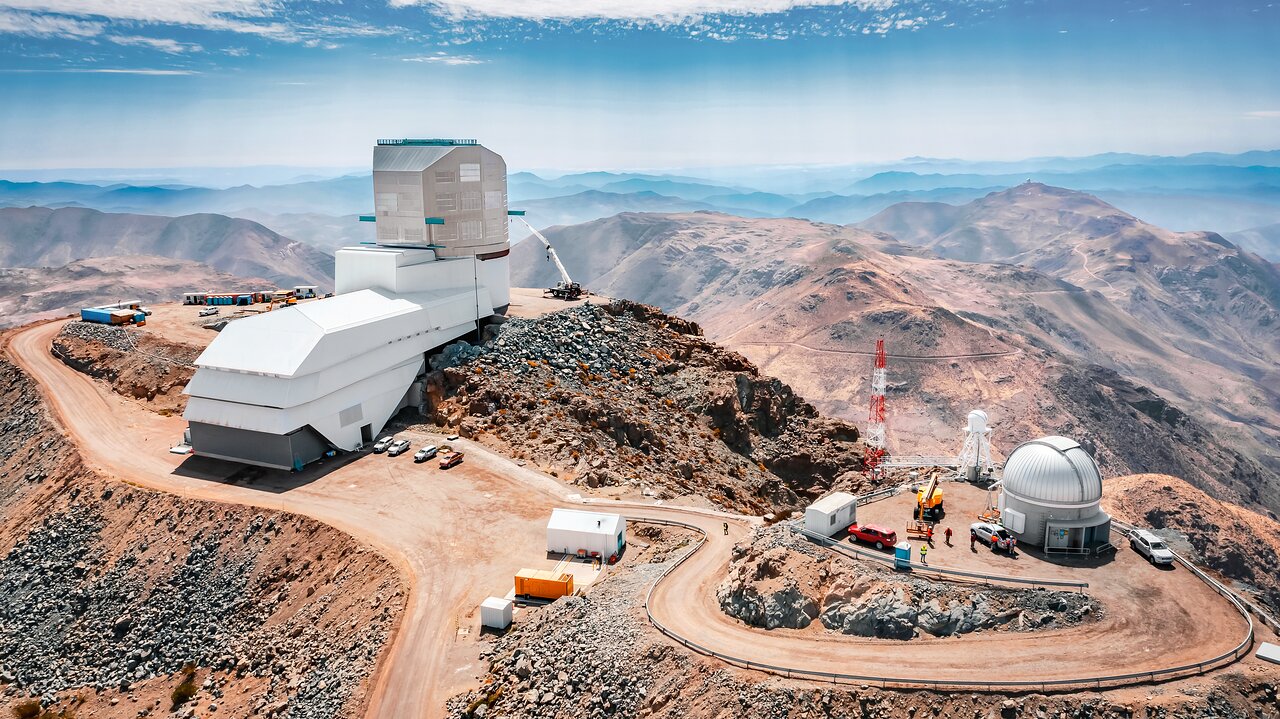
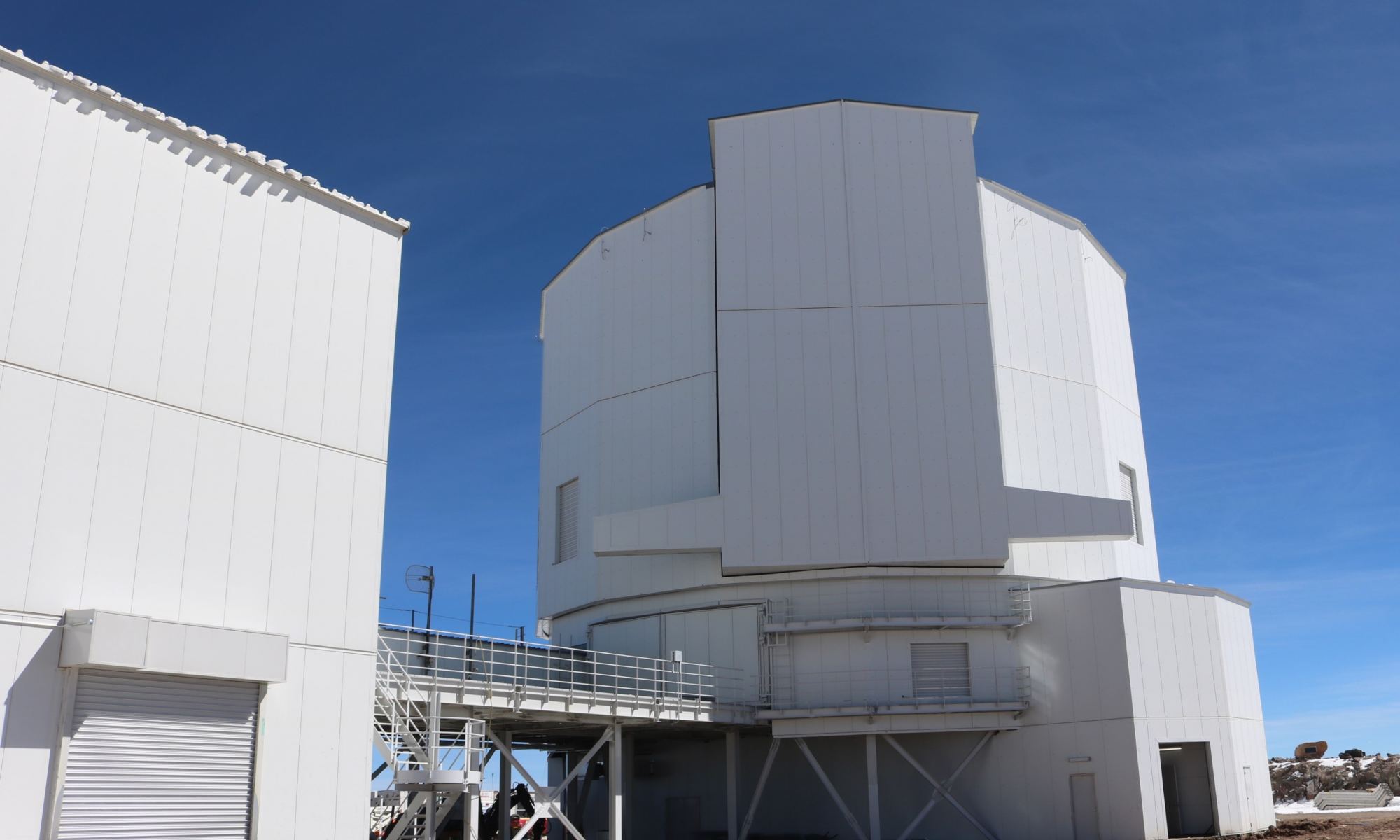
| A view of the observatories atop Mount Lemmon's summit. Image credit: Yvette Cendes. Click to enlarge. |
|
| Astronomy Camp Adventures |
| Jul 27, 2005 - Most teenagers go to summer camp in order to learn arts and crafts, hang out beside a lake in the northern wilderness, and perhaps learn to horseback ride. Nevertheless, every year a small handful of teenagers opt out of the traditional camp and travel to the desert of the American Southwest. Instead of learning how to build a fire they discover how to use research-grade telescopes, instead of discussing the latest fashions they debate planetary formation, and instead of identifying plant types they identify the hydrogen line in Vega. What kind of person spends free time doing that? (Full Story) |
|
|
|
|
|
| Book Review: Einstein's Miraculous Year |
| Jul 27, 2005 - Humans have really raced up the evolutionary ladder in the last 40,000 years. From dragging knuckles on the ground to speeding jets over the sands of the Mojave desert, we've come a long way. Of course progress wasn't continuous. There were some good years and some bad years. Many people think 1905 was particularly good. John Stachel in his book, Einstein's Miraculous Year gives credit to this statement. Within it are the five papers that Einstein wrote then. With time and much investigation, his papers were fully appreciated and with this hindsight, 1905 does appear to have been particularly good. (Full Story) |
|
|
|
|