Universe Today
(This is Part 4 of a series on Hawking's no-boundary proposal. Read Part 1, Part 2, and Part 3 first.)
There's a reason that while interesting, the Hartle-Hawking no-boundary proposal isn't exactly taught in grade school textbooks yet.
Actually, there are a lot of reasons. And in usual fashion, just when you felt like we are on the verge of a triumphant explanation for all of time and space, I'm going to yank it away and tell you...not quite yet.
First we need to start with the elephant in the room, which is that we do not have a working theory of quantum gravity. If we did, we wouldn't need to debate about this, because we could just read off the answer about the beginning of the universe. For Hawking to play his games, he needed to make an absurd number of approximations and guesswork as to what a full theory WOULD tell him, without knowing the actual answer. And so while the choices he made were relatively reasonable, they were also choices and assumptions that don't necessarily have to hold in the real universe, which is the one we particularly care about.
And even if we take the assumptions at face value, or at least begrudgingly allow them, then the most likely universe, the peak of the wave function, isn't EXACTLY our universe. It's slightly different. The most likely universe, the most probable one, is smaller than ours, with less inflation. In other words, our particular universe has a bit too much inflation. Again, that's not ruled out. We're part of the wave function too. But it's hard to swallow when the most LIKELY universe is one that is decidedly NOT US.
This problem has a name, by the way, called for various reasons Boltzmann Babies. It's....let's just say the concept of Boltzmann Brains needs its own episode so please just ask. And this argument is just a cute nickname for the fact that Hawking's most likely universe is smaller and younger than ours, so any random "brain" should be a cosmological "baby". Listen it's a stupid name but I feel like I have to mention it and I can do a whole episode on the broader concept without cringing too hard. I promise. I think.
Anyway, Hawking also played some funny games with the math. He had to play some tricks, like the real-to-imaginary-time switcharoo, to solve the equations. But people have attempted the real deal, with fewer mathematical games, and their results say that this no-boundary not-a-beginning is not a smooth and easy thing. That instead of giving you an easy way to pinpoint the nature of the universe, it's actually crazy chaotic, and it's essentially impossible to read out "this is what the universe is supposed to look like".
Which is generally a bad thing if you're trying to predict what our universe should be like.
And then there's the whole thing with probabilities. In normal quantum mechanics, we have a procedure, called the Born rule, for transforming wave functions (which we can't see or measure) into actual probabilities (which we care about in our experiments). This makes sense and is super well tested for electrons. But...the universe? All possible universes? How do you extract probabilities? How do you turn the wave function into a betting odd? Hawking just followed the normal procedure, but are you seriously telling me I can treat the entire universe the same way I treat an electron? That seems....shaky, at best. And the fact that it gave us an almost-but-not-quite correct answer might be telling us that it's not quite working the way Hawking claimed.
And, excuse me, but it makes sense to observe or measure an electron and get its wave function to collapse and the electron to do something interesting. We put it in a box. We let it hit a screen. But how do we take the measurement of the universe? Aren't we, and I'm just saying this based on the last time I checked, INSIDE the universe? How do we observe it if we're PART of the thing we're trying to observe? I know quantum mechanics has a whole big problem when it comes to measurements that we largely ignore, but it doesn't seem like we can ignore it here.
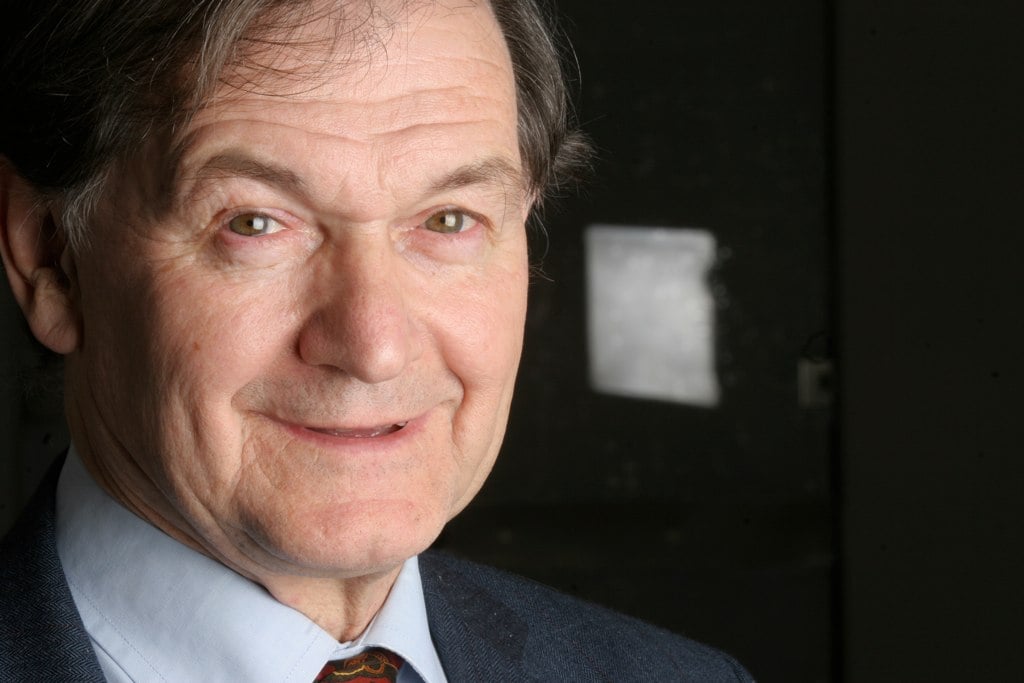
Oh, and that arrow of time thing? Where the smooth, chill, low-entropy universe just "popped out" of this analysis like it was no big deal? Well Roger Penrose pointed out that Hawking ASSUMED smoothness from the beginning. He assumed that reaching the beginning of the universe was just as easy as walking across the south pole. And that we shouldn't be surprised that the initial universe was smooth because that's EXACTLY what Hawking baked into his assumptions from the start. So you don't get to wave your victory flag saying you predicted the arrow of time because it really just snuck in through the back door when you weren't looking.
Speaking of time, we have a big fat problem with the nature of time that Hawking's proposal doesn't really solve. The no-boundary proposal says that there is no time before the universe. That time itself emerges from the geometry AFTER the no-boundary transition. But he also spoke about the universe emerging or nucleating or coming into being. These kinds of words smuggle in a temporal notion.
The universe...exists. We know it exists. And you can say no-boundary-this and no-beginning-that, but to say that time emerges implies that there is a state of existence in which there is no time. So how does something, I don't know, START if there is no time to give it a moment of ignition? I know it sounds like I'm just twisting myself in word knots, and I kind of am, but so did Hawking, and so has anyone who's talked about this. It could be just a failure of language and our monkey brains, when the math says one thing and we can't put it into words (fair enough, it's happened before), or it could be an irreducible failure of the whole idea. Maybe statements that don't make sense are...actually wrong.
I'll leave you with this. The no-boundary proposal is intriguing but has some serious flaws, and unless or until we achieve a quantum theory of gravity, we can't wrap it in rigorous enough mathematics to decide if we're on the right track or not. While we all generally agree that the Wheeler-DeWitt equation is the correct machinery, we don't agree on pretty much anything else, up to and including if the "wave function of the universe" is even a valid concept.
But even if we did, even if Hawking was right, even if time emerges with spacetime, even if there is no such thing as the beginning, your work isn't done. In Hawking's view, the universe simply exists as a consequence of the laws of physics.
But why do the laws of physics exist?
And on that, Wheeler, Hawking, and all the rest, are silent.
As am I.