Universe Today
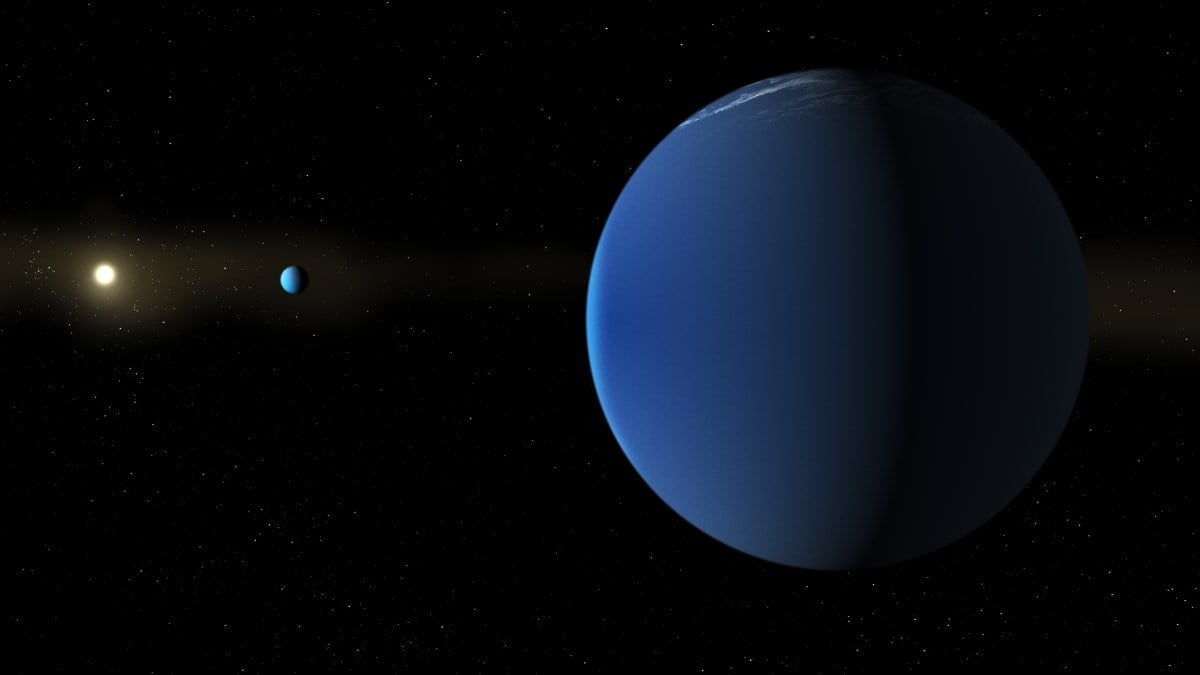
How flimsy and fluffy can a world be? We tend to picture planets as solid, weighty things and sometimes gaseous, but astronomers have just found two that stretch the definition almost to breaking point. Both are giants, each roughly the size of Jupiter, yet they are so wispy that, gram for gram, they are lighter than candy floss. Astronomers call such worlds super puffs, and finding even one is rare but these two orbit the very same star.
Named TOI-791 b and TOI-791 c, they circle a Sun like star some 1,110 light years away in the southern constellation Volans. Despite swelling to Jupiter's size, they contain almost nothing by comparison. Jupiter packs its bulk into a density of 1.33 grams per cubic centimetre; these two manage barely 0.04, around thirty times less, and lower even than spun sugar at a funfair. They are, in effect, planet shaped clouds.
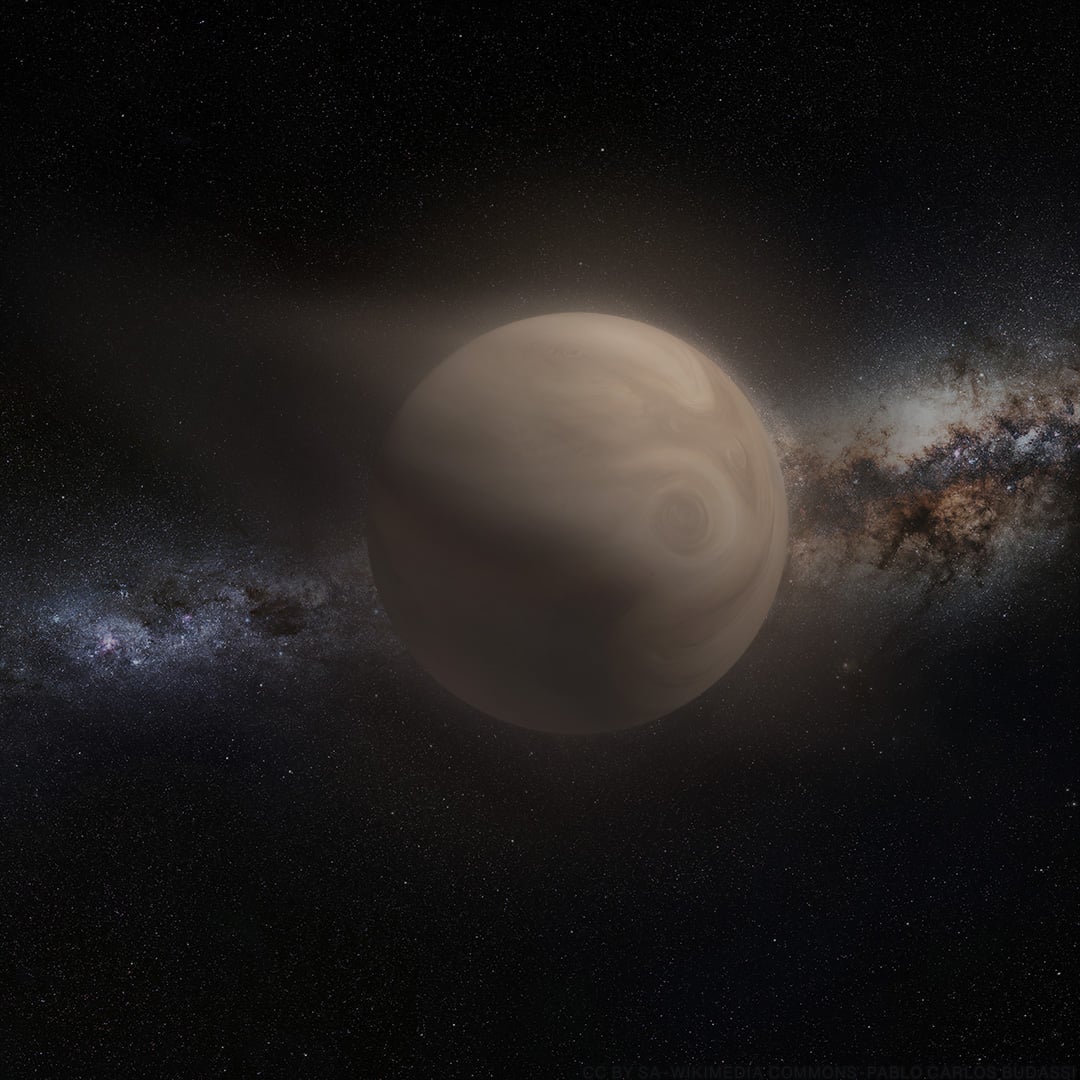 Artistic representation of a super-puff planet (Credit : Pablo Carlos Budassi)
Stranger still, the two are siblings, born together from the same swirling disc of gas and dust around their young star, and they now move in a delicate gravitational dance. For every five laps the inner planet makes, the outer completes almost exactly three, a tidy ratio astronomers call a resonance. As they circle, each tugs gently on the other, nudging the precise timing of their passages across the star, and it was those tiny shifts that gave the game away. That is because the planets were weighed by their misbehaviour.
First spotted in data from NASA's TESS survey by volunteers in the Planet Hunters citizen science project, they betrayed their sizes by dimming their star's light each time they crossed in front of it. To find their masses, the team turned to the way the pair pull on one another, reading the slight earliness or lateness in each crossing to work out how much heft was doing the pulling. Size and mass together gave their feather light densities.
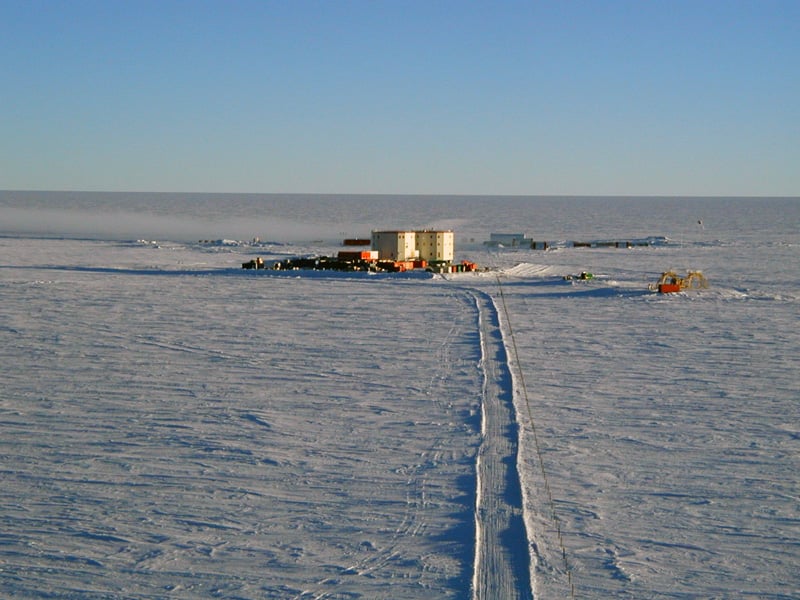 Concordia Research Station at dome Circe, Charlie or Concordia (Credit : Stephen Hudson)
Catching them in the act took patience and a remarkably good seat. Because the planets orbit well out from their star, each crossing drags on for more than eleven hours, far longer than a single night at most observatories allows. So the astronomers turned to Antarctica, where a telescope at Concordia Station sits beneath months of unbroken polar darkness. Through the long Antarctic winter they could follow an entire eleven hour transit without the Sun ever interrupting, the longest such crossings ever recorded in full from the ground.
Quite how a planet ends up this insubstantial is still up for debate. The leading idea is that these worlds are swaddled in enormous atmospheres of hydrogen and helium, gathered greedily in the cold outer reaches of their infant solar system, where gas could cool and pile up around a small rocky core. To test it, the team now hopes to turn the James Webb Space Telescope on the pair and sniff their air for the chemical fingerprints of how they were born. Two of the lightest worlds we know of may yet have something weighty to tell us.
Source : ’Super-puff' planets lighter than candy floss discovered by international team