 Universe Today
It feels like every few months we get to report on another academic paper coming out singing the praises of the Solar Gravitational SGL (SGL). Partly, this is due to Dr. Slava Turyshev’s astounding productivity in terms of pumping out academic articles, but partly because such a ground-breaking mission has lots of positive aspects, but also challenges that need to be addressed. A new paper, available in pre-print on arXiv from Dr. Turyshev, stresses an often overlooked feature of the SGL - how useful it can be at imaging things other than far away exoplanets.
As a bit of background, the SGL itself utilizes a feature of general relativity - how the mass of our Sun bends and magnifies light. A spacecraft positioned at around 550 AU away from our Sun could use that lensing effect as a magnifying glass, allowing us to reconstruct megapixel-scale images of Earth-like exoplanets at a distance of a few dozen light-years.
Exoplanets have been the focus of SGL developments up to this point, but Dr. Turyshev points out that there are plenty of other targets for the SGL to capture high-resolution images of. And exoplanets in particular face one large challenge - “photon starvation”. Even a telescope as powerful as the SGL will have to stare at an exoplanet for a long time in order to gather enough signal to beat out the background noise caused by the Sun’s corona.
Obligatory Fraser interview with Dr. Turyshev talking about the SGL.There are plenty of astronomical objects that wouldn’t have that problem, though - particularly those that create their own light. For these targets, the math switches from photon counts to focal-line navigation, the detector’s dynamic range, and subtracting out the corona’s glare. To prove the point, Dr. Turyshev dove into the math on three particularly interesting use cases.
First, consider mapping the surface of a magnetic white dwarf. These dead stars are incredibly bright but physically small, roughly the size of Earth. Currently, we can only measure details on a white dwarf’s surface down to the microarcsecond scale. According to Dr. Turyshev, the SGL would be capable of mapping the surface of a white dwarf 10 parsecs away down to the nanoarcsecond. This would allow features like temperature differentials and rocky debris within the accretion belt to become visible for the first time.
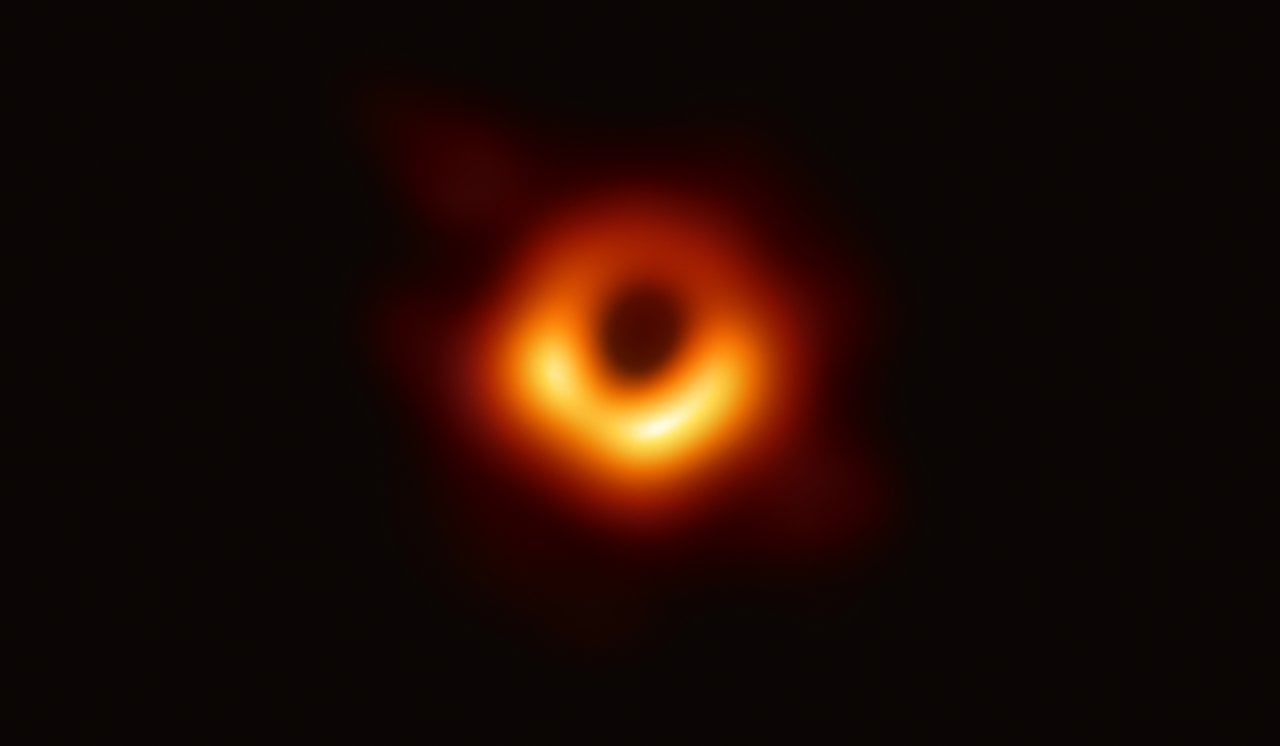
Another use case features the famous M87* supermassive black hole, first captured by the Event Horizon Telescope (EHT). While a historic achievement, the original EHT image has a resolution on the order of tens of microarcseconds. Dr. Turyshev shows that the SGL could improve this resolution down to 0.66 microarcseconds per pixel—an improvement of several orders of magnitude over the original EHT picture.
SGL will require all new modes of propulsion - such as these ion engines that Fraser discusses.There is a lot of activity going on in a protoplanetary disk, and the SGL could help us focus on a particular subfield of it to try to better map out what was going on. Attempting to scan an entire 100 AU protoplanetary disk would be infeasible for the SGL, as it requires the telescope capturing the images to physically move along a focal line to map out the images. But, according to Dr. Turyshev, SGL would be perfect to focus in on specific parts of the disk that might be of particular interest - such as where planets are actively forming.
But that points out one of the main difficulties in selecting the target for the SGL - it must travel up and down a focal line (not a plane) in order to get an accurate image of an object. For example, shifting its view by a single degree when out at 650 AU would require moving the spacecraft a greater distance than the distance from Earth to Saturn. Any such trip would take any existing propulsion system years if not decades, and that’s just to change a target in the sky by one degree.
So until we get a better propulsion system - and work through a myriad of other technical hurdles - the SGL will remain a dream. But with every new paper, and every year’s worth of technological advances, we’re moving closer to where that dream could eventually become a reality. This paper slots nicely into that (hopefully) linear path, and provides even more reasons why such a powerful telescope is worth pursuing.
Learn More:
S.G. Turyshev - Ultra-High-Resolution Astronomy with the Solar Gravitational Lens
UT - Using the Sun as a Gravitational Lens Would Let Us See Exoplanets With Incredible Resolution
UT - Using the Solar Gravitational Lens Will Be Extremely Difficult

