Universe Today
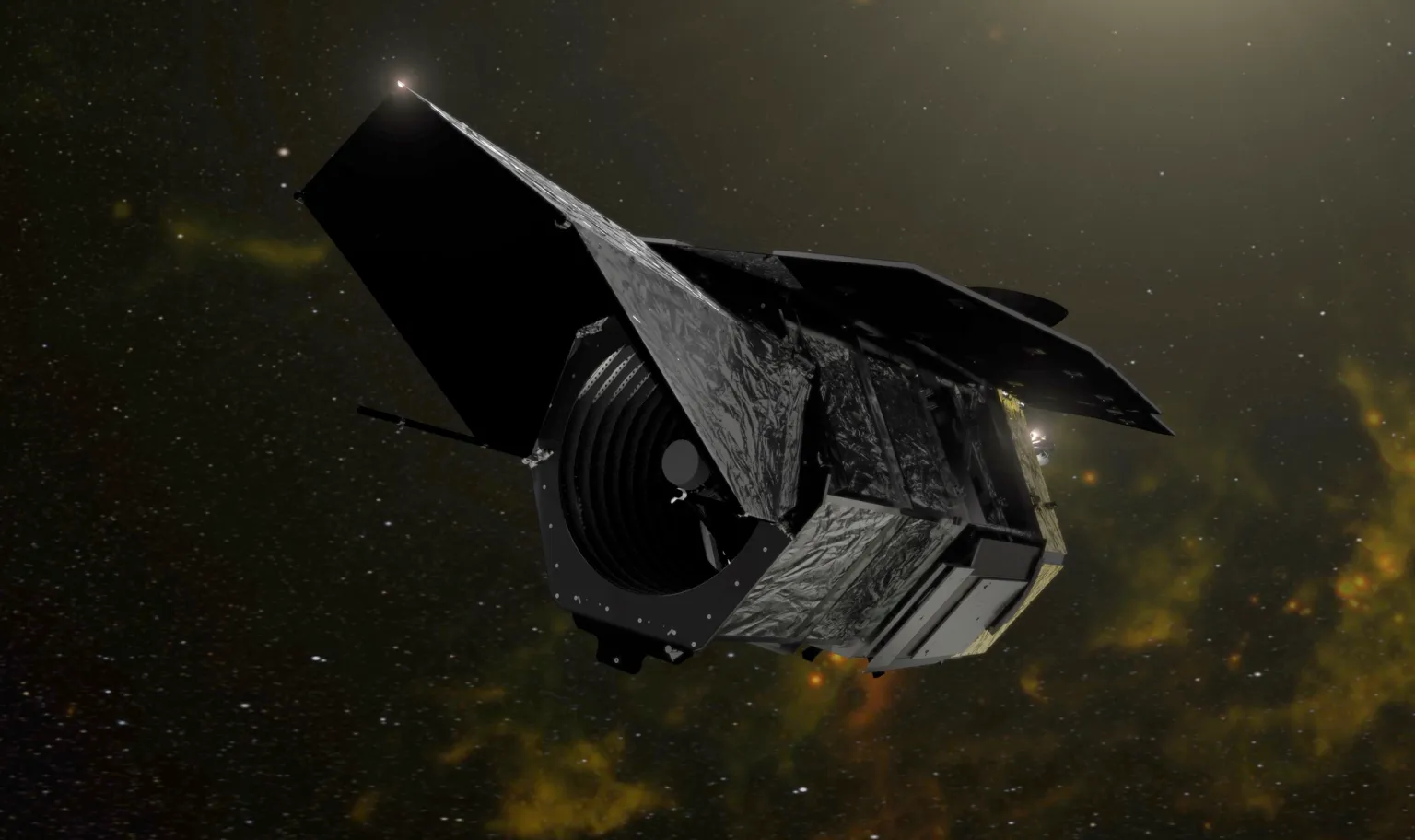
On June 21st, NASA's Nancy Grace Roman Space Telescope arrived at the Kennedy Space Center in Florida. This marks the beginning of the final phase of its prelaunch preparations ahead of the observatory's launch on August 30th. It also puts NASA eight months ahead of schedule with the observatory, which was initially scheduled for launch in 2027. To get there, Roman was loaded into a protective, environmentally controlled transportation container and shipped to Baltimore.
From there, the agency's Pegasus barge carried the spacecraft down the coast to Cape Canaveral, where it was unloaded and transported to NASA's Kennedy Space Center. Over the next few weeks, technicians will perform numerous tests to ensure that Roman is ready for launch. This includes testing the telescope's six solar panels and inspecting the insulation and thermal blankets, and loading its fuel tanks with about 290 gallons of hydrazine fuel.
The Nancy Grace Roman Space Telescope is named in honor of NASA's first female executive at NASA and the agency's first Chief of Astronomy. Throughout the 1960s and 70s, Roman made significant contributions to the classification of stars and stellar motions. She was also a major advocate for space telescopes, and her work eventually led to the development of the first space observatory: the Hubble Space Telescope. It is therefore fitting that Hubble's direct successor would be named after the "Mother of Hubble."
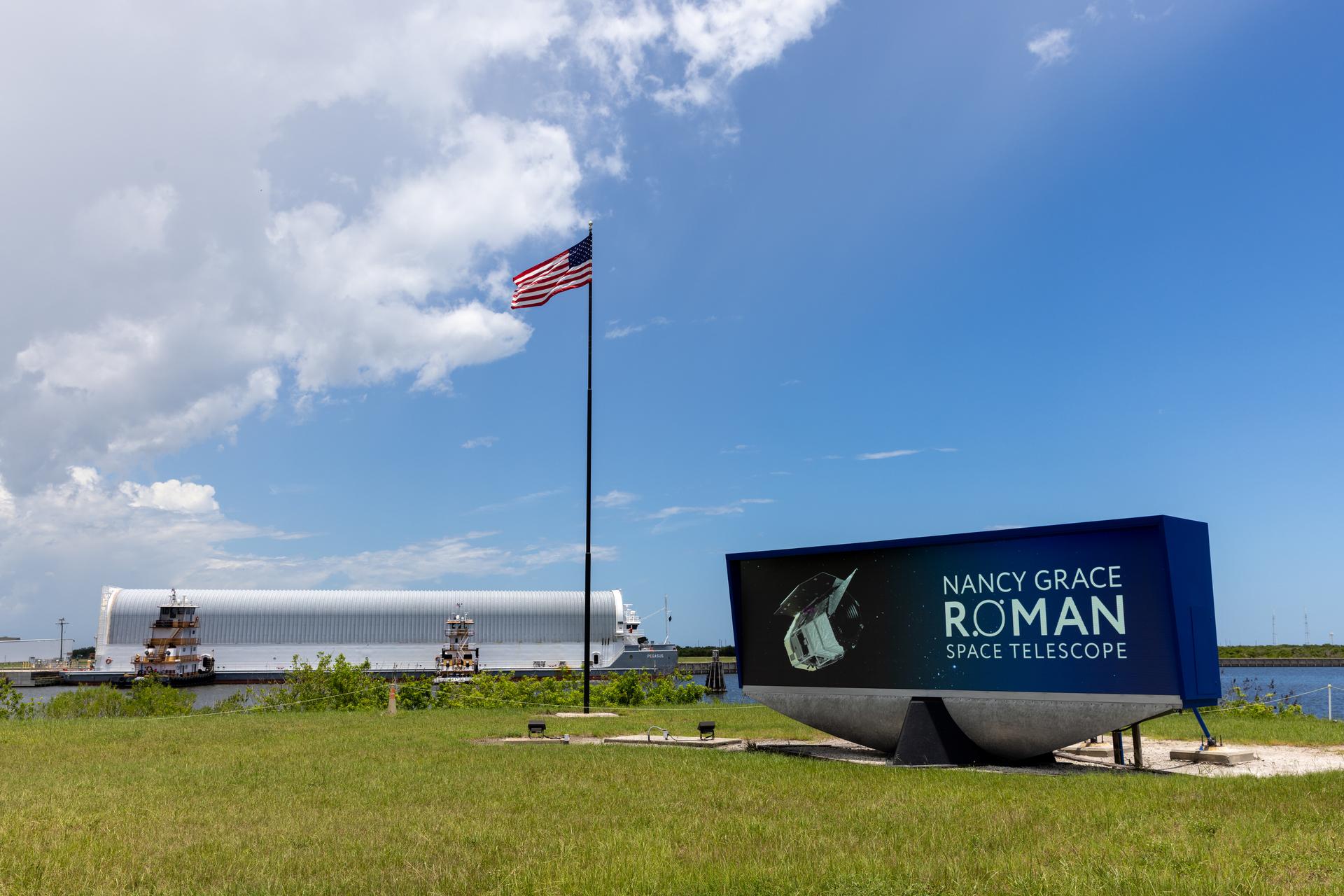 NASA’s Pegasus barge arrives at the Launch Complex 39 turn basin at the agency’s Kennedy Space Center in Florida carrying NASA’s Nancy Grace Roman Space Telescope on Sunday, June 21, 2026. Credit: NASA/Amber Jean Notvest
After arriving at the Cape, Roman was then transported to the Kennedy Space Center's Payload Hazardous Servicing Facility, which recently completed upgrades in anticipation of Roman's arrival. After a series of cleanings to remove contaminants Roman had picked up during its long trip, the telescope was transported through the facility's airlock and unboxed in the clean room. The telescope was then placed in a vertical position and moved by cranes to the facility's work platform (the Pantheon).
Once deployed to the second Sun-Earth Lagrange point (L2), Roman will conduct some of the deepest views of the cosmos yet. Between its 2.4-m (7.9 ft) primary mirror and a field of view at least 100 times that of Hubble, the observatory is expected to collect and measure light from a billion galaxies during its 5-year primary mission. Using its coronograph instrument, Roman will be able to block starlight to directly image exoplanets orbiting closer to their stars (where habitable rocky planets are expected to be found).
All told, Roman is predicted to detect over 100,000 exoplanets during its mission, greatly expanding the current census and adding many more potentially habitable planets to the rolls. Using its spectrographs, the telescope will also obtain spectra from transiting and directly imaged planets, thereby allowing scientists to determine the chemical composition of their atmospheres. This is a crucial step in the characterization process, which is essential for gauging an exoplanet's habitability.
Roman's wide field of view and rapid survey capabilities will allow it to observe billions of galaxies spanning multiple cosmological epochs. The resulting data will help scientists refine measurements of cosmic expansion (the Hubble-Lemaitre Constant), which could finally resolve the mystery of Dark Matter and Dark Energy.
In addition to Roman, the Pegasus barge also carried a weather cover for the core stage of the Artemis III's Space Launch System (SLS). This cover will protect the core stage's thermal systems while it waits on Launch Pad 39B to be moved into the Vehicle Assembly Building (VAB), where it will be stacked in advance for its launch next year.
Further Reading: NASA