 Universe Today
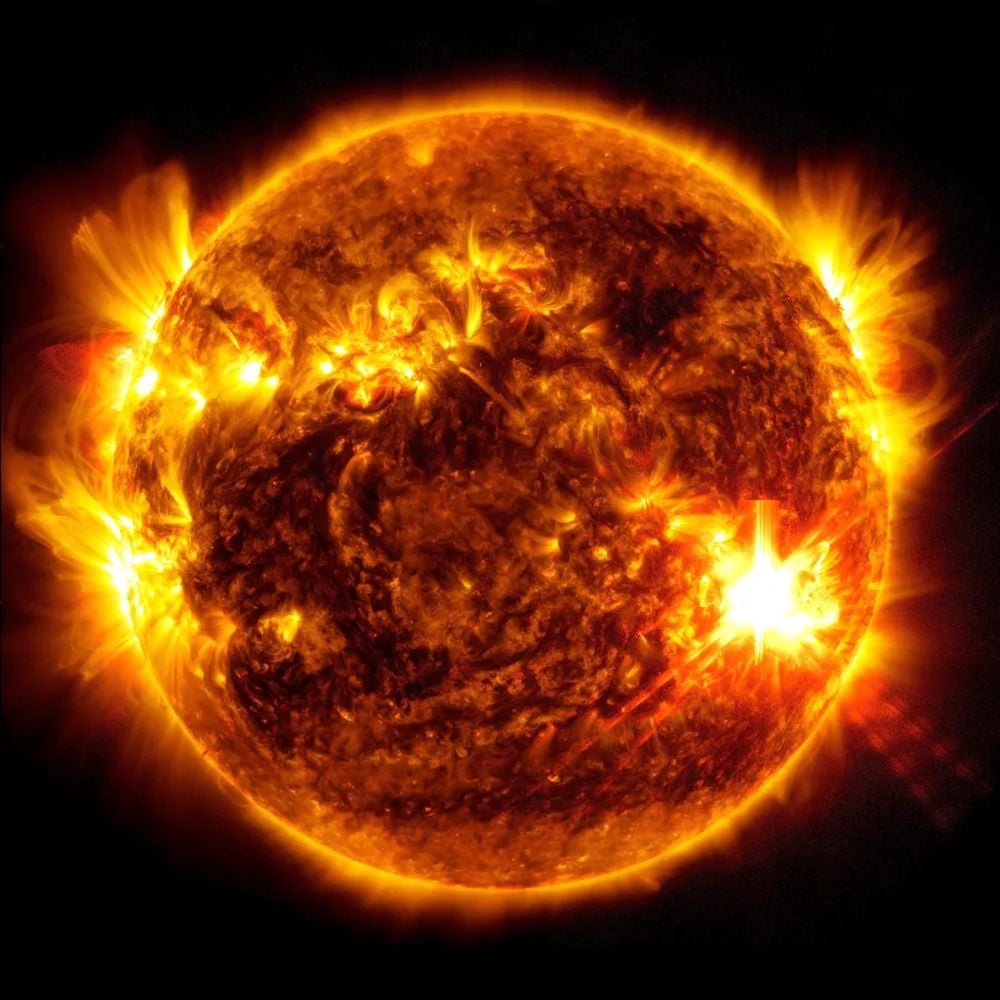
There are all kinds of patterns in Nature, and some are easy to see. Even children can see that it only rains when there are clouds. But some of Nature's patterns are far more difficult to discern, and only after gathering data for decades do they reveal themselves.
The effect that solar storms have on weather is one of these. It's almost imperceptible. But new research based on decades of data shows that the Sun's powerful storms can affect precipitation in the same day they reach Earth.
The research is "Regional and Seasonal Effects of Geomagnetic Storms on Terrestrial Weather," and it's published in the journal Geophysical Research Letters. The sole author is Joachim Raeder, professor emeritus of physics at the University of New Hampshire.
"It has long been a mystery why small Total Solar Irradiation changes have significant effects on Earth's climate" Raeder write. "Solar cycle correlation studies abound but cannot conclusively point to a viable physical mechanism." Total Solar Irradiance is a measure of how much solar power is received per unit area—typically a square meter—at the top of Earth's atmosphere. It's sometimes called the solar constant.
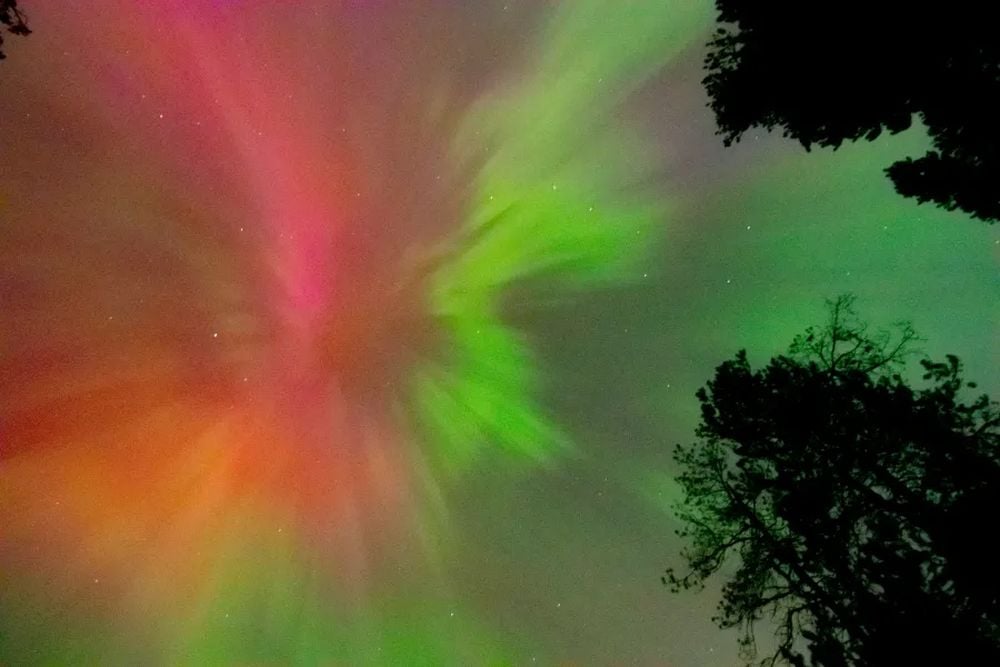 Scientists understand how solar storms can generate aurorae, like these ones seen over British Columbia in May, 2024. But the causes of other effects of the storms are difficult to determine. Image Credit: NASA/Mara Johnson-Groh
In this research, Raeder used 67 years of data to reach his conclusion. The data is from hourly Disturbance storm time (Dst) index and ERA5 atmosphere data for North America.
The Dst index measures how strong Earth's ring current is, which produces a magnetic field opposite to Earth's magnetic field. When a solar storm strikes, the Dst has a negative value, showing that Earth's magnetic field has been weakened.
ERA5 is hourly data on Earth's global climate and weather that goes back decades, from 1940 onwards. "ERA5 provides hourly estimates for a large number of atmospheric, ocean-wave and land-surface quantities," their website states. Climate data nerds will definitely want to check it out.
"In this study, evidence is presented showing that solar and geomagnetic storms, which typically last for only about one day, exert significant and immediate impacts on weather conditions," Raeder writes in his research. These impacts occur within a day of the storm.
The result is notable decreases in precipitation, both rain and snow, following solar storms. Furthermore, the storms that strike in summer and winter have a more powerful suppressive affect on precipitation than those in fall and spring. Raeder says that the patterns in the data are unmistakeable.
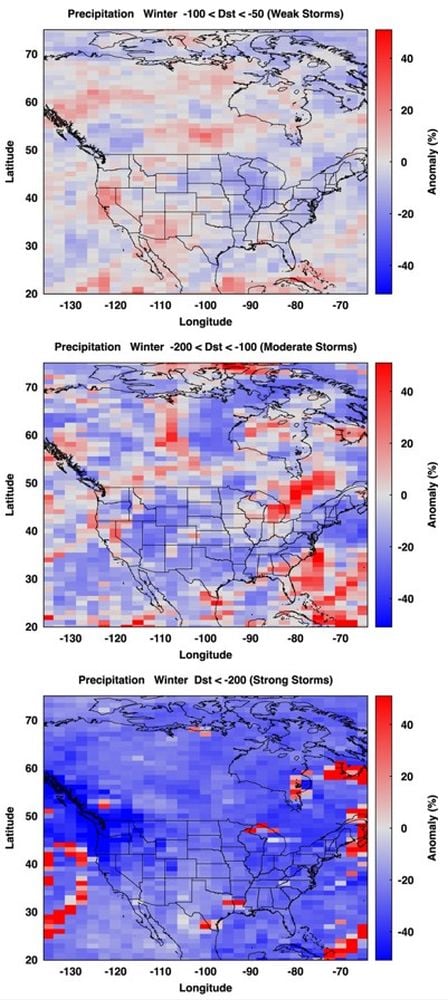 This portion of one of the figures from the study shows precipitation effects for a weak solar storm (top), a moderate storm (middle), and a strong storm (bottom). Image Credit: Raeder, 2026. AGU GRL
“We’ve long understood that the sun influences our atmosphere over its roughly 11-year cycle — it’s subtle, but it’s there,” Raeder said in a press release. “What’s exciting is that we’re now seeing a much stronger, short-term impact — happening within a single day of a solar storm.”
The exact mechanism behind this is still not understood. There are many factors at work in Earth's global climate system, including solar storms and their effects. It's a dynamic, multi-headed hydra of a system, where causes and effects are wrapped around each other like a Gordian Knot.
But one possibility, according to Raeder, involves the Polar Vortex. It's like a cap of cold air that sits over Earth's poles. Normally, fast winds encircle it and hold the cold air cap in place. But when those encircling winds weaken, the cold air is set free and spills down and moves south. This phenomenon is responsible for what we call cold snaps.
In this case, when a solar flare strikes Earth, the electromagnetic energy can penetrate into Earth's atmosphere via the polar vortex. For Raeder, among the many hypotheses that could explain the cause and effect between solar storms and the decrease in precipitation, this is the most likely. But it's nowhere near proven.
Less likely is what's known as cosmic ray effects. It's well-established that the Sun can modulate cosmic ray effects. When the solar wind is strongest, it makes it harder for cosmic rays from things like distant supernovae to reach Earth. There may be a link between cosmic rays and cloud formation, where they generate clouds that cool the Earth. However, that link between cosmic rays and clouds is still controversial, another indication of how complex the whole system is.
What's difficult to understand so far is the geographical restrictions for these reduced precipitation effects. They're found in Canada's Hudson's Bay region, and over the Rocky Mountains in the western USA. Raeder's work only covers North America, but previous similar research covering Eurasia found the same correlation between solar storms and precipitation. "These studies have in common with my results that the largest anomalies occur in the northern hemisphere winter, and that they also show continent scale regional differences," Raeder writes.
Part of humanity's scientific journey is a growing understanding of how complex and detailed our planet is, and how its systems interact, along with the Sun, to generate climate and weather. There are a bewildering number of variable involved, and it seems likely that they all influence each other in at least small way, though many of those relationships are extremely difficult to untangle.
"These findings offer new insights into the underlying physical mechanisms that may drive weather changes in response to solar activity," Raeder writes. He also explains that the results pose a challenge to our climate and weather models. At this point in time, they can't account for the effect that solar and geomagnetic storms have on Earth's weather.
As it stands now, there is no clear explanation behind these findings, just like other similar studies.
“Like many other studies on the same topic, I cannot provide the ultimate answer, but my results narrow down the list of possible physical processes, and in particular, challenge the atmosphere models to reproduce these solar effects on weather,” Raeder said.

