Universe Today
There is something quietly reassuring about a scientific mystery that gets solved not by a dramatic new discovery, but by simply looking again, more carefully, at something we thought we already understood. That’s exactly what has happened with the Sun, and the missing element at the heart of it is silver.
For years, there’s been a nagging problem. The Sun and the meteorites in our Solar System formed from the same swirling cloud of gas and dust, 4.6 billion years ago, which means they should, in theory, contain the same proportions of heavy elements. Meteorites are essentially untouched time capsules from that era, so they can be used as a trusted benchmark. And yet, whenever astronomers measured how much silver the Sun contained, the number always came up short compared to the meteorites but not by a small margin. The Sun appeared to be missing a substantial amount of silver that, by all rights, it should have had.
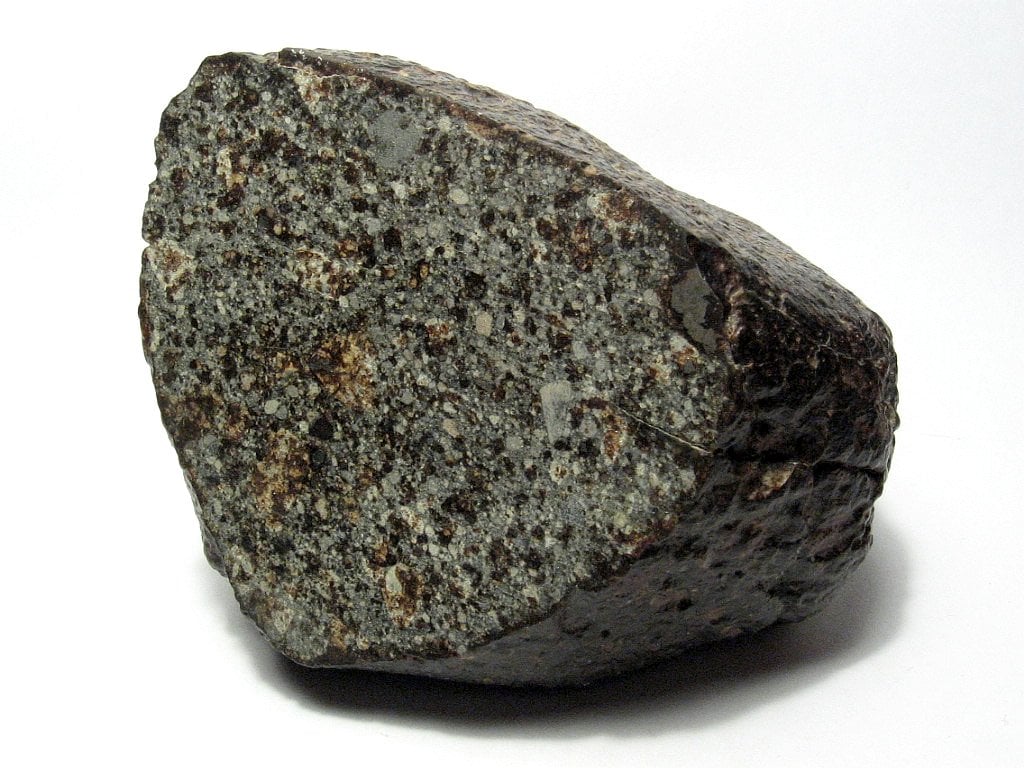 A specimen of the NWA 869 chondrite, showing chondrules and metal flakes (Credit : H Raab)
Now, thanks to new work led by Sema Caliskan at Uppsala University, that mismatch has finally been resolved. The Sun, it turns out, was never missing its silver at all, we simply weren't measuring it properly.
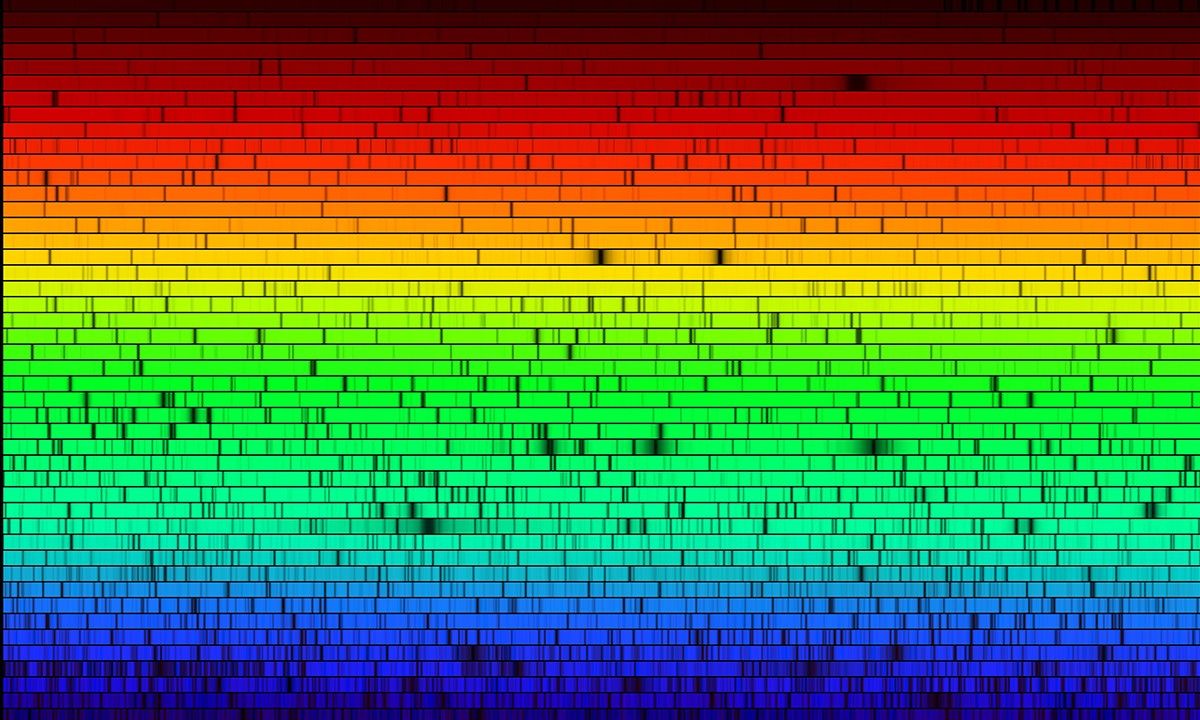
To understand how, it helps to know how astronomers work out what a star is made of in the first place. Starlight carries the fingerprints of every element within it. As sunlight passes through the outer layers of the Sun, atoms of each element absorb tiny amounts of light at very specific wavelengths, leaving faint dark lines in the spectrum. By studying the pattern and strength of those lines, astronomers can work out exactly which elements are present, and in what quantities.
The trouble is, converting that pattern into an accurate number depends entirely on how well you model the Sun's atmosphere in the first place, and previous models were, in hindsight, oversimplified. Caliskan and her colleagues built a far more realistic model, one that accounts for the genuinely turbulent, dynamic nature of the Sun's outer layers, combined with more precise atomic physics describing exactly how silver atoms interact with light and their surroundings. Crucially, the new model also accounts for the fact that light itself affects the very atoms producing those tell tale absorption lines, something earlier, simpler calculations had overlooked entirely.
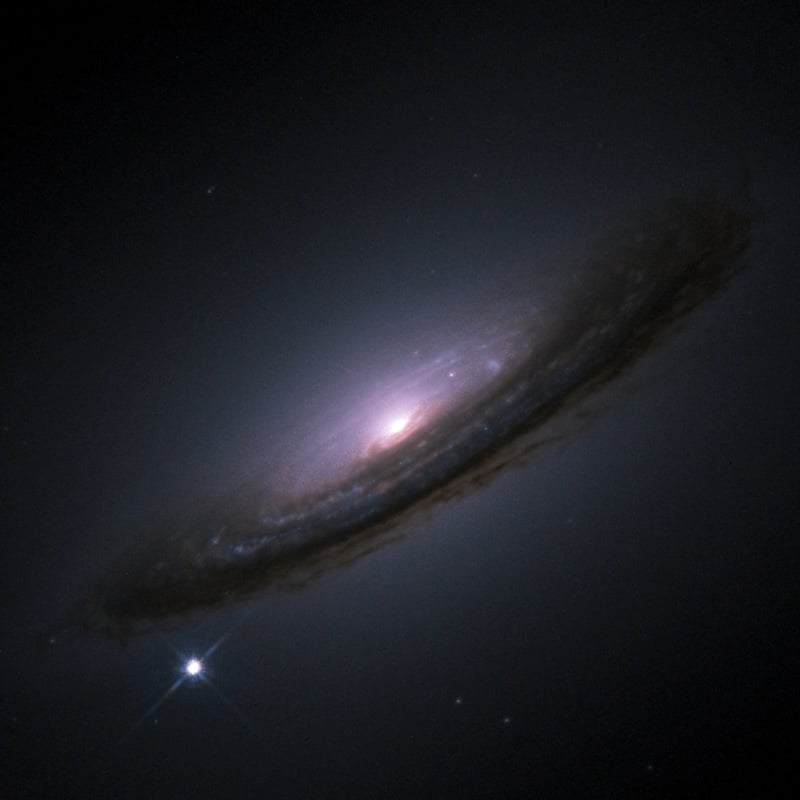 SN 1994D (bright spot on the lower left), a Type Ia supernova within its host galaxy, NGC 4526 (Credit : NASA/ESA)
Run through this new model, the numbers shifted dramatically. The Sun, it turns out, contains 55 per cent more silver than previously thought, bringing the solar value into much closer agreement with what we see in meteorites. A decades old inconsistency, quietly resolved by better physics rather than any new observation.
What I find so satisfying about this result is what it represents. The Sun is astronomy's reference point, the star against which we measure almost everything else, so getting its composition right matters far beyond a single element. Caliskan and her team now plan to apply the same technique to other stars of different ages and types, hoping to trace exactly where and when elements like silver were forged, and how they came to be scattered throughout the Milky Way.
Source : The Sun contains more silver than previously estimated