Universe Today
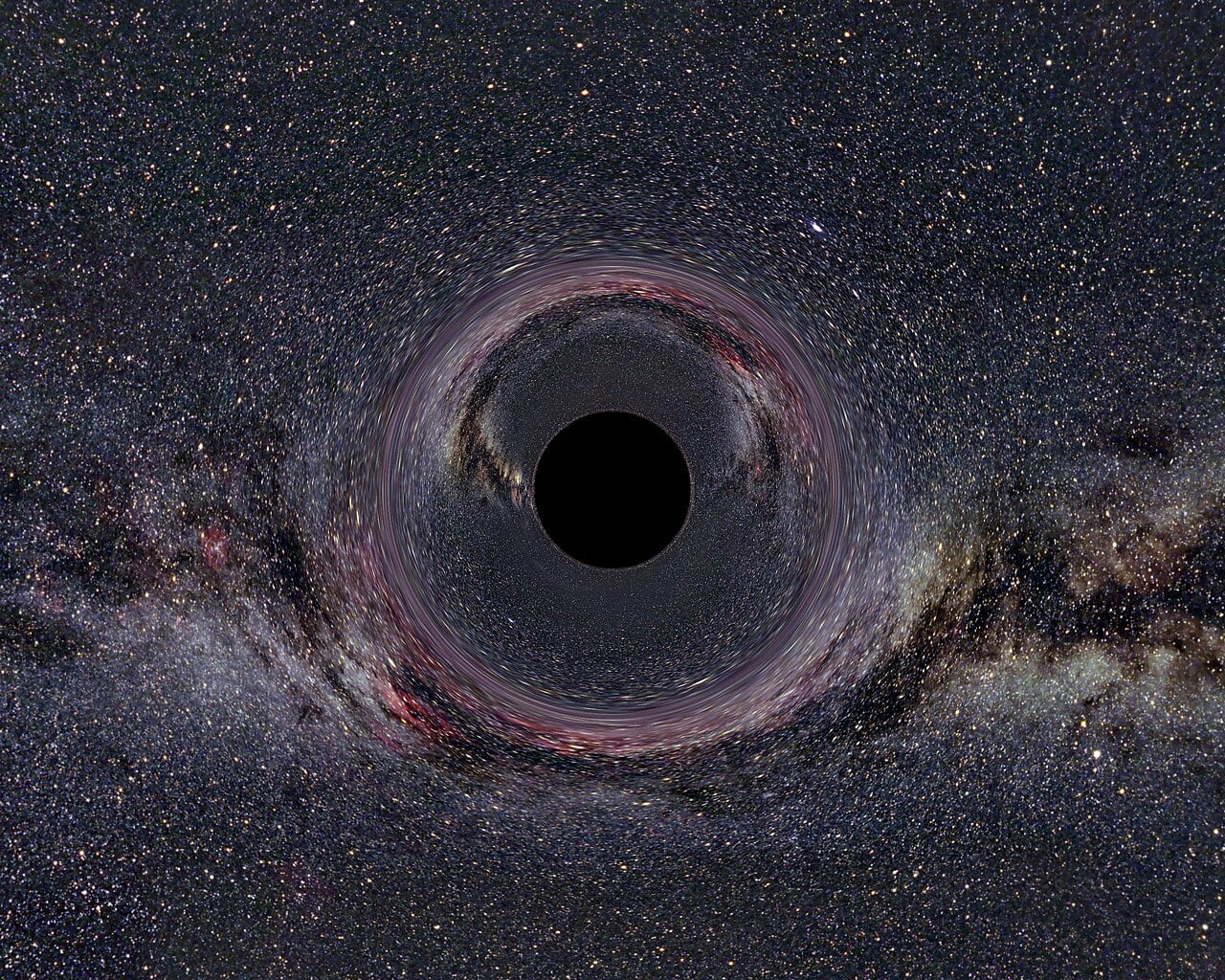
What happens to a star after a black hole eats it? You might assume the answer is simple: a brief, brilliant flare as the star is torn apart, then silence as the black hole settles back into the dark. For years that is exactly what astronomers thought. But it turns out these giants have appalling table manners, and the meal is far from over when the lights go down. Many of them, it seems, belch.
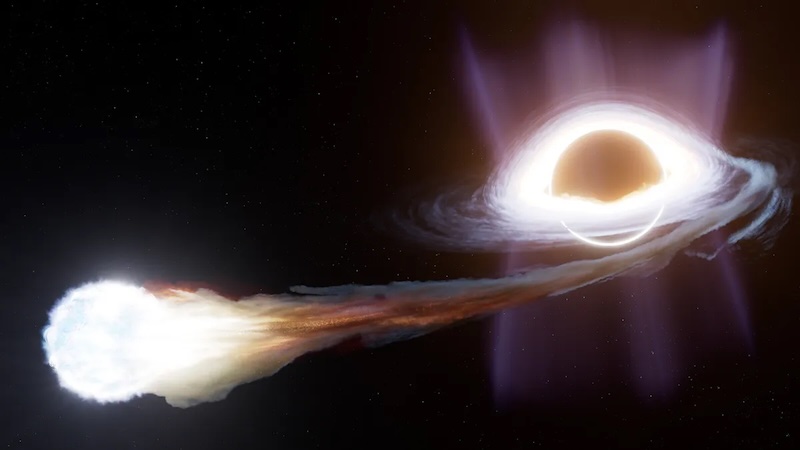 An artist’s impression of a tidal disruption event, where a star gets too close to a black hole and is torn apart, its debris forming an accreting disk of material around the black hole. (Credit: Ralf Crawford (STScI)
The feast begins when a star drifts too close to a supermassive black hole and strays within reach of its gravity. The star is shredded in what astronomers call a tidal disruption event, and as its remains spiral inward they blaze with a flash of visible, ultraviolet and X-ray light from the centre of a Galaxy that was otherwise quiet. Then the flare fades, the black hole slips back into obscurity, and the show appears to be over.
Except, at radio wavelengths, it is only just beginning. Watching 31 of these stellar killings with the Very Large Array in New Mexico, a team led by Kate Alexander of the University of Arizona found that a surprising number flare again in radio waves months, or even years, after the original outburst. Having swallowed most of the star, the black hole lets out a powerful burp, a belch of radio light the array can pick up from billions of light years away.
What that radio glow reveals is that the black hole does not swallow its meal cleanly. Some of the infalling gas is flung back out, in jets or winds launched from perilously close to the event horizon, and when that expelled material slams into the gas surrounding the black hole it sets off shock waves that shine in radio. The burp, in other words, is the sound of a messy eater spitting part of its dinner back into the room.
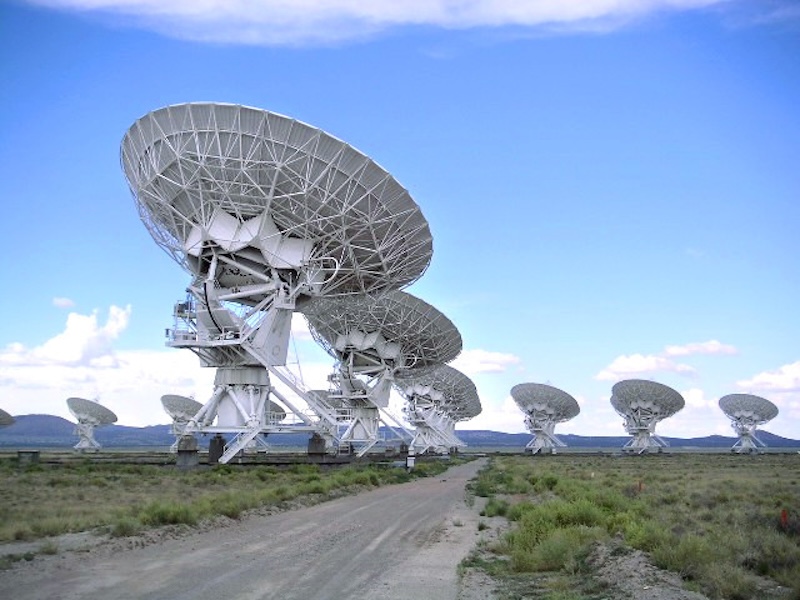 The Very Large Array near Socorro, New Mexico, United States (Credit : Hajor)
Stranger still, the burps come in two varieties. Sometimes the radio flare switches on within a few hundred days, while the black hole is still gorging quickly on the wreckage; other times it appears only much later, once the feeding has slowed to a trickle. Either way, these events let astronomers do something rare: watch a black hole's appetite change in real time, and confirm that wildly different feeding rates can drive the same bright radio outburst.
The team even found a way to guess which black holes will burp, since the ones that later flare in radio tend to look subtly different in visible light from the very start. That gives astronomers a shortlist of which feasts are worth watching. Far from being isolated catastrophes, these stellar deaths are long, unfolding stories, and by listening for the belches that follow, we are learning how black holes feed, grow, and reshape the galaxies around them.
Source : Astronomers Catch Black Holes "Burping" in Radio with the NSF VLA