 Universe Today
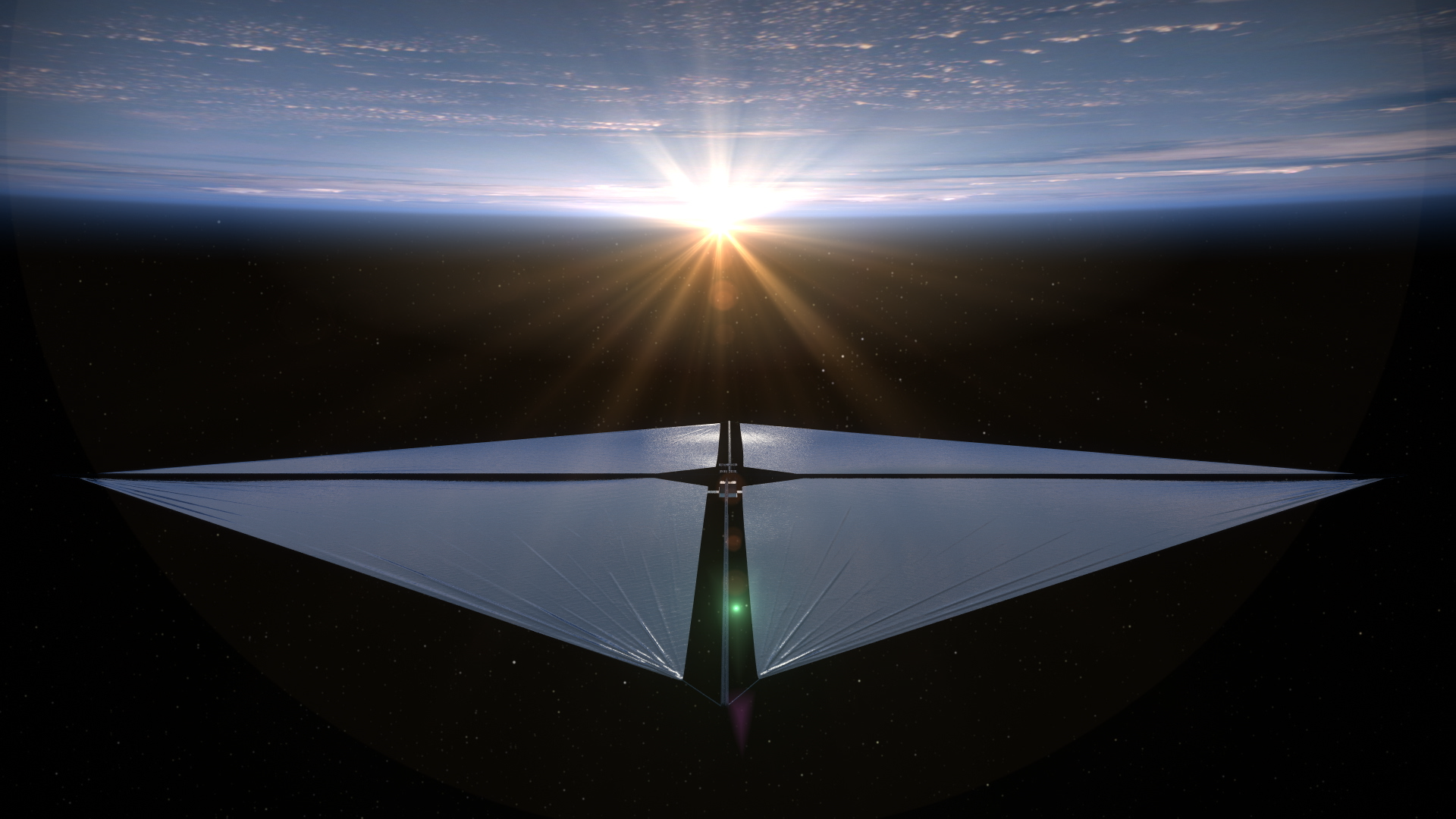
Giant mirrors in space have been a staple of science fiction for decades. But so far there’s been very little work looking at the actual physics behind the concept - possibly because we’re still so far from making them ourselves. Still, they could potentially serve as a passive technosignature, if we manage to find one. In order to do that, though, we have to understand what we’re looking for. That is the purpose of a new paper, available in pre-print on arXiv, by Shauna Sallmen of the University of Wisconsin - LaCrosse, and Eric Korpela of UC Berkeley.
There are plenty of reasons an advanced civilization would place giant mirrors around a planet. Many of the planets in the “habitable zone” of their stars don’t actually have a climate that is particularly hospitable to life, and mirrors can be used to fix some of those problems. In particular, planets in the habitable zones of dim red M-dwarfs are likely close enough that they experience tidal locking - meaning one side is constantly facing the star while the other is a frozen wasteland that never sees sunlight.
Mirrors reflecting sunlight back onto such a planet is one obvious solution to that problem. But there’s a massive catch - orbital mechanics. Starlight doesn’t just reflect perfectly off the mirror and bounce down to the target planet. Some of the energy of the photons hitting the mirror will cause a “push” similar in concept to how a solar sail works. Since these mirrors are designed to be lightweight and have massive surface area, even a small amount of light sailing can push them into orbits completely unsuitable for maintaining the climate of their target planet.
Fraser talks about light sails - where we purpose harness radiation pressure to drive a spaceship.Radiation pressure can easily knock such huge megastructures out of orbit over time. Correcting for it, on the other hand, would require active measures like expending fuel, just to maintain the megastructure’s current position. The researchers realized this, and thought it would be better if some other design constraints were used to minimize the potential amount of fuel use for this massive system.
One of those design constraints is the mirror’s orbit. The researchers used a software package called REBOUND N-body simulator to model Earth-sized planets based at the inner, middle, and outer edge of the habitable zones across different types of main sequence stars. They then placed a 1000kg, 1km^2 mirror at distance of 2, 3, and 10 planetary radii from the planet, and arranged them in four different orbital arrangements: same plane and direction as the planet’s orbit, retrograde orbit in reference to the planet, perpendicular to the planet’s orbit, and face on on the planet’s day/night terminator. Each of these configurations were run 1,000 times with different initial orbital periods, watching to see what the biggest impact on the mirror’s survivability would be.
One notable impact was the type of star - mirrors around planets orbiting low-mass M-dwarf stars were much more likely to survive the simulation than those around hotter, more massive stars. Retrograde orbits also helped, at least compared to prograde (matching) orbits. The researchers believe this was because of a transfer of momentum from the planet to the mirror, noting that the orbital elongation caused by radiation pressure is smaller in retrograde simulations.
Isaac Arthur talks through the different kinds of megastructures we could find as technosignatures. Credit - Isaac Arthur YouTube ChannelDistance matters too - mirrors that were placed close to their host planet or orbiting a planet located farther away from their star, survived the longest. In these scenarios, the planet’s gravity itself acts as a stabilizing influence, limiting the effects of radiation pressure.
As the authors note, though, the complexities of this process make it very unlikely to happen naturally. Maintaining an orbital mirror collection for a long time requires technical expertise, and that, assumedly, would go along with an advanced civilization. Knowing what to look for when it comes to technosignatures, this paper is hoping to inform the next group of telescopes about what exactly they should be looking for if they happen to find something that might possibly just be a megastructure of mirrors around a planet in the habitable zone. It will be some time before we can truly test that capability, but that will also give the authors more time to clearly define what the next generation of telescopes should be looking for.
Learn More:
S.M. Sallmen & E.J. Korpela - Exploring the Orbital Stability of Large, Lightweight Mirrors around Exoplanets
UT - The Best Place to Look for Alien Megastructures Might Be Moon Dust
UT - Why Build Megastructures? Just Move Planets Around to Make Habitable Worlds

