 Universe Today
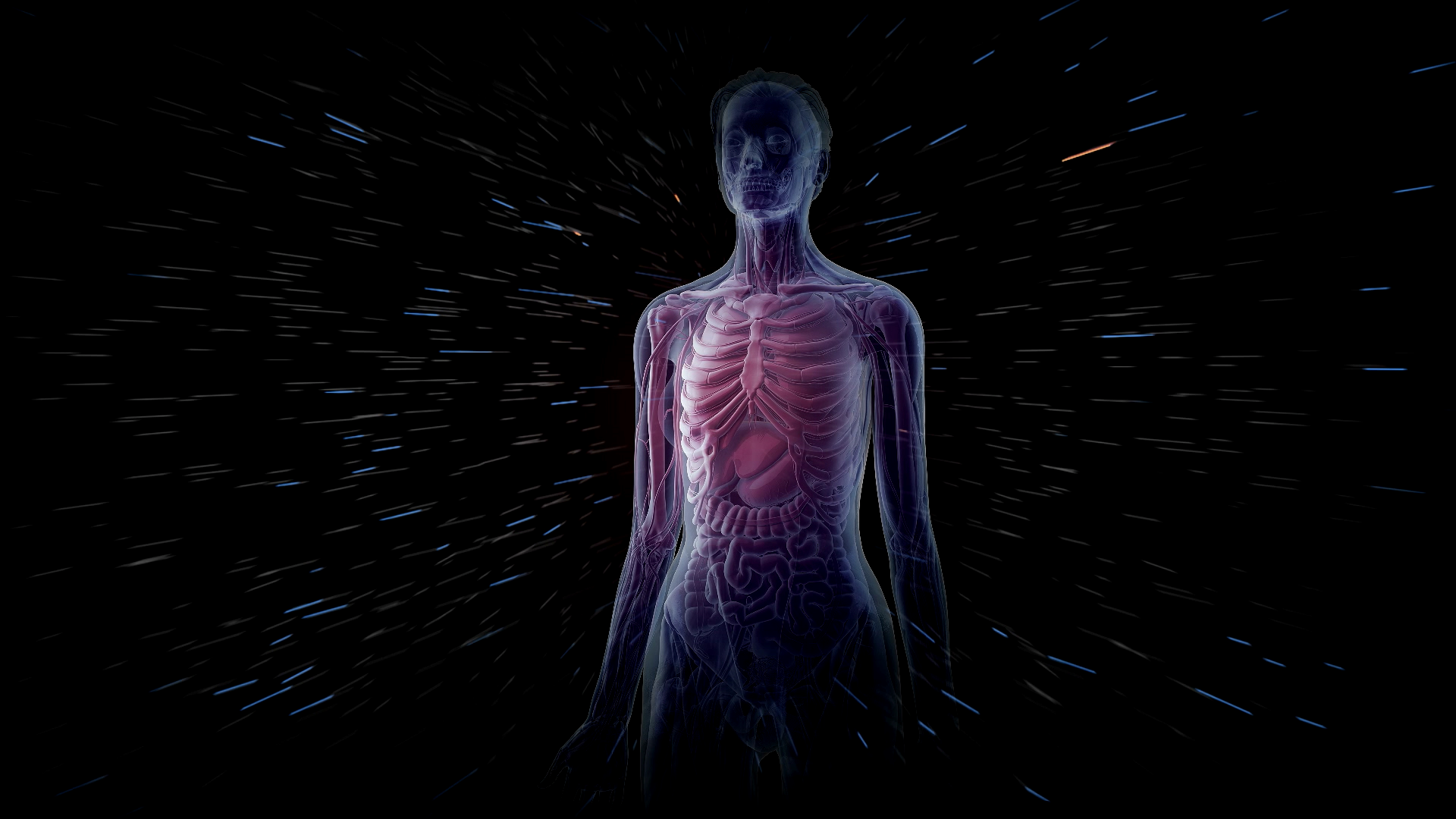
Deep space travel comes with a huge potential downside - radiation exposure that can kill an astronaut either quickly or slowly over time if not managed correctly. But what exactly does that mean, and is there any way to handle it other than sticking more and more protective layers between the squishy biological systems inside a spacecraft and the radiative void of deep space? A new paper from researchers at Oklahoma State University and the University of Texas Health Science Center hopes to answer both questions, and while the causes of radiation they point out are complex, they also offer some potential solutions as well.
Scientists have long known that one of the main sources of cancers in deep space travelers (and even airline pilots) is Galactic Cosmic Rays (GCRs). These are high-energy atomic nuclei that have been stripped of their electrons and accelerated by massive shockwaves from supernovae. But they are typically stopped by the protective blanket of Earth’s atmosphere before they can reach anyone on the ground.
Astronauts in space are not so lucky, as they are subjected to high levels of GCRs, including the most dangerous kind - high-atomic number, high-energy ions known as HZE ions, such as iron nuclei (Fe-56). Iron ions are much more destructive than even X-rays, leaving a dense trail of ionization that literally rips through DNA strands, and, with enough exposure, will almost certainly cause cancer.
Video that describes some of the dangers of space radiation. Credit - NASA Video YouTube ChannelHowever, they are relatively rare. On a typical three-year round trip to Mars, calculations based on data from Curiosity’s journey there, estimate that only about 3% of an astronaut’s cells would take a direct hit from an iron ion. That doesn’t sound terrible, given that it means 97% of a person’s cells would be unaffected. But flight surgeons are alarmed about what they call the radiation-induced bystander effect.
To showcase this danger, the researchers gathered groups of human aortic endothelial cells - the kind that line the walls of blood vessels - and subjected them to Fe-56 ion beams at Brookhaven National Laboratory’s NASA Space Radiation Laboratory. In such conditions, it becomes readily apparent that cells directly hit by iron ions can’t simply repair themselves, or even die off. Instead they start an inflammatory signaling cascade.
After a cell is hit with an iron ion, it activates a transcription factor called NF-B, which is crucial for inflammation and cellular defense. It also turned on the production of another important inflammatory messenger molecule called Tumor Necrosis Factor-alpha (TNF-). Some of this molecule attaches back to the surface of the cell that secreted it in what is called an autocrine loop, creating a loop that then creates more NF-B, and reinforces the inflammatory distress signaling loop for upwards of three days.
Video describing the NASA Radiation Lab at Brookhaven National Laboratory where the researcher did some cellular testing. Credit - NASA Video CollectionBut some of those TNF- also wash over neighboring cells and cause havoc there. To showcase this, the researchers put some of the irradiated endothelial cells into a porous mesh hovering just above a group of normal epithelial cells - the kind that lines lungs. The two lines of cells didn’t physically touch, and were only interconnected through a liquid medium that chemical signals could travel through.
Despite the physical disconnect, nearby cells were heavily affected by the TNF- coming from their irradiated neighbors. They suffered from massive free radical spikes, with a notable increase in double-stranded DNA breaks. The incoming TNF- also bypassed a normal biological “kill switch” that would prevent a cell's harmful mutations from spreading by switching on several anti-death genes and activating a growth signal. In other words, the exact mechanisms the TNF- disabled the exact mechanisms a cell would typically use to stop from forming a cancer.
To further prove their point, the researchers turned to mouse models. They implanted some non-cancerous epithelial cells that had simply been in the presence of the irradiated endothelial cells in mice, and watched as those exact cells grew substantive tumors. In other words, cells that had never been directly affected by a radiative GCR had begun to grow a tumor simply because they had been around another cell that had.
In yet another step up the biological testing chain, the researchers also looked at data from the Space Omics and Medical Atlas experiment, which took a series of blood samples and tissue biopsies from astronauts on the SpaceX Inspiration4 mission in 2021. They found systemic spikes in TNF-, as well as heightened activity of anti-death genes that were triggered as part of the radiation cascade. In other words, these effects weren’t just some laboratory quirk - they seem to be taking place in real astronauts too.
Fraser talks about one way to protect astronauts from radiation - building an artificial magnetosphere.So, this has all sounded like bad news. But there is a silver lining - if we know the chemical signaling pathway for this breakdown of cell function, we can introduce countermeasures. The researchers actually did manage to break the cascade by inhibiting the TNF- receptor and halting NF-B activation, allowing cells to avoid the cancerous transformations at the end of the chemical signaling path.
Combining those chemical interventions with advanced shielding techniques, such as water walls and hydrogen-rich polymers like polystyrene, could drastically limit the occurrence of cancer in future deep space travelers. But it will take a lot more research to prove our protective techniques are up to the task. Before we start sending lots of humans out into the void criss-crossed by GCRs, it's worth taking a closer look at how we can save them from these particularly dangerous particles.
Learn More:
N. Aravindan et al - Space Radiation Sparks Hidden Cancer Risks: The Bystander Effect Unveiled
UT - We Know How Much Radiation Astronauts Will Receive, But We Don't Know How to Prevent it
UT - Radiation Sickness, Cellular Damage and Increased Cancer Risk for Long-term Missions to Mars

