Universe Today
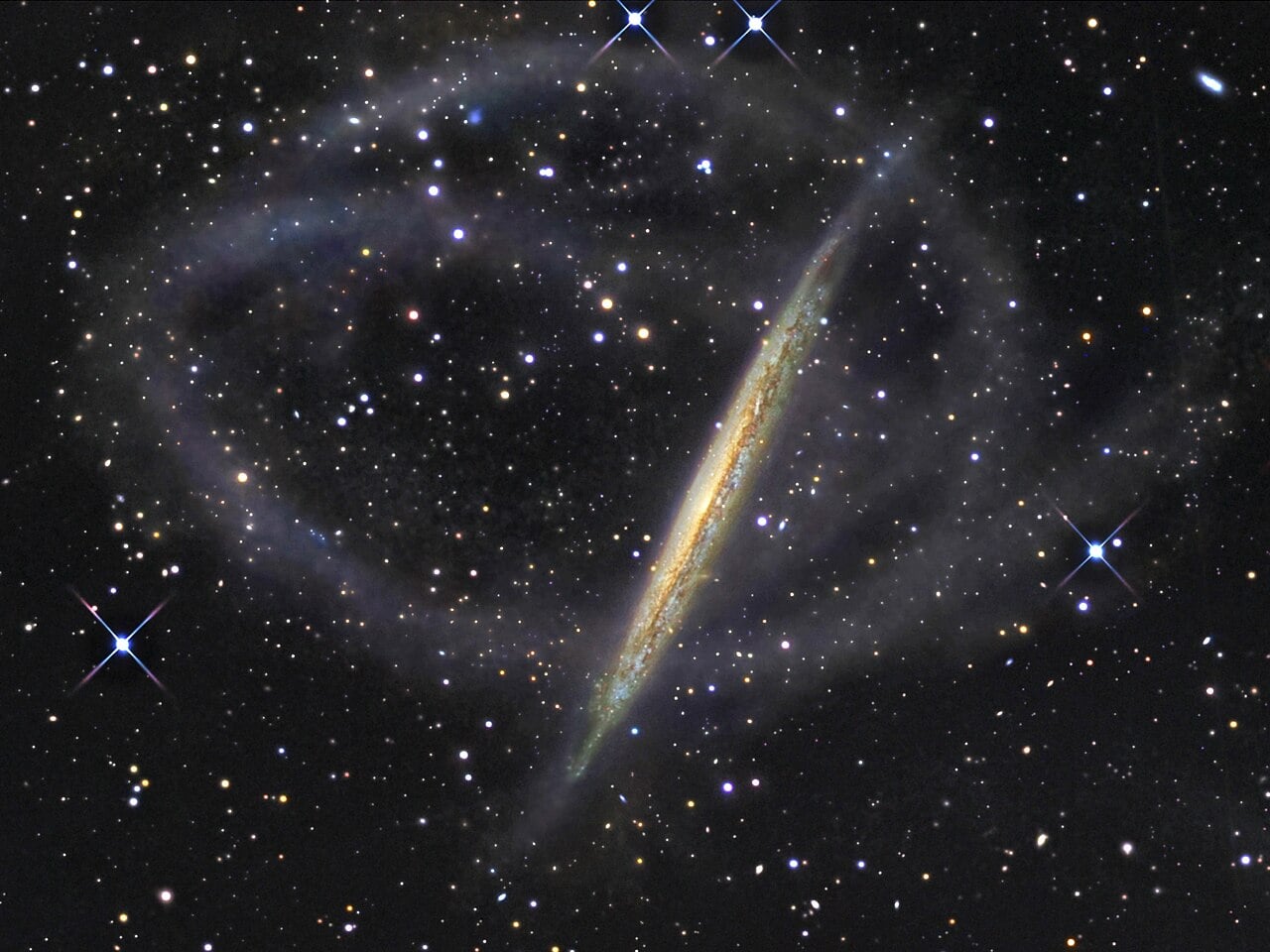
Here's something that puts the scale of the universe into perspective. When you look at a photograph of a spiral galaxy, the beautiful glowing disc you see is only part of the story. Surrounding it, stretching out far beyond those spiral arms, is a vast spherical region called a halo. It is mostly invisible. It contains dark matter, hot gas, and the scattered remains of smaller galaxies that were torn apart by gravity billions of years ago. And it holds, written in extraordinarily faint starlight, a complete record of everything that galaxy has been through.
Now ESA has formally adopted a mission to read that record. Its name is Arrakihs, which stands for Analysis of Resolved Remnants of Accreted galaxies as a Key Instrument for Halo Surveys, and it is one of the most ambitious attempts yet to understand how galaxies form and grow.
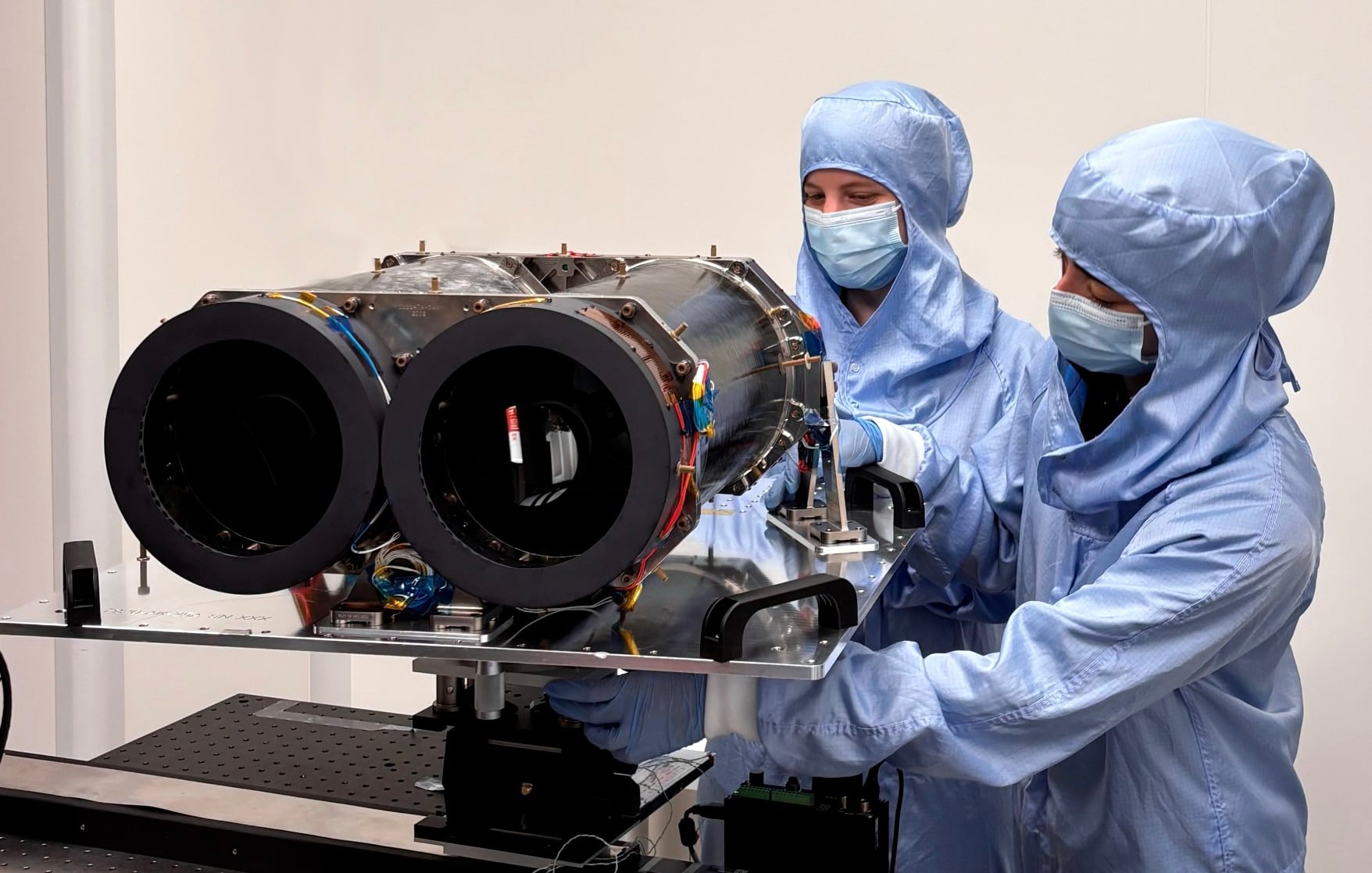 ESA's Arrakihs mission will carry two binocular telescopes. Together, they will allow the mission to observe the faint starlight coming from the haloes of galaxies that are similar to the Milky Way galaxy (Credit : ESA)
The central idea behind Arrakihs is straightforward, even if the engineering required to achieve it is anything but. Scientists believe galaxies grow by cannibalising smaller ones. Over billions of years, a large galaxy like the Milky Way pulls in smaller dwarf galaxies, shredding them apart with its gravitational field. The stars from those consumed galaxies don't disappear entirely. They get redistributed into the halo, forming long, ghostly ribbons of stars called stellar streams, the astronomical equivalent of a crime scene still visible long after the event itself.
By mapping those stellar streams across dozens of galaxies, astronomers can work backwards through time, piecing together the history of past mergers and building up a picture of how a typical galaxy assembles itself. The problem is that galaxy haloes are extraordinarily faint. They are so far below the brightness of anything else in the sky that almost no telescope has been able to study them in any detail, and certainly not in large enough numbers to draw meaningful conclusions.
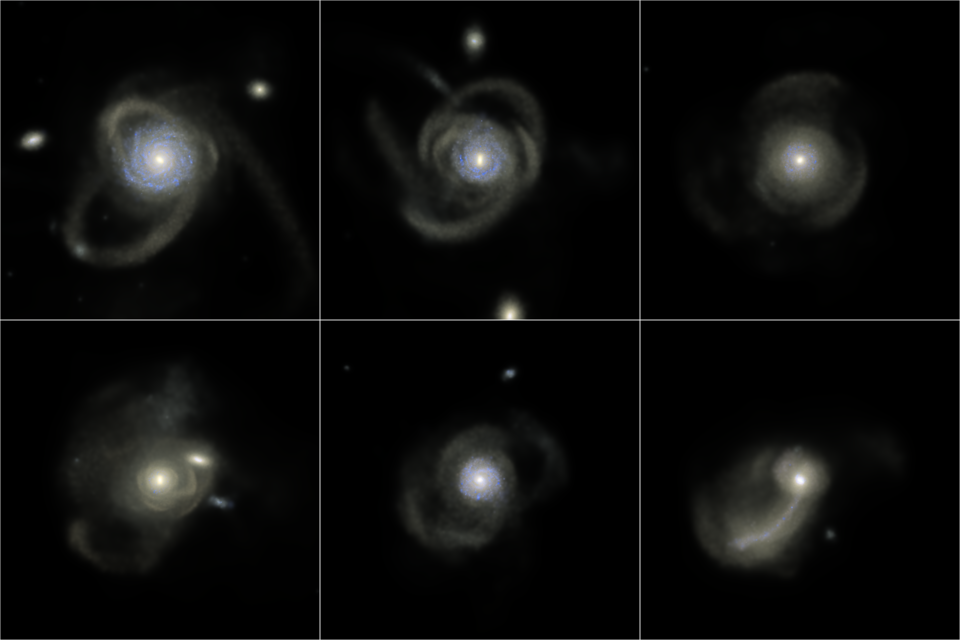 Simulated galaxy halos (Credit : ESA)
Arrakihs is designed specifically to solve that problem. The spacecraft will carry four cameras arranged as two pairs of binocular telescopes, each sensitive to a different range of wavelengths spanning from the near ultraviolet through visible light and into the near infrared. Together they will be capable of detecting the diffuse glow of stellar haloes around at least 80 galaxies with a similar mass to the Milky Way. That number matters enormously since only by studying enough galaxies can scientists say with confidence what a typical galaxy looks like, and only then can they assess whether our own Galaxy is unusual or perfectly ordinary.
Our models of how galaxies form are inseparable from our models of dark matter, the invisible substance that makes up the majority of the matter in the universe. If the haloes Arrakihs reveals don't match what the models predict, something significant is missing from our understanding of the universe itself.
The mission is planned for launch by the end of 2030 and was formally adopted at a Science Programme Committee meeting in Tenerife this week. The next phase involves building, integrating, and testing the spacecraft and its instruments. It is, in the most literal sense, galactic archaeology and we are about to start digging.