 Universe Today
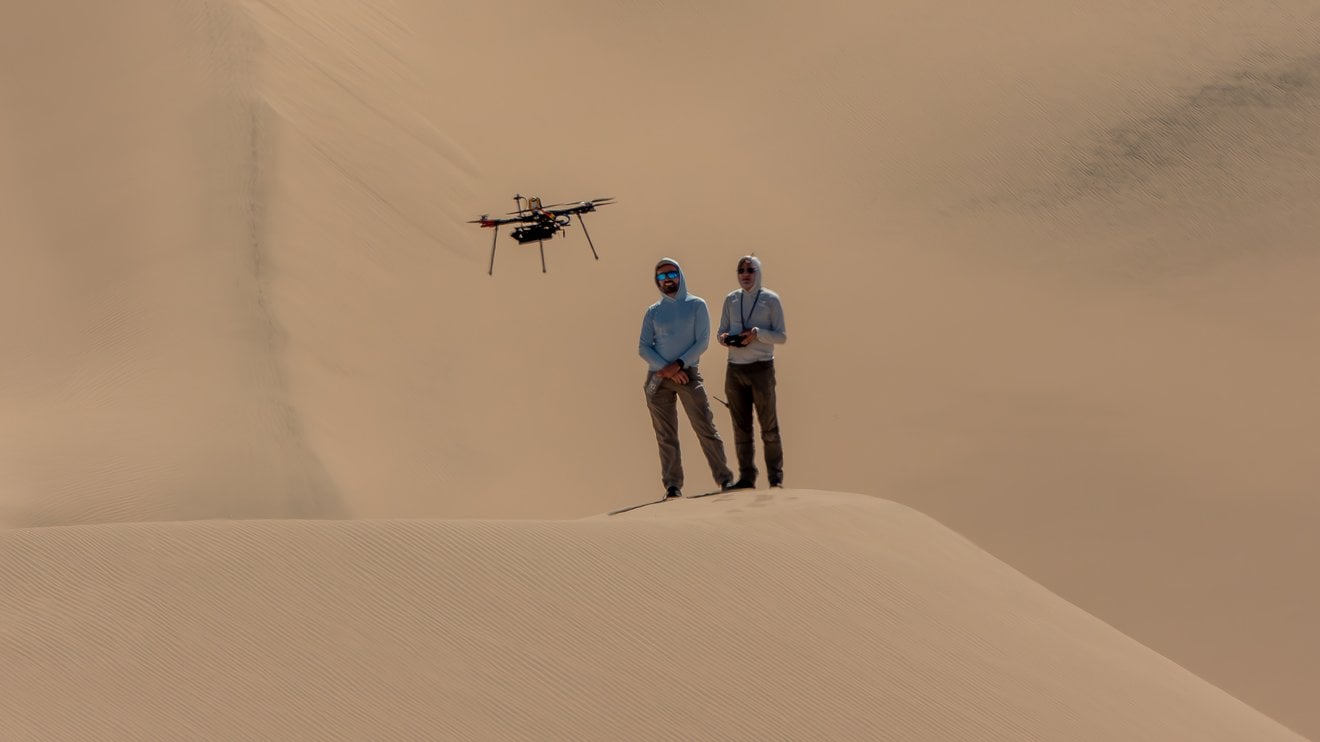
Engineers can be split into two camps - those who just release whatever they’re building and try to fix whatever might be wrong with it as they get feedback on it, and those who test their product in every possible way before releasing it to the public. Luckily, NASA engineers are in the latter camp - it wouldn’t look great if all of the probes we send throughout the solar system failed because of something we could have easily tested for here at home. However, finding analogues for the places we want to send those probes remains a challenge for some NASA projects, so they make due with the best Earth has to offer. For Mars, that means testing technology in the desert’s rolling sand dune and rocky outcrops, and this year several different NASA technologies were tested in deserts throughout the country, as reported in a press release from the agency.
One of the most famously inhospitable places in the US, and also the world, is Death Valley National Park in California. NASA engineers and scientists have been testing vehicles there since the 1970s, when they used it as a testbed for the Viking lander. That pedigree continued through the more recent testing of Perseverence’s landing system, which was flown over the park in a helicopter.
This year, they gathered there again, in some very un-Mars like 45℃ heat, to update some drone software that caused a problem with Ingenuity near the end of its operational life. The Mars Helicopter used a ground-facing camera to watch the planet’s surface as it flew over it and used that to partially determine its speed. After more than 70 flights, the ground the helicopter was moving over became much more like the featureless dunes famous from deserts on Earth. That confused the flight algorithm, eventually causing Ingenuity’s failure on its 72nd flight. Improving the algorithm to work over featureless terrain is a key goal for the next Mars helicopter, and testing it over the barren dunes of Death Valley will help the engineers test their improvements with actual field data rather than just continually running simulations.
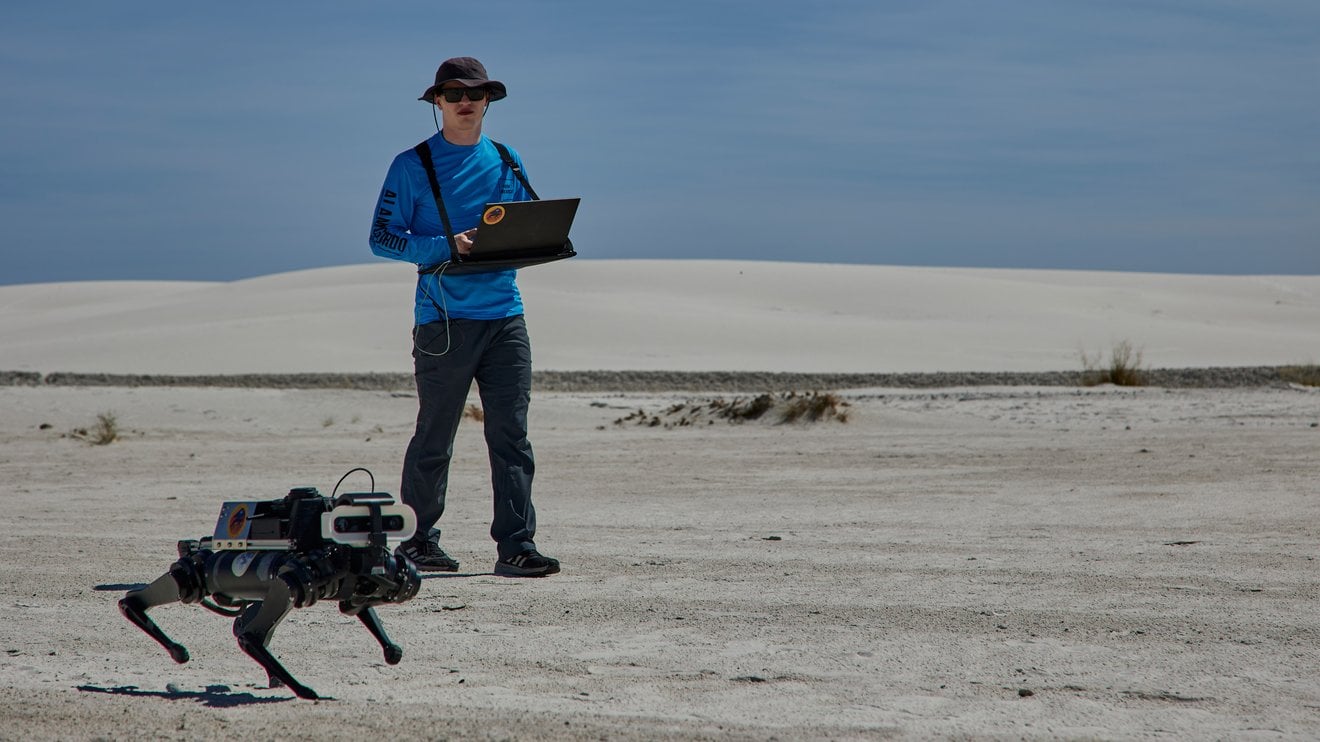 LASSIE-M walks across the White Sands National Park, alongside a researcher. Credit - Justin Durner
There’s another American desert with perhaps even better sand dunes for testing, and the engineers from NASA’s Jet Propulsion Laboratory also decided to go there. The Mojave Desert has a site called the Dumont Dunes - an expanse of tan sand that effectively mimics the more varied terrain the same algorithm would also be faced with, ensuring that it can handle both types without confusion.
Another desert excursion was in order for a ground-based system NASA has been working on. The Legged Autonomous Surface Science in Analogue Environments for Mars (LASSIE-M) robot is built with a “dog” form factor that has become familiar for many robotics prototyping projects. It’s designed to scout over rocky and sandy terrain, and use the physics its legs experience while doing so to estimate the physical properties of whatever that surface might be. Since this particular robot is being developed by researchers at the Johnson Space Center in Houston, they decided to travel to a closer desert location to home for their analogue testing - the White Sands National Park in New Mexico.
Also famous as a missile testing range, White Sands has also been a favorite NASA test site for decades. In this case, LASSIE-M made its way across various terrains throughot the park while testing its ability to stay upright and monitor surface conditions underneath it. Since the purpose of this platform is to scout ahead for either rover or human explorers accompanying it, making sure the surface is safe for its companion is one of its primary mission goals.
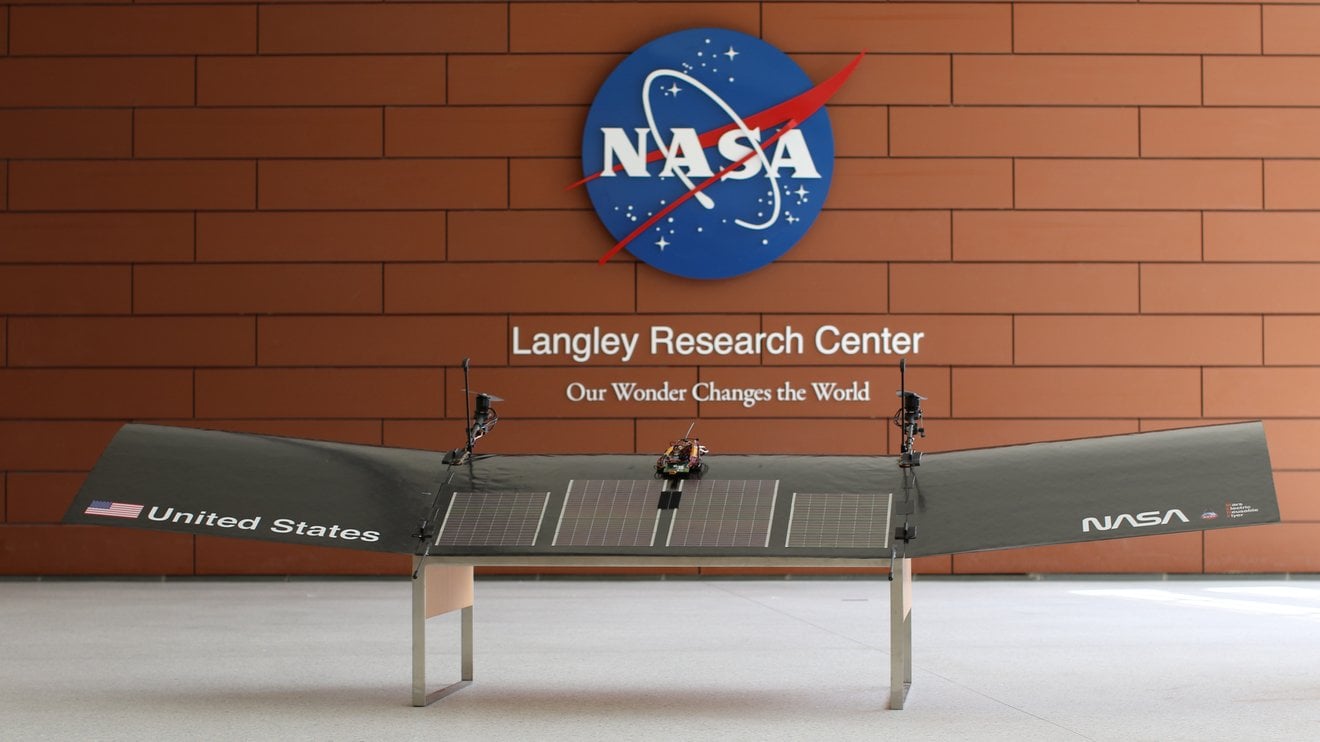 Half-scale model of the MERF at Langley Research Center. Credit - NASA
However, not all testing must be done in deserts. Another Mars-releated exploration program managed to do some testing this year in a much more benign locale - a field in Virginia. Researchers at NASA’s Langley Research Center, near the country’s East Coast, have been developing the Mars Electric Reusable Flyer (MERF) - an autonomous flying machine that uses a wing to glide must farther distances than Ingenuity was capable of doing.
It also has vertical take off and landing propellers that allow it to take off and hover similar to Ingenuity. It also has a downward-facing camera, like its famous predecessor, and must overcome the same difficulties in feature surface recognition. But that wasn’t what the flight in Virginia was for - it was intended to test the aerodynamics of half-sized prototype, and ensure the lightweight materials the glider is built with are capable of withstanding take-off and landing forces.
The press release itself is a reminder of just how much Mars-related research is going on at NASA, despite the agency’s recent challenges. There are still plenty of scientists and engineers working towards exploring the Red Planet, no matter what opposition they face here on Earth.
Learn More:
NASA JPL - NASA Tests Drones in Death Valley, Preps for Martian Sands and Skies
UT - NASA Thinks it Knows Why Ingenuity Crashed on Mars
UT - An Astronaut Controls a Robotic Dog From Orbit
UT - New Image Revealed by NASA of their New Martian Helicopter

