 Universe Today
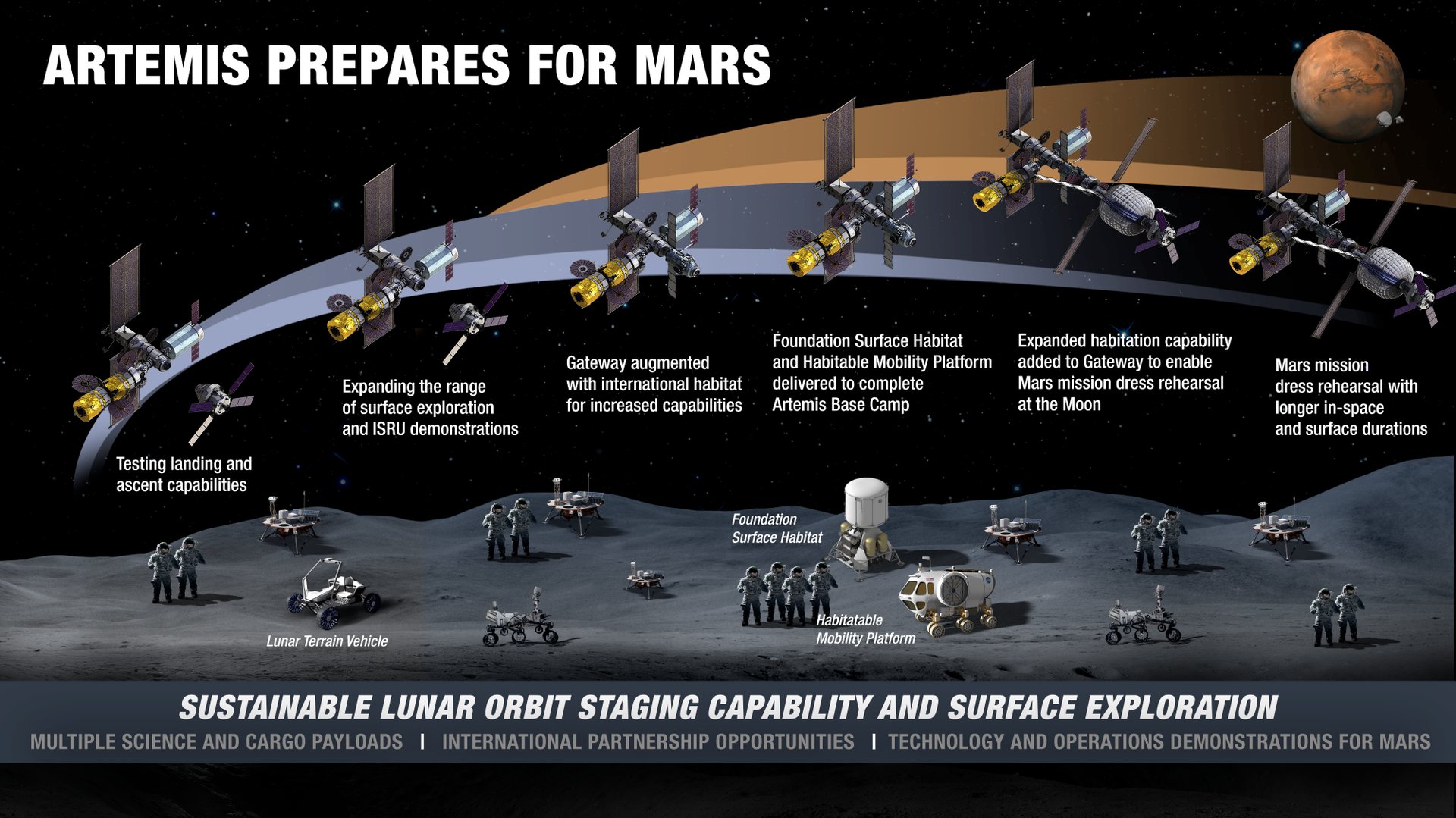
NASA is serious about going back to the Moon. Ongoing missions like the recently completed Artemis II trip around the Moon are just one such sign. But perhaps more importantly, NASA is recognizing how much additional work will have to go into funding technology development if we hope to stay on the lunar surface permanently. To reflect that understanding, the agency recently released a request for public feedback on what it calls the Lunar Enabling Infrastructure Accelerator - which might have been named after a Star Wars fan, since its acronym is LEIA.
In the byzantine world of federal solicitations, the LEIA draft solicitation is actually piggybacked as an appendix of the Next Space Technologies for Exploration Partnerships-3 (NextSTEP-3) program. NextSTEP is NASA’s successful public-private partnership model that leverages private investment to rapidly build deep space technologies.
This particular solicitation is run by NASA’s Glenn Research Center, and is open for public feedback until July 17th, with the expectation that the full solicitation will be open for bids sometime around August, with money being doled out in late 2026 or early 2027. And to be clear it’s a significant amount of money - anywhere between $5M and $50M per award. Each contract will also be tied to performance based milestones that will span up to three years.
Fraser talks about what we do after we have a Moon base.So what exactly are the private companies submitting these proposals going to be working on? NASA explicitly mentioned the “Big Five” technology gaps that must be solved to maintain a permanent human presence on the Moon. The agency even has an official name for them - the Civil Space Shortfalls, complete with a descriptive website and everything. These gaps fall into five main categories - vertical solar arrays, radioisotope thermal generators, in-situ resource utilization, in-space advanced manufacturing, and innovative nanomaterials. Let’s take a look at each in turn.
At the lunar poles, where NASA wants to establish its permanent base (due to the proximity of water), the Sun is very low on the horizon, which means traditional horizontal solar panels won’t work particularly well. NASA believes it will need tall, vertical arrays that can capture sunlight continuously no matter its position on the horizon, and which can eventually scale into a stand-alone lunar power grid.
But even then, solar power alone won’t be enough to supply a permanent base’s needs. They will need some form of nuclear power, which is completely agnostic to the season or the position of the Sun. The safest kind of nuclear power for spaceflight is a radioisotope thermal generator (RTG), and in particular NASA is looking for solicitations improving upon the classic Stirling RTG used in many of its current day rovers.
Fraser talks about lunar infrastructure and how important it will be.Some of those rovers might have shovels attached to them. Utilizing the resources available on the lunar surface (known as in-situ resource utilization, or ISRU) is a key feature of any long-term lunar presence as it limits the cost of parts and raw materials that must be shipped up from the Earth’s surface. Even oxygen, which is abundant in the lunar soil, is a precious commodity when astronauts have to create both their own breathable air and rocket propellant. Technologies that allow them to easily access that stored oxygen will be a critical resource for any permanent lunar base.
Raw materials will only get you so far, though, as the ability to turn them into finished good is the central premise of in-space advanced manufacturing. Again, shipping expensive tools up from Earth is less than ideal, so making their own parts and tools in-situ, likely with the use of an advanced form of 3D printer, is a critical enabling technology for long-term lunar exploration.
Those tools and parts will have to withstand the lunar environment though, which is no easy task. The abrasive dust, constant radiation, and extreme temperatures are not easy on most human-made materials. Which is why the fifth and final technology development area is innovative nanomaterials that can withstand those conditions without degrading.
None of these will come as a surprise to anyone who has been watching the development of lunar technologies for a while. But seeing direct financial support for their derisking is exciting, as it shows that the world’s biggest space agency is taking the challenge of supporting a lunar base permanently seriously. If you’re interested in providing feedback to the solicitation, the public portal remains open until July 17th, so take a read over its proposed language yourself, and if you have anything you think can contribute to the discussion, now is your chance!
Learn More:
NASA - NASA Seeks Industry Input to Accelerate Lunar Surface Technologies
NASA - NASA Releases Technology Priorities to Energize Space Industry
UT - A Long-Term Lunar Infrastructure Hub Named After the Object That Created the Moon
UT - Harnessing Nanosatellite Technology for Lunar Infrastructure

