Universe Today
(This is Part 3 of a series on cosmic dust. Read Part 1 and Part 2 first.)
But you know what? Now that I think about it. This dust that's so ever-present and annoying and pervasive and aggravating....it's gotta be kinda powerful? You know, in a dusty sort of way. Not every substance gets to play a critical role in so much of observational astronomy (to the point that the entire scientific discipline could probably be called "dust mitigation strategies").
I'm not saying dust is a GOOD thing. But...at least it's a player on the galactic stage. We care more about dust than, I don't know, black holes, when it comes to day-to-day astronomy. That's pretty impressive.
And I'll be honest. Dust does more than cause migraines.
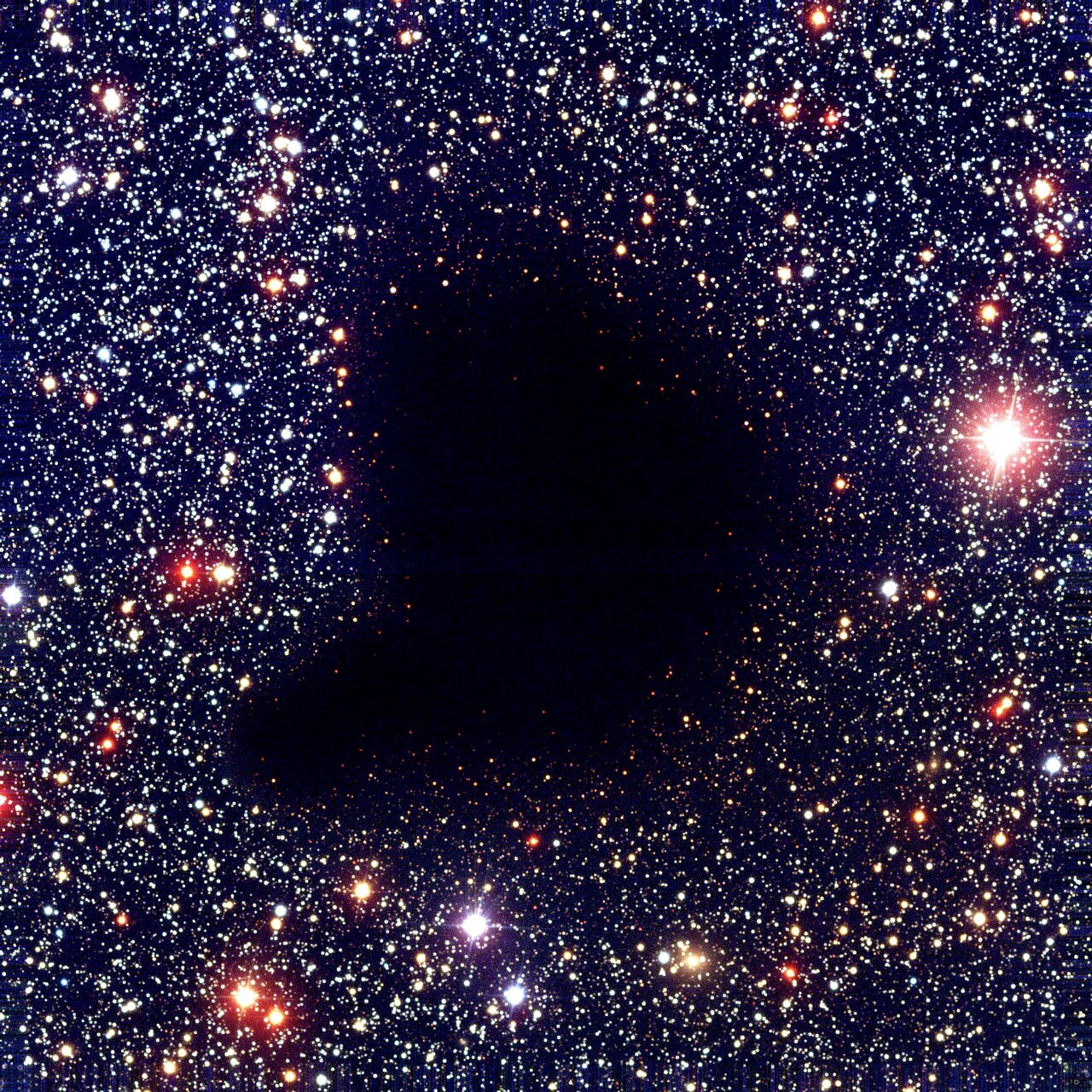
Let me tell you about something I really don't want to admit. Dust makes molecules. Not just any molecules. The most basic, fundamental, this-is-where-everything-starts molecule: H2. Two hydrogen atoms bound together. H2 is the most common molecule in the universe by an enormous margin. It's the building block of molecular clouds (hence the name) which are the nurseries for stars. Every star you have ever seen formed in a region where H2 was the dominant ingredient.
Here's the problem. H2 doesn't just form on its own in the middle of space. You'd think it would, right? Two hydrogen atoms float around the galaxy, eventually bump into each other, and bond. Done. But there's a hitch. When two hydrogen atoms collide and try to form an H2 molecule, the energy of that bond has to go somewhere. Stick the atoms together and the bond stores energy, which has to be released for the molecule to actually settle into a stable state. With two atoms colliding in empty space, there's nowhere for that energy to go fast enough, and the would-be molecule just falls apart again before it can stabilize.
You need a third body. A surface. Something to soak up the extra energy. And in the cold, almost-empty depths of interstellar space, the only available surfaces are dust grains. Hydrogen atoms drift through space, eventually stick to a dust grain, skitter across its surface until they find another hydrogen atom doing the same thing, bond, and the grain absorbs the leftover energy. The H2 molecule then drifts off into space, free and stable. Without dust, you don't get H2. Without H2, you don't get molecular clouds. Without molecular clouds, you don't get stars. The entire chain of cosmic existence runs through a dust grain catalyst.
That's...annoying. To admit. But it's true.
Oh, did I mention the ICE MANTLES? Imagine a dust grain as a tiny core of a tiny planet, and ices (like water, carbon dioxide, methane, and ammonia) can glom on to them making little mantle shells around the grains. So now each grain is a kind of dirty snowball, a rocky core wrapped in frozen volatiles. And those ice mantles can absorb UV radiation from starlight, which provides the energy for really bizarre complex chemistry (the kind of chemistry that can only happen when you combine low temperatures, no pressure, and high-energy radiation), which produces all sorts of organic compounds and molecules.
I'm talking about amino acids. Sugars. Precursors to the bases that make up DNA and RNA. Out there, in the freezing void between the stars, on the surface of dust grains the size of a virus, the universe is quietly running organic chemistry experiments. The UV rays that hit those icy surfaces energize the molecules and transform them into longer, more complex chains. Things that, billions of years later, end up looking suspiciously like the chemistry of life.
We can watch this happen. There are radio observations of cold dense molecular clouds that show signatures of dozens of complex organic molecules. We can take samples of meteorites that fell to Earth and find amino acids that match the ones in our cells, formed in the depths of space, riding inside the parent body of the meteorite for billions of years before crashing into Arizona. Whatever is happening out there in the dust, it's the same kind of chemistry that's happening inside you right now.
I'm sorry, what?
I came into this prepared to apologize to dust for being annoying. I wasn't prepared for dust to turn out to be the place where the universe makes the molecules of life. That's...a different level of apology.
So we've got dust building the molecules. We've got dust making H2 possible, which makes molecular clouds possible, which makes stars possible. We've got dust running complex organic chemistry on the surfaces of grains floating in interstellar space. And I'm starting to get the feeling that this is just the warm-up.
In Part 4, I have to confront the fact that without dust, there would be no stars, no planets, and no you.