Universe Today
I owe an apology. A deep, sincere, heartfelt apology. So I'm going to start this series by getting it out of the way. Clearing the air (wait actually not clearing the air, you'll see in a second). Making amends. Not becoming friends, no, that's still a bridge too far. But, we can be chill.
To all the dust grains in the universe, if you're listening, and I know you probably aren't because a) radio waves pass through you largely unimpeded, and b) you're just a small collection of molecules and likely not sentient: I'm sorry.
There, I said it. I feel better, don't you?
I've spent years complaining about dust. There's dust on my desk right now as I'm typing this. There's dust floating through the sunlight in the window. And while I'm not allergic to dust at all, it feels like I am. Dust is annoying, it's everywhere, it gets into stuff.
Dust makes almost everything worse. You clean dust in your home, and in a few days it's back. Industrial dust gets deep into your lungs, linked to respiratory diseases that kill millions every year. Black lung from working in the mineshafts? I haven't experienced that personally but it SOUNDS terrible.
Sometimes dust can explode. Depending on what it's made of, if it's suspended in the air and reaches a critical ignition temperature, it can just go and blow up. Grain elevators. Coal mines. Flour mills. The fine powder gets airborne, a spark hits, and the whole thing goes off like a fuel-air bomb. Dust isn't just a passive nuisance. It can actively try to kill you.
Dust bowl? DUST BOWL?
And if you want to do astronomy, dust is NASTY. It can coat your lenses and scatter light, which is really bad considering the entire goal of a telescope is to collect light, and you can't just wipe it off because that will scratch the perfectly shaped and ground glass.
Dust in the atmosphere scatters light too, and you can't just wipe it off because that would get rid of the atmosphere, which while great for astronomy would be generally bad for life in general.
Oh, you want to get off the Earth and explore the wonders of the solar system? Too bad. Dust.
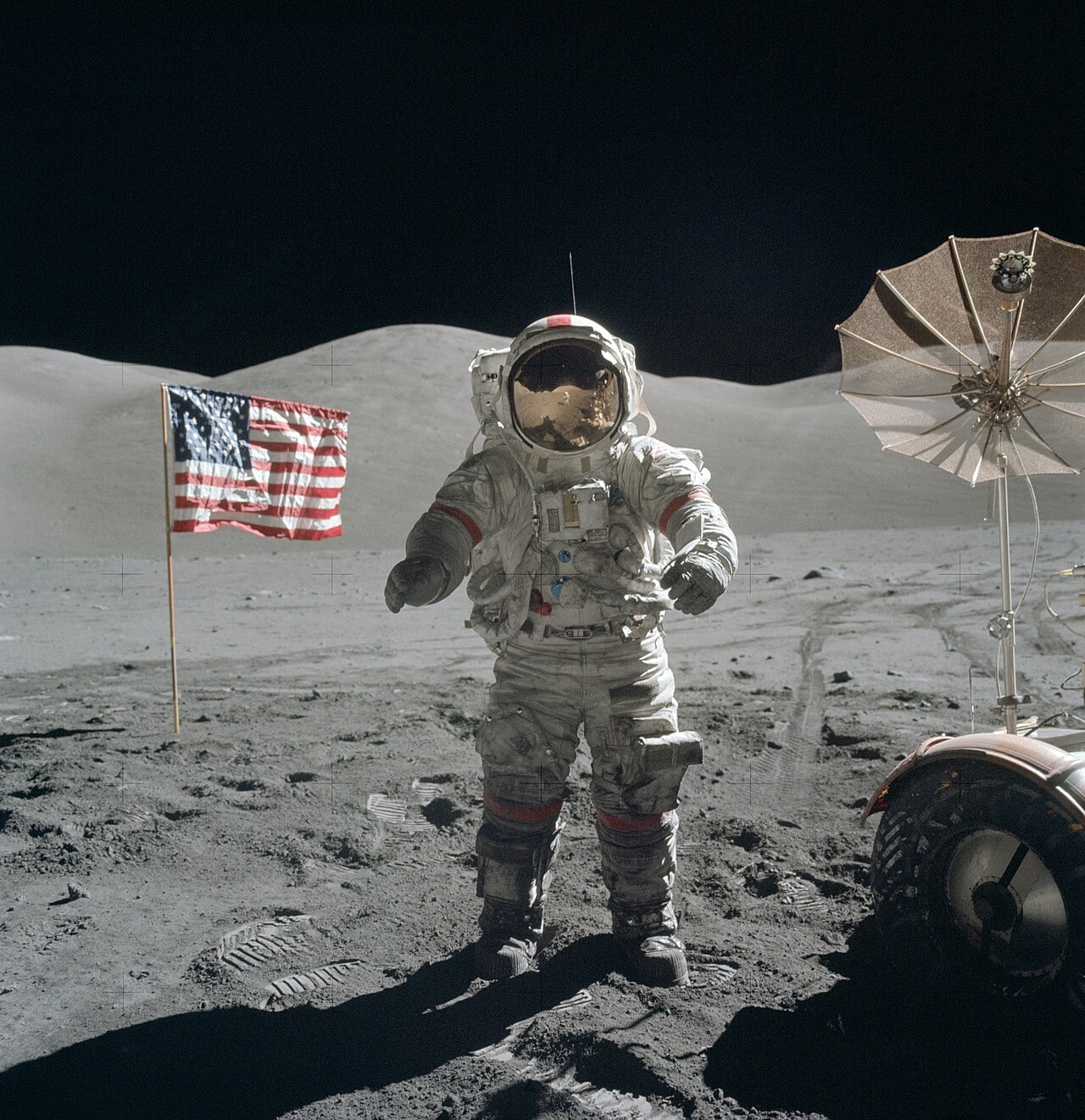
Lunar dust has sharp jagged edges, because it hasn't been worn down by wind and water, so it's exceptionally sticky and abrasive. The Apollo astronauts reported it as one of the most persistent and annoying problems of the entire mission. It stuck to everything: suits, visors, equipment, and got tracked inside the lander. They could smell it (described as burnt gunpowder) when it off-gassed inside the cabin. It scratched visor coatings, degraded spacesuit joints, and clogged seals. After just a few moonwalks, the suits were visibly worn.
It's electrostatically charged by solar UV and the solar wind, which means it actively levitates and clings to surfaces, not just passively settling. It contaminated sample containers, made it hard to get clean scientific samples, and interfered with instrument readings. In fact, "dealing with dust" is one of the biggest challenges facing extended lunar excursions like the upcoming Artemis missions.
And Mars? Even worse. There the dust has been blowing for billions of years, so it's super tiny, which means it gets inside EVERYTHING and can get blown around the entire planet. In 2018 a global dust storm blocked so much sunlight that it killed the Opportunity rover. Oh, and that dust often carries perchlorates, which are potentially carcinogenic. So now you've got martian dust cancer to worry about.
I haven't even gotten to the astronomy yet. I mean, the actual astronomy, the part where you're trying to use a telescope and dust just laughs at you from across the galaxy. That's coming. But before we get to the cosmic stuff, just sit with the local stuff for a second. Sit with the fact that dust ruins your house, ruins your lungs, ruins your spacesuit, and ruins your rover. It's a relentless, microscopic adversary that you cannot win against.
Yeah, this apology isn't going great so far. Let me try harder.
In Part 2, we get to the part where dust ruins astronomy specifically, and I have to admit I once helped run an experiment that got fooled by it.