 Universe Today
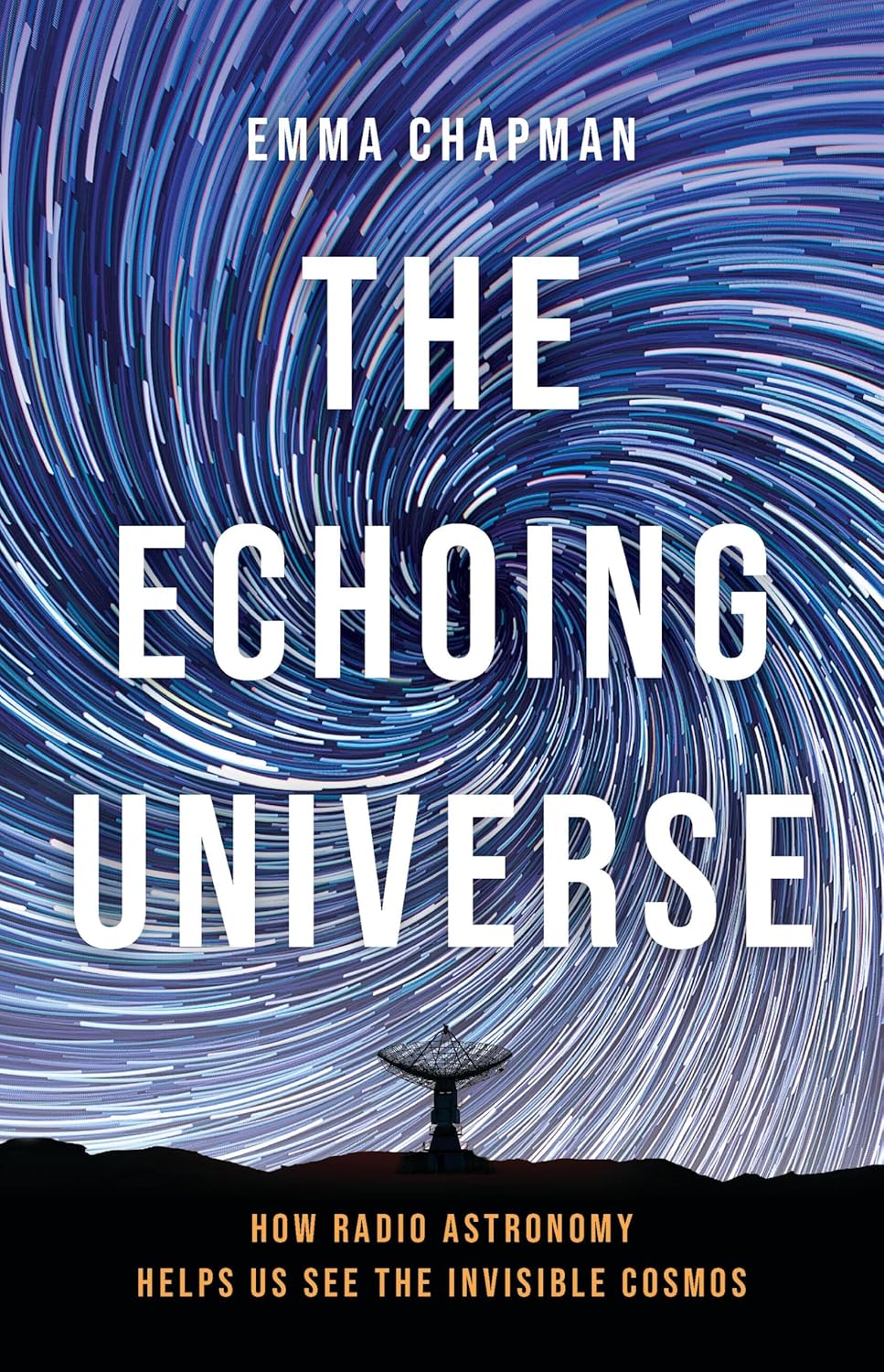
Typically when we think of astronomy, we think of pictures of M87 captured on a backyard telescope or the soaring colorful peaks of the Eagle Nebula seen by Hubble. But perhaps the most influential type of astronomy of the last 100+ years doesn’t directly result in the stunning pictures we’re so accustomed to today. It captures radio waves from some of the most interesting objects in the universe. And in her new book, The Echoing Universe: How Radio Astronomy Helps Us See the Invisible, Dr. Emma Chapman, a radio astronomer at the University of Nottingham, tracks how these longest wavelengths of the electromagnetic spectrum have influenced the practice of astronomy and our understanding of our place in the universe.
The book traces the field back to Karl Jansky’s famous “merry-go-round” antenna built out of Ford Model T wheels, and gradually walks the reader through major historical events in radio astronomy like James Stanley Hey’s discovery that radar blackouts during World War II were caused by massive solar flares. But the main framing of the book is about distance, and how radio astronomy itself can be used to probe everything from our closest neighbors to the beginnings of our universe.
Long before we put landers on Venus or Mars, radio was our best way to explore them. It penetrated Venus’ toxic cloud to map its toxic surface, and measure its rotation, which was found to be retrograde. In what Dr. Chapman described in an interview as her most astonishing fact discovered while researching the book, radio also found ancient ice hidden in the permanently shadowed regions of Mercury.
Interview with Dr. Emma Chapman, the book's author. Credit - SpaceMog YouTube ChannelBut beyond planetary science, radio astronomy is also useful for hazard tracking. Radio waves can act as early warning sirens for Coronal Mass Ejections, which can damage satellite infrastructure and our power grid. Radar is also a key component in the “planetary defense” realm - tracking near-Earth asteroids and interstellar visitors to our solar system alike.
Further afield, radio astronomy has played a key role in some of the most interesting studies of far-flung parts of our universe. One of those studies was the now-famous first ever silhouette of a supermassive black hole - captured by the Event Horizon Telescope, a globe-spanning network of synchronized radio dishes. The book even dives into how radio telescopes can use the 21-centimeter line that famously depicts neutral hydrogen to trace dark matter and even look back through the haze of the early universe to see some of its first light, during the Epoch of Reionization, which Dr. Chapman wrote her PhD thesis on.
Radio astronomy isn’t done yet with its discoveries yet, either. While it’s becoming increasingly difficult to find “quiet zones” here on Earth, the book talks about the next major telescope to be commissioned - the Square Kilometer Array, with facilities in both Australia and South Africa, is planned to be operational by the early 2030s. Dr. Chapman provides touching reflections on some of the lost workhorses of radio astronomy, including describing pilgrimages to sites like Arecibo and Interplanetary Scintillation Array, which Jocelyn Bell Burnell used to discover the first pulsar in 1967, but which is now essentially just a field in England.
Dr. Chapman gives a talk on the first stars at the Royal Astronomical Society. Credit - RAS YouTube ChannelIn her interview, she also mentioned her interest in a favorite topic of Fraser, our editor - a radio telescope in the last “radio quiet” place left in the solar system - the “dark side” of the Moon. But even that special zone might be limited as space agencies begin to send rovers, such as the Chang’e-6 and the associated communications satellite to that isolated part of our solar neighborhood.
The Echoing Universe is certainly worth a read if you want to understand why radio astronomy is so important to our understanding of our place in the universe, and why it's so important to preserve our ability to study those long wavelengths. Chapman’s prose is witty and engaging, and she explains complex engineering and physics topics simply enough that a layman can easily grasp them.
So if you’re looking for a book that looks past the pretty pictures and attempts to understand the raw data that helps define our universe, look no further. The Echoing Universe is a powerful reminder that, while rovers, rockets, and pretty pictures might get the glory, there are plenty of antennas spread over our planet that spend every day listening to the echoes of creation.
Learn More:
UT - Radio Astronomy: Why study it? What can it teach us about finding life beyond Earth?
UT - We've Been Listening for Ten Years. Here's What We Heard

