 Universe Today
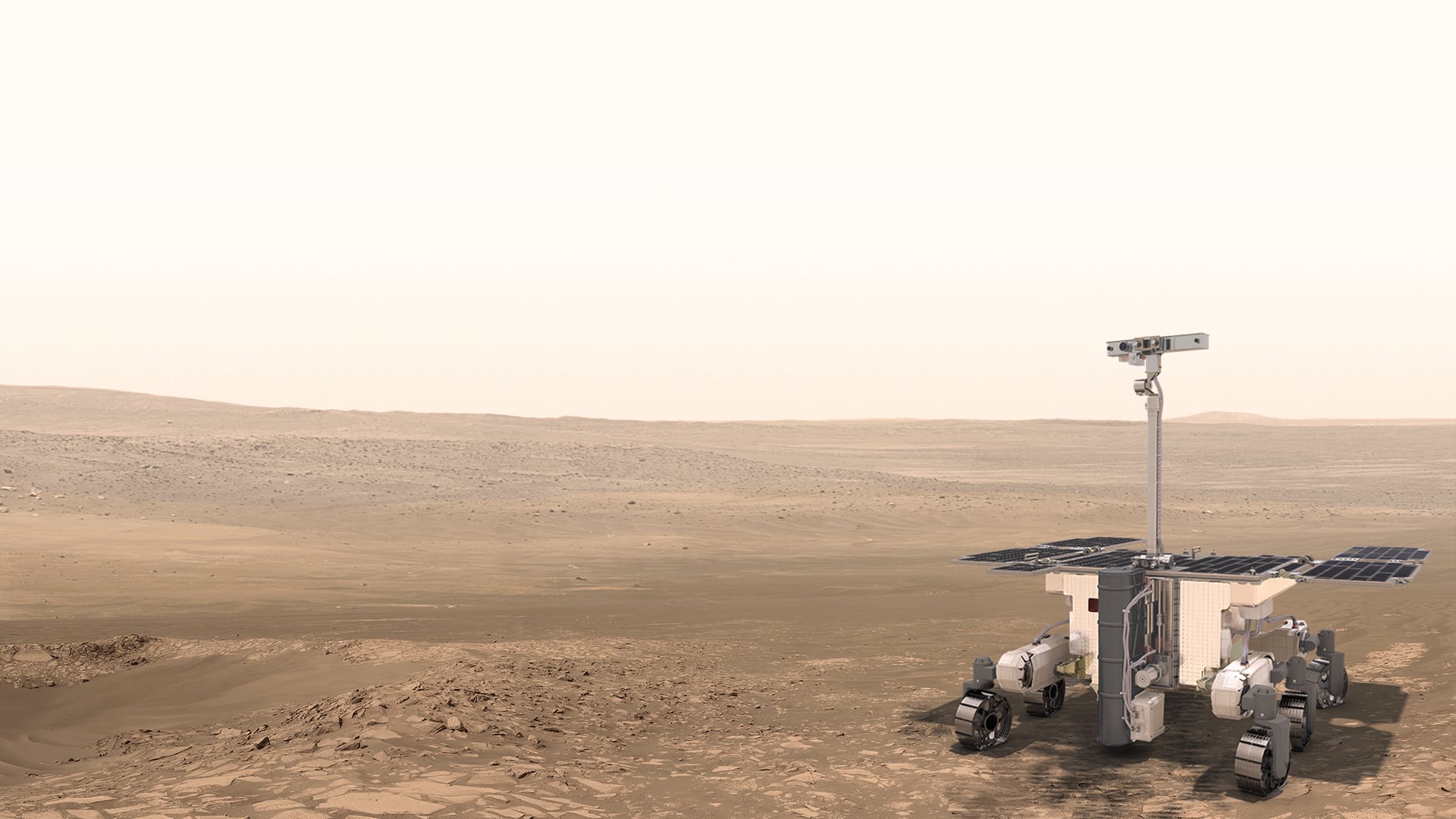
We’ve known for a long time that there are organic molecules on Mars. Rovers and landers keep turning them up wherever they look. But, “organic” simply means a molecule is made up of carbon and hydrogen atoms, not that it was created by life - there are plenty of non-biological processes that can create organic molecules. But there is one feature of organic molecules that can point very strongly in the direction of life or not - its chirality, and a new instrument on the Rosalind Franklin rover, planned for launch to Mars in the 2030s, just proved it can successfully look for it.
To dig into this, it’s best to start with a basic definition of chirality. Chirality is the orientation of a molecule - in other words the physical angles at which its atoms are bound together. Typically each organic molecule which has this property (and not all do) can have one of two mirrored orientations - organic chemists label this property “handedness” - like left-handed or right-handed.
Abiotic processes (i.e. those that aren’t driven by life) don’t care which handedness of an organic molecule they create, which results in about a 50/50 split between the two mirrored versions - a combination known as a racemic mixture. However, since life’s superpower is to make little copies of itself, it typically creates more molecules of the same orientation it's currently made up of. For example, life on Earth exclusively uses “left-handed” amino acids, and “right-handed” sugars. So if there is an overwhelming majority of one particular orientation in a sample of organic molecules, it’s a pretty clear sign that those organic molecules were produced by a biological process.
Fraser talks about the history of the search for life on Mars.We’ve actually sent a chirality tester to Mars before - the Sample Analysis at Mars instrument onboard Curiosity is capable of measuring chirality. Unfortunately, none of the organic molecules the rover has found were intact complex molecules that the instrument would work on. Other rovers, such as Perseverance, have likely found such complex organic molecules (such as the famous “leopard spots” we reported on previously), but the operators of that mission had assumed that the samples they collected would be shipped back to Earth for further analysis. Since that program has been cut by NASA due to funding constraints, the answer to whether there is (or was) life on Mars might continue to sit in a sample capsule on the red planet’s surface indefinitely.
The European Space Agency is not going to make that same mistake in planning. They plan to equip the Rosalind Franklin rover to do all the science it needs to on site without relying on expensive sample return missions. One critical instrument to complete that mission is the Mars Organic Molecule Analyzer (MOMA). This instrument, which currently underwent its first analogous test, is much more sensitive than any other chirality sensor we’ve ever sent to the Red Planet.
To prove that point, a team led by Dr. Guillaume Leseigneur decided to put a stand-alone version of the instrument through its paces by analyzing the famous Murchison meteorite. In particular they wanted to look for two complex organic molecules - pristane and phytane, both of which make up part of petroleum. Perhaps more importantly, they’re also extremely stable degradation products of chlorophyll, meaning they could survive billions of years on the Martian surface after having been made as a by-product of sun-collecting life.
Fraser talks about the discoveries Curiosity has made.The Murchison meteorite is a pristine sample of a carbonaceous chondrite that crashed into Australia in 1969. The research team ran a sample of it through the MOMA instrument, and, interestingly, found a racemic mixture of almost equal chiralities. Given that the research team had originally expected to find an imbalance due to biological contamination from Earth’s native microbes, that came as quite a surprise. But after some consideration, they think the meteorite actually picked up traces of burnt fossil fuels containing pristane and phytane while coming in through Earth’s atmosphere. So while that wiped out the possibility of finding and “space biology” on Murchison, it was a great proof-of-concept for MOMA’s capabilities.
That being said, the engineer in me is assuming they had tested the instrument on known samples beforehand ensuring that it would be able to correctly read all the necessary signals before being given a sample with an unknown makeup. Assuming they did, the paper is both a great validation of MOMA’s abilities as well as an interesting look into the makeup of one of the most famous known meteorites. Now we’ll only have to wait another 10 years or so before one of the most important instruments we will have ever sent to Mars really gets to work.
Learn More:
Max Planck Society - ExoMars: Stress Test For Search For Life
G. Leseigneur et al. - Racemic isoprenoids in the Murchison meteorite derive from petroleum-based aerosol pollutants
UT - Has NASA Detected Convincing Evidence Of Ancient Life On Mars?
UT - How the ESA's Rosalind Franklin Rover Will Drill for Samples on Mars

