Universe Today
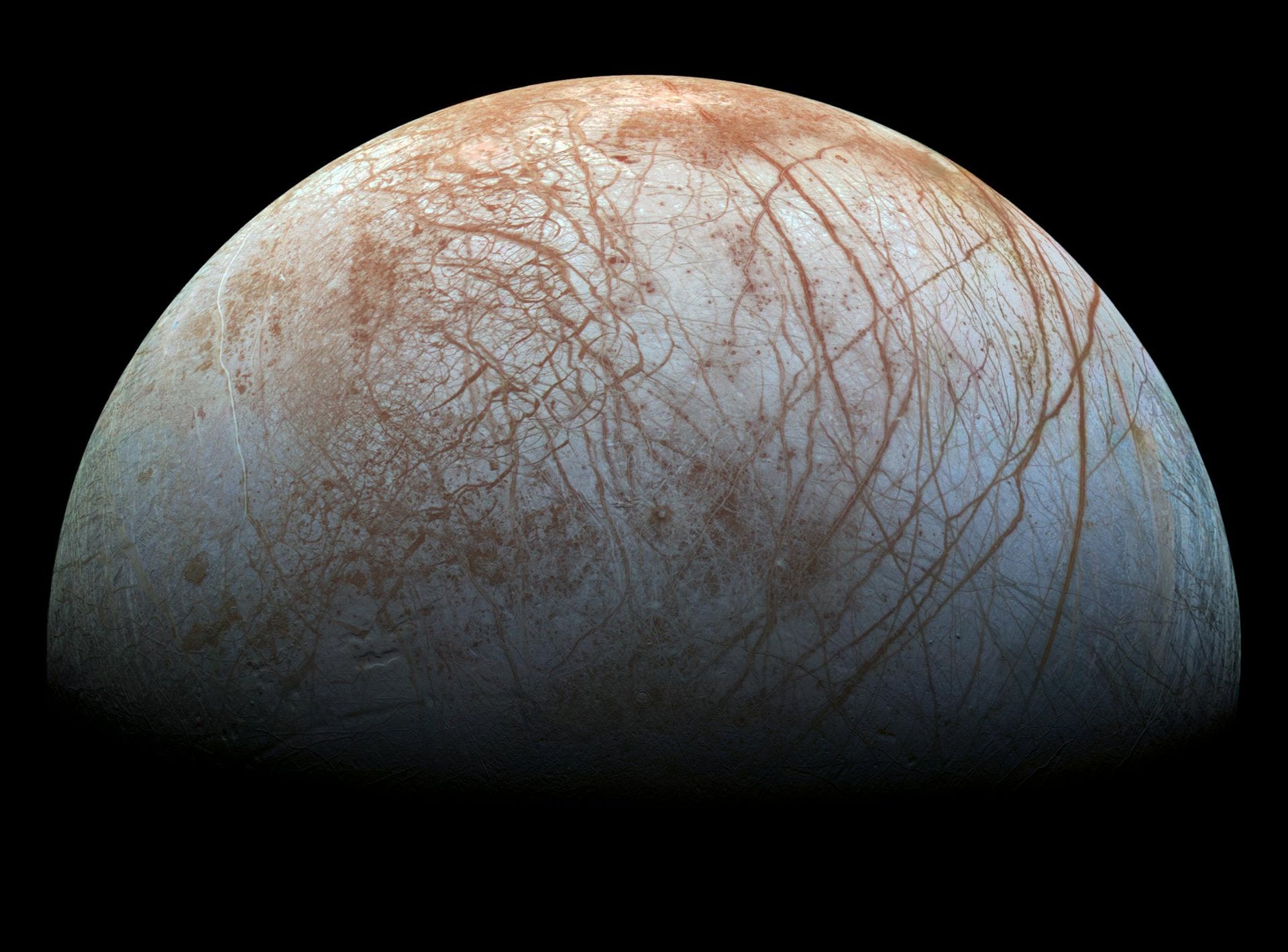
Jupiter's icy moon Europa has been a source of fascination ever since the Voyager 1 and 2 probes passed through the system. Based on multiple lines of evidence, including the moon's "chaos terrain," induced magnetic field, and surface plumes, scientists conclude that Europa has an ocean deep in its interior. What's more, there is strong evidence that it experiences hydrothermal activity at the core-mantle boundary (thanks to tidal flexing in its core). This suggests that Europa's interior ocean might support life.
Currently, two missions are en route to Europa to explore its surface from orbit and determine if this ocean could contain life - the ESA's Jupiter Icy Moons Explorer (JUICE) and NASA's Europa Clipper. If these missions find potential evidence of biosignatures, scientists hope to send follow-up missions to explore the icy surface and interior, such as the Europa Lander and the Deeper Access, Deeper Understanding (DADU) submersible.
Unfortunately, a new study led by Rutgers University scientist Lujendra Ojha shows that reaching this ocean may be harder than previously thought. Ojha is an associate professor from the Rutgers School of Arts and Sciences. He was joined by Ankit Barik, an Assistant Research Scientist from Johns Hopkins University, and Jacob Buffo, a planetary scientist from the Thayer School of Engineering at Dartmouth College. Their study was recently published in Nature Astronomy.
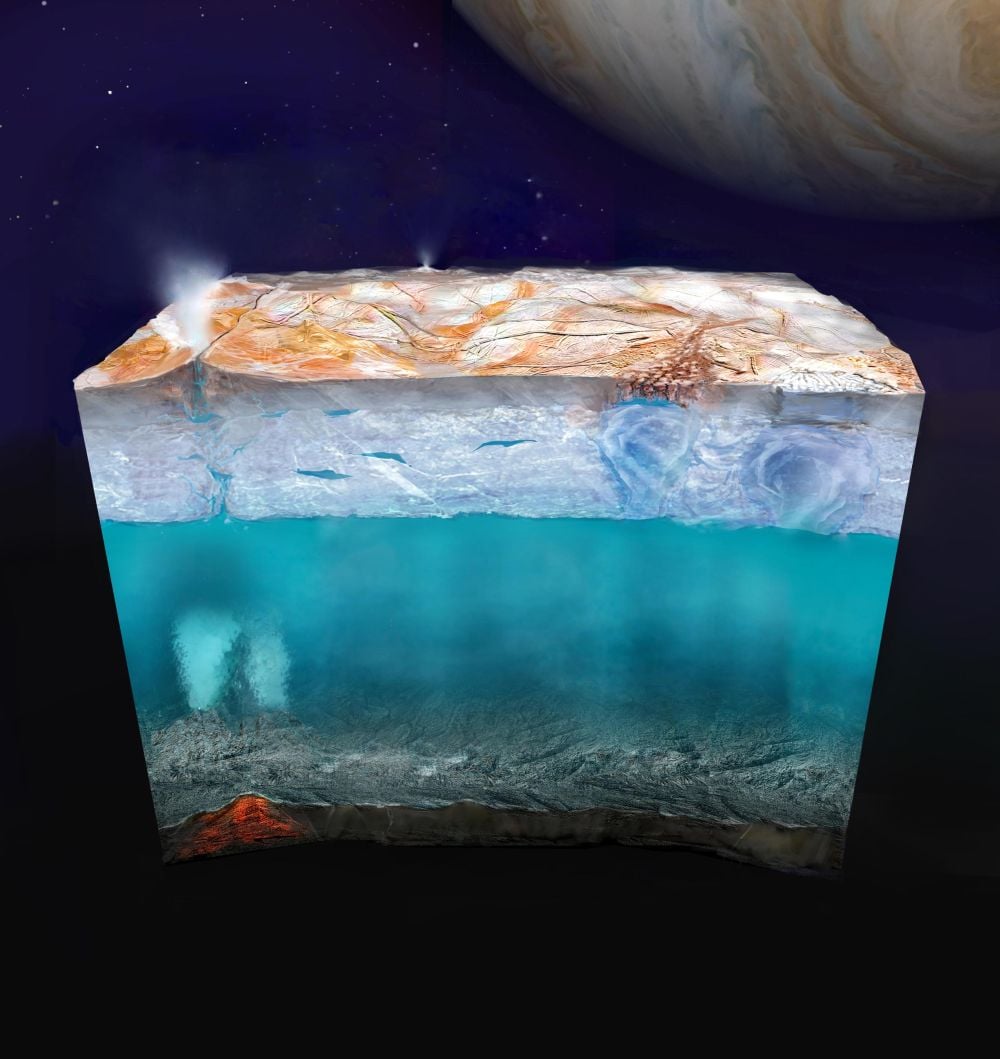 This illustration shows what the interior of Europa may look like, with a thick ice cap and a deep ocean. The icy crust may hold pockets of water, and the seafloor may have hydrothermal vents. Image Credit: NASA/JPL-Caltech
To get at Europa's interior ocean, one of the most promising options is to access cracks in the surface ice to reach possible reservoirs within the ice sheet. Should such reservoirs exist, it would make it much easier for future missions to detect and/or obtain samples from the ocean beneath. To test this theory, Ojha and his colleagues used computer simulations to test whether liquid water from Europa’s interior ocean could rise through cracks in the ice and collect in shallow reservoirs closer to the surface.
However, if these reservoirs are not connected to the ocean, they may not provide clues as to what is happening in Europa’s interior. Ojha and his team focused on narrow cracks or fractures (dikes) that could theoretically allow water from the ocean to rise upward towards the surface. This is consistent with cryovolcanism, which occurs on Europa and many other icy moons in the Solar System (Ceres, Enceladus, Titan, and Triton). However, instead of magma rising through cracks in a rocky mantle, the process involves liquid water moving through ice.
Their results showed that the route from the deep ocean to the shallow surface ice is probably much more difficult than scientists thought. In previous studies, the models employed generally assumed that water rising through Europa's ice moved in a relatively orderly way. The Rutgers simulations, however, suggest that water would be more likely to move turbulently through fractures in the ice, losing heat as it makes contact with the ice walls. As the water cools, ice crystals can form and build up to clog the pathway.
“This water that’s going to come up, it’s going to be turbulent,” said Ojha. “It’s going to be left and right, it’s going to be up and down, it’s going to have a swirling motion. And when that happens, that liquid water is going to cool very, very fast as it approaches the surface.” The simulations showed that under these conditions, narrow cracks could freeze in a matter of hours. Under ideal conditions, wider cracks could carry a lot of water toward the surface, but turbulence makes those scenarios far less likely.
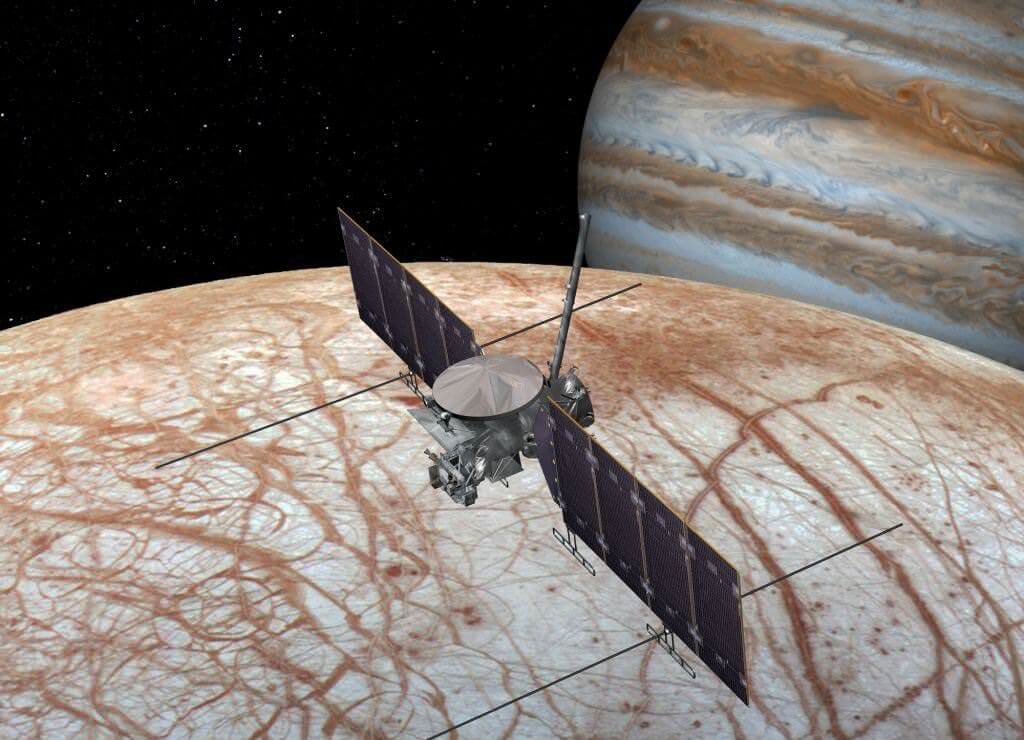 Artist's concept of a Europa Clipper mission. NASA plans to launch this mission in the 2020s. Credit: NASA/JPL
In short, Europa's crust would need to be extremely long or plentiful in order to deliver enough water to reservoirs beneath the surface. The results indicate that if shallow reservoirs are present, they may have been produced by localized heating and melting, rather than rising from the ocean. As Ojha summarized:
The mystery we wanted to solve was whether this journey is actually possible. Can liquid water rise from Europa’s deep ocean toward the surface without freezing along the way? There’s an icy shell, there’s water underneath, and there’s all this speculation about how that water can come from deep underground and make its way all the way up without freezing en route. That’s really what we think we disproved.
If reservoirs exist beneath the moon's surface, they may not contain water from Europa's ocean and may have formed locally from ice melting within the crust. These findings have important implications for future exploration of Europa, including JUICE and the Europa Clipper, which are scheduled to arrive around Jupiter in July 2031 and April 2030, respectively. These missions are expected to provide a more detailed view of Europa's icy crust and surface composition, and to determine whether shallow reservoirs exist and how they are structured.
“Our work suggests that Europa’s ice shell may be a stronger barrier between the ocean and the surface than previously assumed,” Ojha said. “This helps future missions interpret what they find and better understand where to look for signs of habitability.”
Further Reading: Rutgers University, Nature Astronomy