 Universe Today
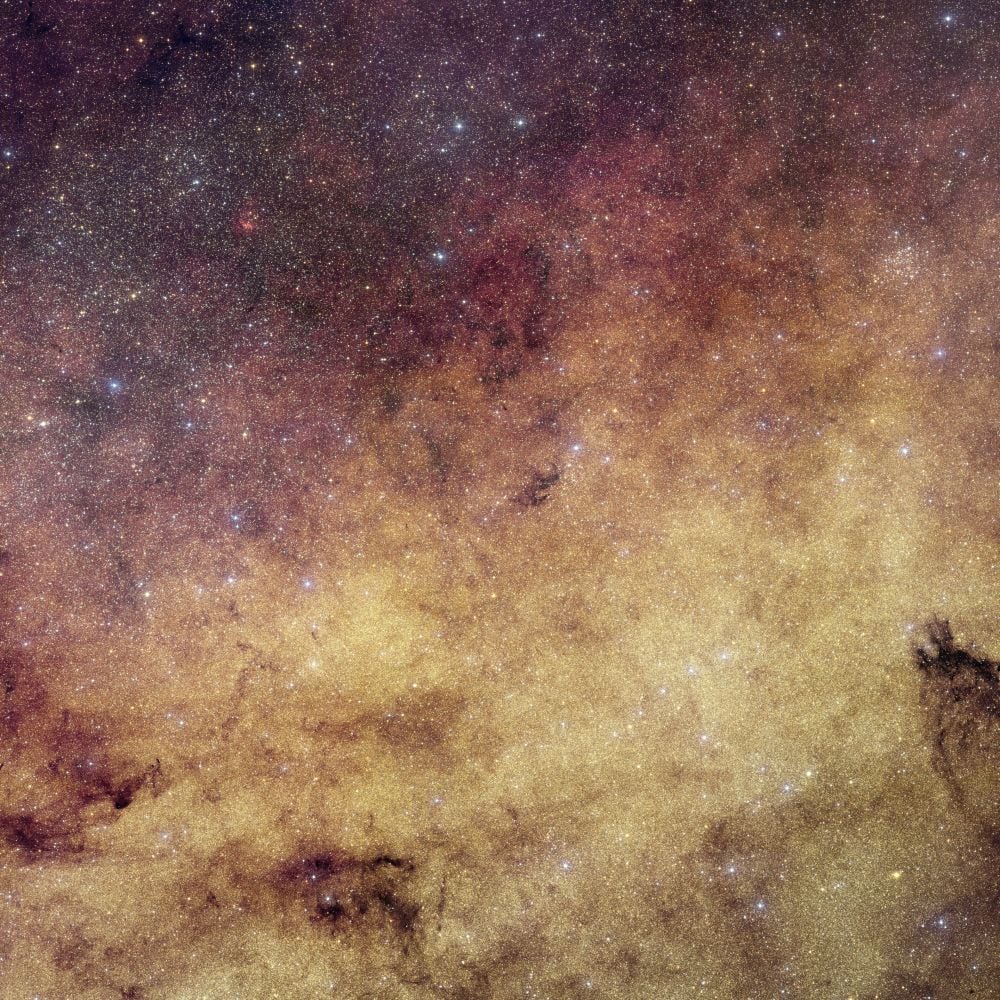
The ESA's Euclid Space Telescope is built to measure the redshift of huge numbers of galaxies. The goal is to understand dark matter, dark energy, and the expansion of the Universe. But because the telescope features a 600 MB, wide angle camera, it can also capture dramatic images.
That's what Euclid did recently when it imaged the Milky Way's galactic bulge. The bulge is a densely-packed region that contains about 10 billion stars, mostly older, redder ones. These stars date back to the formation of the galaxy around 10 or 11 billion years ago. In this image from March 2025, the space telescope captured about 60 million stars. It also captured other things like nebulae and star clusters.
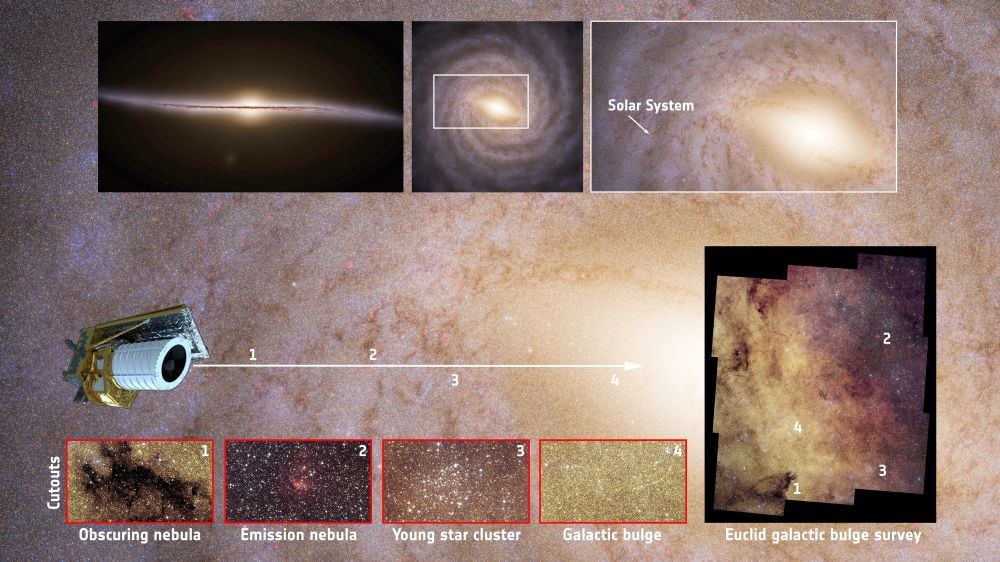 This infographic shows the context for the galactic bulge and also the types of objects found in the image. Image Credit: Euclid images: ESA/Euclid/Euclid Consortium/NASA, CFHT, image processing by J.-C. Cuillandre and E. Bertin (CEA Paris-Saclay); Milky Way artist impressions: ESA/Gaia/DPAC, Stefan Payne-Wardenaar) Licence: CC BY-SA 3.0 IGO or ESA Standard Licence
Euclid took 26 hours to capture this image in 10 separate pointings. Each individual pointing covered an area larger than the size of the full Moon. It's worth noting that Euclid, even though it needed 26 hours to do so, captured this image far more quickly than other telescopes could.
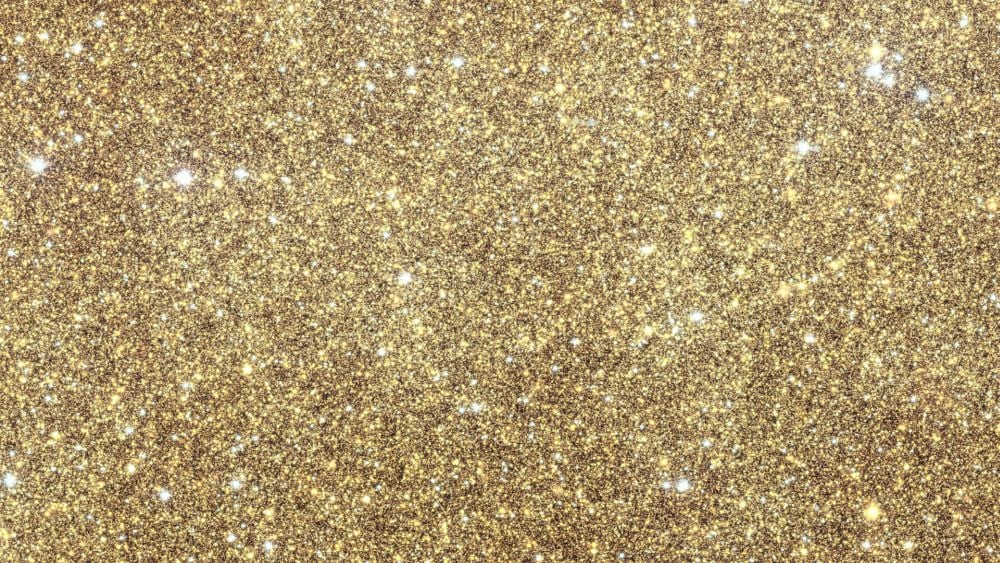 This zoomed-in portion of the image shows how tightly-packed with stars the Milky Way's bulge is. Image Credit: ESA/Euclid/Euclid Consortium/NASA, CFHT, image processing by J.-C. Cuillandre and E. Bertin (CEA Paris-Saclay). Licence: CC BY-SA 3.0 IGO or ESA Standard Licence
This image with its 60 million stars is ideal for gravitational microlensing, a technique that can find very faint objects like exoplanets. It works when two stars are aligned with one another from Euclid's viewpoint. The mass of the foreground star warps spacetime and magnifies and brightens the background star. When an exoplanet orbits the foreground star, that alters the image of the background star in a tiny way, and telescopes can sense this small change. But gravitational microlensing only works in a crowded star field, where chance stellar alignments are more likely to occur. Ground-based telescopes have made all of the exoplanet discoveries with this technique so far, but Euclid should be able to outperform them.
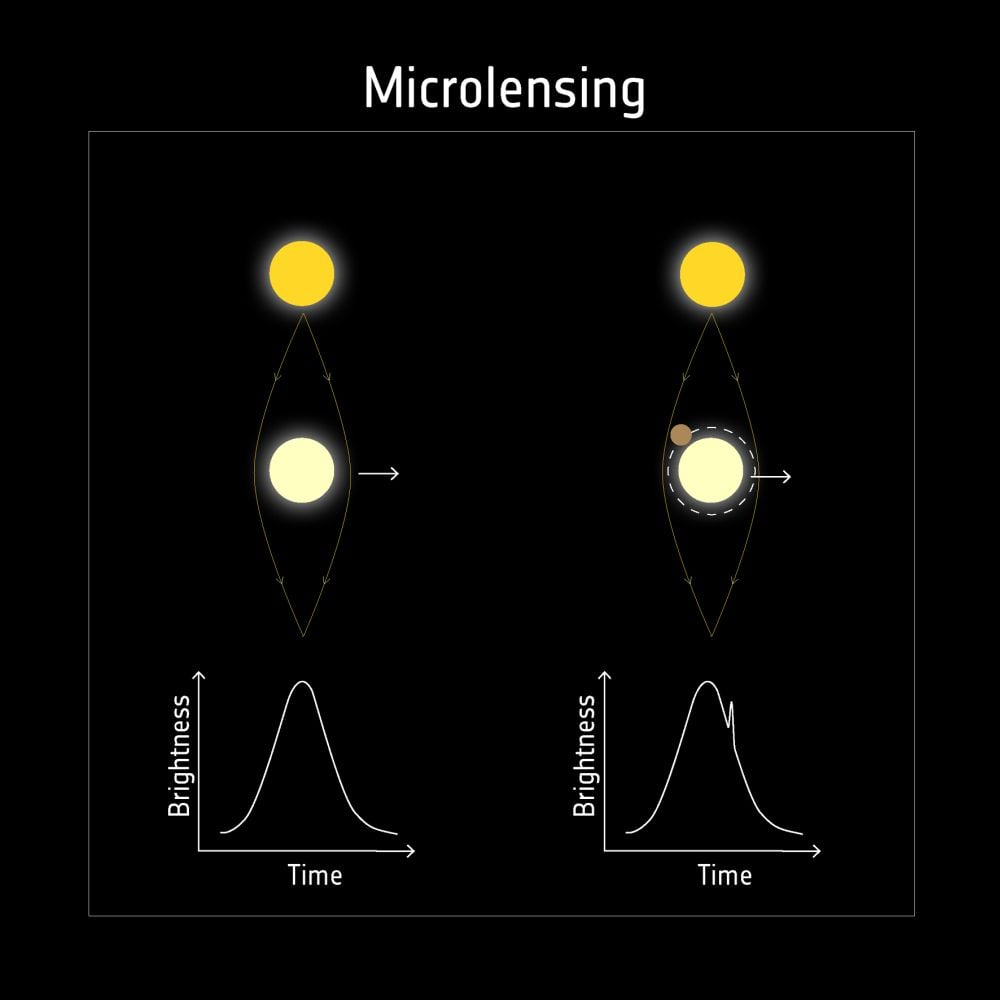 This graphic shows how gravitational microlensing works. When two stars line up, the foreground star acts as a lens for the background star. When an exoplanet orbits the foreground star, telescopes can detect the change in light. Image Credit: ESA. Licence: CC BY-SA 3.0 IGO or ESA Standard Licence
Gravitational microlensing was never part of Euclid's core mission, though it was considered as part of its legacy science. When it points at the galactic bulge, it's not looking at its primary science fields. Euclid has certain mission constraints based on thermal and stray light conditions. It has to keep pointing its coronagraph toward the Sun to stay cold. Since the galactic bulge is in a fixed direction, and since Euclid's field of view sweeps across the sky during the year, it can only look at it the bulge twice per year, during equinoxes. And since observing its main fields wouldn't be as productive at these times, it looks at the bulge instead, where tightly-packed stars make more gravitational microlensing likely.
“To catch microlensing, you need to observe parts of the sky that are crowded with stars, such as close to the centre of our galaxy,” explains Jean-Philippe Beaulieu from the Institut d’Astrophysique de Paris in France. He was the original instigator of Euclid’s galactic bulge survey, and he co-led the exoplanet working group of the Euclid Consortium.
“During the last twenty years, almost 300 exoplanets have been discovered using this technique, all with ground-based telescopes and all towards the centre of our galaxy. This image from Euclid includes 51 known planetary systems – and it will assist in studying many more that will be found,” added Beaulieu.
The 26 hours used to capture this image is not long enough to find any exoplanets. That requires much longer observations. But it was long enough to determine the masses of some previously discovered exoplanets.
The main contribution from Euclid's survey of the galactic bulge may arise when other telescopes like the Nancy Grace Roman perform their own surveys. The Roman Space Telescope's mission is designed around several surveys, one of which is the 15-month long Galactic Bulge Time-Domain Survey (GBTDS). It'll look for microlensing events in the galactic bulge and is expected to find about 1,400 cold exoplanets with masses greater than Mars. That number will also include about 300 exoplanets with fewer than three Earth masses. Astronomers will use the data from Euclid to help understand the microlensing events.
“In 24 hours, Euclid has already captured the stars involved in all the future microlensing events that the Roman space telescope will detect, but before the stars and planets involved have aligned,” said Natalia Rektsini of the Institut d’Astrophysique de Paris in France, who led the release of Euclid’s galactic bulge survey data for the scientific community.
“This means that anyone who detects a microlensing event in the same region, for example with Roman, will be able from now on to use Euclid data as a time reference in the past and see how the stars looked before they overlapped,” Natalia explains. “Since Euclid can clearly separate individual stars, one can then measure how fast they move over time and use that information to confirm the existence of a planet and determine its mass. This would not be possible with data from one point in time.”
Exoplanet methods struggle with their own observational biases. For instance, the transit method is more likely to find larger planets on close orbits, rather than smaller planets on wider orbits. But gravitational microlensing is different.
“This technique is unbiased, we discover whatever is out there,” said Natalia. “It is uniquely suited to discover cold exoplanets. And we expect every star in the Milky Way to host at least one such planet.”
Some previously discovered exoplanets are still lacking accurate measurements of their masses, and Euclid will provide that. “I led the team that discovered OGLE-2005-BLG-390Lb 20 years ago,” said Beaulieu. “It’s an icy planet, a bit like Hoth from Star Wars. After all this time, I’m excited that Euclid might finally allow us to measure its precise mass.”
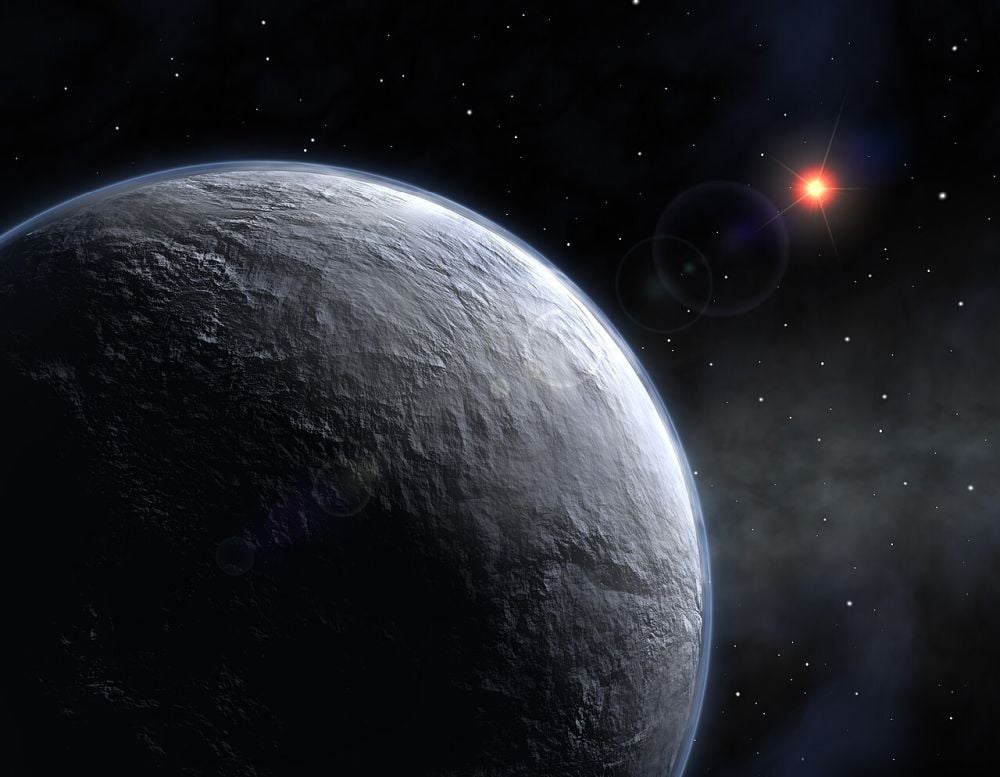 This artist's illustration shows the exoplanet OGLE-2005-BLG-390Lb. The icy world is nicknamed Hoth, after the planet in Star Wars. Even though it was discovered 20 years ago, its mass has never been precisely measured. Euclid may finally measure its mass. Image Credit: By ESO - http://www.eso.org/public/news/eso0603/, CC BY 3.0, https://commons.wikimedia.org/w/index.php?curid=11045388
“In just 24 hours, Euclid has delivered unique data on the Milky Way’s centre, with a large and sharp view of this region. With time, the separation between sources and lenses increases. That’s why this Euclid data will be a time reference for past and future missions and enable studies of exoplanets and their masses. This data can also be used for other scientific applications, from brown dwarfs and binary stars to stellar motions and dust across our galaxy.”

