Universe Today
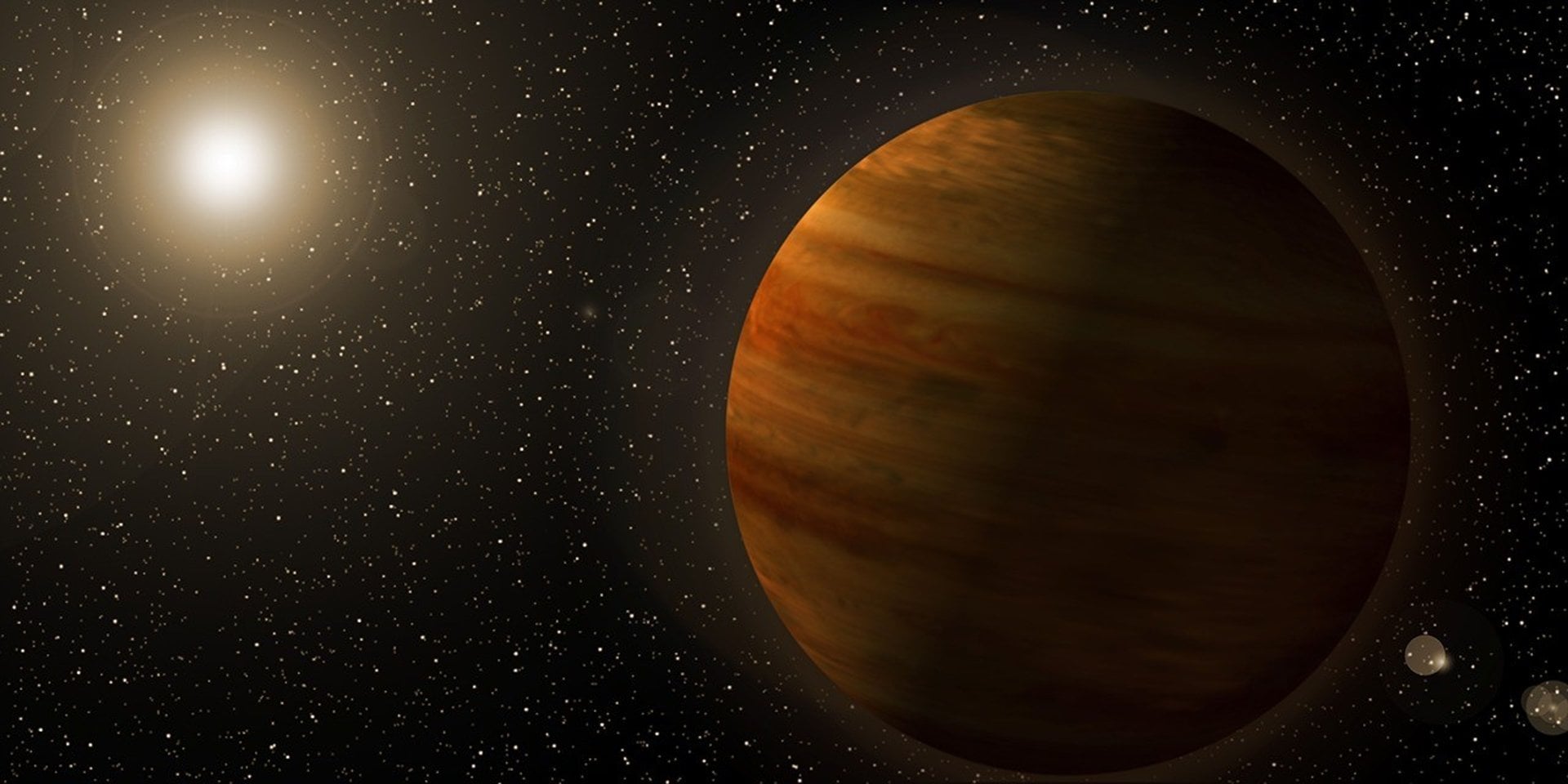
NASA’s Transiting Exoplanet Survey Satellite (TESS) has captured evidence of a Jupiter-like world orbiting another star, using a trick straight out of Einstein’s relativity: gravitational microlensing. The technique marks a first for TESS, and opens up the possibility of a whole new category of planets the spacecraft might uncover.
“When TESS launched, no one expected it to ever be capable of finding this kind of planet,” said Diana Dragomir, professor at the University of New Mexico, in a NASA press release. “The discovery implies that there are probably other so-called microlensing planets hiding in TESS’s data that we hadn’t previously thought to look for.”
The paper announcing the discovery was published July 1, 2026 in the Astrophysical Journal Letters.
TESS is a planet-hunting virtuoso, having discovered more than 800 new planets to date. But usually, TESS finds planets orbiting very near to their star. That’s because it was designed to use the transit method of detection, where a planet passes close in front of its star, dimming the light in a way that makes its presence known to astronomers.
This new super-Jupiter, dubbed Gaia23bra b, is an outlier amidst TESS’s discoveries. It orbits its star much further out, at around the same distance as Jupiter orbits the Sun. What’s more, the star system itself is 40,000 light-years away from Earth, far beyond TESS’s usual detection range of about 150 light-years.
The microlensing effect that made the detection possible is a result of gravitational lensing: the bending of spacetime around massive objects, as predicted by the theory of general relativity. In this case, Gaia23bra b and its star passed in front of an even more distant star, and as they moved, they warped the light from that distant star, causing a magnifying-glass-like effect that enhanced the brightness of the distant star.
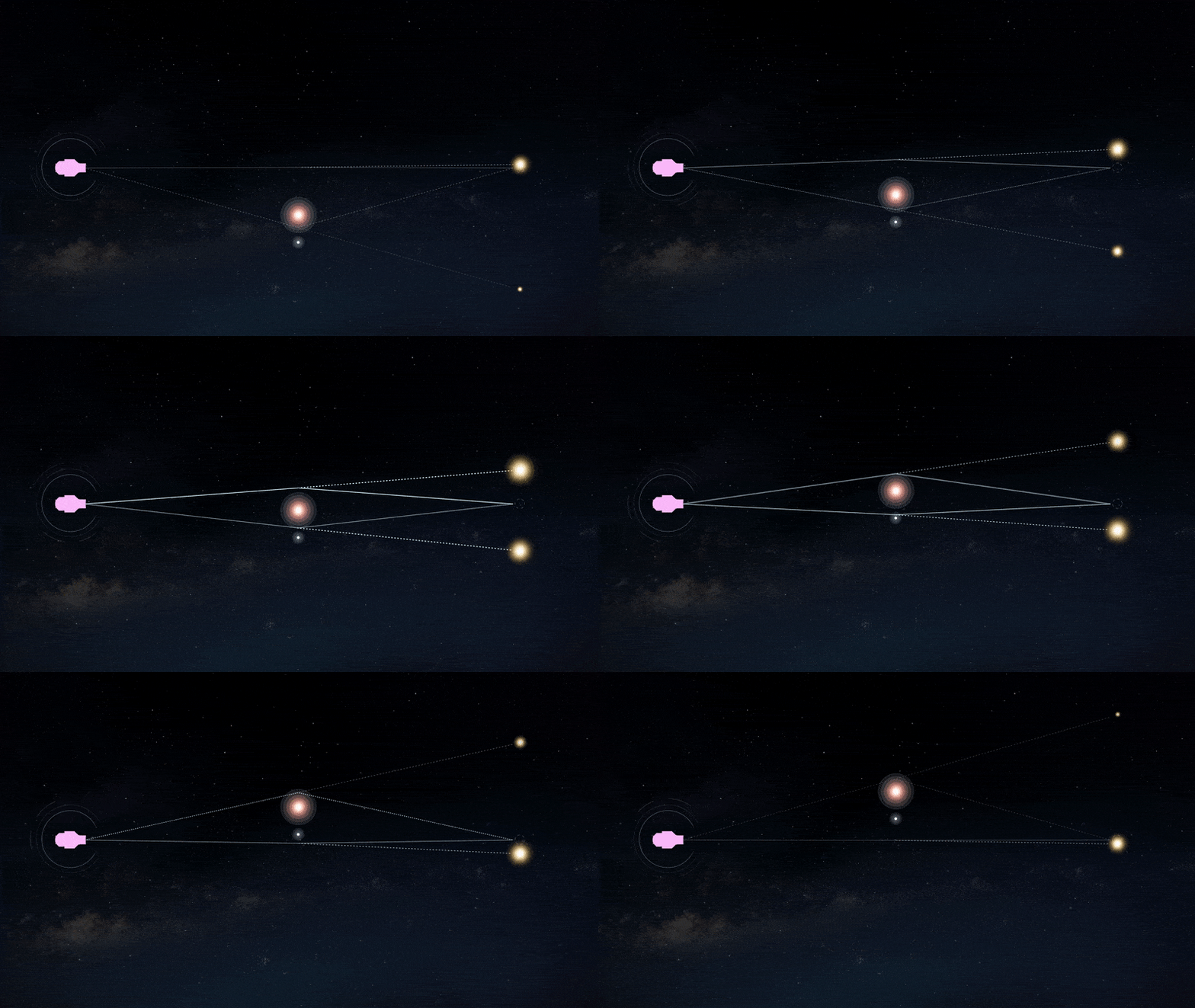 This animation illustrates the concept of gravitational microlensing. When one star in the sky (shown in the center of the animation) appears to pass nearly in front of another (located in the dashed circle at the right) from our vantage point, the light rays of the background star become bent due to the warped space-time around the foreground star. This star acts like a virtual magnifying glass, amplifying the brightness of the background star and causing its position to appear to slightly shift. If the nearer star harbors a planetary system, then those planets can also act as lenses, each one producing a short deviation in the brightness of the source. When astronomers find planets this way, they can measure their mass and orbital distance from their host star. NASA’s Goddard Space Flight Center/CI Lab
Lensing events happen all the time as stars cross each other’s paths, but what caught the astronomers’ eye in this particular event is that the light from the distant star was magnified twice: once from the moving star, and a second time from Gaia23bra b. This double lens effect revealed the hidden planet.
Less than 5% of all known exoplanets were discovered this way, and the one-off nature of lensing events means we’re unlikely to get another glimpse at Gaia23bra b anytime soon.
“Microlensing events happen once and they’re gone — they don’t repeat. I like to joke that we’ll probably find the first Earth analog with microlensing, and then wave at it as it goes by because we’ll never see it again,” said Mallory Harris, PhD candidate at the University of New Mexico and lead author of the study.
But they are nevertheless valuable opportunities for exoplanet hunters.
“With microlensing, we can find smaller planets with greater orbital distances, including worlds in the habitable zone of their star and even farther away,” Harris said.
By combining the transit method with gravitational microlensing, a larger selection of planet types is open to discovery.
The discovery also highlights the importance of maintaining multiple complementary telescope types to optimize planet-hunting strategies. TESS’s discovery would not have been possible if the lensing effect had not first been captured by ESA’s Gaia spacecraft, which recently completed its science observations mapping the Milky Way in three dimensions.
Gaia’s wide field of view over long time periods told astronomers where to look, so that more precise instruments like TESS could then see in more detail what Gaia could not on its own: a hidden planet. Only by combining the strengths of both instruments was this discovery made possible.