Universe Today
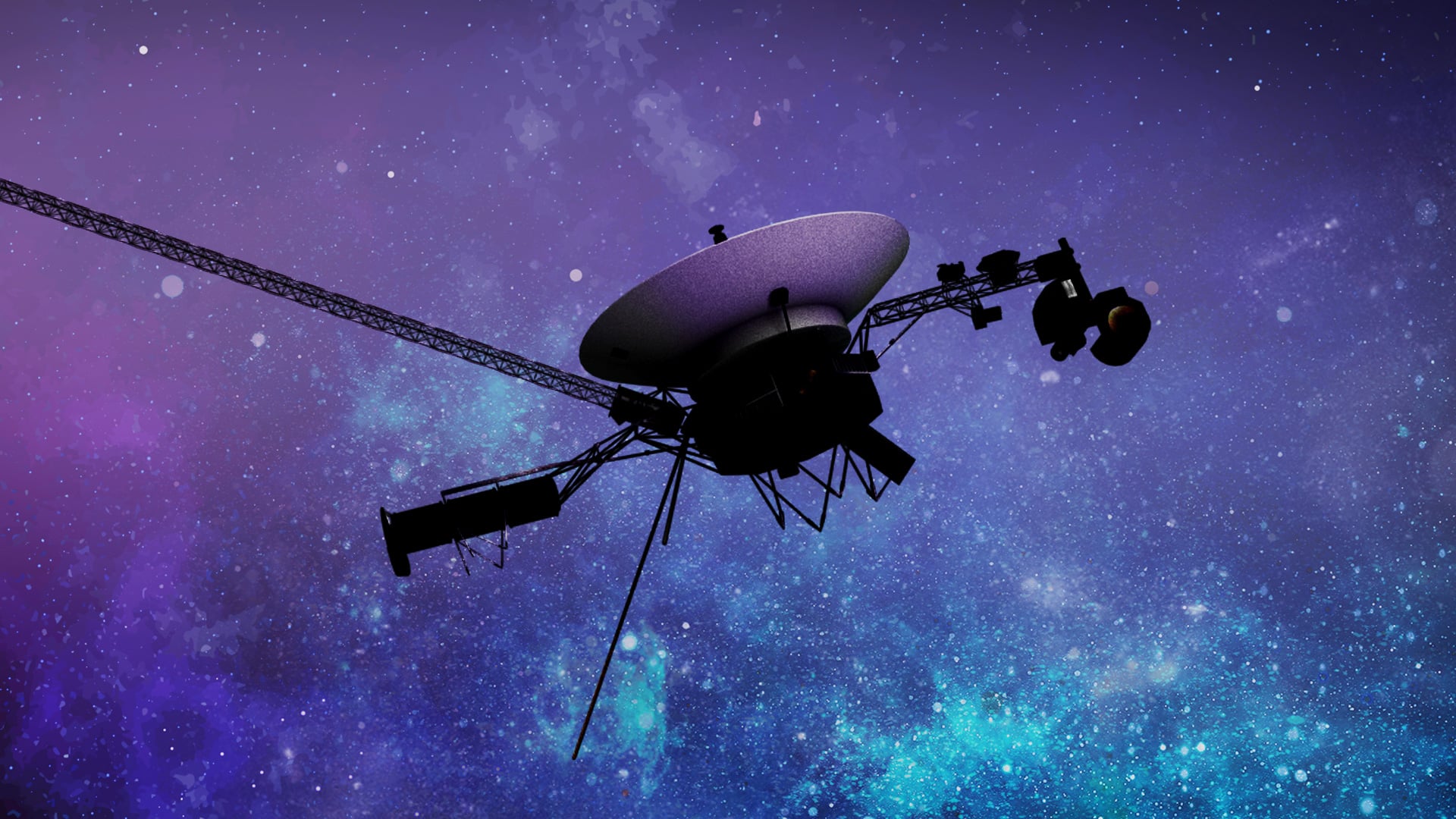
The farthest spacecraft from Earth, the Voyager 1 probe, has just shut down another instrument. The reason for this shutdown is that Voyager's mission team wants to conserve power, which the aging spacecraft is in short supply of. The instrument in question is the Low-energy Charged Particles (LECP) experiment, which the Voyager probes used to study solar wind and the interstellar medium (ISM). Basically, the decision was made to power down this instrument so humanity's first interstellar mission could continue exploring the Universe.
Like its sister mission, Voyager 1 uses three Radioisotope Thermoelectric Generators (RTGs), devices that convert heat from decaying Plutonium-238 into electricity. After nearly 50 years of continuous operation, these generators are running low on power. Engineers at NASA’s Jet Propulsion Laboratory (JPL) sent commands to shut down the instrument on April 17th, following the shutdown of the Cosmic Ray Subsystem (CRS) in February 2025 and the imaging system, ultraviolet spectrometer, and other instruments since 1990.
The LECP has been operating almost without interruption since the Voyager 1 and 2 probes launched in 1977. Meanwhile, the power output of Voyager 1's RTGs has been declining by about 4 watts per year, and as of April 2026, they are producing less than half their original power. With power margins becoming razor-thin, the team has been forced to shut down heaters and instruments while ensuring the spacecraft's fuel lines don't freeze. This is a careful balance that requires the mission team to determine which instruments can be sacrificed at this point in the mission.
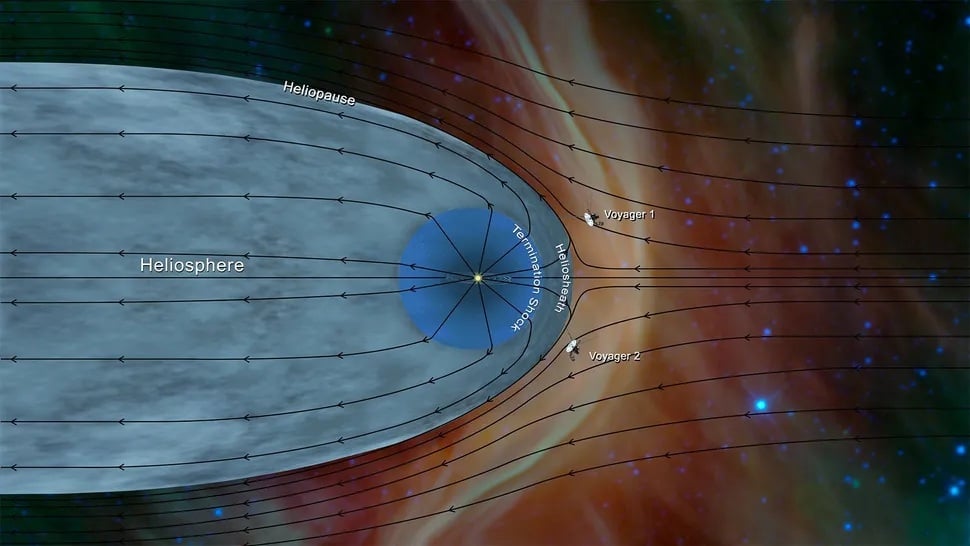 NASA’s Voyager 2 spacecraft entered interstellar space in November 2018, more than six years after its twin, Voyager 1, did the same. Credit: NASA /JPL-Caltech
The decision was made after Voyager 1 experienced an unexpected drop in power on Feb. 27th during a planned roll maneuver. A sudden power drop can trigger the spacecraft's undervoltage fault protection system, which automatically shuts down instruments to keep the spacecraft operational. If that were the case, the mission team would be forced to undergo the lengthy recovery process. Given Voyager 1's distance from Earth (25 billion km; 15 billion mi), it would take about 23 hours for the command sequence to reach the spacecraft and more than 3 hours to complete.
The decision did not come easy. Since Voyager 1 left the Solar System, the LECP has provided critical data about the structure of the ISM, detecting pressure fronts and variations in particle density beyond the heliosphere. This magnetic field, created by solar wind, forms a protective bubble that shields the Solar System from harmful cosmic radiation. At the outer boundary where it meets the ISM, it forms a "bow shock." The two Voyager probes are the only spacecraft far enough from Earth to provide information on this region.
Luckily, the Voyager science and engineering teams established a plan for which instruments would be shut down, and in what order. For Voyager 1, the LECP was next on the list for Voyager 1, which had already been shut off on Voyager 2 back in March 2025. As Kareem Badaruddin, Voyager mission manager at JPL, explained in a NASA press release:
While shutting down a science instrument is not anybody’s preference, it is the best option available. Voyager 1 still has two remaining operating science instruments — one that listens to plasma waves and one that measures magnetic fields. They are still working great, sending back data from a region of space no other human-made craft has ever explored. The team remains focused on keeping both Voyagers going for as long as possible.”
 Ed Stone, the project scientist of NASA’s Voyager mission, co-hosted a news conference on June 6th, 1990, during which the mission revealed the “Solar System Family Portrait." Credit: NASA/JPL-Caltech
A small motor that spins the LECP sensor to scan in all directions will remain on so the team can turn the instrument back on if more power becomes available in the future. In the meantime, the engineers are taking the time this provides to finalize a larger strategy to extend the mission, which they call the "Big Bang." The plan involves turning off a group of powered devices simultaneously and activating low-power alternatives to keep the spacecraft warm enough to continue gathering science data.
The team will implement the Big Bang on Voyager 2 first since it has slightly more power and is closer to Earth. Tests are planned for May and June of this year, and if they go well, the team will attempt to implement the plan on Voyager 1 no sooner than July. If the plan frees up power, the LECP could be reactivated to continue gathering data on the ISM.
Further Reading: NASA