Universe Today
Finding planets used to be a painstaking business. Astronomers would fix their gaze on a handful of carefully chosen stars, watch and wait, and hope to catch the faint dip in starlight that signals a world passing in front of its host. It worked. It worked brilliantly. But it also meant we were fishing with a very small net in a very big ocean.
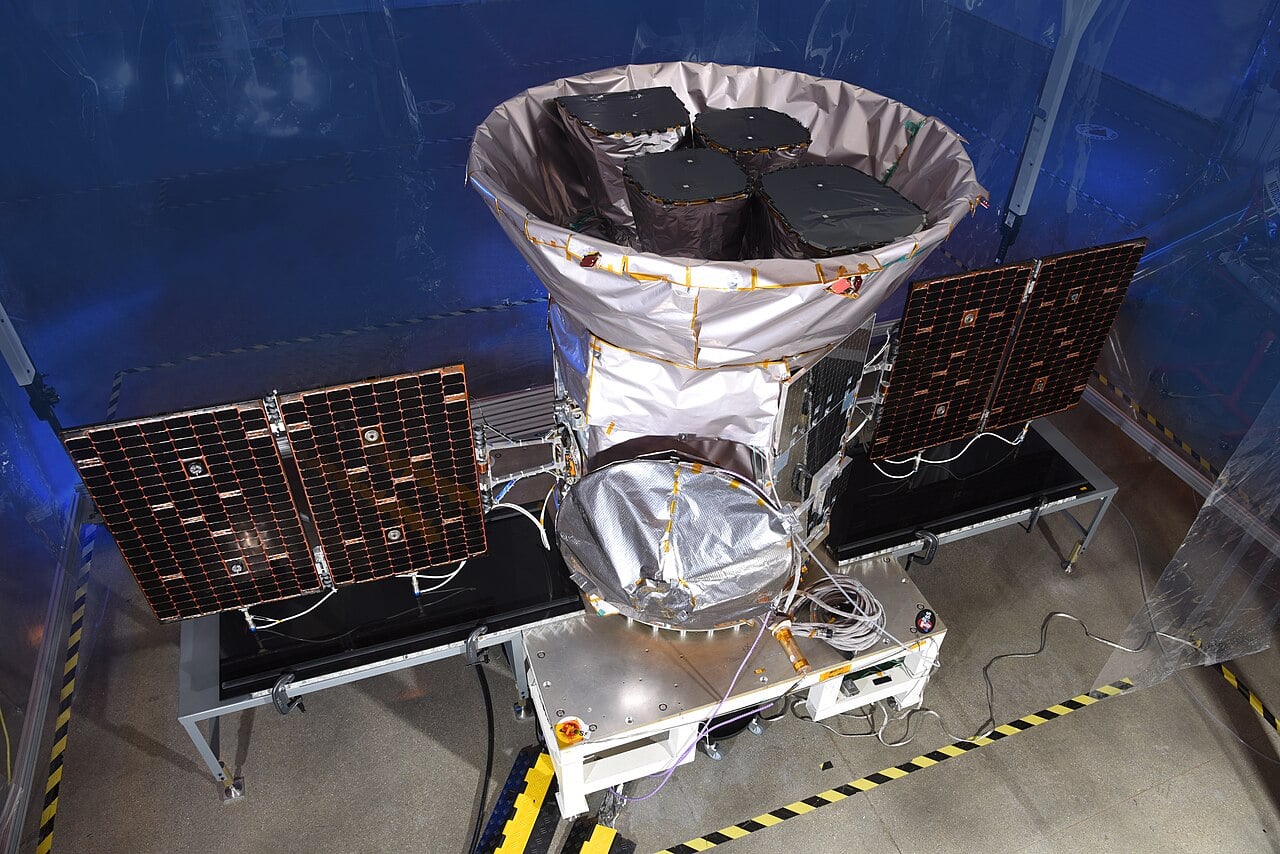
A team led by researchers at Princeton University has turned NASA's TESS space telescope into something altogether more ambitious, a systematic planet hunting machine capable of scanning not thousands but tens of millions of stars in a single sweep. Their project, called T16, has processed the light curves of 83,717,159 stars observed during the first year of TESS operations, reaching deep into the sky to stars sixteen times fainter than those typically targeted by official TESS searches.
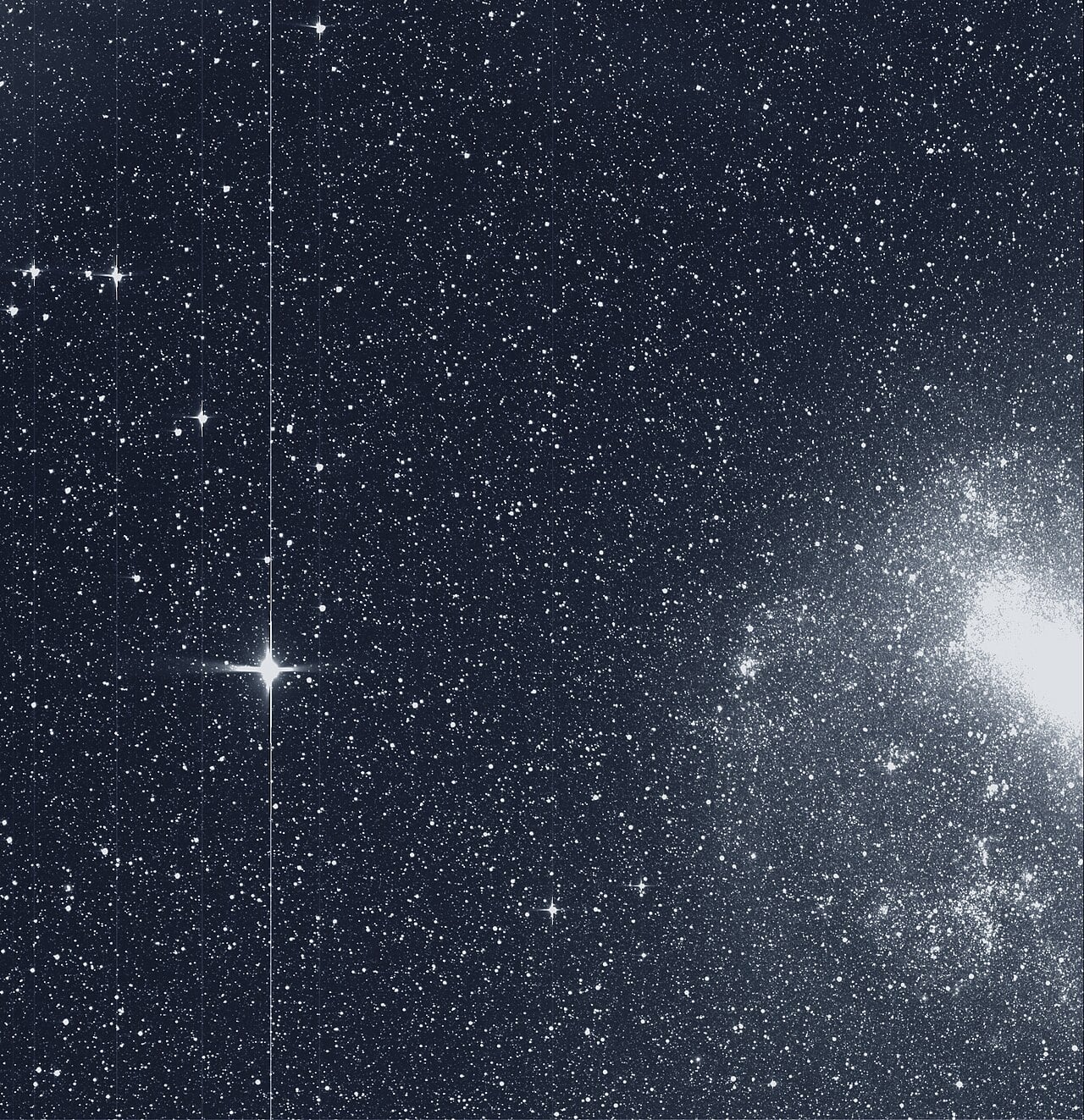 First light from TESS captured on 7 August 2018 (Credit : NASA/MIT/TESS)
Most planet searches focus on bright, nearby stars because they are easier to study in detail. But the universe doesn't conveniently put all its planets around conveniently bright stars. By pushing into fainter territory, the T16 team are opening a vast new hunting ground that previous searches have essentially ignored.
From the countless stars available, the team identified 11,554 planet candidates, worlds that reveal themselves by causing a tiny, repeating dimming as they cross the face of their star. These aren't confirmed planets yet since most will need follow up observations to rule out other explanations. The sheer scale of the haul from this latest study is unprecedented.
Fortunately, the team didn't stop at just producing the initial catalogue. They selected one candidate for immediate confirmation, a world orbiting the star TIC 183374187 and to that end deployed the formidable 6.5 metre Magellan telescope in Chile to clinch the case. The result is a gas giant roughly the mass of Jupiter almost sprinting around its star at close range, completing an orbit in just a few days. It is the kind of world that would make our own Solar System look positively serene.
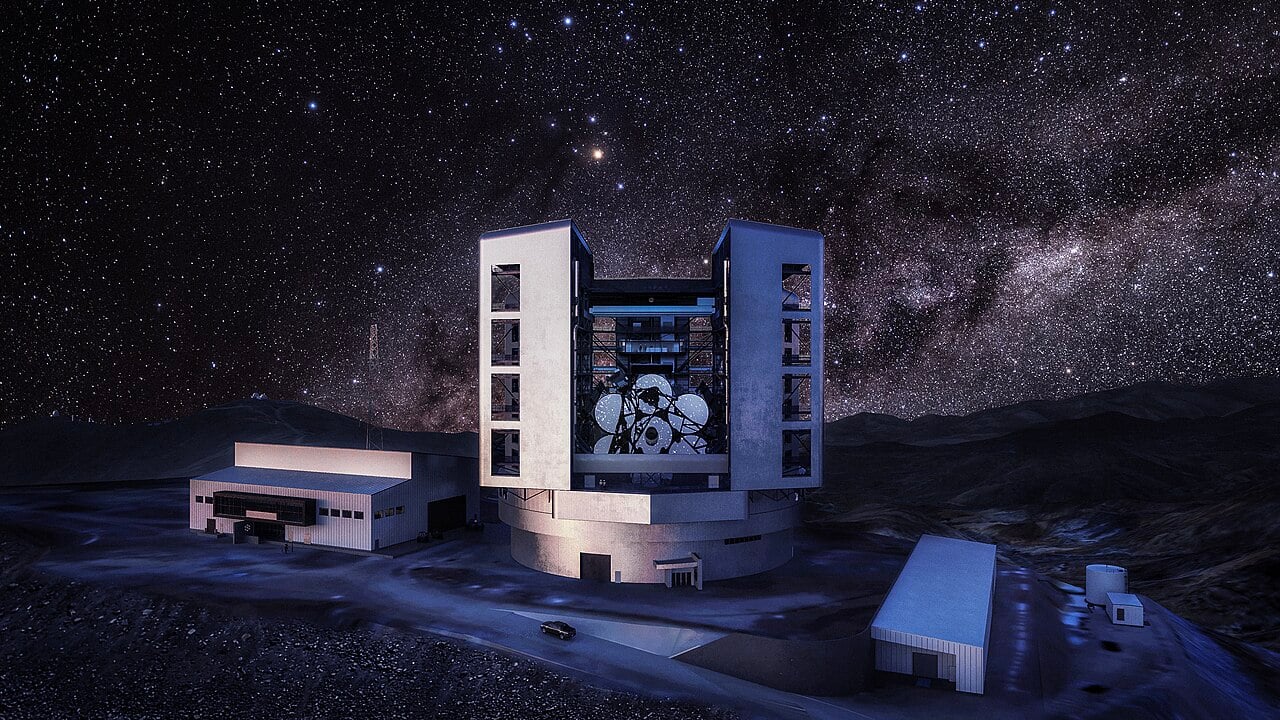 Nighttime exterior rendering of the Giant Magellan Telescope with support site buildings in the foreground at Las Campanas Observatory in the Chile Atacama Desert (Credit : Giant Magellan Telescope)
Perhaps the most significant innovation in the T16 project is the use of machine learning to sort through the data. Identifying planet candidates from 83 million light curves by hand would be impossible, instead, the algorithm does in seconds what would take teams of astronomers years. It’s a sign of where exoplanet science is heading and that’s not just bigger telescopes, but smarter instruments behind them.
With TESS continuing to observe the sky in subsequent cycles, the T16 team are already processing more data but the current haul of 11,554 candidates is just the beginning. Each one is a door waiting to be opened and behind some of them, worlds we have never imagined.