Universe Today
If humans are ever going to live and work in space, it is paramount that we can meet our basic needs far from home. This includes food and water, but the most vital element is a steady supply of clean air to breathe. This is especially important for long-duration missions to the Moon, Mars, and other deep space destinations. For any astronauts or inhabitants this far from Earth, opportunities for resupply missions are few and far between. To this end, NASA and other space agencies are looking to In-Situ Resource Utilization (ISRU) as the solution.
Simply put, this method uses local resources to ensure crew members have air, water, food, building materials, and other necessities. To address the need for clean, breathable air, NASA is conducting an experiment called the Carbothermal Reduction Demonstration (CaRD), which uses concentrated solar energy to extract oxygen from lunar regolith. The CaRD team recently completed an important test with their integrated prototype, putting the technology a step closer to enabling long-duration missions on the Moon.
As the team described in their project proposal, lunar regolith is approximately 45% oxygen by mass, the majority of which is bound in silicate minerals. This oxygen is deposited every time the Moon passes through Earth's magnetotail, a region that captures oxygen ions from Earth's upper atmosphere. Carbothermal reduction is widely used in industrial processes, typically to remove oxygen from minerals by heating them to high temperatures (using coke, coal, or charcoal) to produce pure metals. Generally, it produces carbon monoxide (CO) as a byproduct.
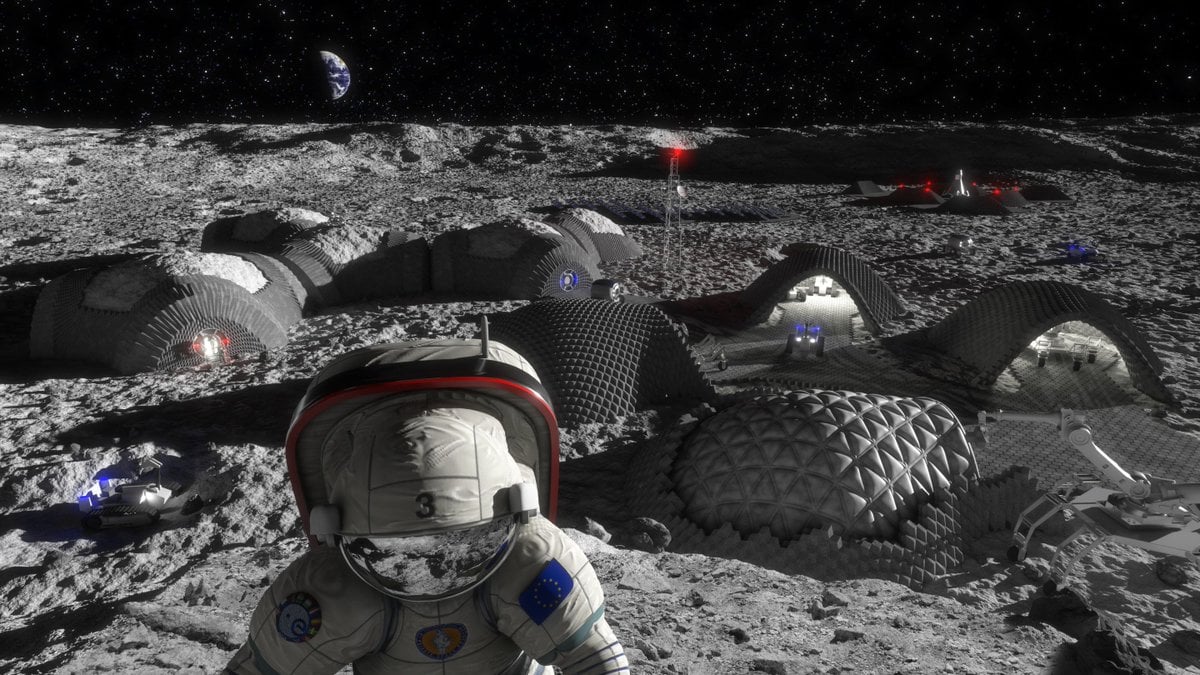 Technology that combines concentrated solar energy and lunar regolith could produce enough oxygen to support long-duration missions on the Moon. Credit: ESA
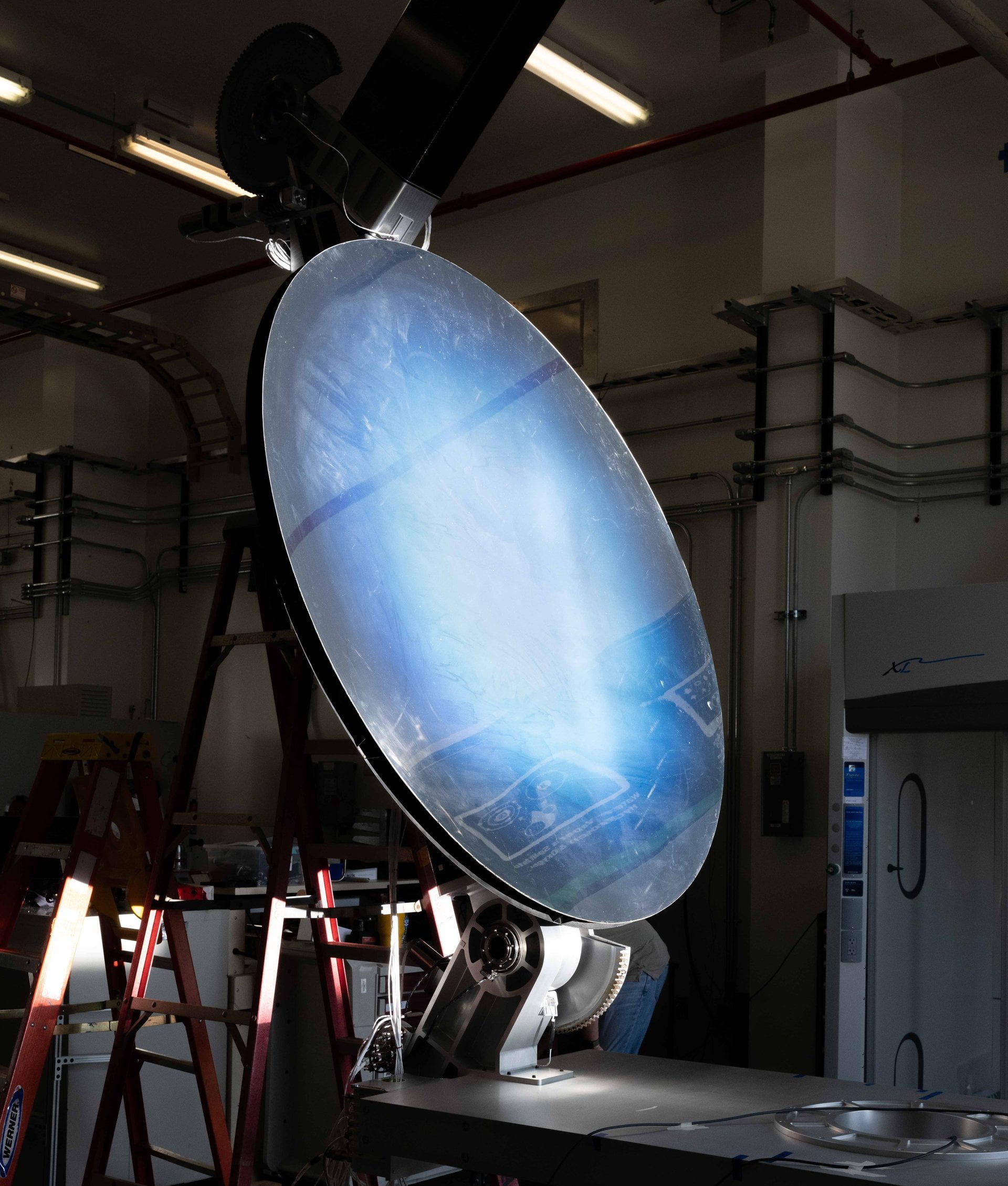
The CaRD experiment leverages this same technology to extract oxygen from regolith, but relies solely on concentrated sunlight to complete the process. Their prototype combines a carbothermal oxygen production reactor developed by Sierra Space, a solar concentrator designed by NASA’s Glenn Research Center, precision mirrors produced by Composite Mirror Applications, and avionics, software, and gas analysis systems from NASA’s Kennedy Space Center. NASA’s Johnson Space Center manages the project, systems engineering, testing, and development of key hardware and ground support systems.
During this integrated test, the team combined the solar concentrator, mirrors, and control software and tested them on lunar regolith simulant. Their results confirmed the production of CO through a solar-driven chemical reaction. When combined with downstream technology that converts carbon monoxide into oxygen, the CaRD experiment could enable a steady supply of oxygen gas for astronauts and crews working and living on the Moon. This technology could become an integral part of NASA's Artemis Program and its long-term plans to build a lunar base.
This process could also be adapted to convert carbon dioxide into oxygen and methane, providing a means for refueling on the surface. These techniques would drastically reduce the cost and complexity of sustaining a long-term human presence on the lunar surface. Last, but not least, the technology could also be adapted to extract oxygen from Martian regolith in support of NASA's Moon to Mars mission architecture.
The CaRD project was funded by NASA’s Game Changing Development program under the Space Technology Mission Directorate.
Further Reading: NASA