 Universe Today
Welcome back to our ongoing series on the Brief-ish History of Messaging Extraterrestrial Intelligence (METI). In our previous installments, we examined the inspiration and earliest experiments in this field. We then looked at how it co-evolved with the Search for Extraterrestrial Intelligence (SETI), leading to the first true attempt to send a message of greeting to the stars (the Arecibo Message). We followed up with a look at two of the brightest minds in the business (Frank Drake and Carl Sagan), the brains behind the first interstellar messages (the Pioneer Plaques and the Voyager Golden Records).
Today, we'll look at experiments conducted since the end of the Space Age and the turn of the century. And just like SETI, the number of experiments has grown considerably, thanks to renewed interest in space exploration following new efforts to explore Mars and the Solar System. This included the first orbital observatory, the venerable Hubble Space Telescope, and deep space probes like the Galileo, Cassini-Huygens, Magellan, and Venus Express missions.
This era also saw revitalized efforts to search for signs of past (and maybe present) life on Mars. These included orbiters like the Mars Odyssey and Mars Express missions, and rovers and landers like Mars Pathfinder and Sojourner, as well as Spirit and Opportunity. These experiments also reflected the changing nature of space exploration, which included missions from emerging space agencies, non-profits, and private entities.
All of these experiments built on the legacy of the Arecibo Message, adding additional information and personal touches where the creators desired.
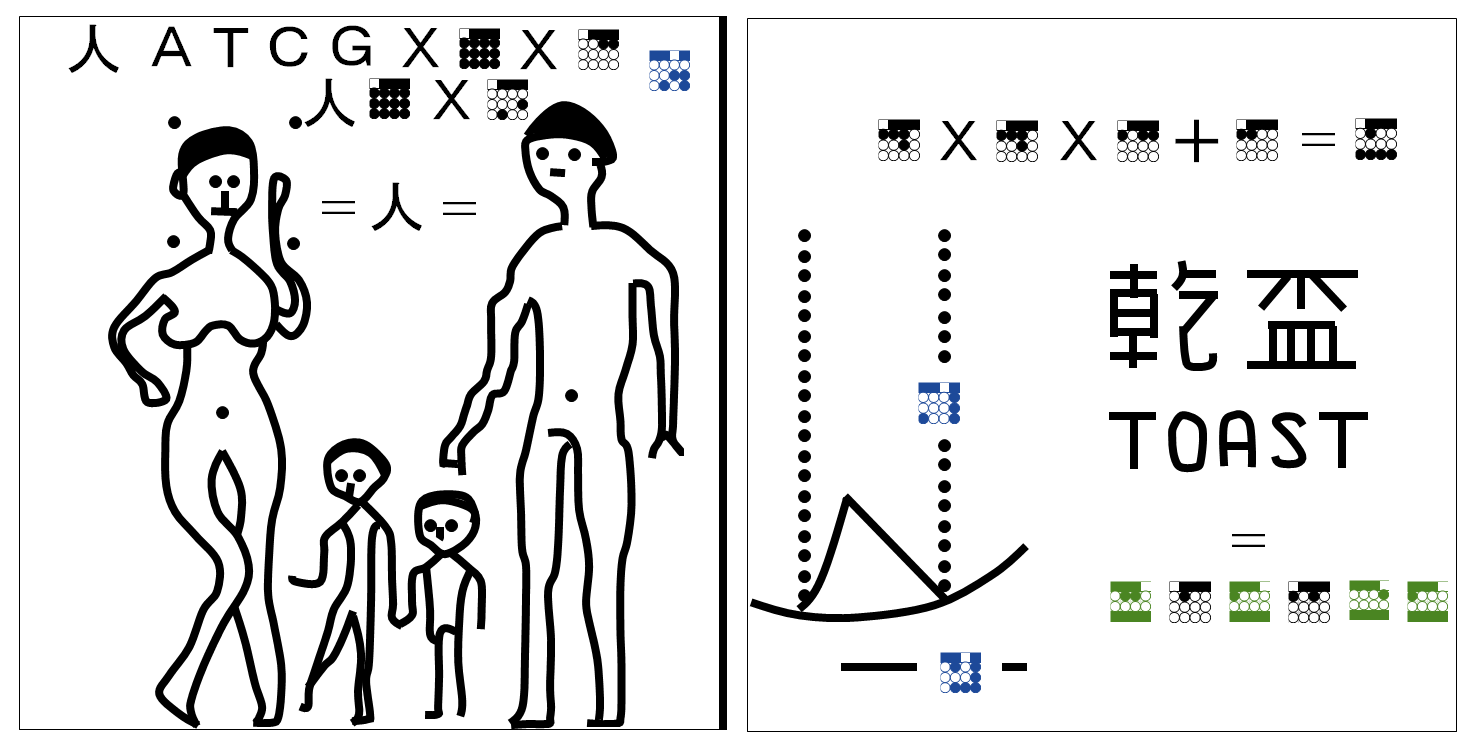 An explanatory diagram of a message transmitted in 1983 by Masaki Morimoto and Hisashi Hirabayashi to Altair. Credit: ShizuShizu/Wikimedia
Message to Altair
In 1983, astronomers Masaaki Morimoto and Hisashi Hirabayashi used the Stanford Dish radio telescope at Stanford University to transmit the Message to Altair (or the Call to the Cosmos 83'). The message was produced in collaboration with the Japanese publication Weekly Shonen Jump and transmitted on August 15th, 1983, to commemorate the publication's 15th anniversary. The destination was Altair, an A-type blue-white giant star located 16.7 light-years from Earth, which represents the Shinto deity Hikoboshi in the Tanabata legend.
Like the Arecibo Message, the content was a symbolic, graphic message meant to convey information about humanity, life on Earth, and peace. Unlike the Arecibo message, the Message to Altair consisted of several pages rather than a single, long pictograph, each dealing with a different subject. The first page included mathematical information, such as the numbers 1 to 12, prime numbers, powers of 3, formulas for indicating addition and multiplication, and chemical elements essential to life.
For this, Morimoto and Hirabayashi chose hydrogen, helium, carbon, nitrogen, and oxygen, the building blocks of stars and planetary systems. Several other molecules were included, including hydroxide, water, nitrous oxide, formaldehyde, hydrogen cyanide, and their respective wavelengths. All of these chemicals play a central role in prebiotic chemistry and the formation of organic molecules that give rise to life.
Page two included information on the Solar System, including (from top to bottom) the Sun, the planets in order of distance, some of the larger moons, and their equatorial radii and mean distances from the Sun. Pages three and four included the chemical formulae for DNA compounds, as well as showing DNA structure and replication. This was followed by a series of drawings that showed different types of life forms on Earth, and they were arranged to convey the process of biological evolution.
They begin with pictures of early primitive life, followed by jellyfish, fish, amphibians, lizards, early mammals, apes, and then humans. Like the Pioneer Plaques, this image shows a man and a woman with two children between them. This was followed by a close-up illustration of the woman's face waving hello. The last page showed the transmission parameters: the total number of bits, the transmission wavelength, and the radius of the radio telescope that beamed the message.
It also contained the Japanese and English spelling for the word "toast," followed by the chemical formula for ethanol alcohol - in short, the message concludes with the raising of a toast with an alcoholic drink.
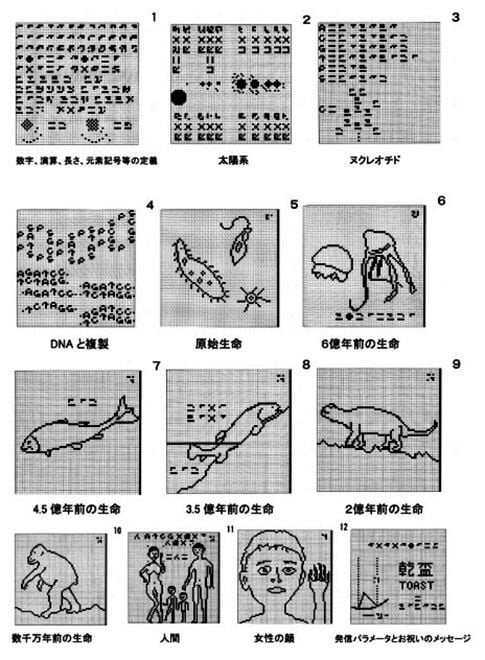 The thirteen pictures that make up the Message to Altair, listed in order (left to right, top to bottom). Credit: Shinya Nurasawa
As Altair is approximately 17 light-years distant, the message would have arrived around 2000, and the window for a reply would open by 2017. In 2023, Hyogo University astronomer Shin-ya Narusawa (who knew Morimoto before his death) asked the Japan Aerospace Exploration Agency (JAXA) to help search for a possible reply. JAXA obliged and used the radio antenna at the Usuda Space Observatory to observe Altair for an hour at 10 p.m. on August 22nd, 2023.
The date was significant because it also fell on Tanabata in the old Japanese calendar and is the only day of the year when the deities Orihime and Hikoboshi (represented by Vega and Altair, respectively) are allowed to meet. The observations detected no signals, but Narusawa said he intends to continue observing and collaborating with other research institutions.
The Cosmic Calls
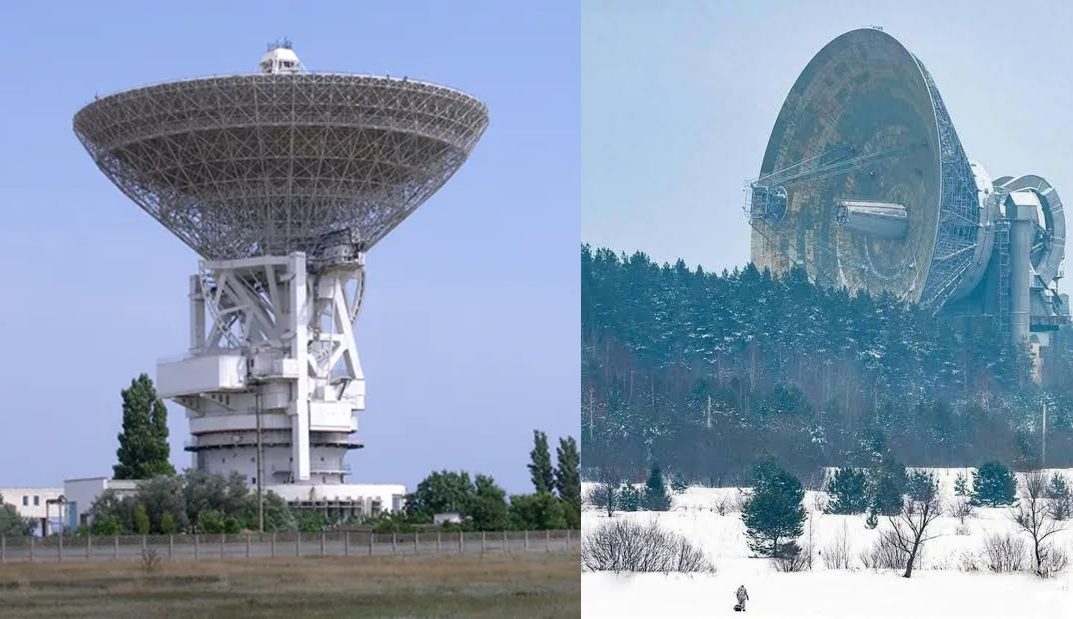
Between 1999 and 2003, three METI experiments were conducted using the Evpatoria Planetary Radar (EPR), a Soviet-era facility located in the Crimea for deep-space communications and radio astronomy. All four projects were organized with help from famed Soviet-Russian radio engineer, astronomer, and SETI researcher Alexander Zaitsev. As we addressed in part I of the series, he coined the term METI in his 2006 paper, Messaging to Extra-Terrestrial Intelligence.
The first project to use the EPR RT-70 radio telescope was the Cosmic Call, which included two broadcasts, one sent in 1999 and the other in 2003. The venture was a crowdsourced effort by Texas-based startup Team Encounter, Canadian astrophysicist Yvan Dutil, Russian scientists (including Zaitsev), and Eastern European radio engineers.
The message included contributions by Dutil and his fellow physicist Stéphane Dumas. Their primer was inspired by Hans Freudenthal's 1960 book Lincos: Design of a Language for Cosmic Intercourse, which describes a language designed to be understandable to an extraterrestrial intelligence (ETI). Using Lincos, Dutil and Dumas' message (DDM) was carefully structured to include pictograms showing mathematics, physics (the hydrogen spectrum), and related concepts.
The second part consisted of a series of pictograms created by Richard Braastad of Team Encounter, the Braastad Message (DM). It used mathematical symbols to describe a solar sail (another project Team Encounter was working on), including its dimensions, payload, trajectory, and projected launch time. This was followed by the original Arecibo Message (AM), the company's Team Encounter 2001 Staff Message (ESM), and a message composed with input from the public - the Public Part (PP).
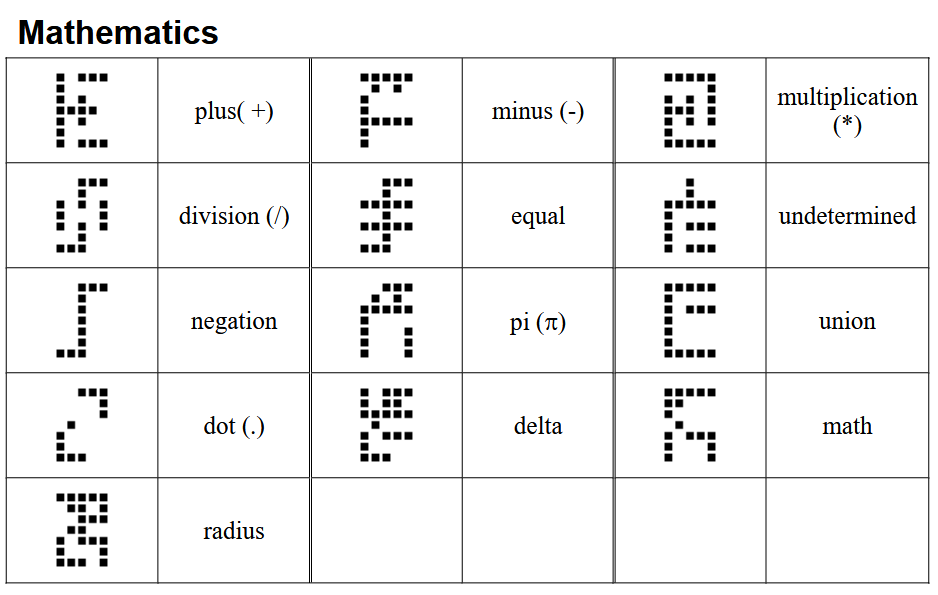 The second page of the primer prepared by Dutil and Dumas, denoting mathematical concepts (part of the Cosmic Call). Credit: Dumas, S.
The broadcast was broken into four sessions, lasting a total of 40 hours, with each session targeting a different Sun-like (G-type) star system. These included 16 Cygni A on May 24th, 1999, a G-type star in a triple-star system located 69 light-years from Earth. On June 30th, 1999, the target was 15 Sagittae, another G-type star about 58 light-years from Earth in the Sagittarius Constellation. Lastly, and again on June 30th, 1999, the team transmitted to HD 178428, a G-type star located 69 light-years away, also in the Sagittarius Constellation.
Each session of Cosmic Call 1 transmitted the scientific parts (DDM, BM, AM, and ESM) three times at 100 bits per second, followed by the Public Part (PP), sent once at 2000 bits/s. The full message was structured as:
DDM → BM → AM → ESM → DDM → BM → AM → ESM → DDM → BM → AM → ESM → PP
The second Cosmic Call, in 2003, followed a similar structure. For this message, Dutil and Dumas presented an updated version of their Lincos pictographs (DDM2), the Arecibo Message, the Bilingual Image Glossary, and the same Public Part. The structure was as follows:
DDM2 → DDM2 → DDM2 → AM → AM → AM → BIG → BIG → BIG → BM → ESM → PP,
The destinations for this message included five more stars, with all transmissions occurring on the same day (July 6th, 2033). They included GJ 49, a G-type star located 32 light-years away in the constellation Cassiopeia, on July 6th, 2003. This was followed by Gliese 208, an M-type (red dwarf) star 37 light-years away in the constellation Orion; 55 Cancri, an M-type star 41 light-years away in Cancer; HD 10307, a binary star system with a G-type primary and an M-type companion 42.6 light-years away in Andromeda; and 47 Ursae Majoris, a G-type star located 45.3 light-years away in Ursa Major.
The Cosmic Calls were the most ambitious public SETI/METI effort mounted to date. While Team Encounter went bankrupt in the years that followed, their messages established a precedent that would be joined by several more METI efforts in the new millennium. Zaitsev would play a key role in several, and his work with his colleagues would culminate by 2008 in the creation of METI International. More on that soon!
Further Reading:
- "Messaging to Extra-Terrestrial Intelligence," Zaitsev, A. (2006)
- "Report on Cosmic Call 1999," Zaitsev, A. & Ignatov, S. (1999)
- "The 1999 and 2003 messages explained," Dumas, S. (2007)
- "Synthesis and Transmission of Cosmic Call 2003 Interstellar Radio Message," Braastad, R. & Zaitsev, A. (2003)
- "How a Couple of Guys Built the Most Ambitious Alien Outreach Project Ever" - Chorost, M. Smithsonian (2016)