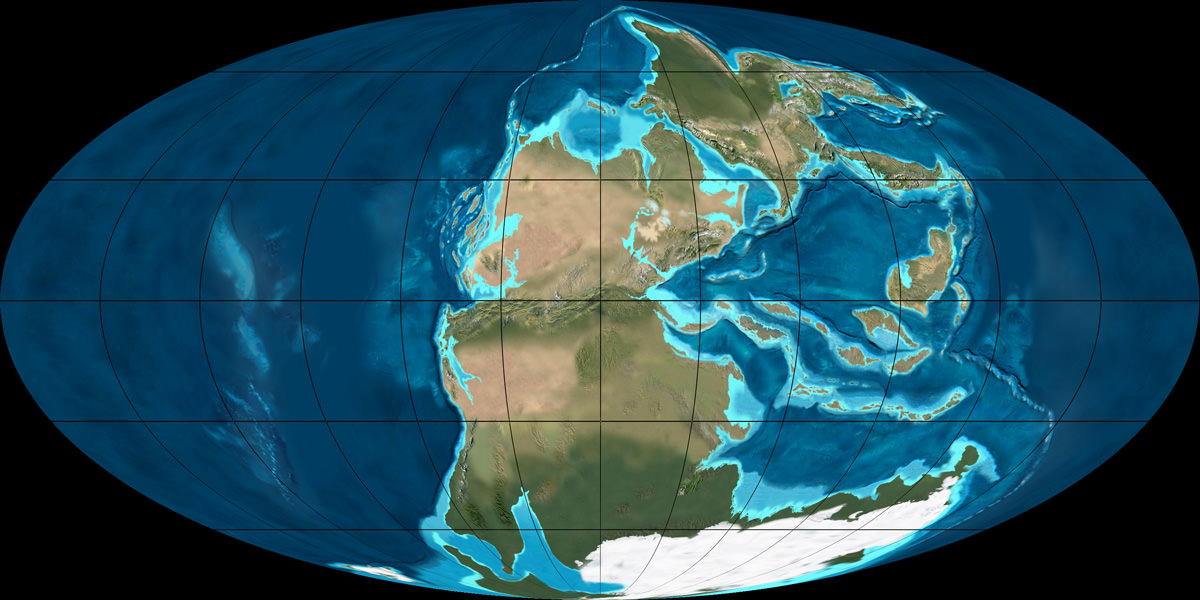
Continents might be necessary for life, especially complex life. This image shows super-continent Pangaea during the Permian period (300 - 250 million years ago). Credit: NAU Geology/Ron Blakey
On Earth, continents are likely necessary to support life. Continents ‘float’ on top of the Earth’s viscous mantle, and heat from the planet’s core keeps the mantle from solidifying and locking the continents into place.
The core is hot because of the presence of radioactive elements that came from neutron star collisions. It should be possible to calculate when the first continents formed in the Universe.
New research indicates that mobile plate tectonics—thought to be necessary for the creation of a habitable planet—was not occurring on Earth 3.9 billion years ago. Image Credit: University of Rochester illustration / Michael Osadciw
It’s widely accepted that Earth’s plate tectonics are a key factor in life’s emergence. Plate tectonics allows heat to move from the mantle to the crust and plays a critical role in cycling nutrients. They’re also a key part of the carbon cycle that moderates Earth’s temperature.
But new research suggests that there was no plate tectonic activity when life appeared sometime around 3.9 billion years ago. Does this have implications for our search for habitable worlds?
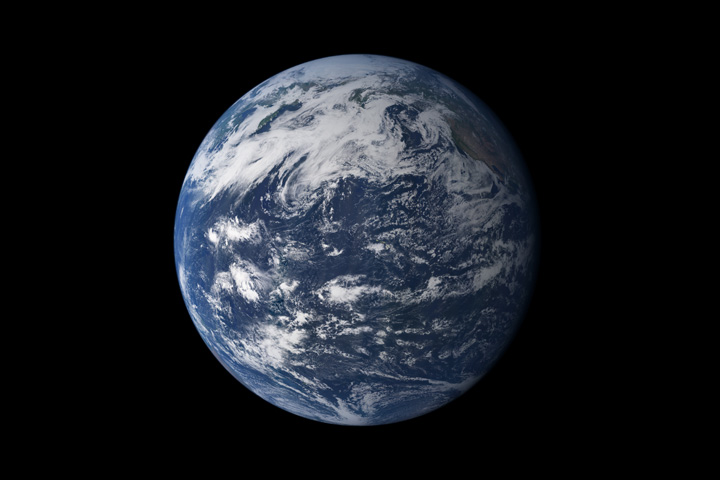
Earth, seen from space, above the Pacific Ocean. Credit: NASA
Today, the Earth’s seven continents are distributed across the surface, with North and South America occupying one hemisphere, Africa, Europe, Asia, and Australia occupying the other, and Antarctica sitting alone around the South Pole. However, these continents were arranged in entirely different configurations throughout Earth’s history. On occasion, they formed supercontinents like Gondwana (ca. 550 to 180 million) and Pangaea (ca. 335 to 200 million years ago) that were surrounded by “superoceans.”
Eventually, the Earth’s tectonic plates will come together again to form the world’s next supercontinent. According to new research led by Curtin University in Bentley, Australia, this will happen roughly 200 to 300 million years from now. As they determined through a series of simulations, this will involve the Americas drifting westward until they collide with Australia and Asia (eliminating the Pacific Ocean) and Antarctica moving north to join them. This will give rise to the new supercontinent they have named “Amasia,” which will also have profound implications for life on Earth.
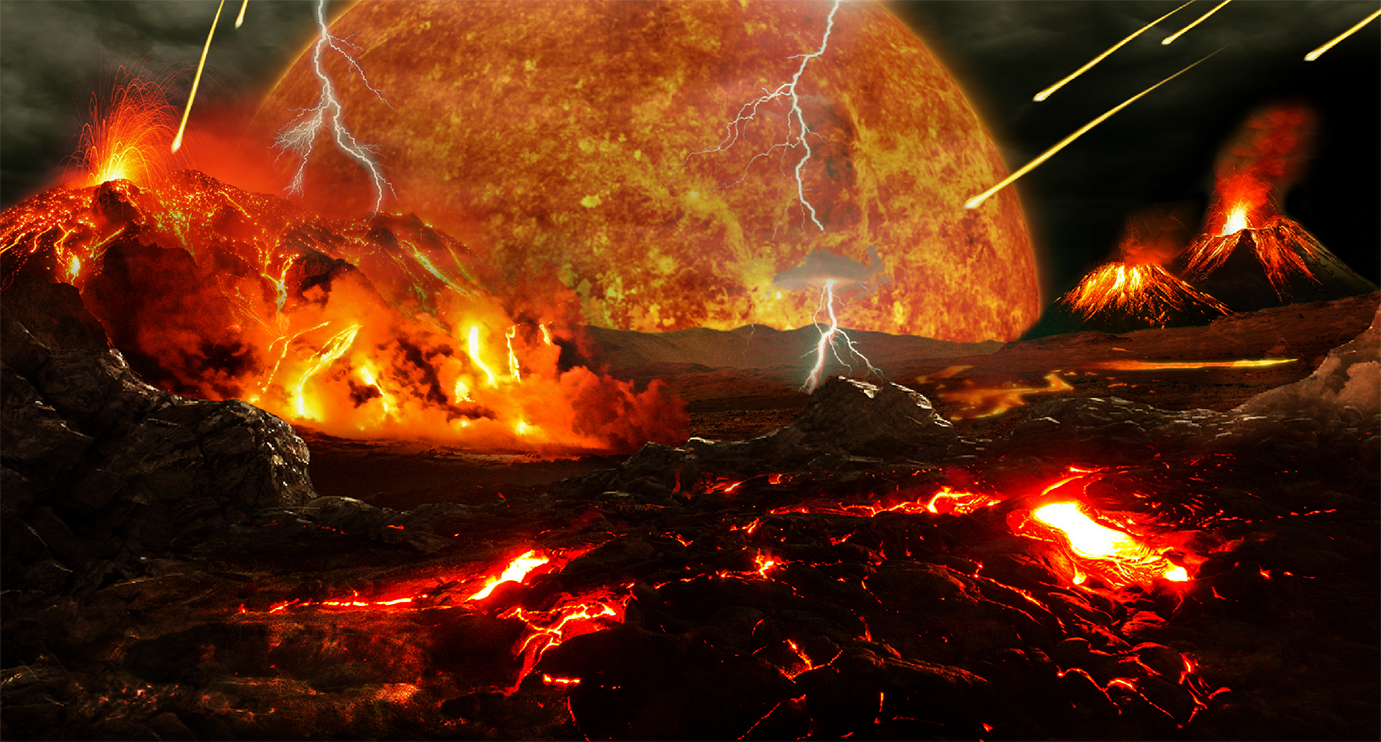
An artist's impression of the Hadean eon. Image Credit: By Tim Bertelink - Own work, CC BY-SA 4.0, https://commons.wikimedia.org/w/index.php?curid=48916334
Earth formed from the Sun’s protoplanetary disk about 4.6 billion years ago. In the beginning, it was a molten spheroid with scorching temperatures. Over time, it cooled, and a solid crust formed. Eventually, the atmosphere cooled, and life became a possibility.
But how did all of that happen? The atmosphere was rich in carbon, and that carbon had to be removed before the temperature could drop and Earth could become habitable.
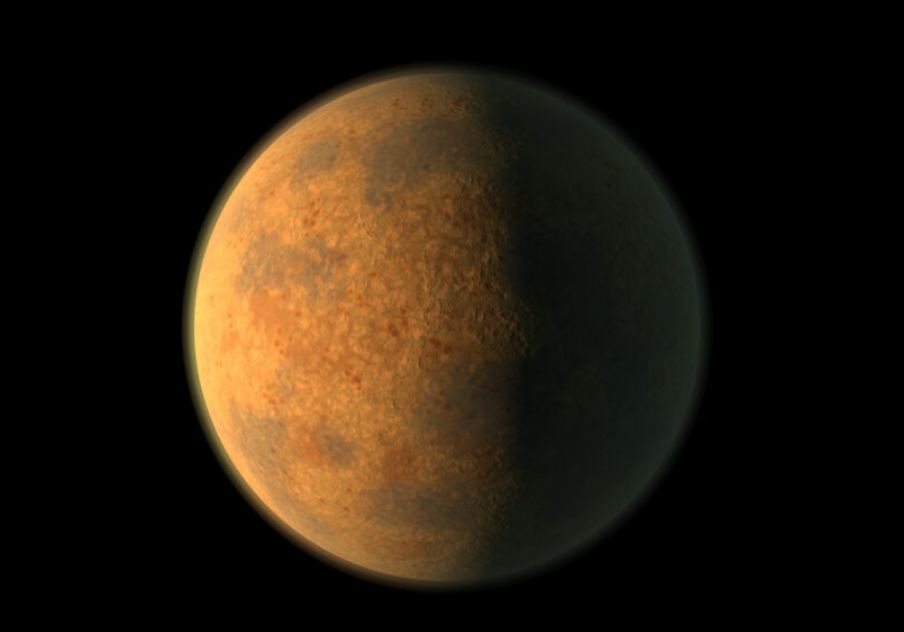
'Eggshell planets’ are rocky worlds that have an ultra-thin outer brittle layer and little to no topography. Here, an artist’s rendition of such an exoplanet. (Image: NASA)
Planets without plate tectonics are unlikely to be habitable. But currently, we’ve never seen the surface of an exoplanet to determine if plate tectonics are active. Scientists piece together their likely surface structures from other evidence. Is there a way to determine what exoplanets might be eggshells, and eliminate them as potentially habitable?
The authors of a newly-published paper say there is.
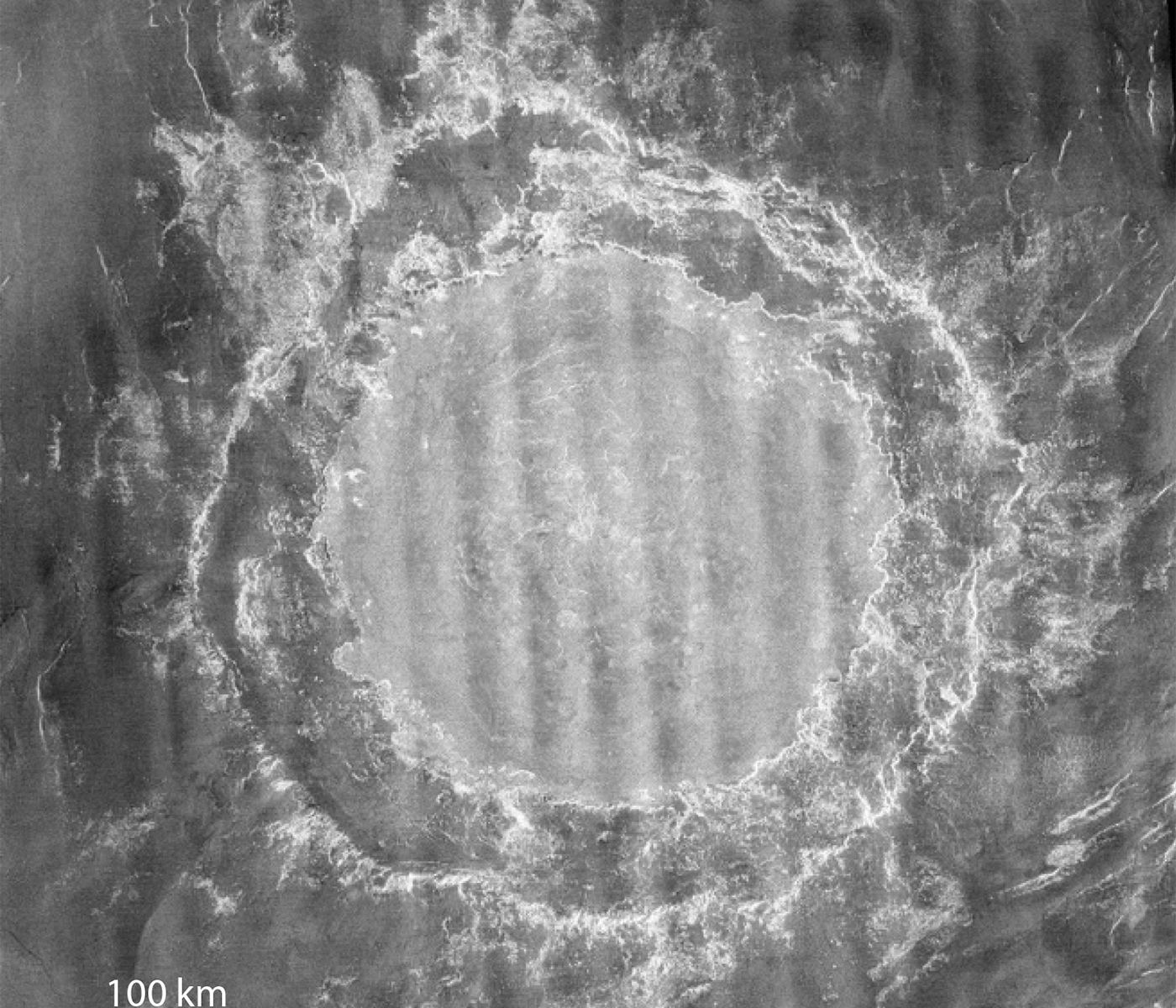
Venus may not have had Earth-like tectonic plates or volcanism for the last billion years, according to a new study. A deep look at a giant impact crater on Venus suggests the planet hasn’t experienced any tectonic activity in the recent past, and might be covered with a in a single outer plate. If so, this would essentially rule out any recent volcanic activity on the planet that many consider Earth’s twin.
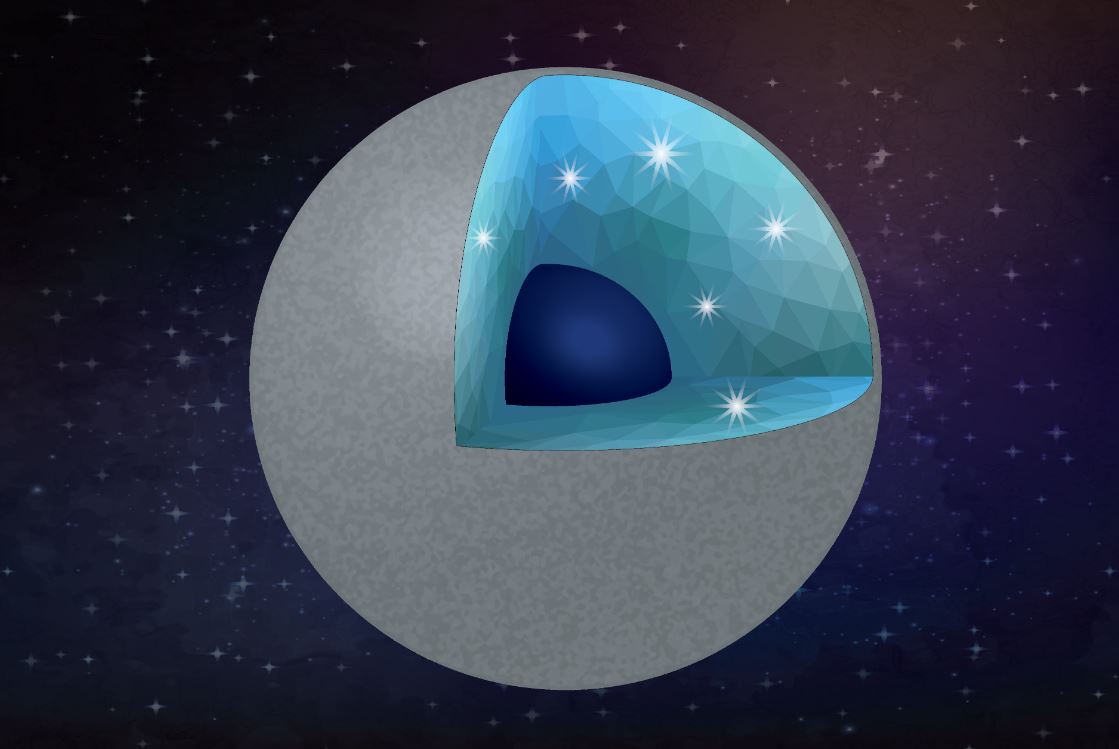
llustration of a carbon-rich planet with diamond and silica as main minerals. Water can convert a carbide planet into a diamond-rich planet. In the interior, the main minerals would be diamond and silica (a layer with crystals in the illustration). The core (dark blue) might be iron-carbon alloy. Credit: Shim/ASU/Vecteezy
Scientists are getting better at understanding exoplanets. We now know that they’re plentiful, and that they can even orbit dead white dwarf stars. Researchers are also getting better at understanding how they form, and what they’re made of.
A new study says that some carbon-rich exoplanets could be made of silica, and even diamonds, under the right circumstances.
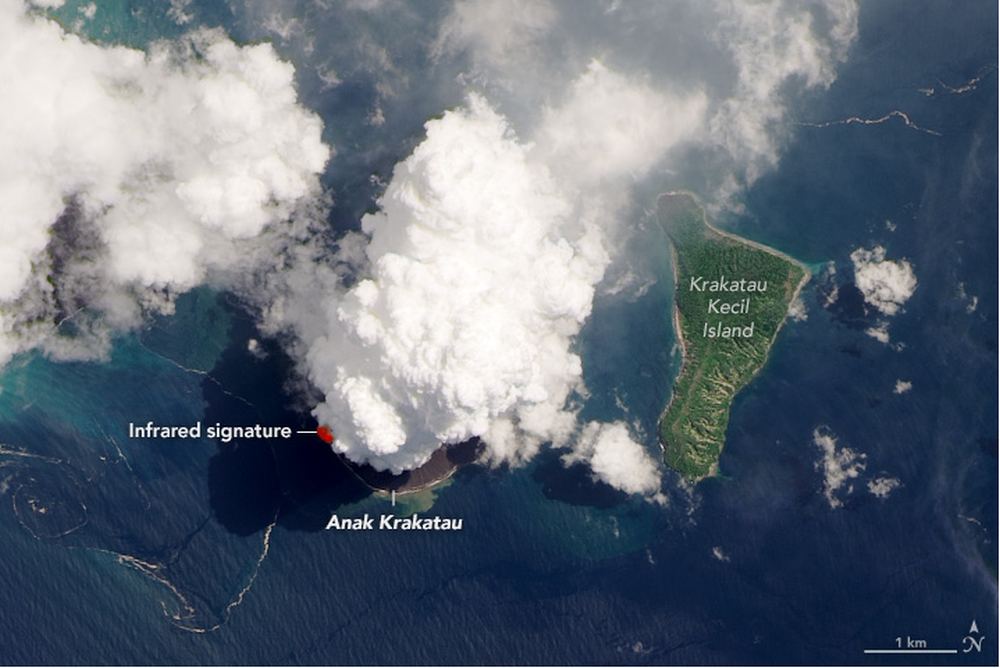
Plumes rise from Anak Krakatau on April 13th 2020 in this LandSat 8 OLI image. Image Credit: NASA Earth Observatory image by Lauren Dauphin, using Landsat data from the U.S. Geological Survey.
In between the Indonesian islands of Java and Sumatra lies the Sunda Strait. And in the Sunda Strait lies the much smaller island of Anak Krakatau, one of Earth’s active volcanoes. It’s erupted more than 50 times in the past 2,000 years, and now it’s doing it again.
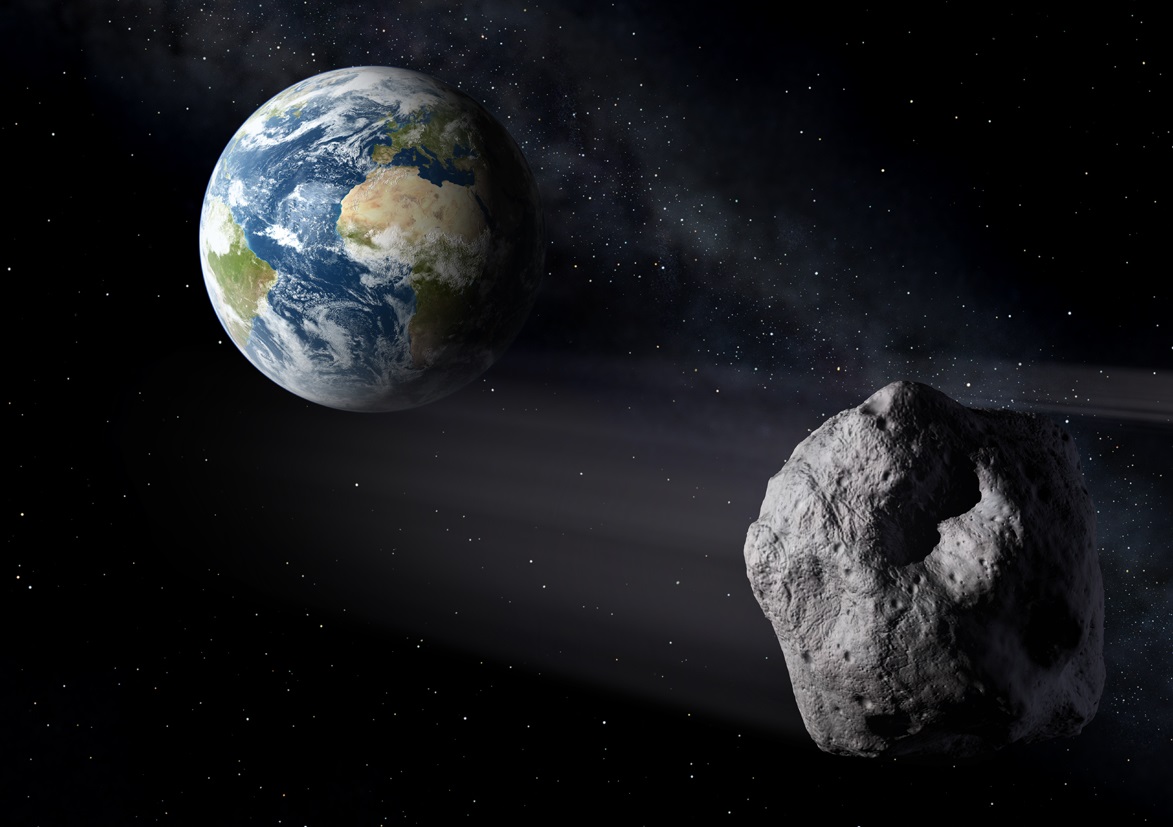
Mining asteroids might be necessary for humanity to expand into the Solar System. But what effect would asteroid mining have on the world's economy? Credit: ESA.
Plate tectonics have played a vital role in the geological evolution of our planet. In addition, many scientists believe that Earth’s geologically activity may have played an important role in the evolution of life – and could even be essential for a planet’s habitability. For this reason, scientists have long sought to determine how and when Earth’s surface changed from molten, viscous rock to a solid crust that is constantly resurfacing.
Artist's concept of Kepler-69c, a super-Earth-size planet in the habitable zone of a star like our sun, located about 2,700 light-years from Earth in the constellation Cygnus. Credit: NASA
When looking for potentially-habitable extra-solar planets, scientists are somewhat restricted by the fact that we know of only one planet where life exists (i.e. Earth). For this reason, scientists look for planets that are terrestrial (i.e. rocky), orbit within their star’s habitable zones, and show signs of biosignatures such as atmospheric carbon dioxide – which is essential to life as we know it.
This gas, which is the largely result of volcanic activity here on Earth, increases surface heat through the greenhouse effect and cycles between the subsurface and the atmosphere through natural processes. For this reason, scientists have long believed that plate tectonics are essential to habitability. However, according to a new study by a team from Pennsylvania State University, this may not be the case.
The study, titled “Carbon Cycling and Habitability of Earth-Sized Stagnant Lid Planets“, was recently published in the scientific journal Astrobiology. The study was conducted by Bradford J. Foley and Andrew J. Smye, two assistant professors from the department of geosciences at Pennsylvania State University.
The Earth’s Tectonic Plates. Credit: msnucleus.org
On Earth, volcanism is the result of plate tectonics and occurs where two plates collide. This causes subduction, where one plate is pushed beneath the other and deeper into the subsurface. This subduction changes the dense mantle into buoyant magma, which rises through the crust to the Earth’s surface and creates volcanoes. This process can also aid in carbon cycling by pushing carbon into the mantle.
Plate tectonics and volcanism are believe to have been central to the emergence of life here on Earth, as it ensured that our planet had sufficient heat to maintain liquid water on its surface. To test this theory, Professors Foley and Smye created models to determine how habitable an Earth-like planet would be without the presence of plate tectonics.
These models took into account the thermal evolution, crustal production and CO2 cycling to constrain the habitability of rocky, Earth-sized stagnant lid planets. These are planets where the crust consists of a single, giant spherical plate floating on mantle, rather than in separate pieces. Such planets are thought to be far more common than planets that experience plate tectonics, as no planets beyond Earth have been confirmed to have tectonic plates yet. As Prof. Foley explained in a Penn State News press release:
“Volcanism releases gases into the atmosphere, and then through weathering, carbon dioxide is pulled from the atmosphere and sequestered into surface rocks and sediment. Balancing those two processes keeps carbon dioxide at a certain level in the atmosphere, which is really important for whether the climate stays temperate and suitable for life.”
Map of the Earth showing fault lines (blue) and zones of volcanic activity (red). Credit: zmescience.com
Essentially, their models took into account how much heat a stagnant lid planet’s climate could retain based on the amount of heat and heat-producing elements present when the planet formed (aka. its initial heat budget). On Earth, these elements include uranium which produces thorium and heat when it decays, which then decays to produce potassium and heat.
After running hundreds of simulations, which varied the planet’s size and chemical composition, they found that stagnant lid planets would be able to maintain warm enough temperatures that liquid water could exist on their surfaces for billions of years. In extreme cases, they could sustain life-supporting temperatures for up to 4 billion years, which is almost the age of the Earth.
As Smye indicated, this is due in part to the fact that plate tectonics are not always necessary for volcanic activity:
“You still have volcanism on stagnant lid planets, but it’s much shorter lived than on planets with plate tectonics because there isn’t as much cycling. Volcanoes result in a succession of lava flows, which are buried like layers of a cake over time. Rocks and sediment heat up more the deeper they are buried.”
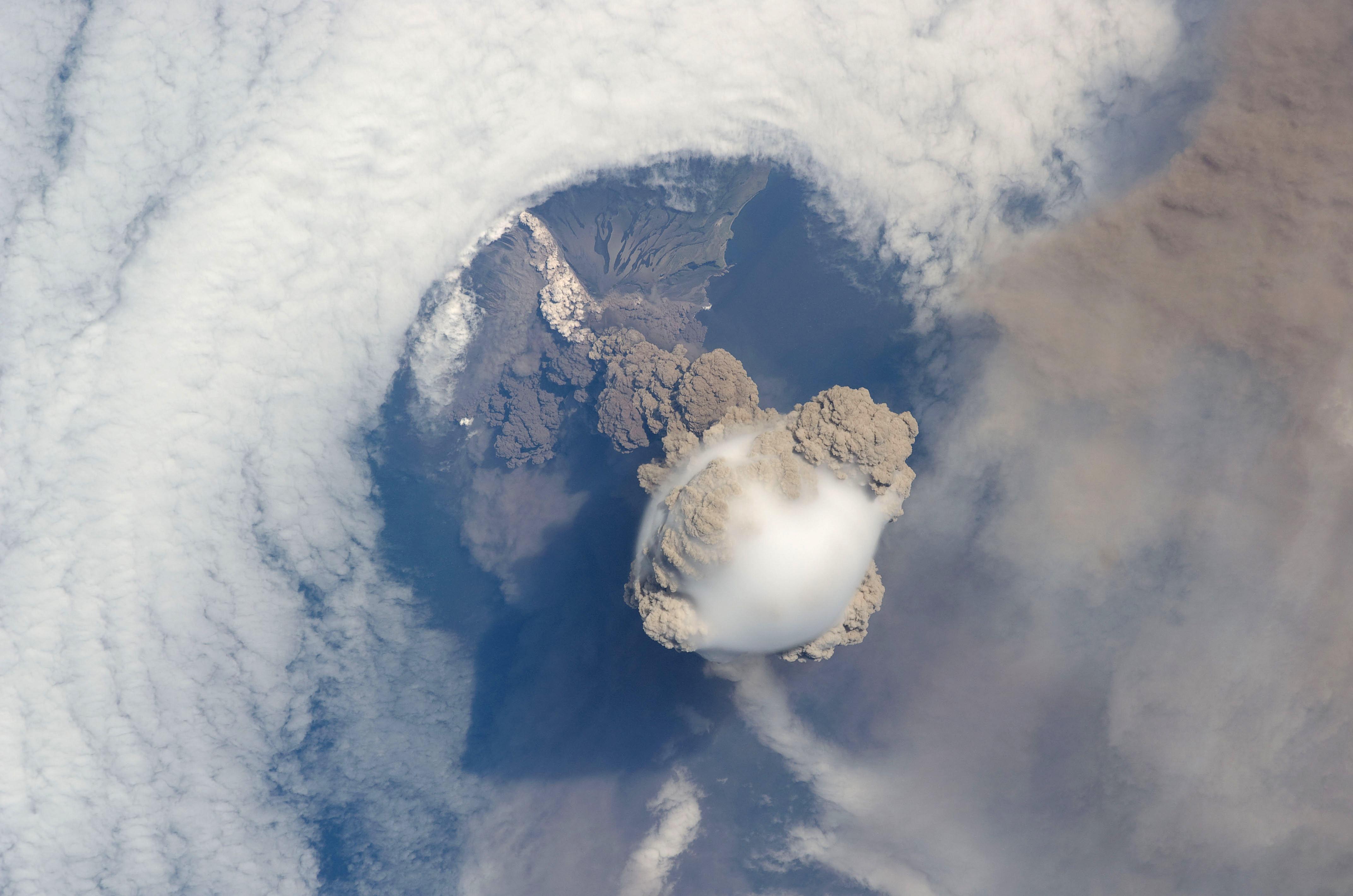
Image of the Sarychev volcano (in Russia’s Kuril Islands) caught during an early stage of eruption on June 12, 2009. Taken by astronauts aboard the International Space Station. Credit: NASA
The researchers also found that without plate tectonics, stagnant lid planets could still have enough heat and pressure to experience degassing, where carbon dioxide gas can escape from rocks and make its way to the surface. On Earth, Smye said, the same process occurs with water in subduction fault zones. This process increases based on the quantity of heat-producing elements present in the planet. As Foley explained:
“There’s a sweet spot range where a planet is releasing enough carbon dioxide to keep the planet from freezing over, but not so much that the weathering can’t pull carbon dioxide out of the atmosphere and keep the climate temperate.”
According to the researchers’ model, the presence and amount of heat-producing elements were far better indicators for a planet’s potential to sustain life. Based on their simulations, they found that the initial composition or size of a planet is very important for determining whether or not it will become habitable. Or as they put it, the potential habitability of a planet is determined at birth.
By demonstrating that stagnant lid planets could still support life, this study has the potential for greatly extending the range of what scientists consider to be potentially-habitable. When the James Webb Space Telescope (JWST) is deployed in 2021, examining the atmospheres of stagnant lid planets to determine the presence of biosignatures (like CO2) will be a major scientific objective.
Knowing that more of these worlds could sustain life is certainly good news for those who are hoping that we find evidence of extra-terrestrial life in our lifetimes.