Extrasolar Planets

Blocking Light Sheds New Light on Exoplanet Atmospheres

May 16, 2013

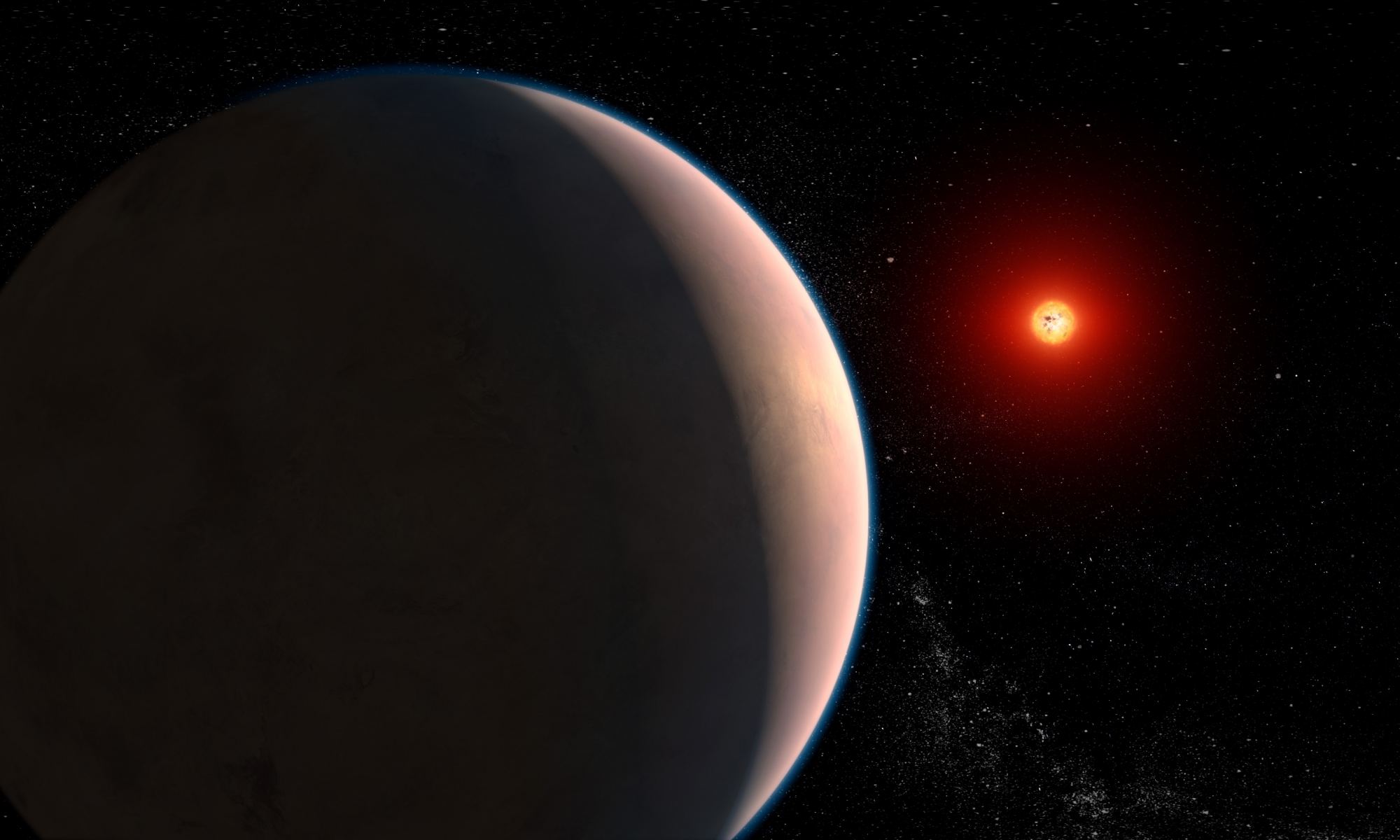
Want to stay on top of all the space news? Follow @universetoday on Twitter Exoplanets are uncanny. Some seem to have walked directly out of the best science-fiction movies. For example, we’ve discovered a planet consisting purely of water (GJ 1214b) and one with two suns (Kepler 16b). Some planets nearly scrape their host stars once [...]

Read the full article →

Watch Live Hangout: TESS and the Search for Exoplanets

May 1, 2013

Last month, NASA announced plans to launch the Transiting Exoplanet Survey Satellite (TESS) in 2017. This is a satellite that will perform an all-sky survey to discover transiting exoplanets in orbit around the brightest stars in the Sun’s neighborhood. “TESS will carry out the first space-borne all-sky transit survey, covering 400 times as much sky [...]

Read the full article →

Habitable Worlds? New Kepler Planetary Systems in Images

April 18, 2013

The Kepler mission has discovered two new planetary systems that include three super-Earth-size planets in the “habitable zone,” the range of distance from a star where the surface temperature of an orbiting planet might be suitable for liquid water. The Kepler-62 system has five planets; 62b, 62c, 62d, 62e and 62f. The Kepler-69 system has [...]

Read the full article →

Kepler Team Finds System with Two Potentially Habitable Planets

April 18, 2013

This might be the most exciting exoplanet news yet. An international team of scientists analyzing data from NASA’s Kepler mission has found a planetary system with two small, potentially rocky planets that lie within the habitable zone of their star. The star, Kepler-62, is a bit smaller and cooler than our Sun, and is home [...]

Read the full article →

The Exoplanet Naming Debate Heats Up

April 15, 2013

Following last Friday’s press release from the International Astronomical Union (IAU) concerning the naming of extrasolar planets, a heated debate has arisen over two separate but related issues. One is the “official” vs. “popular” names of astronomical objects (and the IAU’s jurisdiction over them) and the other is Uwingu’s intentions in their exoplanet naming contests. [...]

Read the full article →