
[/caption]
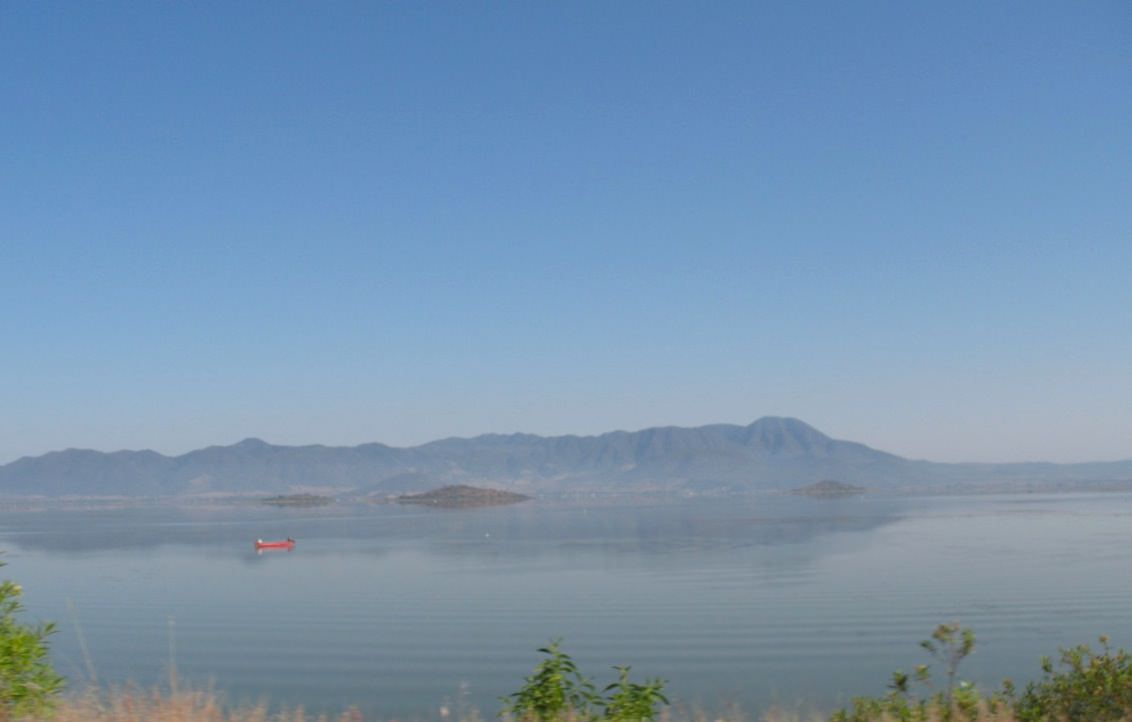
Exotic sediments found beneath the floor of Lake Cuitzeo in central Mexico support theories of a major cosmic impact event 12,900 years ago, report a 16-member international research team. The impact may have caused widespread environmental changes and contributed to the extinctions of many large animal species.
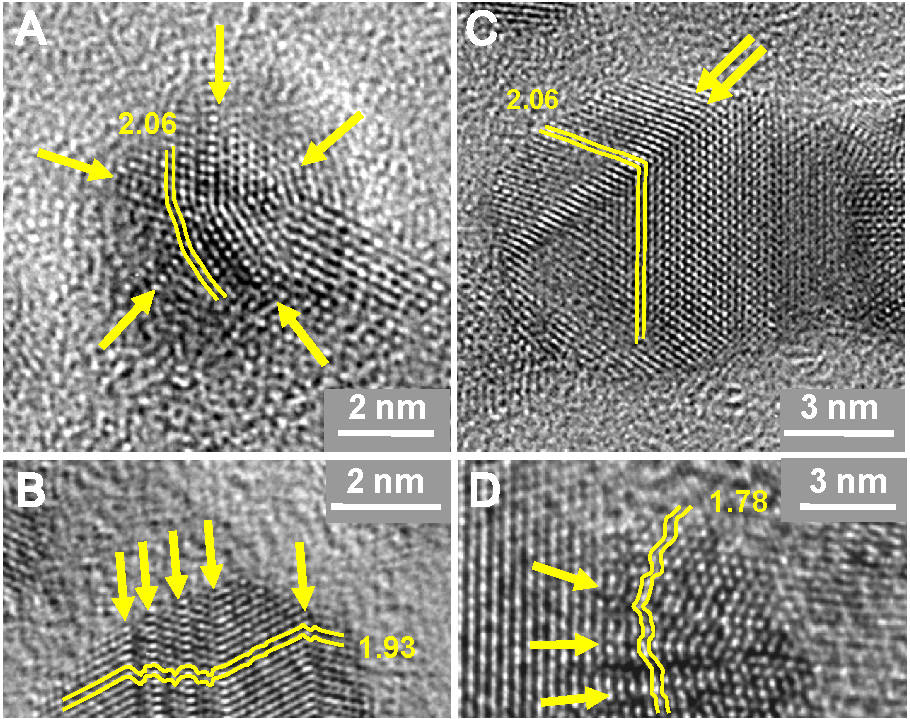
The team found a 13,000-year-old layer of sediment that contains materials associated with impact events, such as soot, impact spherules and atomic-scale structures known as nanodiamonds. The nanodiamonds found at Lake Cuitzeo are of a variety known as lonsdaleite, even harder than “regular” diamond and only found naturally as the result of impact events.
The thin layer of sediment below Cuitzeo corresponds to layers of similar age found throughout North America, Greenland and Western Europe.
It’s thought that a large several-hundred-meter-wide asteroid or comet entered Earth’s atmosphere at a shallow angle 12,900 years ago, melting rocks, burning biomass and, in general, causing widespread chaos and destruction. This hypothesized event would have occurred just before a period of unusually cold climate known as the Younger Dryas.
The Younger Dryas has been associated with the extinction of large North American animals such as mammoths, saber-tooth cats and dire wolves.
“The timing of the impact event coincided with the most extraordinary biotic and environmental changes over Mexico and Central America during the last approximately 20,000 years, as recorded by others in several regional lake deposits,” said James Kennett, professor of earth science at UC Santa Barbara and member of the research team. “These changes were large, abrupt, and unprecedented, and had been recorded and identified by earlier investigators as a ‘time of crisis.’ ”
The exotic materials found in the sediment beneath Cuitzeo could not have been created by any volcanic, terrestrial or man-made process. “These materials form only through cosmic impact,” Kennett said.
The only other widespread sedimentary layer ever found to contain such an abundance of nanodiamonds and soot is found at the K-T boundary, 65 million years ago. This, of course, corresponds to the impact event that led to the extinction of the dinosaurs.
The researchers’ findings appeared March 5 in the Proceedings of the National Academy of Sciences. Read the news release from UC Santa Barbara here.
The consensus seems to be that this hypothesis is pushing up the daisies:
“The Younger Dryas impact hypothesis or Clovis comet hypothesis was the hypothesized large air burst or earth impact […] studies of the claim asserted various physical signs of such an impact cannot be found. […]
A study of Paleoindian demography found no evidence of a population decline among the Paleoindians at 12,900 ± 100 BP, which was inconsistent with predictions of an impact event. The suggested that the hypothesis would probably need to be revised.[13][14] There is also no evidence of continent-wide wildfires at any time during terminal Pleistocene deglaciation,[15] which calls into question the origin of the “black mat”. Iridium, magnetic minerals, microspherules, carbon, and nanodiamonds are all subject to differing interpretations as to their nature and origin, and may be explained in many cases by purely terrestrial or non-catastrophic factors.[16] […]
However, there is much evidence that the megafaunal extinctions that occurred across northern Eurasia, North America and South America at the end of the Pleistocene were not synchronous.”
I also seem to remember a study on pollen and fungus fossils, that concluded that nothing dramatic happened synchronously with the megafaunal extinctions. But I am probably misremembering some or all of it.
Note how often Kennett appears on the papers previous to the effective criticism was launched. Clearly he is devoted to the imagined pattern instead of the actual data as it is now known.
Note on the Wikipedia article it also states that a leading Clovis expert says “something major happened at 10,900 B.P. that we have yet to understand.” So there seems to be an event and a time scale involved. I’m not convinced the rumored demise of this hypothesis is as cut-and-dried as that.
Yeah, Wikipedia is such a reliable source to cite. Not!
Just because you disagree with information on wikipedia, doesn’t make it wrong.
It’s a starting point. Follow the references (if any)
Wikipedia also says “Nearly all of this evidence was found to be non-reproducible and has been dismissed as support for the hypothesis.”
If this is proven, could it not have caused large tsunamis and rains, and have resulted in the worldwide flooding reported in most ancient cultures?
Sounds a bit like “Lucifer’s Hammer”.
most cultures have lore about big floods because most ancient cultures found life to be easier near water or in flood plains.
Make sure to check out http://www.cosmictusk.com for all the latest. Pushing up daisies? How about growing like a weed?