Continue reading
Continue reading
In 1961, astronomer Frank Drake proposed his now-famous equation for calculating the likelihood of extra-terrestrial intelligence in the Universe.
Continue reading
NASA is planning a mission to get as close as possible as we can to the Sun and reveal its mysteries.
Continue reading
A new study has indicated that the famous Wow! signal may have been caused by a comet, though not all are convinced with its findings
Continue reading
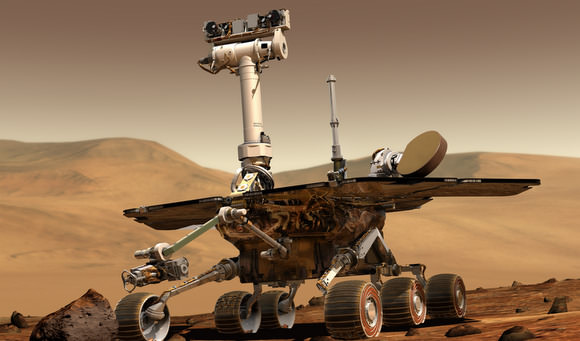
To kick of their Summer of Mars exhibit, NASA unveiled their Mars Rover Concept Vehicle - a mobile lab specially-designed for exploring Mars!
Continue reading
Located in the southern skies, about 5,500 light years from Earth, is the bright and rich open star cluster known as Messier 46 (aka. NGC 2437)
Continue reading
A team of astrophysicists from UZH has simulated the formation of the entire Universe, producing a catalog that will help unlock the secrets of the "Dark Universe".
Continue reading
Continue reading
In the southern skies lies the faint constellation known a Corona Australis (aka. the "Southern Crown"), one of the 88 constellations recognized by the IAU.
Continue reading
Continue reading
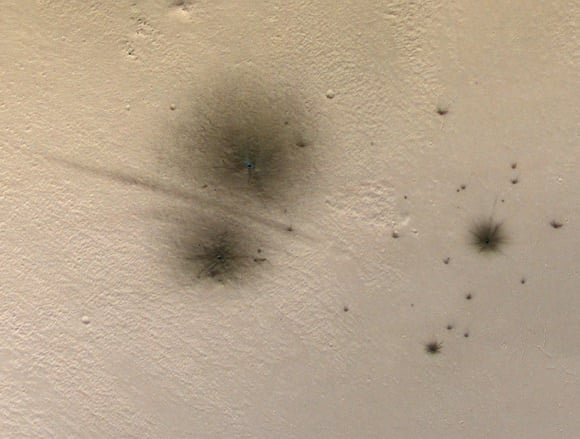
An unusual pit on the surface of Mars is a bit of a mystery to scientists: is it the result of an impact, or of the melting of carbon dioxide ice?
Continue reading
Fraser Cain and Isaac Arthur team up again to bring you another epic collaboration. This time, it's construction tips from an engineer from a Type 2 Civilization.
Continue reading
Using the Hubble Space Telescope, a team of NASA astronomers has repeated an old experiment that was used to confirm General Relativity
Continue reading
A presentation at the June 6th AAS meeting confirms that our galaxy is inside an enormous cosmic void, the largest one ever discovered.
Continue reading
The T2K experiment just released its first batch of data, which could help answer why there is an apparent imbalance of matter and antimatter in the Universe.
Continue reading
Continue reading
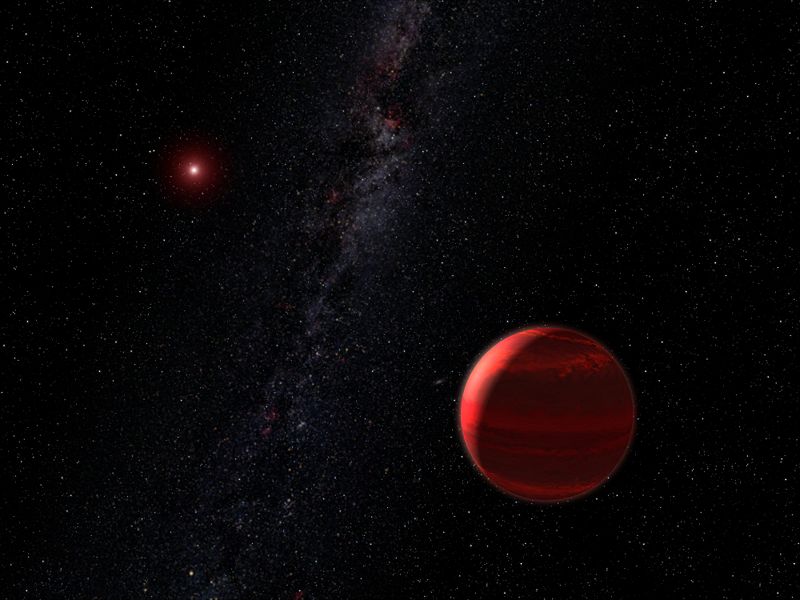
A study presented at the annual meeting of the American Astronomical Society this week has dealt another blow to the case for finding habitable planets around red dwarf stars.
Continue reading
A new study suggests that Mars had a much larger ocean than previously thought. However, we can't understand how the Martian climate was ever able to support such an ocean.
Continue reading
A new study by scientists from UNLV indicates that astronauts going to Mars will be at an increased risk of cancer caused by exposure to radiation.
Continue reading