Universe Today
I'll admit to using AI for things it was probably never designed for. When my van threw a fault I couldn't immediately sort and one that it seems is notorious for trips backwards and forwards to a garage, I ended up in a long (but cheaper) back and forth with an AI system working through the symptoms. Same again with a run of guttering, and with building stud work in my house. It isn't magic and perhaps more often than I would like to see, it’s wrong, but as a way of thinking a problem through with something that's read more manuals than I ever will, it has earned its place in the toolbox. So I read this next story with some sympathy and interest.
AI has now been turned onto the sky since astronomers have a scheduling problem, and it's a harder one than mine. Time on a major telescope is rationed. You might wait months for a handful of hours, and those nights arrive with conditions you can't control. The Moon might be too bright for a faint target. The seeing might be poor. Cloud might roll across the half of the sky you'd planned to work in. Many of these can be scheduled out but it’s a tricky moving beast and every hour is a judgement call about which of your targets is worth the conditions you've actually got, and getting it wrong means soft images, washed out data, and a wait until the rota comes round again.
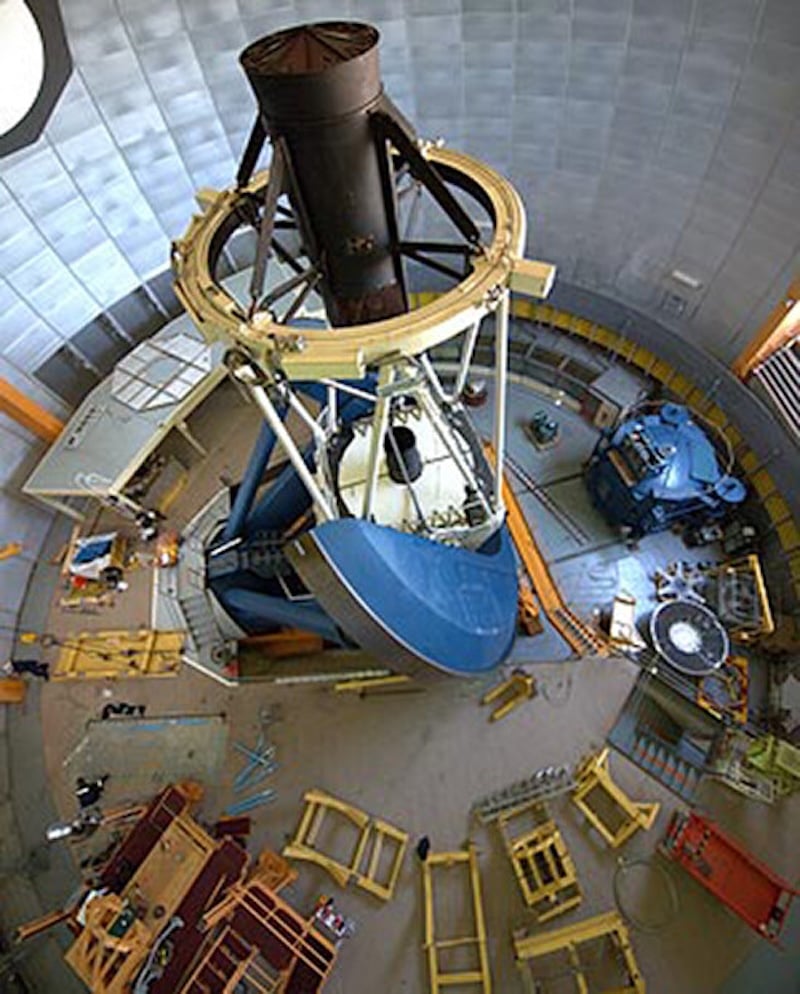 The 570 megapixel Dark Energy Camera, built at Fermilab and mounted on the Blanco. The AI learned from years of Dark Energy Survey observations taken with this instrument — then took over driving it (Credit : CTIO/NOIRLab/NSF/AURA)
Alex Drlica-Wagner of Fermilab and the University of Chicago, and Aravindan Vijayaraghavan at Northwestern, have built something to take that decision on. Working through the SkAI institute, they trained a deep learning model on years of observations from the Dark Energy Survey. They didn't encode the rules astronomers use, instead they showed the model where the telescope was pointing at a given moment, asked it to predict what happened next, then compared its guess to what the humans actually did and made it correct itself. Repeat that a few million times and the model works out how moonlight and atmosphere shape a good decision without ever being told that they do.
Having now learned how ‘astronomers do it’ they scheduled two real observing campaigns this spring and summer on the Blanco 4-metre at Cerro Tololo in Chile. The system was able to drive the 570 megapixel Dark Energy Camera and it produced the plan and then adapted it live as conditions moved.
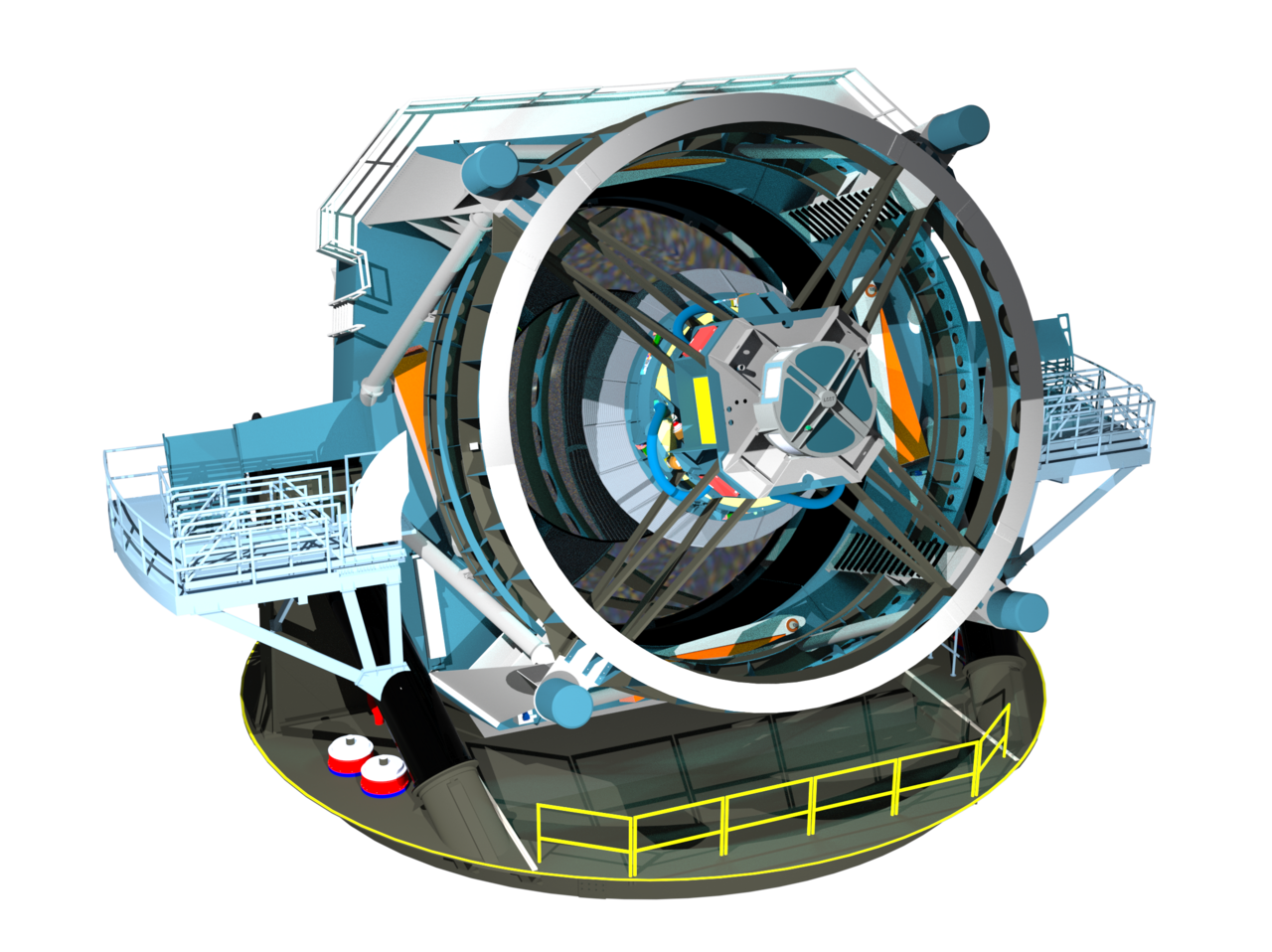 Schematic of the Vera C. Rubin Observatory. When it begins issuing alerts at full rate, other telescopes will need to respond faster than any human roster can manage (Credit : RubinObs/NSF/AURA)
The honest assessment from the team is that it currently performs about as well as a human. Which sounds modest until you consider that matching an experienced astronomer was the entire goal of a first deployment. The next objective is to exceed them, by trying strategies no human would think to try.
There's a practical reason this matters now with the Vera Rubin Observatory about to start producing more data than anything before it, other telescopes will need to react to what it finds quickly. Scheduling by hand doesn't scale to that but an AI tool can react and adapt at speeds that no human can.
Drlica-Wagner puts the point better than I could ‘..automate the operational work, and astronomers get their time back for the interesting part.’ Which is roughly what I want from my AI system, although my ambitions stop at the van for now.