 Universe Today
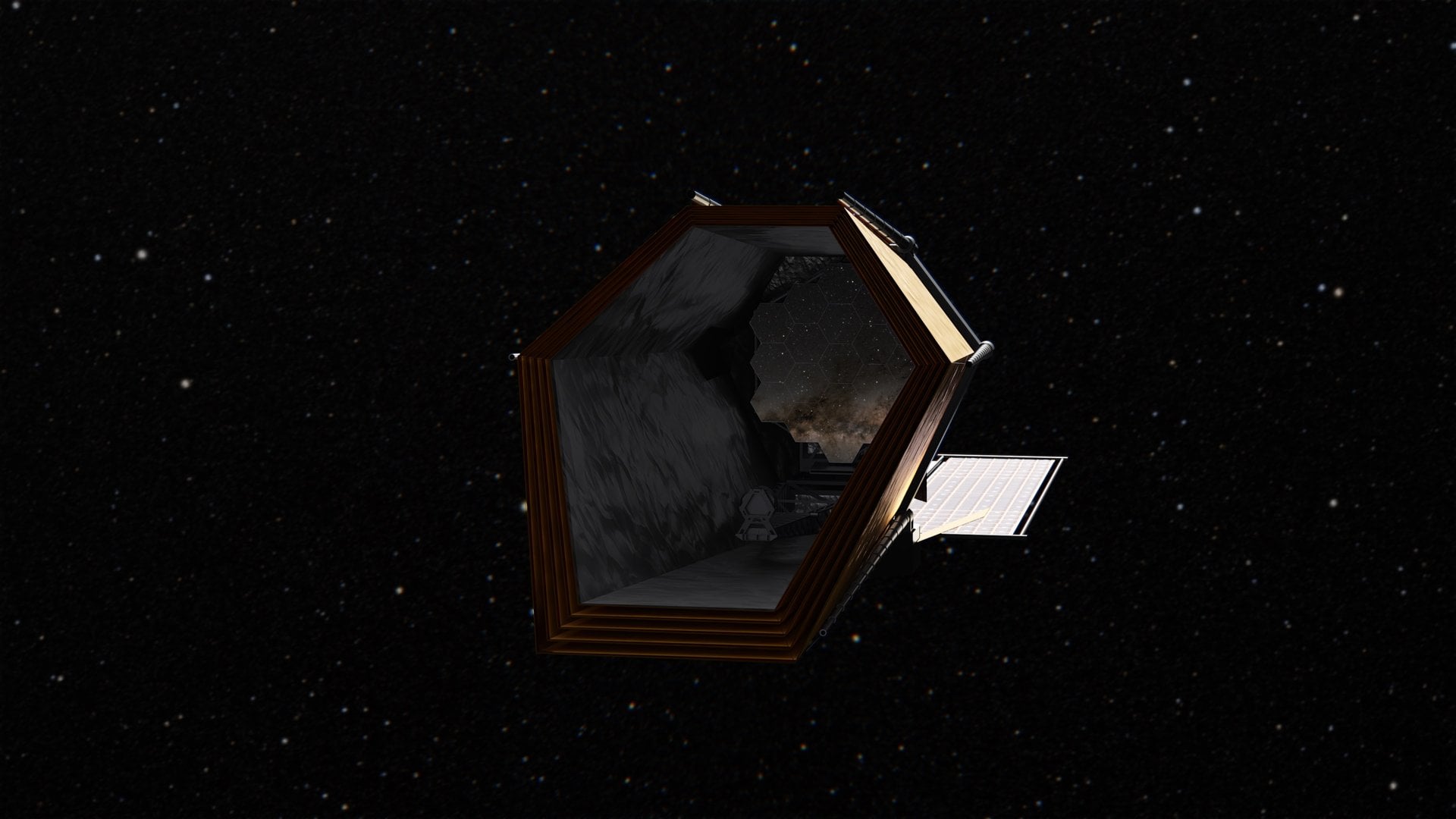
We’re getting closer and closer to finding a real Earth-like exoplanet. But finding one is only half the battle. To truly know if we’re looking at an Earth analog somewhere else in the galaxy, we have to directly image it too. That’s a job for the Habitable Worlds Observatory (HWO), a planned space-based telescope whose primary job is to do precisely that. But even capturing a picture and a planet and getting spectral readings of its atmospheric chemistry still isn’t enough, according to a new paper available in pre-print on arXiv by Kaz Gary of Ohio State and their co-authors. HWO will need to figure out how much a planet weighs first.
That’s easier said than done, though. The paper outlines why achieving a planetary mass measurement with a precision of 10% is essential to understanding whether a planet is actually habitable or not. Without that high level of precision, the models used to figure out what gases the atmosphere is made out of run into a problem that mathematicians bluntly call “degeneracy”. In this case, degeneracy means it would be impossible to identify the dominant background gas in a planet’s atmosphere - and distinguishing between nitrogen (like our own atmosphere) or CO2 (like Venus’) makes a pretty big difference.
Currently, the go-to method for measuring the weight of exoplanets is radial velocity (RV). This measures the spectral “wobble” of a star as an exoplanet’s gravity pulls on it. But, measuring this value is notoriously difficult. An Earth-sized exoplanet orbiting a sun-like star creates a RV signal of only 9 cm/s - an extremely small signal that is easily drowned out by the star’s own surface activity.
Fraser discusses some of the limts of the HWO.To make matters worse, RV is essentially useless for a large percentage of the stars HWO will be looking at. Around 30% of the observatory’s target list consist of hot, rotating A and F-type stars. Those types of stars have hot photospheres with a minimal amount of distinguishing spectral lines. And they rotate so fast what little data that might be there is easily blurred. All this adds up to making high-precision RV measurements impossible for around 30% of HWO's target stars.
Enter astrometry. This alternative approach uses the physical side-to-side wobble of a target star created by the planet orbiting it relative to the background stars surrounding it. It has a major advantage of being particularly useful for the active stars the RV can’t handle, since watching them move side to side is much easier than watching their spectral signatures change.
But it comes with its own set of challenges, which, no surprise, come mainly around precision. The astrometric signal for an Earth-like planet 10 parsecs away is roughly 0.3 microarcseconds. That is 0.3 millionths of an arcsecond. Keep in mind that there are 1,296,000 arcseconds in the night sky and it becomes clear how absurdly precise this instrument has to be.
NASA showcases the capabilities of the HWO. Credit - NASA Goddard YouTube ChannelTo detect a shift that small, HWO’s High-Resolution instrument will have to rely heavily on the presence of background stars. In fact, the primary limit of astrometry is tied to the “photon-noise” from background stars, which, in turn, is entirely dependent on how many of those stars are in the background. That means that the direction HWO is observing will make a huge difference. If it’s pointed towards the galaxy’s edge, the background of stars is sparse, and the uncertainty skyrockets. But if it’s pointed towards the galactic plane, there are plenty of stars to keep the uncertainty low.
The researchers simulated the amount of background stars in several scenarios, and decided that the best way to capture the necessary background star information without introducing so much noise into the instrument was to choose the optimal filter to minimize astrometric uncertainty by balancing the opposing effects of star density and the diffraction limit. They suggest using the Gaia G band - the primary wide-optical band of light that is used by the European Space Agency’s Gaia spacecraft, which is currently mapping the position of over a billion stars in our galaxy. It hits a sweet spot between longer wavelengths like infrared, where the diffraction limit of HWO itself worsens, and shorter wavelengths, where there aren’t as many background stars to use as references.
So, with a measurement, a direction, and a spectral band to work with, HWO just needs an observational campaign. The authors suggest a dedicated 200-day astrometry survey spread throughout the 5-year primary mission of HWO. By taking roughly 100 observations of each target star, the HWO could successfully measure the masses of about 40 habitable-zone Earth-like planets to the required 10% precision.
HWO itself is still a long way away, though, and likely won’t launch until at least the early 2040s. But, by pairing advanced photometry with ultra-precise astrometry, we could finally find the ultimate prize that astronomers have been dreaming about for centuries - another habitable world.
Learn More:
K. Gary et al - Masses of Potentially Habitable Planets Characterized by the Habitable Worlds Observatory
UT - The Optical Engineering Required to Photograph an Earth Twin

