 Universe Today
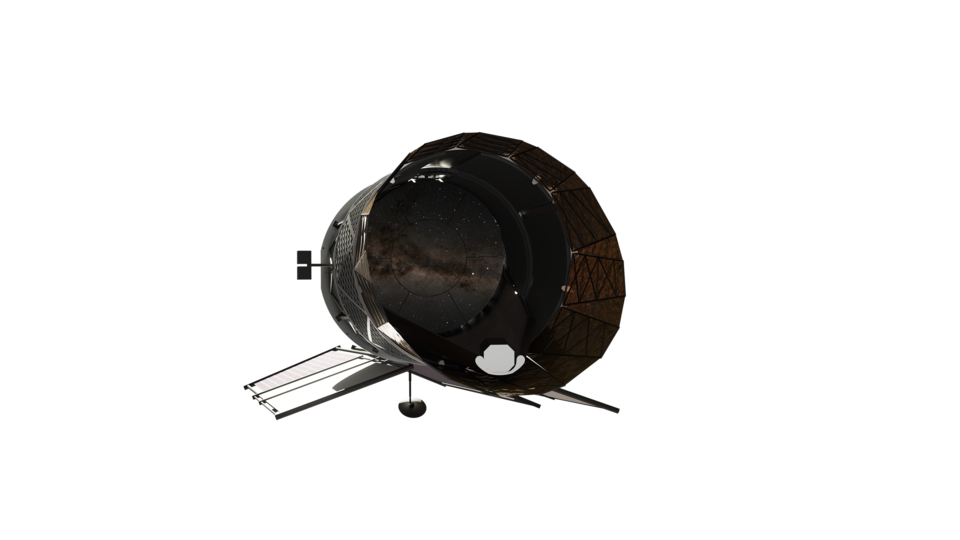
More and more papers are coming out about the upcoming Habitable Worlds Observatory (HWO). As the telescope moves from theory to practice (and physical manifestation), various working groups are discovering, defining, and designing their way to the world’s next major exoplanet observatory. A new paper from researchers at NASA Goddard Space Flight Center adds another layer of analysis - we even just reported on its immediate predecessor two weeks ago. In this one, the researchers compared the ability of the telescope to distinguish between carbon dioxide and methane/water, to come up with a specific wavelength the engineers should design for.
Infrared imaging is the holy grail of exoplanet observation. Many of the most interesting potential biosignatures are very distinct spectrographic signatures at those wavelengths, making them the most interesting from an astrobiological perspective. However, they come with a trade-off - to capture a wide band of infrared wavelengths, the system capturing must be cooled to extreme temperatures in order to eliminate any noise introduced by the heat the instrument itself produces.
The James Webb Space Telescope (JWST), another famous infrared observatory, solves this problem with a complex and expensive cryogenic cooling system. However, that system is part of the reason JWST was so delayed and over budget. HWO’s designers are hoping to avoid that fate, and therefore avoid the complex cryogenic cooling system entirely.
Academic presentation on the BARBIE framework used in the paper. Credit - Exoplanet Seminar Series YouTube ChannelThat choice brings with it other problems, however, such as spectral overlap. Two of the most interesting biosignatures are methane and carbon dioxide - and perhaps more importantly a combination of the two. Carbon dioxide is actually more interesting in its absence - it’s abundant on dead worlds like Mars and Venus, but at much lower concentrations on Earth because much of it is captured by our liquid oceans and biosphere. If astrobiologists were to find three rocky planets in another solar system and one was significantly lacking in carbon dioxide, that would be a major signal.
Methane, on the other hand, is interesting when its abundant. It is easily destroyed in an atmosphere by photochemical processes, so it won’t last long in the atmospheres of any exoplanets that don’t have a consistent new source of it. One of the most common sources of methane on Earth is life, though there are some abiotic sources as well. Importantly, the source must be consistent, and many of those abiotic sources would run out of steam after millions or billions of years of planetary lifecycle, so methane in itself is a decent indication there might be some biological activity.
But it’s when the two are combined that truly provides a “smoking gun” - a world with CO2 and a lot of methane, but without a lot of oxygen. In that case, there is a high likelihood that something living is producing those gases in the atmosphere. However, actually observing methane and carbon dioxide in the same planet is a problem for many telescopes.
NASA video about that Habitable Worlds Observatory. Credit - NASA Goddard YouTube ChannelTheir spectral signatures overlap. According to the paper, high levels of methane negatively impact the detectability of carbon dioxide far more than high levels of even water does. Signatures reflecting the methane “saturate out” the regions of the spectra where carbon dioxide would otherwise show up clearly. To prove this point, the researchers mimicked the spectral signatures of several different phases of Earth’s own evolution, and Venus, using a statistical model called the Bayesian Analysis for Remote Biosignature Identification of exoEarths - or BARBIE. This paper is technically titled BARBIE IV, as there have been three previous papers published on the subject analyzing different trade-offs in the spectral sensitivity of HWO.
Perhaps the most important outcome of this analysis was setting an upper limit of detectability for the infrared sensor on HWO that doesn’t require the massive cooling system, but still allows a reasonable amount of differentiation between carbon dioxide and methane without extremely long observational times. That “sweet spot” for the bandwidth is 1.52um, though with a 20% bandwidth window, that means the upper bound of the telescope itself will be capped at 1.68um.
All major projects have to get their definable requirements down before they truly begin, and this upper limit is a major step towards that for HWO. Eliminating the need for the cryogenic freezing system will also make the engineering of the system much less complex, allowing the technical focus to switch to the optics and coronagraph needed to make sure this marvel of ingenuity will be able to see properly. When it launches, hopefully sometime in the 2030s, if it does capture a potentially habitable exoplanet, it will be at least in part thanks to these foundational papers that define what the system will be capable of.
Learn More:
UT - Is Methane the Key to Finding Life on Other Worlds?

