Universe Today
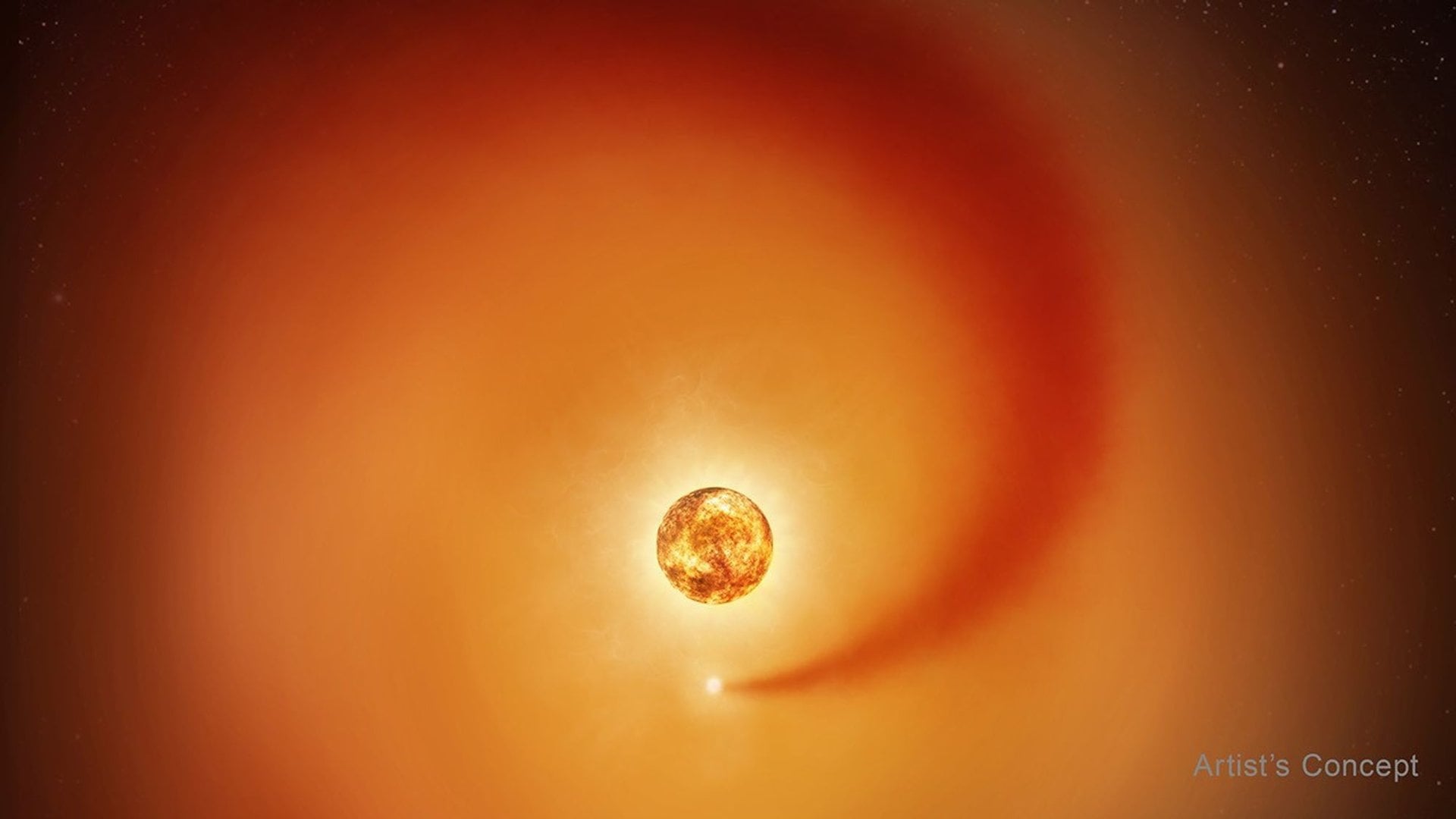
Betelgeuse is the star that everybody can't wait to see blow up, preferably sooner than later. That's because it's a red supergiant on the verge of becoming a supernova and there hasn't been one explode this close in recorded human history. It's been changing its brightness and showing strange surface behavior, which is why astronomers track its activity closely. Are these changes due to its aging process? Do they mean it's about to blow up? Probably not.
It turns out those changes are related to a previously unknown companion star named Siwarha that was revealed in 2025. “The idea that Betelgeuse had an undetected companion has been gaining in popularity for the past several years, but without direct evidence, it was an unproven theory,” said Andrea Dupree, an astronomer at Harvard's Center for Astrophysics and lead author of a team that studied Betelgeuse and Siwarha.
Studying Betelgeuse
Over the past eight years, researchers tracked strange changes using the Hubble Space Telescope and ground-based observatories. The periodicity of those changes plus the existence of a weird trail of dense gas in Betelgeuse's upper atmosphere tipped them off to the idea that the restive red giant has a companion star. There have also been strange outbursts of dust, which astronomers now understand to be related to surface mass ejections. One in 2019/2020 seemed to cause Betelgeuse to dim, and it later turned out that the ejection sent dust out to space and it cooled to form a dust cloud that dimmed the light from the star.
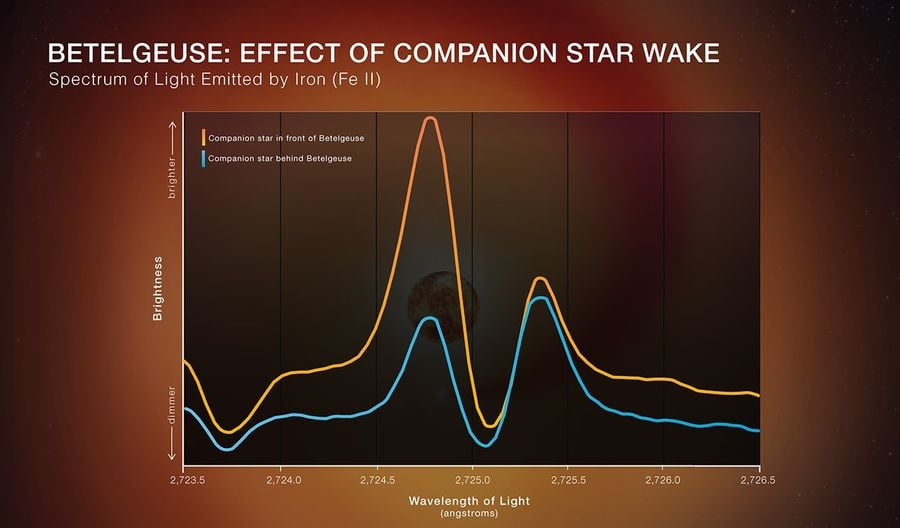 Hubble Space Telescope data and spectra show evidence of a wake being generated by Siwarha as it orbits Betelgeuse. Note the difference in light shown in the lefthand peak when the companion star was at different points in its orbit. Illustration: NASA, ESA, Elizabeth Wheatley (STScI); Science: Andrea Dupree (CfA)
You can see Betelgeuse very easily in the night sky from about September or October through April. It's in the constellation Orion, and forms one of his shoulders. If it was our Sun, its atmosphere would extend out to the Asteroid Belt, and if you could load it up with Suns, it would hold 400 million of them. That mass dictates how the star will end, sometime in the next 100,000 years or so. This star and its companion lie about 650 light-years away from us, which is actually pretty close in cosmic terms. Given that distance, astronomers have been able to observe its surface and track changes in the atmosphere as Betelgeuse continues down its path to destruction.
The Wake of the Companion
During the eight years that astronomers were able to observe Betelgeuse's unsettled ways, they noticed a pattern of changes in the star that were a bit puzzling. The spectrum of the star changed, and it wasn't always clear it was due to aging activities. In addition, a strange wake in the gases kept showing up every six years. That periodicity suggested something other than a crotchety star in its death throes; it indicated that a stellar companion was there with Betelgeuse. “It’s a bit like a boat moving through water. The companion star creates a ripple effect in Betelgeuse’s atmosphere that we can actually see in the data,” said Dupree. “For the first time, we’re seeing direct signs of this wake, or trail of gas, confirming that Betelgeuse really does have a hidden companion shaping its appearance and behavior.”
Of course there were other theories about the star's behavior. Since they haven't seen the behavior of a supernova progenitor star before (at least, not up close), astronomers considered everything from strange magnetic field behavior to unexpected clouds of dust or other features in the atmosphere. In the end, the companion theory seemed the most likely. “With this new direct evidence, Betelgeuse gives us a front-row seat to watch how a giant star changes over time," said Dupree. "Finding the wake from its companion means we can now understand how stars like this evolve, shed material, and eventually explode as supernovae.”
What do we Know about Siwarha?
Astronomers suspected Siwarha's existence and gave it a name in 2025. It orbits Betelgeuse at a distance of about 4 astronomical units and its "year" is about 5.7 to 6 Earth years. In our Solar System, that would be not quite out to Jupiter. Siwarha is about 1.5 times the mass of the Sun and moves through Betelgeuse's atmosphere during its lengthy orbit. As it does, it creates that "wake" the astronomers detected.
Siwarha's days as a companion to a massive supergiant star are numbered. As soon as Betelgeuse blows up as a supernova, Siwarha will likely be consumed and destroyed. Before that, Betelgeuse will likely exhibit other restless behaviors as it prepares to go supernova. Astronomers will continue to study this tiny companion to understand how it, and its massive companion, evolve over time. The next opportunity will be when Siwarha orbits out from behind Betelgeuse on November 26, 2027.
For More Information
NASA Hubble Helps Detect ‘Wake’ of Betelgeuse’s Elusive Companion Star
Betelgeuse: Detection of the Expanding Wake of the Companion Star