Universe Today
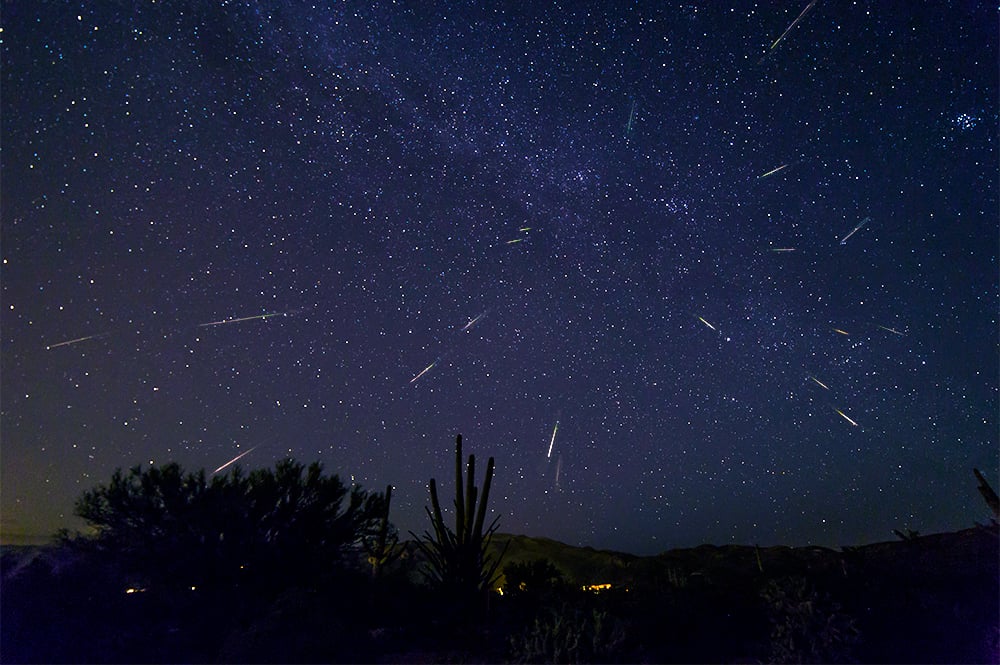
With the Moon ‘missing in action,’ the August Perseids are set to light up the sky next week.
You couldn’t ask for a better year, for one of the top annual meteor showers. If skies are clear be sure to watch for one of the top skywatching draws of 2026: the August Perseid meteor shower. While the Perseids are a draw on any year, 2026 is special, and has a few things going for it in terms of the Moon phase, peak timing and prospects.
2026 prospects see the Perseids top out at an expected Zenithal Hourly Rate (ZHR) of 100 meteors per hour on Wednesday, August 13th at 3:00 Universal Time (UT). That’s 11:00 PM EDT on the 12th, meaning that Europe and North America will be turning into the oncoming shower stream just past the peak.
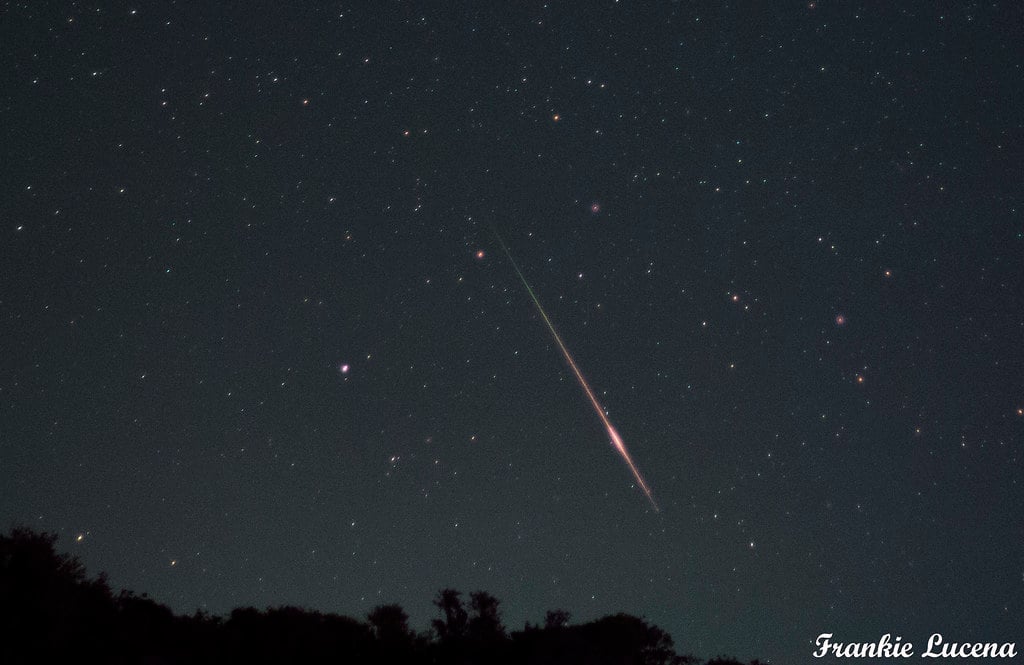 A 2016 Perseid seen over Cabo Rojo, Puerto Rico. Credit: Frankie Lucena.
The Perseids often exhibit a broad double peak for the shower, meaning it's worth watching an day or two before and after the 13th. You’ll see a few early stragglers as nightfall approaches in the PM hours, though the action will really pick up after midnight, as your local observing site turns forward into the meteor stream.
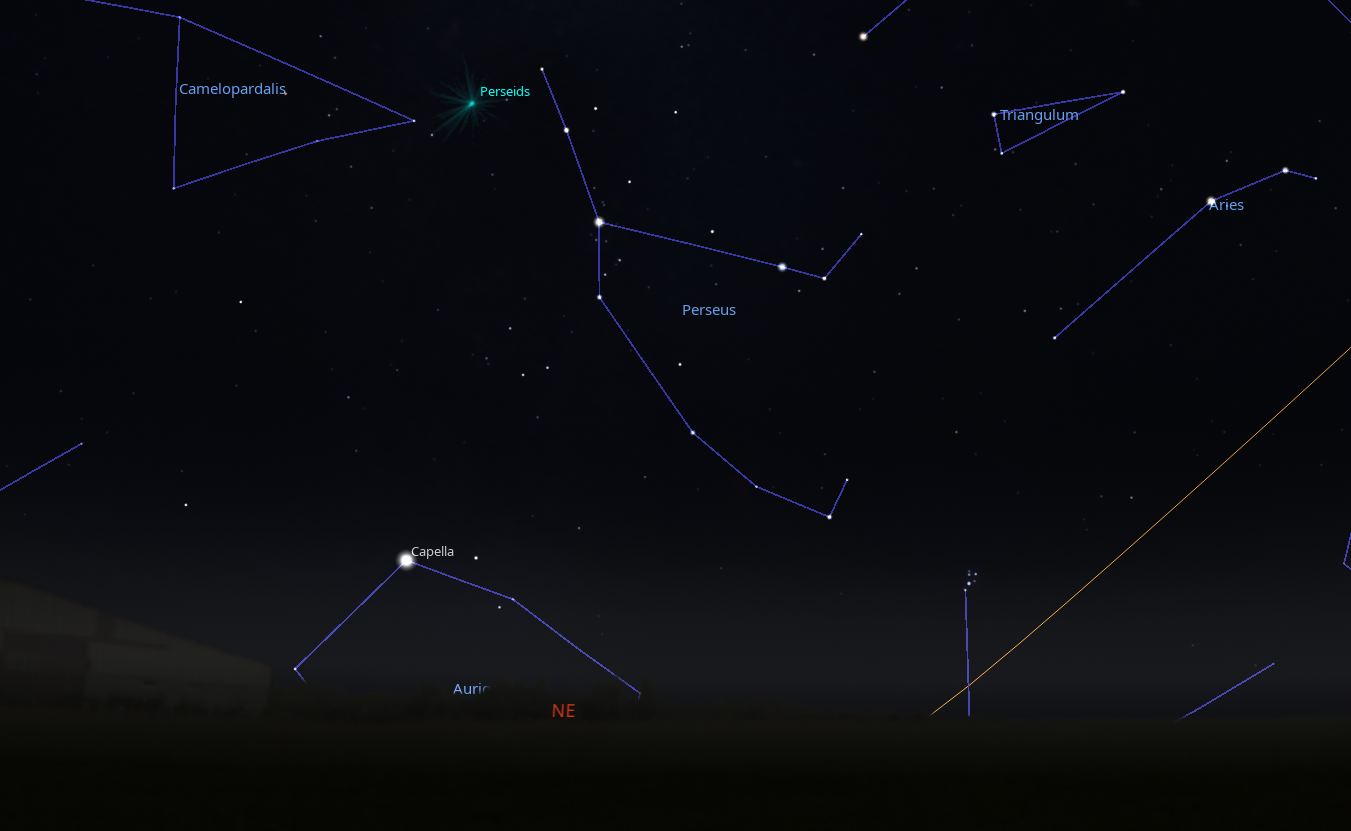 The rising Perseid radiant, looking east shortly after midnight. Credit: Stellarium.
You can see this in the appearance of meteor streaks. PM meteors are slow and leave long trails as they struggle to catch up to the Earth, whereas AM meteors punctuate the sky with swift streaks. The Perseids are fast movers overall, with a 59 km/per second approach velocity versus the Earth.
You won’t have to worry about the Moon this year, as it’s busy eclipsing the Sun on the 12th. Extra credit to anyone who nabs a Perseid during totality, which occurs just seven hours before the peak of the Perseids.
New Moon (with an eclipse) last occurred on August 12th in 1942, and won’t happen again until 2045, though New Moons (or any given phase) repeat on a given date every 19 years in what’s known as the Metonic cycle.
Meteor showers occur when the orbit of the Earth intersects ancient debris trails laid down by comets. Though they may seem brilliant, the biggest Perseids are pea-sized at best, and most are dust grains. The source of the Perseids is periodic Comet 109P Swift-Tuttle.
Astronomer Giovanni Schiaparelli first noted the periodicity of the annual shower in 1862. The source comet reached perihelion in 1992, and will do so again in 2126.
The shower is also sometimes known as the ‘Tears of St. Lawrence’ in honor of the saint who was martyred on August 10th, 258 AD. The shower is well-known as such in rural southern Spain.
The comet’s steep 113 degree inclination retrograde orbit means it encounters no other planets, and is stable over centuries. Records of outbursts from the Perseids go all the way back to Chinese observations in 36 AD, when the annual shower actually fell in July.
The modern radiant for the shower now lies near the intersection of the northern constellations Cassiopeia, Camelopardalis and Perseus. The shower has been a dependable one through the 20th and into the 21st century. We could also see a ramp up in activity in coming years. Astronomer Esko Lyytinen predicts we could see an outburst from the Perseids in 2028 as the Earth meets the 1479 stream, with rates topping storm levels at over 1,000 per hour. Of course, the nearby Last Quarter Moon may dampen things a bit in 2028.
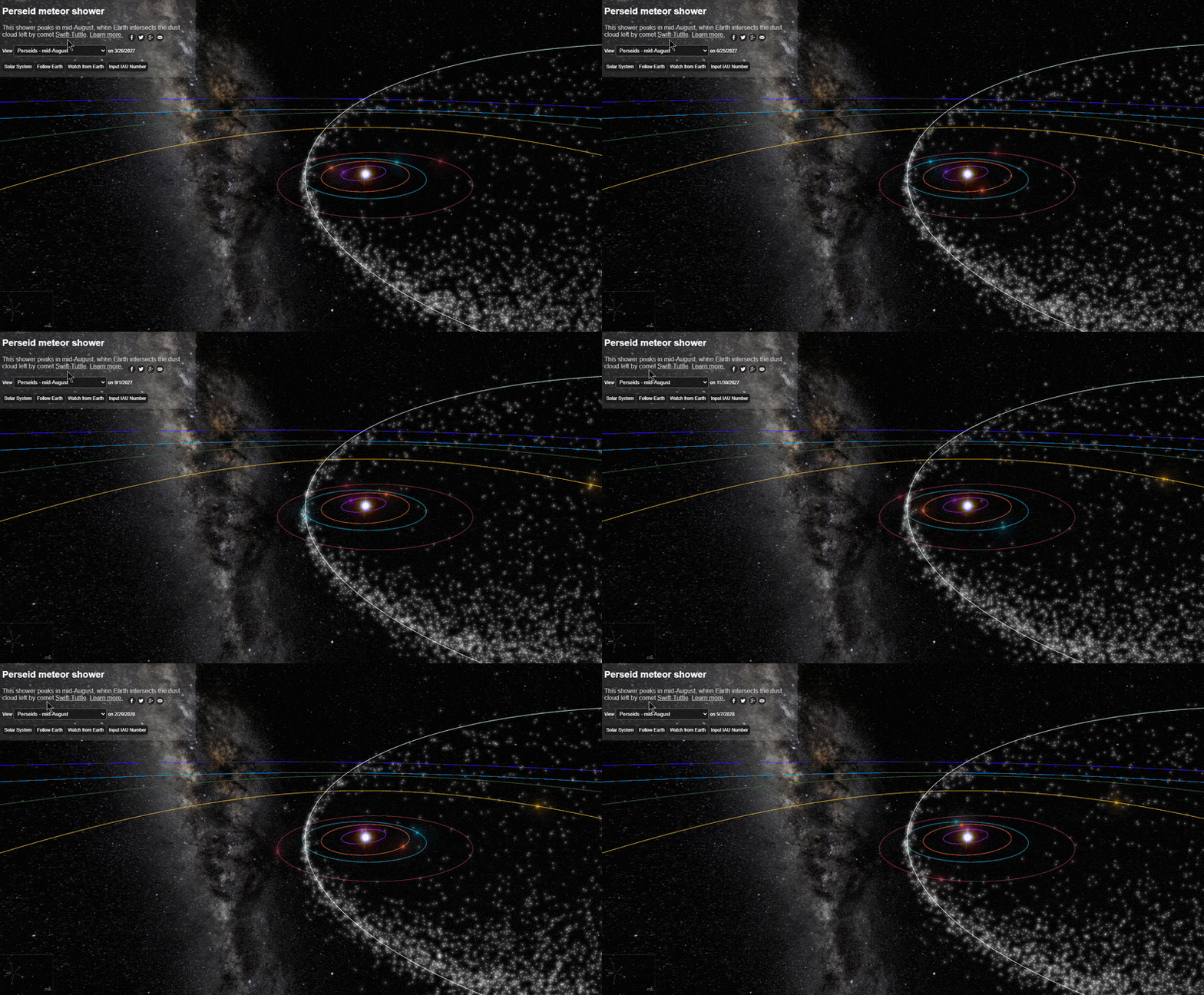 An animation of the Perseid meteor stream through the inner solar system. Credit: IMO Meteors.
Observing the Perseids or any meteor shower simply requires clear skies and patience. You can optimize your chances by selecting as dark an observing site as possible, and maybe enlisting a friend or two to watch the sky in different directions. Meteors generally appear in profile about 45 degrees or so away from the shower’s radiant.
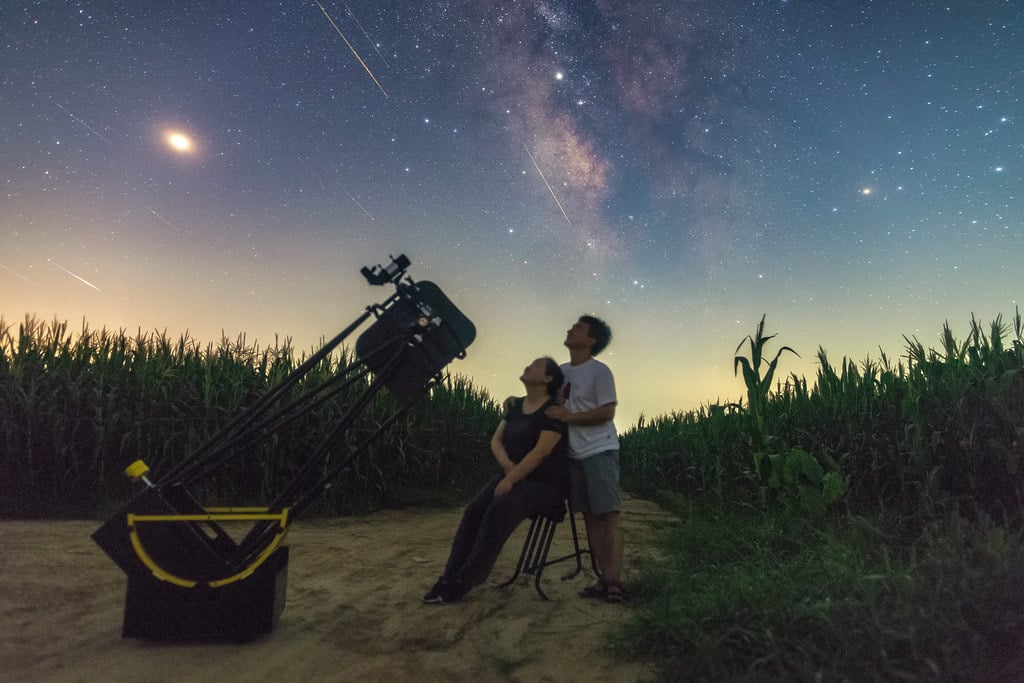 The 2018 Perseid meteors. Credit: SteadJoy/Flickr.
Imaging a meteor shower is as simple as perching a DSLR with a wide angle lens on a tripod, and taking long exposures of the sky and seeing what turns up afterward. An intervalometer is a great way to automate the process, and be sure to take a series of early test shots to gauge sky conditions and get the f-stop/ISO/and exposure settings just right. You can report what you see to the International Meteor Organization.
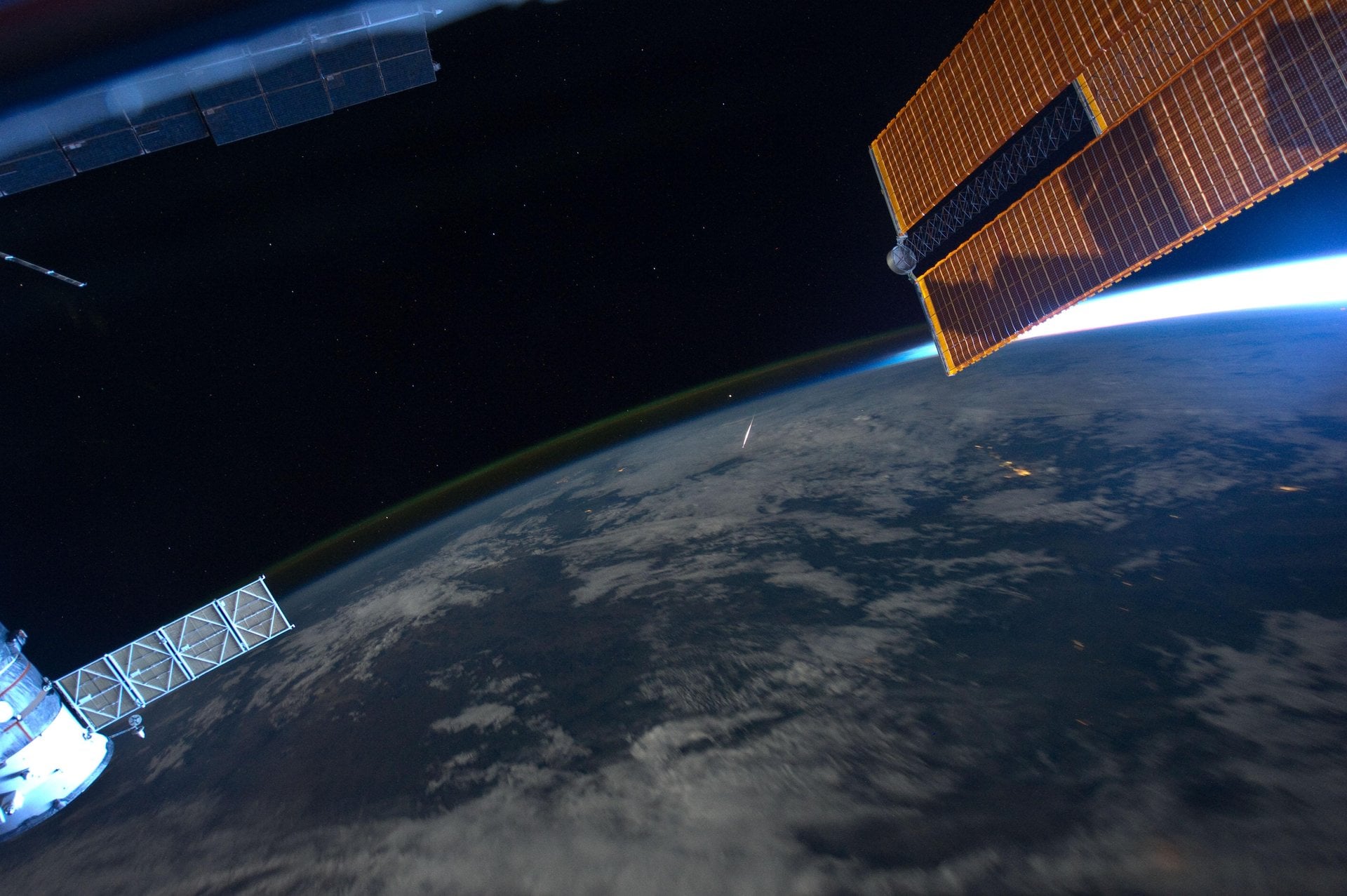 A Perseid captured from the International Space Station. Credit: NASA.
If you’re clouded out, you still might ‘hear’ pings from Perseid meteors on your FM dial. Also keep an eye out form bizarre phenomena such as corkscrew meteors, long persistent meteor after glow trails, and ‘audible meteors’.
Don’t miss the 2026 Perseids. It’ll be a while before we get an optimal year again.