Universe Today
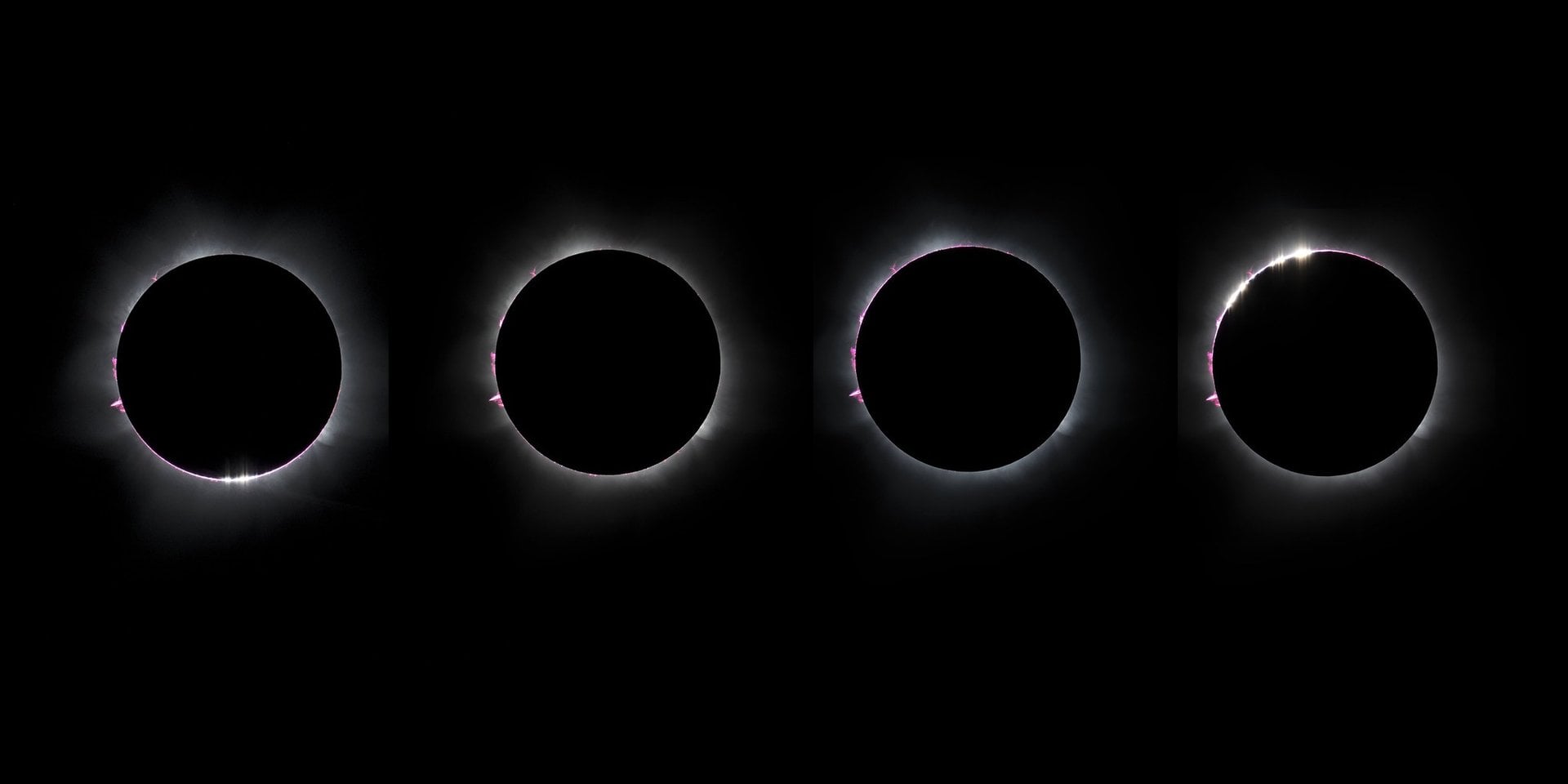
What to expect as we approach next Wednesday’s total solar eclipse.
It’s almost show time. We’re just a few days away now, from the only total solar eclipse of 2026. While eclipses are a surety as the celestial gears of the Universe grind on, there are always a few unknowns leading up to eclipse day.
We wrote a recent guide to the upcoming total solar eclipse featuring totality across Greenland, Iceland, the North Atlantic and Spain on August 12th. As that date is now only a few days away, it’s a good time to look at prospects and resources to have on hand leading up to eclipse day.
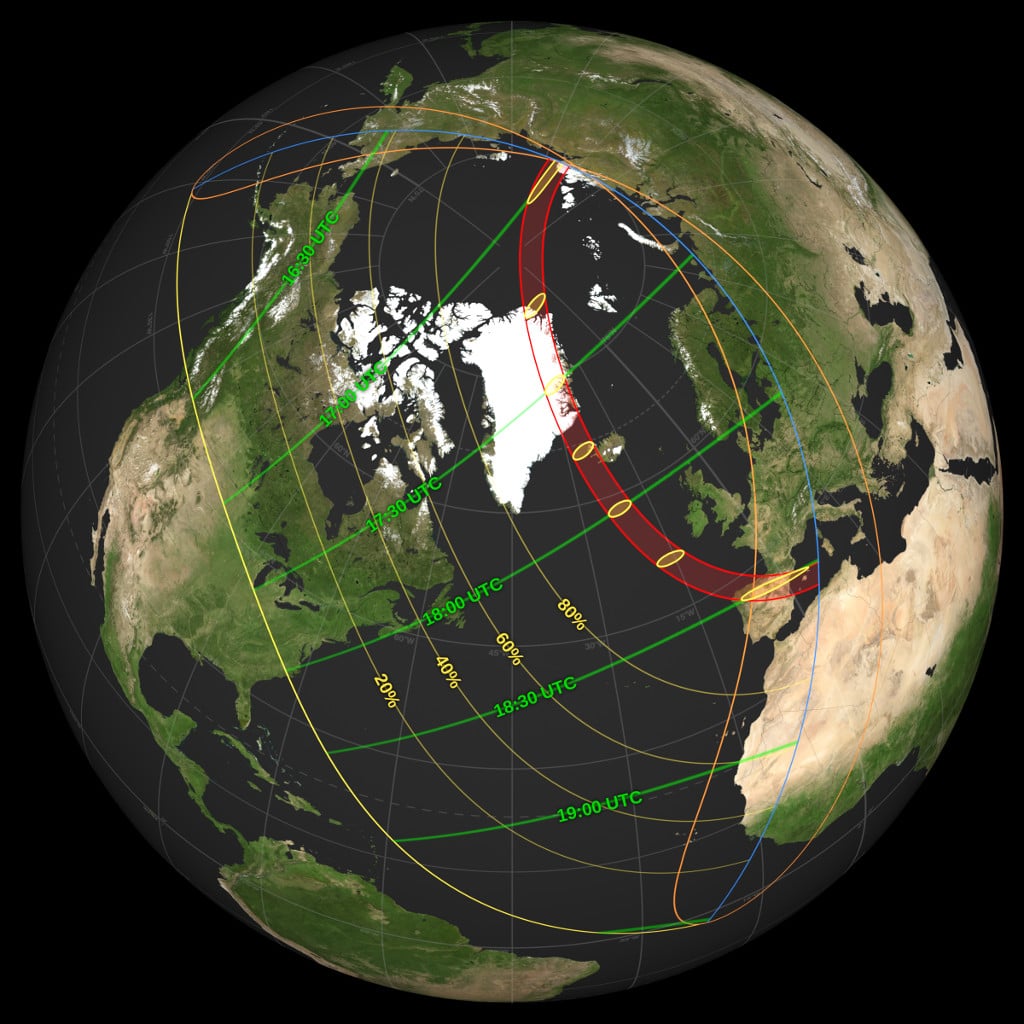 The track and footprint for the August 12th total solar eclipse. Credit: NASA/GSFC.
What’s a bit mind-bending is how partial phases for this polar eclipse actually drape down across North America as far west as Alaska:
Neat. Here's the partial prospects for cities across the U.S. for the August 12th solar eclipse - www.eclipseglasses.com/pages/what-u...[image or embed]— David Dickinson (@astrodave.bsky.social) July 30, 2026 at 4:37 PM
Weather prospects are always on every eclipse chaser's mind. Eclipse day can dawn crystal clear as it did for me in western North Carolina in 2017, only to have an approaching cloud bank spoil the view hours later. Fast forward to 2024, and we actually had fine views from northern Maine just the day after a surprise April snowstorm blanketed Aroostook county.
Pivotal Weather shows a good long range view, and ESA’s ECMWF page shows the situation, going in to eclipse day. Right now, Iceland looks to be overcast during totality, while northeastern Spain is looking at mostly clear skies.
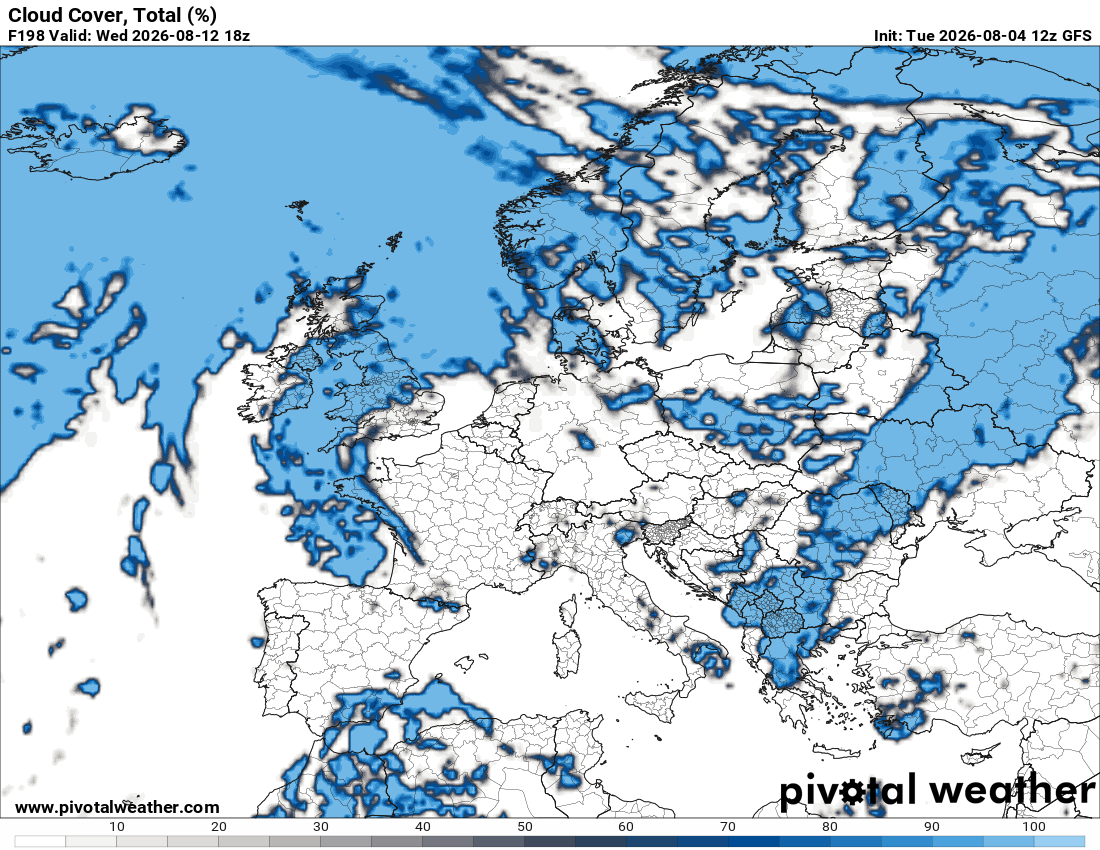 Cloud cover prospects for Europe on eclipse day at 18:00 UT. Credit: Pivotal Weather.
The destructive fires in Spain and southern France have also been a concern going into August. NASA’s Deep Space Network complex outside of Madrid narrowly withstood fires on July 24th. You can see the current wildfire situation across the Iberian peninsula here.
Solar prominences and the shape of the corona can vary from one eclipse to the next. Many ‘umbraphiles’ can tell which eclipse an image is from, just from the shape of the solar corona. Modern day computer predictions can actually show us a pretty good facsimile of what the eclipse will look like:
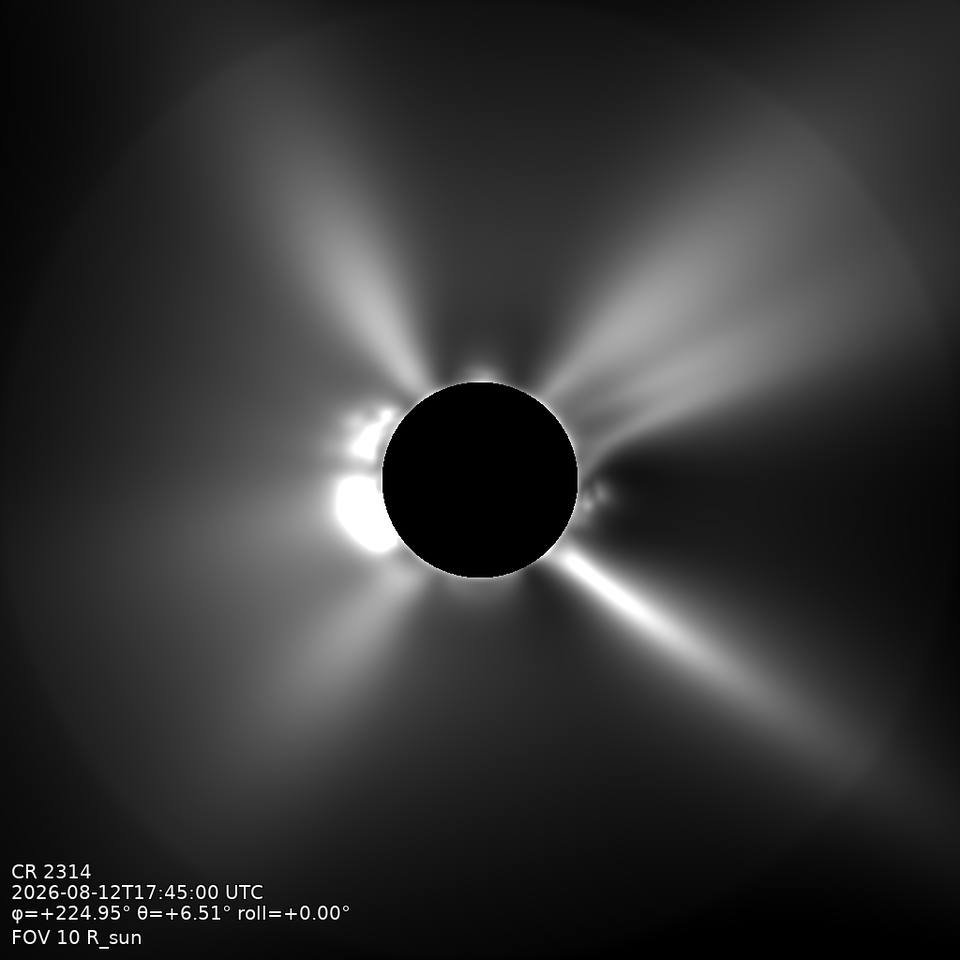 An early prediction model for the shape of the solar corona during next week's total solar eclipse.
Be sure to check out ESA’s KU Leuven’s COCONUT model site for updates.
Sunspot activity can add to a photogenic view of the Sun during the partial phases before and after totality. We’re coming off the tail of the peak for Solar Cycle Number 25, meaning Sol is still pretty active. The equatorial regions of the Sun rotate once every 25 days, meaning that whatever rotates into view 5-7 days prior to the eclipse will still be visible come eclipse day. Here’s what we see, as of Friday, August 7th:
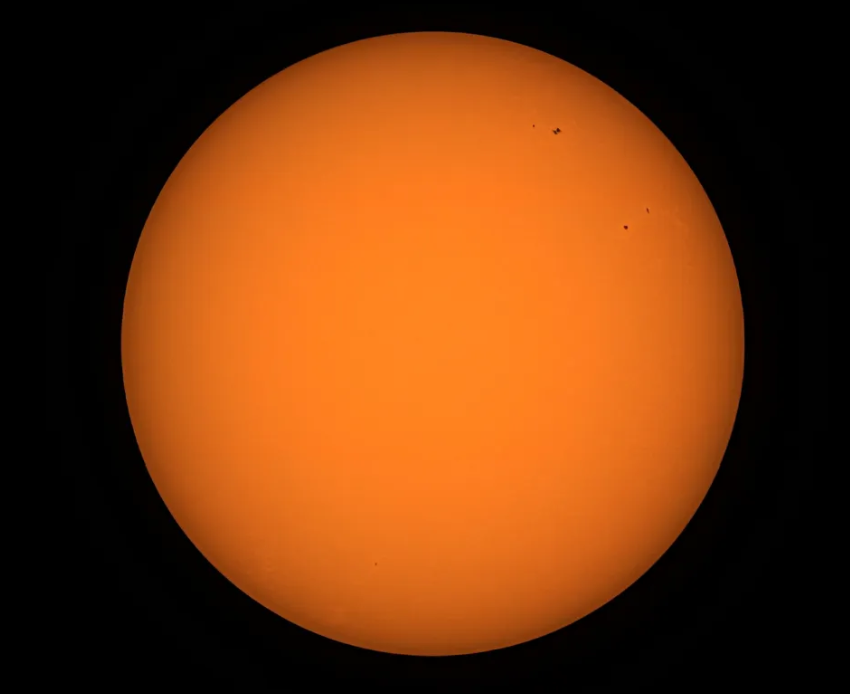 The state of the Earthward side of Sol on August 6th, taken with a Dwarf Lab Dwarf Mini smartscope. Whatever rotates into view over the next few days will still be visible during the August 12th total solar eclipse. Credit: Dave Dickinson
NASA’s Solar Dynamics Observatory site is a great place to check out current solar activity.
Could auroras be visible during totality? It’s a long shot for sure, just on the grim edge of possible. The last time we had totality pass through the Arctic was 2015. Iceland and Greenland would offer prime viewing prospects to see aurora during totality. ‘If’ an Earth-directed Coronal Mass Ejection were to leave the Sun on or around Sunday, August 9th, it could arrive and impact Earth’s space weather environment at exactly the right time.
Be sure to watch NOAA’s space weather page for all the latest action.
Are there any sungrazing comets inbound, waiting to reveal themselves during totality? 2024 saw just such an event, hours before the show time for the eclipse:
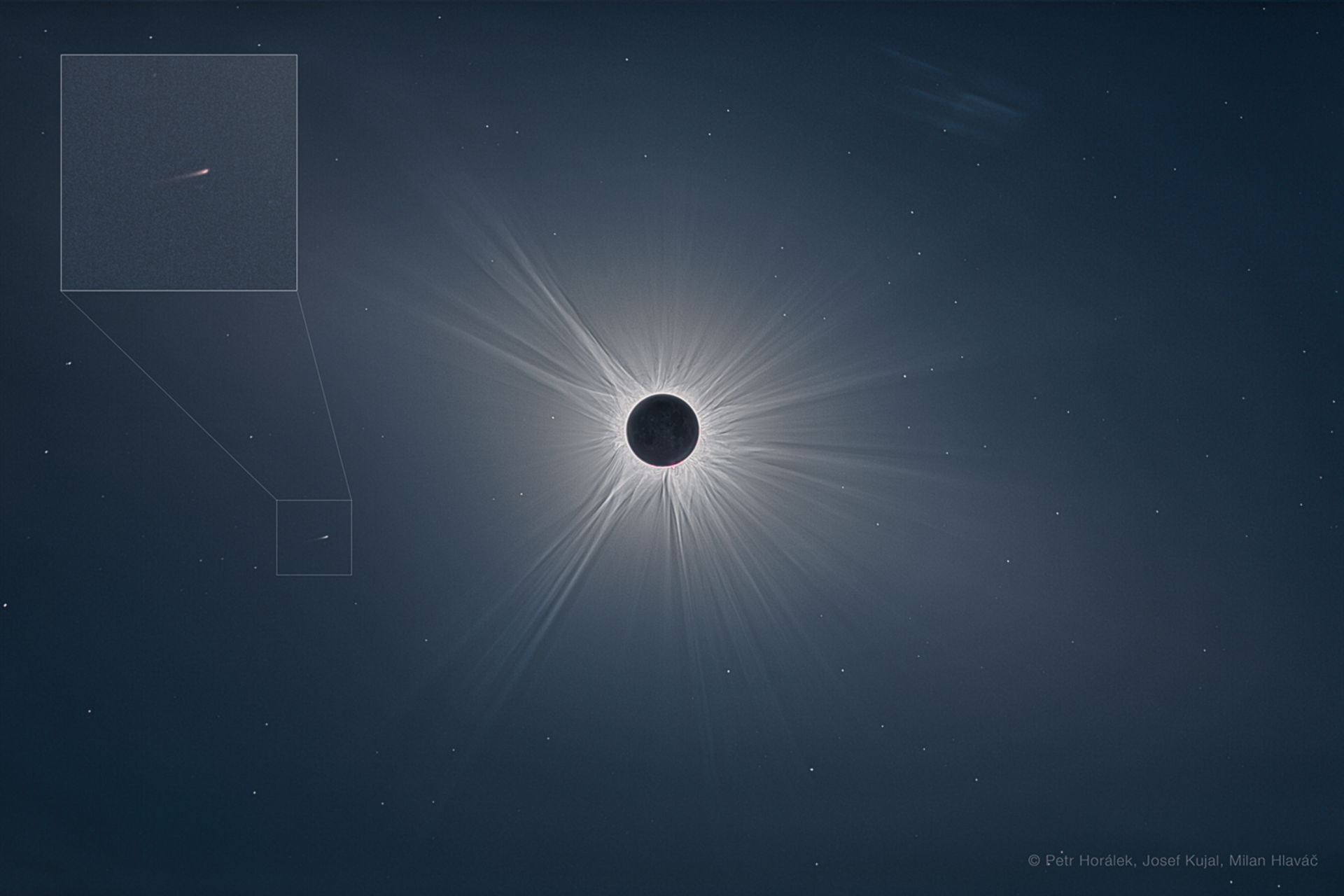 Sungrazing comet seen during the 2024 total solar eclipse. Credit: ESA.
Follow the Solar Heliospheric Observatory’s LASCO C2 and C3 main pages, and NOAA’s CCOR-1 coronagraph aboard the GOES-19 satellite to see if any icy interloper is due to steal the show.
And of course, you can still always watch the eclipse live online. NASA, ESA, and the Virtual Telescope Project all have live webcasts featuring totality. We fully expect to see amazing eclipse images from Earth and beyond by this time late next week.
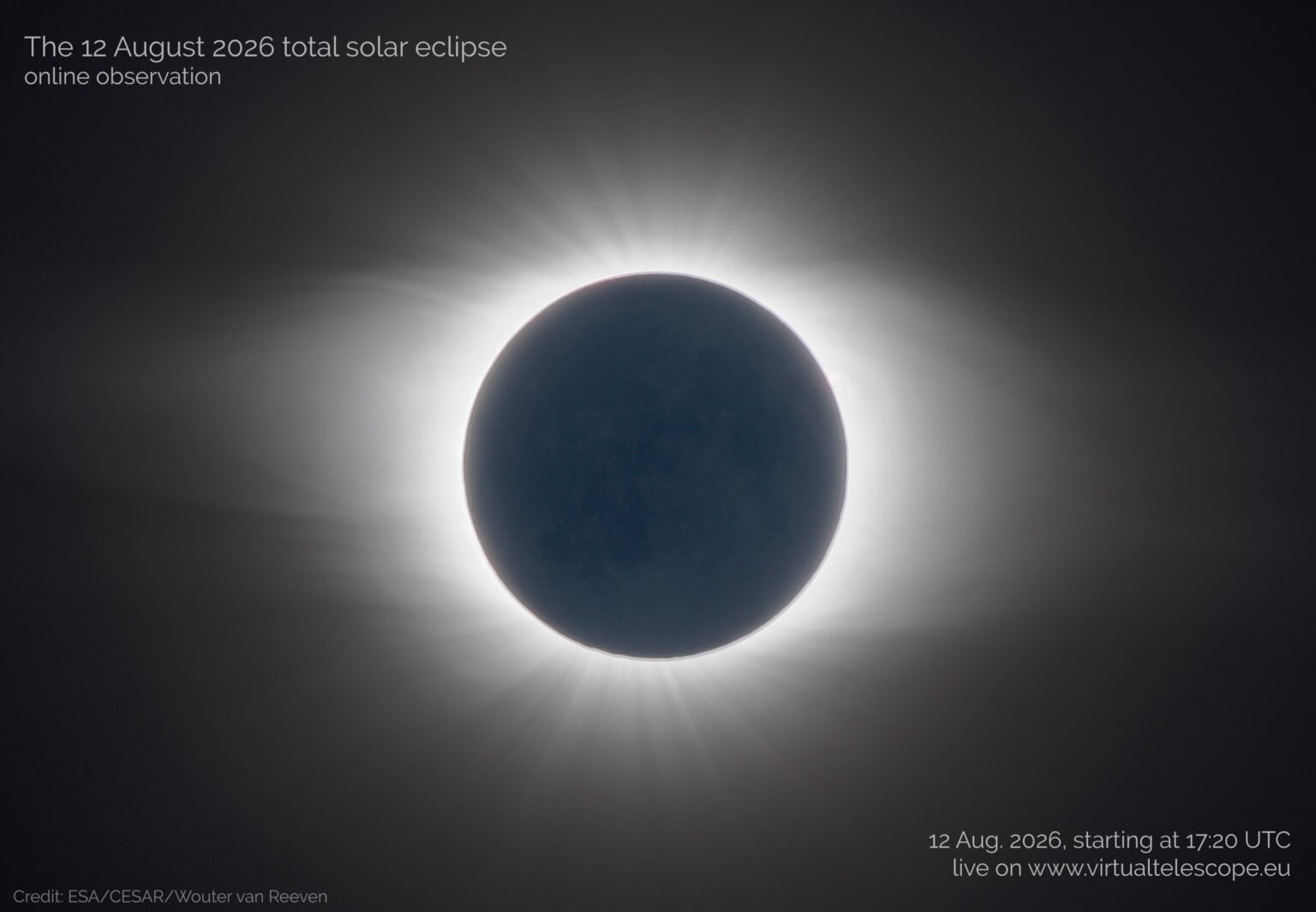 Eclipse poster for the August 12th eclipse. Credit: The Virtual Telescope project.
Good luck and clear skies to everyone who made the trek to totality. Eclipses are a sure thing; clear skies aren’t. But with a little patience (and ready mobility) you can witness totality, and win the privilege to stand in the shadow of the Moon.
Read Dave Dickinson’s eclipse-themed science fiction and more.