 Universe Today
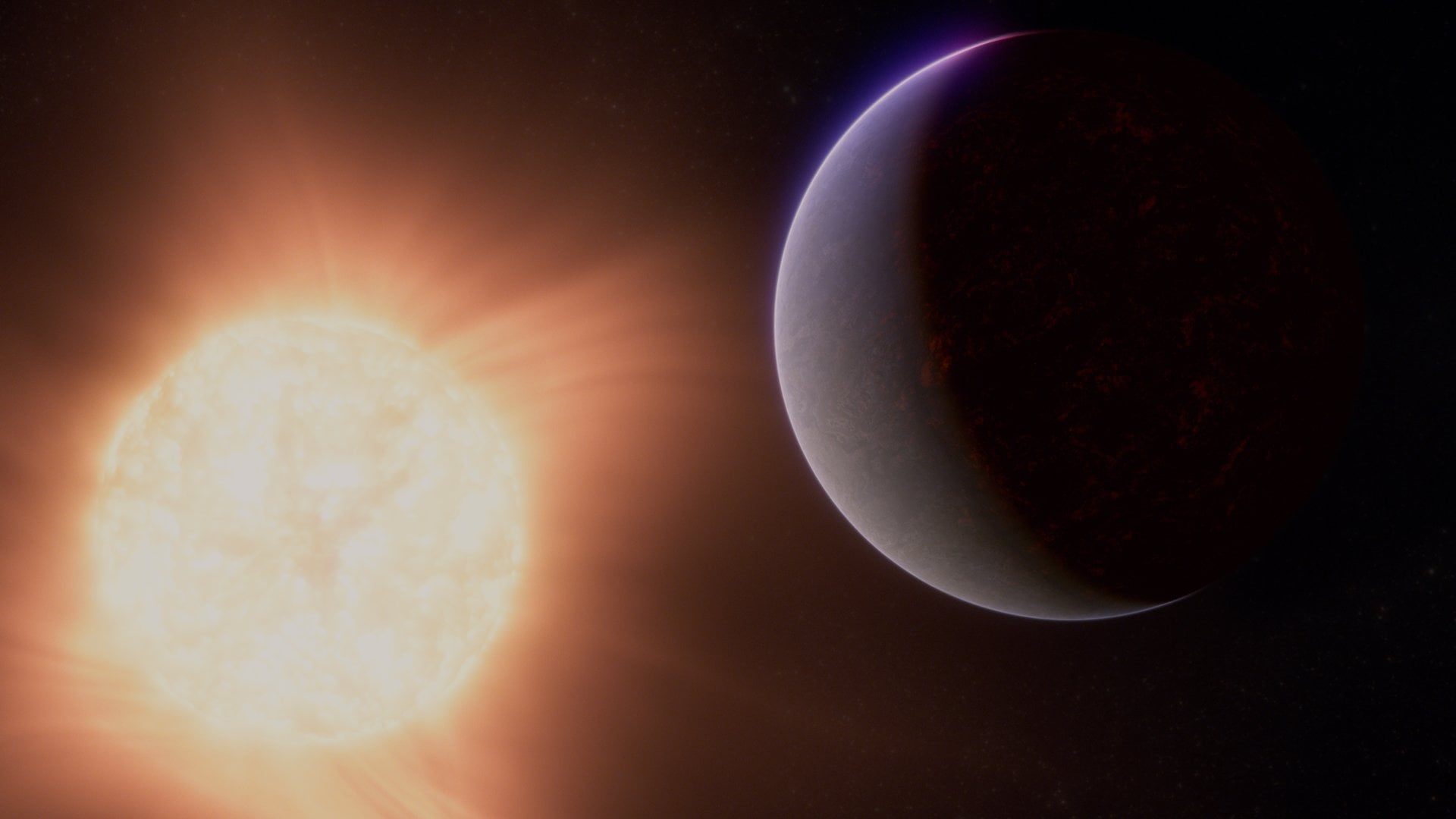
The search for Earth 2.0 has begun in earnest. But there’s a huge variety of exoplanets out there, so narrowing down the search to focus valuable telescope time on only the best candidates is critical. One variable of a planet that will have a huge impact on its habitability is its size. A new paper, now available in pre-print on arXiv, by researchers at the University of California Riverside, looks into the impact of a planet’s size on one of its more critical features for habitability - whether it holds onto an atmosphere - and determines that slightly smaller than Earth is likely the smallest a planet can be and still be viable for life to develop.
That magic number, specifically, is 0.8 Earth radii, according to the Smaller Than Earth Habitability Model (STEHM) that the researchers developed. And that limit seems to be determined by two specific hurdles that planets must jump in order to be viable for life.
First is the obvious one - gravity. Smaller planets have less mass, and therefore lower gravity, but also a lower escape velocity. That makes it incredibly easy for high-energy atmospheric particles to simply leak into space in a process known as Jeans escape. No surprises there.
Video showcasing the Pandora mission to study alien atmospheres. Credit - NASA Goddard YouTube ChannelBut the second isn’t quite so obvious - internal cooling. Smaller planets have a high surface area-to-volume ratio, causing their interiors to cool down more rapidly than larger planets. As the planet cools its lithosphere (i.e. its outer shell) rapidly thickens, essentially capping whatever volcanos the planet might have. Since volcanic outgassing of the planet's interior is one of the main ways to maintain an atmosphere over the long run, less volcanic activity leads to much lower atmosphere lifetimes.
The STEHM model used to showcase these hurdles admittedly was relatively simplistic. The researchers modeled the planets as “stagnant lid” planets with a single unbroken crust. And they used a carbon dioxide atmosphere, which is perhaps the best case scenario for atmosphere retention, since CO2 is a heavy molecule that naturally resists Jeans escape.
But despite these limitations, the model shows a very clear cut-off between 0.7 and 0.8 Earth radii. Planets that are 0.8 Earth radii or larger can hold onto an atmosphere for billions of years. Whereas 0.7 Earth radii planets and smaller inevitably lose their atmosphere to the extreme ultraviolet (XUV) radiation of their host stars. For example, a 0.6 Earth-radius planet would hold on to an atmosphere for about 400 million years (likely not long enough for life to develop defenses against a lack of atmosphere) whereas a 0.5 Earth-radius planet would be stripped bare in a mere 30 million years.
Astronomy Cast episode focused on the habitable zone of exoplanets.There are some exceptions to this rule, though Smaller planets can cheat their atmospheric death if they have any one of three very rare features. If it forms with a large carbon budget, that surplus of carbon is capable of staving off the atmosphere being stripped away for billions of years. A small planet with a low core radius fraction (e.g., no core) retains a larger mantle volume and volatile inventory, allowing it to continue outgassing atmosphere-giving gases for billions of years. And finally, if the planet has a “cold start” where the mantle takes awhile to heat up and start pumping CO2 into the sky. In this case, the star itself would have aged and diminished the XUV radiation that would otherwise have stripped away the atmosphere, allowing the atmosphere itself to exist for much longer than if the planet had started out hot.
Those features are exceedingly rare though. So what this means for astronomy can be put simply - if we are hoping to find extraterrestrial life, it’s probably only looking at exoplanets that are 0.8 Earth radii or larger. Anything smaller than that, unless it has an extremely unusual composition, is likely just an airless rock drifting through space.
Learn More:
M.L. Hill et al - Smaller Than Earth Habitability Model (STEHM): The Lower Size Limit for Atmosphere Retention in the Habitable Zone
UT - To Understand Exoplanet Habitability, We Need A Better Understanding Of Stellar Flaring

