Universe Today
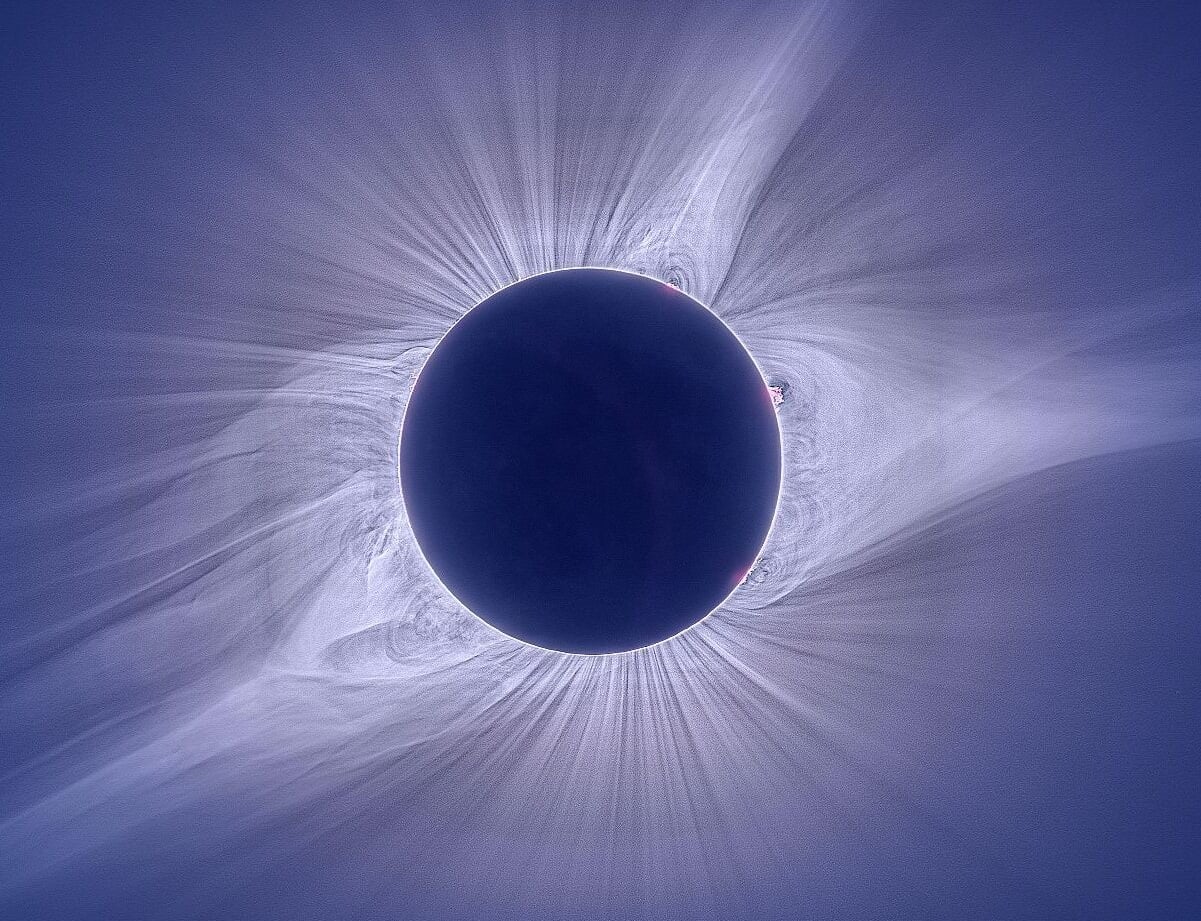
On April 8th, 2024, people across the world witnessed a solar eclipse, a relatively rare event in which the Moon occults (blocks out) light from the Sun. To capture this event, volunteers at 143 observatories across the U.S. trained their equipment on it as part of NASA's Eclipse Megamovie citizen science project. The images they took were groundbreaking and provided some of the most detailed images to date of the Sun's corona. After nearly two years of production and editing, the Eclipse Megamovie team has released the dataset from this project.
The Eclipse Megamovie team included researchers from Sonoma State University and the University of California, Berkeley, in collaboration with NASA’s Goddard Space Flight Center. Along with EdEon STEM Learning programmer Troy Wilson, the team began working on the database long before the eclipse. The greatest contribution, however, was made by the hundreds of volunteers who ventured out and photographed the total solar eclipse with their instruments. The resulting dataset is the first white-light eclipse dataset ever produced, spanning more than an hour and a half of cumulative observations of the Sun's corona.
It includes 143 volunteer-led observations, 52,469 photographs, and shows how the Sun's corona evolves from one observatory's view to the next. The resulting dataset will enable astronomers worldwide to identify coronal mass ejections (CMEs) and study how solar plumes grow and develop. The data is also available to the public and highly accessible, with images classified by observatory and location. The files are also divided into three categories based on different levels of image processing.
Level 1 data consists of raw images, level 2 consists of calibrated images, and level 3 consists of images calibrated in the Flexible Image Transport System (FITS) - a standard astronomical data format used by NASA and the International Astronomical Union (IAU). "Thank you for all you do and have done for us," said Eclipse Megamovie volunteer Jessi McKenna in a NASA press release. "Everyone in the group has been amazingly supportive of each other. And those who are running things are always so obviously appreciative of everyone who has contributed to the project."
Further Reading: NASA