Universe Today
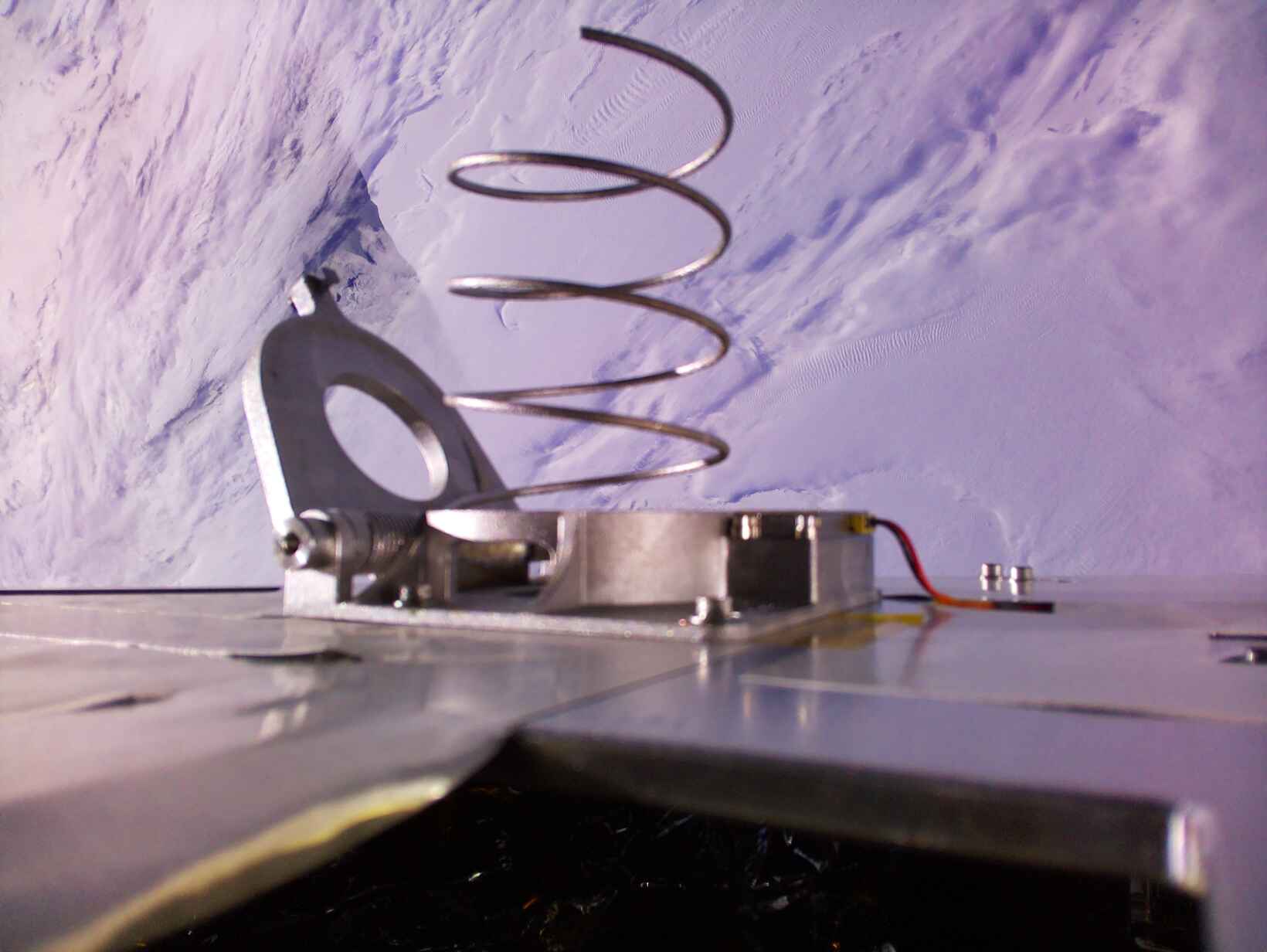
Additive manufacturing, also known as 3D printing, has a proven track record for reducing waste and efficiently producing made-to-order tools and components. For years, NASA has been testing the technology aboard the International Space Station (ISS) to investigate how it may increase astronauts' self-sufficiency. This is especially true of missions far from Earth, where opportunities for resupply are few and far between. With their latest experiment, the JPL Additive Compliant Canister (JACC), NASA demonstrated another application: 3D printed springs.
The spring-like wire was deployed on Feb. 3rd, 2026, aboard Proteus Space's Mercury One spacecraft, a small commercial satellite and the first developed using AI. An onboard camera captured video footage (click here to watch) of the spring popping out of its container as the spacecraft passed over the Pacific Ocean in Low-Earth Orbit (LEO). JACC is one of two technology demonstrators designed by NASA's Jet Propulsion Laboratory to take up less volume while precisely deploying antennas on future satellites.
Mercury One was launched aboard SpaceX's Transporter-15 mission on Nov. 28th, 2025, from Vandenberg Space Force Base in California. The spring is modeled after communication antennas commonly used on satellites and is printed out of titanium. The design combines multiple parts - a hinge, panel, compression spring, and two torsion springs - into a single component. This reduces the number of parts by a factor of three, compared to similar structures, as well as the spring's weight and volume.
The full package weighs just 498 grams (~1 lb) and measures 10 cm (4 inches). The spring extends from a packed height of 3 cm (1 inch) to 15 cm (6 inches) when deployed. The successful test of the JACC demonstrates that 3D-printed mechanisms can be built faster, cheaper, and with greater ease than methods traditionally used to create space hardware. This is especially important for long-duration missions beyond LEO, including NASA's Artemis Program and other plans to build habitats in the Moon's southern polar region.
The second payload is the Solid Underconstrained Multi-Frequency Deployable Antenna for Earth Science (SUM), a high-frequency (up to 240 GHz) reflector designed for Earth science. Along with the JACC, these payloads constitute the Prototype Actuated Nonlinear Deployables Offering Repeatable Accuracy Stowed on a Box (PANDORASBox), both of which were invented and tested by NASA JPL. These low-budget payloads were produced in a year, while the Mercury One satellite went from the drawing board to flight certification in about nine months.
So, in addition to demonstrating another potential application of 3D printing in space, this test also demonstrated advances made in rapid payload-tailored satellite development.
Further Reading: NASA