 Universe Today
There’s a specific sequence in the anime Dragonball Z that for some reason has stuck in my head for over two decades. Goku, the main character of the show, travels to King Kai’s planet and can barely stand up when he arrives because the planet’s gravity is 10 times stronger than Earth’s. Over time, he trains in this gravity, and his body begins to adapt to it. Eventually, after leaving the planet, he’s stronger, faster, and more agile than he ever was before. But would that really happen if you were exposed to 10G over a long period of time? Researchers at the University of California Riverside (UCR) decided to test that idea and report their results in a recent paper in the Journal of Experimental Biology. But instead of using anime characters, they used fruit flies as their test subjects.
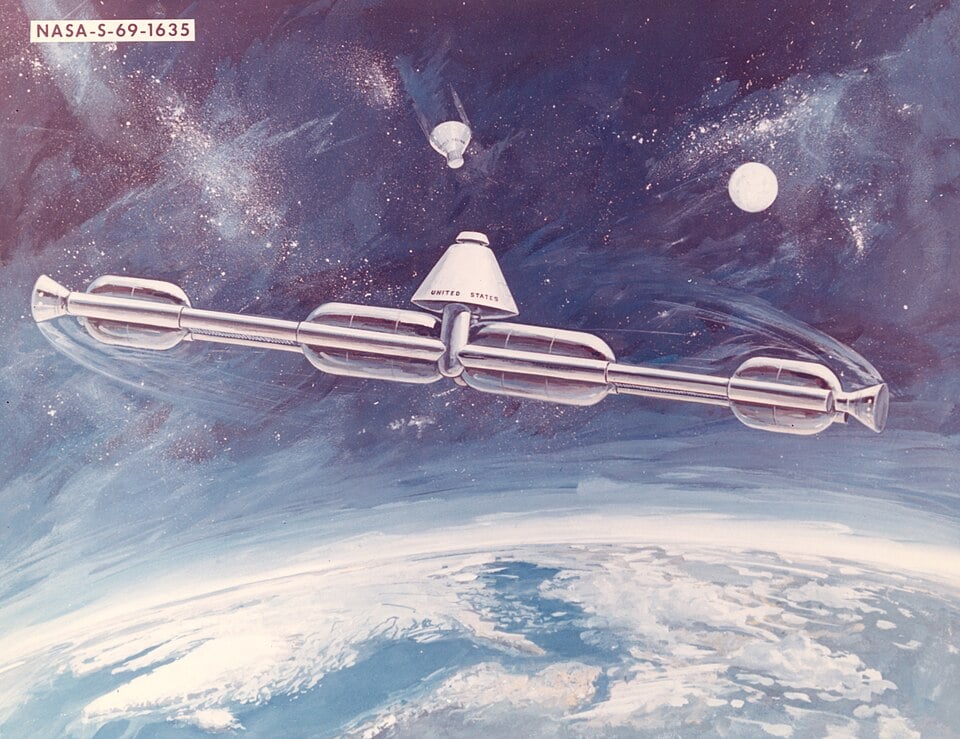
To be fair, it’s not truly possible to test higher gravities for long periods without something more massive than even the Earth in close proximity or continuous accelerations or decelerations that are essentially impossible to perform for long periods. Instead, researchers can use a proxy - centrifugal force. Most commonly seen in everyday life as a famous spinning carnival ride, this rotating force is treated as a valid replacement for gravity, and is the basis for ideas like rotating space habitats.
Luckily, fruit flies fit nicely into centrifugal tubes, making it easier to test the effects of prolonged higher gravity exposure on one of the most commonly used biological proxies. The UCR researchers set up several experiments exposing the flies to 4G, 7G, 10G, and even 13G accelerations for either an “acute” period of 24 hours, or a “chronic” one where they were raised in the centrifuge, and even went on to have 10 generations of other fruit flies all raised in the same high gravity conditions. After their period of high gravity exposure, they were then returned to normal 1G conditions and the researchers monitored how they coped with the transition.
Fraser discusses the practicality of artificial gravity.One key feature the researchers were looking for was a difference in the amount of the flies’ “startle” response, which is typically triggered when their vials are tapped. Typically, flies start a reflexive upward climb, technically known as a “negative geotaxis”, when they are startled. The researchers found that, even at higher levels of gravity, this response remained largely intact - showing that the flies' muscles or legs weren’t just completely broken by the crushing force.
However, their spontaneous movement was dramatically diminished. Even at 4G, the flies walked closer, covered less distance, and took less complex paths. The effects were even more pronounced at the higher gravities.
Why the discrepancy between the two reactions? Hypergravity is incredibly demanding, and requires vast amounts of energy just to exist, let alone to move. The researchers believe the flies didn’t voluntarily move around much because they were conserving energy, whereas they would still trip in the “flight” mode when threatened by a shaking vial. To support that thesis, they took samples of lipid levels in the flies after their exposure, which showed both time- and gravity-dependent changes in how their bodies managed energy stores.
Fraser discusses how dangerous microgravity can be for humans.Perhaps the most interesting insight from the study was that flies that were exposed to 4G were actually hyperactive after their gravity load was reduced. And that increased activity lasted well into the fly’s late adulthood. Maybe Goku was on to something after all. But, in a strange reversal, flies that were subjected to higher gravities - even 7G - took weeks to recover and had depressed activity levels after returning to normal gravity. Eventually they did, but only near the end of their lives.
If the flies were exposed to it for generations, they showed even worse locomotor impairments than the ones that were only exposed to a 24-hour spin. Multigenerational flies whose parents were also raised in 7G or above exhibited a massive drop in daily activity which showed no signs of bouncing back at all, even in old age. In other words, developing in high gravity seems to lock in physiological changes that might be epigenetic that prioritize survival over movement.
To be clear, it’s not likely that any humans will be spinning in a 7G centrifuge for long periods of time anytime soon. However, the underlying biology is relevant to our space travels. As we spread out to the Moon, Mars, and the microgravity travel in between, astronauts will be exposed to all kinds of gravitational shifts. Understanding how organisms shift their energy reserves and alter their neural circuitry to cope with gravity transitions will be essential to keeping humans healthy in those environments. Goku understood that well, as he opted to install an artificial gravity machine to enable him to train at 100G on his way to confront Frieza later in the Dragonball Z series. While we might never get that kind of cool tech, manipulating and dealing with gravitational changes and their physiological effects will remain a core challenge as we start to spread farther out into the solar system.
Learn More:
EurekAlert / UCR - Under crushing hypergravity, flies adapt — and recover
S.A. Amogh, S. Horton, & Y.M. Giraldo - Hypergravity exposure leads to persistent effects on geotaxis and activity in Drosophila melanogaster
UT - Could We Make Artificial Gravity?
UT - Space Travel May Impact Human Fertility and Fertilization

