Universe Today
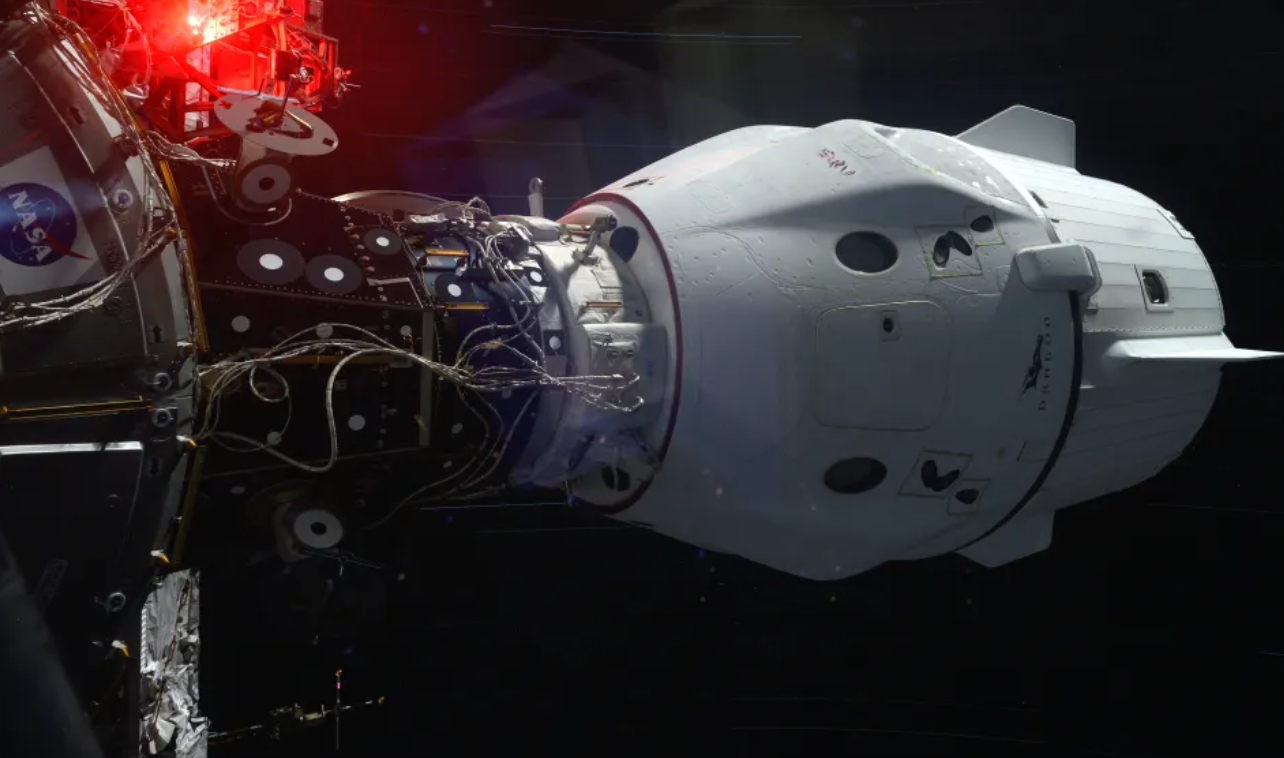
Crew-11’s early return could be visible across the U.S. Wednesday night.
In a historic first, an unspecified medical issue is prompting an early return from the International Space Station on Wednesday night, January 14th. And while the return will be featured live online from undocking to splashdown, if skies are clear, you might just be able to see the pair crossing the night sky, shortly after undocking.
The issue unfolded early in the first week of 2026, when NASA announced the early return due to a medical situation involving a crew member aboard the station. NASA stated that the crew member is in stable condition, and did not make the member’s name or the exact nature of the issue public due to privacy concerns.
 Crew-11 aboard Endeavour. Credit: SpaceX.
NASA has contingency plans for just about every emergency conceivable, including rapid evacuation of the station or medical emergencies. Still, this is a first in the history of the space station. The ISS has been continuously inhabited since the start of Expedition 1 on November 2nd, 2000. Thus far, humans have had a presence in space for every day of the 21st century.
 The launch of SpaceX's Falcon-9 rocket with Crew Dragon on the Crew-11 mission. Credit: NASA
The issue forced a cancellation of a U.S. spacewalk in late December. Crew-11 has been aboard the ISS for five months, and consists of Russian cosmonaut Oleg Platonov, JAXA astronaut Kimiya Yui and NASA astronauts Zena Cardman and Mike Fincke.
Undocking from the Harmony zenith node for Crew Dragon Endeavour is set for Wednesday, January 14th at 5:05 PM EST/22:00 Universal Time (UT) with a splashdown off the coast of California on early Thursday morning January 15th at 3:40 AM EST/8:40 UT. NASA TV will carry the return live starting two hours prior to undocking. SEN’s 24 live-streaming camera on the station should provide great live views as well.
The International Space Station is a familiar friend to skies across the Earth, a bright outpost for humanity’s claim to low Earth orbit. The good news is, there are two good passes over the U.S. for the ISS Wednesday evening, right as the Crew-11 return to Earth begins:
The first pass occurs at around 6:00 PM EST for the Eastern U.S. This is only an hour after undocking. The U.S. Northeast and New England should have the very best view under dusk twilight skies.
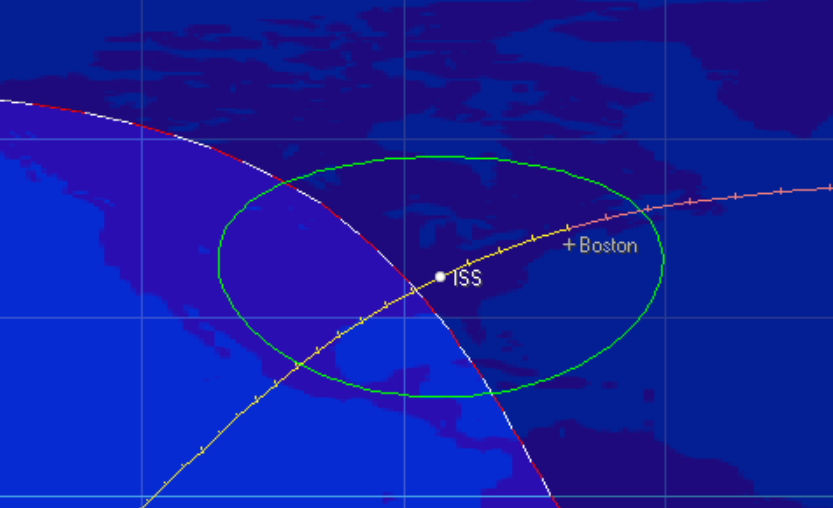 The 1st pass of the ISS over CONUS Wednesday night. Credit: Orbitron.
The second key pass comes up at 7:39 PM EST for the central U.S. This is an hour and a half after undocking, but still has good prospects for seeing both.
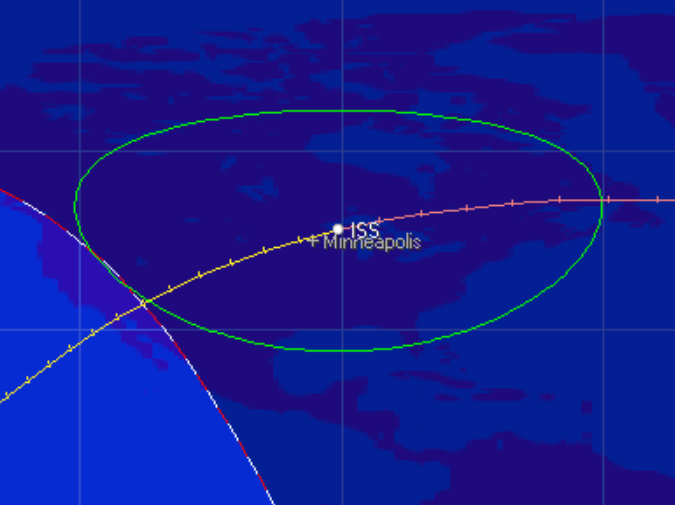 The 2nd visible pass of the ISS over CONUS Wednesday night. credit: Orbitron.
Heavens-Above is a great resource to track specific passes of the ISS and other satellites for your observing locale.
Generally speaking, weather prospects for clear skies tonight look better west of the Mississippi due to a January snowstorm making its way eastward:
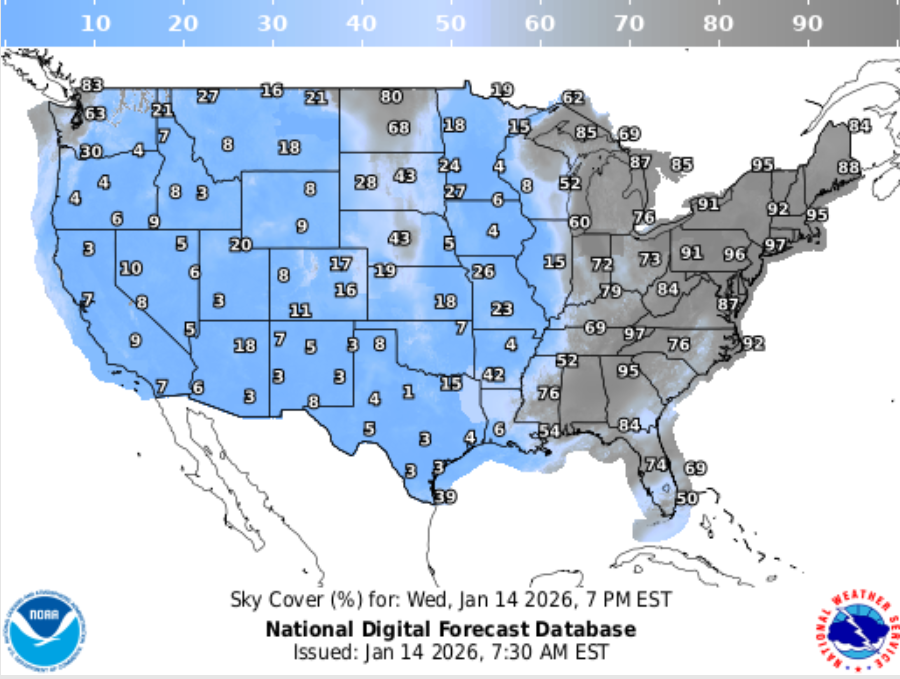 Cloud cover prospects for Wednesday night across CONUS at 7PM EST. Credit: NOAA.
Prospects for Spotting Crew Dragon and the ISS
Observing the return is as simple as watching during an ISS pass. Dragon should appear as a fainter +2nd magnitude ‘star’ along the same path as the ISS, either in front of the station or behind. Keep a pair of binoculars handy to sweep along on your hunt for Crew Dragon, especially if you’re observing from bright twilight skies. Watching this sort of orbital ballet was common back in the era of the U.S. Space Shuttle, which was a frequent flyer to the ISS while it was still under construction:
The future of the station and humans in low Earth orbit may soon change. Vast wants to put its first commercial space station module Haven-1 in orbit this year. NASA will likely dispose of the ISS around 2030, safely de-orbiting the outpost into the spacecraft graveyard of the remote southern Pacific 'Point Nemo' region after three decades of service.
It will be sad to see the station go, but tonight you can catch the drama in low Earth orbit as Crew-11 returns to the Earth.