Universe Today
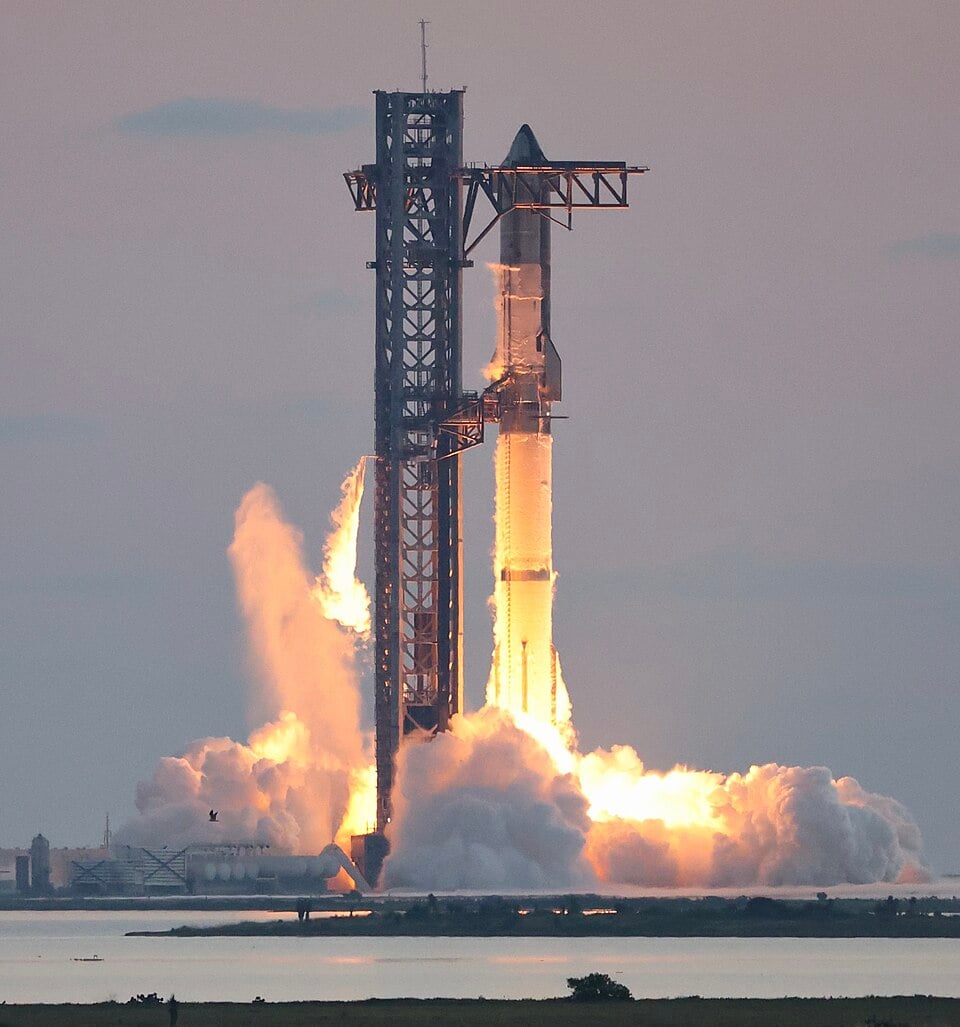
In the summer of 2023, something happened that engineers had talked about for decades but few genuinely expected to see in their lifetimes. SpaceX's Starship, a stainless steel tower taller than a thirty storey building lit its thirty three engines simultaneously and lifted off from the Texas coast. It did not go entirely to plan. But it went. And when the Super Heavy booster returned in flight test five to be caught, mid air, by the enormous mechanical arms of its own launch tower, it was clear that the rules of spaceflight had fundamentally changed.
Starship is designed to carry more than 100 tonnes to low Earth orbit in fully reusable form. If it achieves that goal, it will be the most capable and most cost effective rocket in history. For space agencies and rocket companies around the world, the question is no longer whether this represents a revolution, the question is what to do about it.
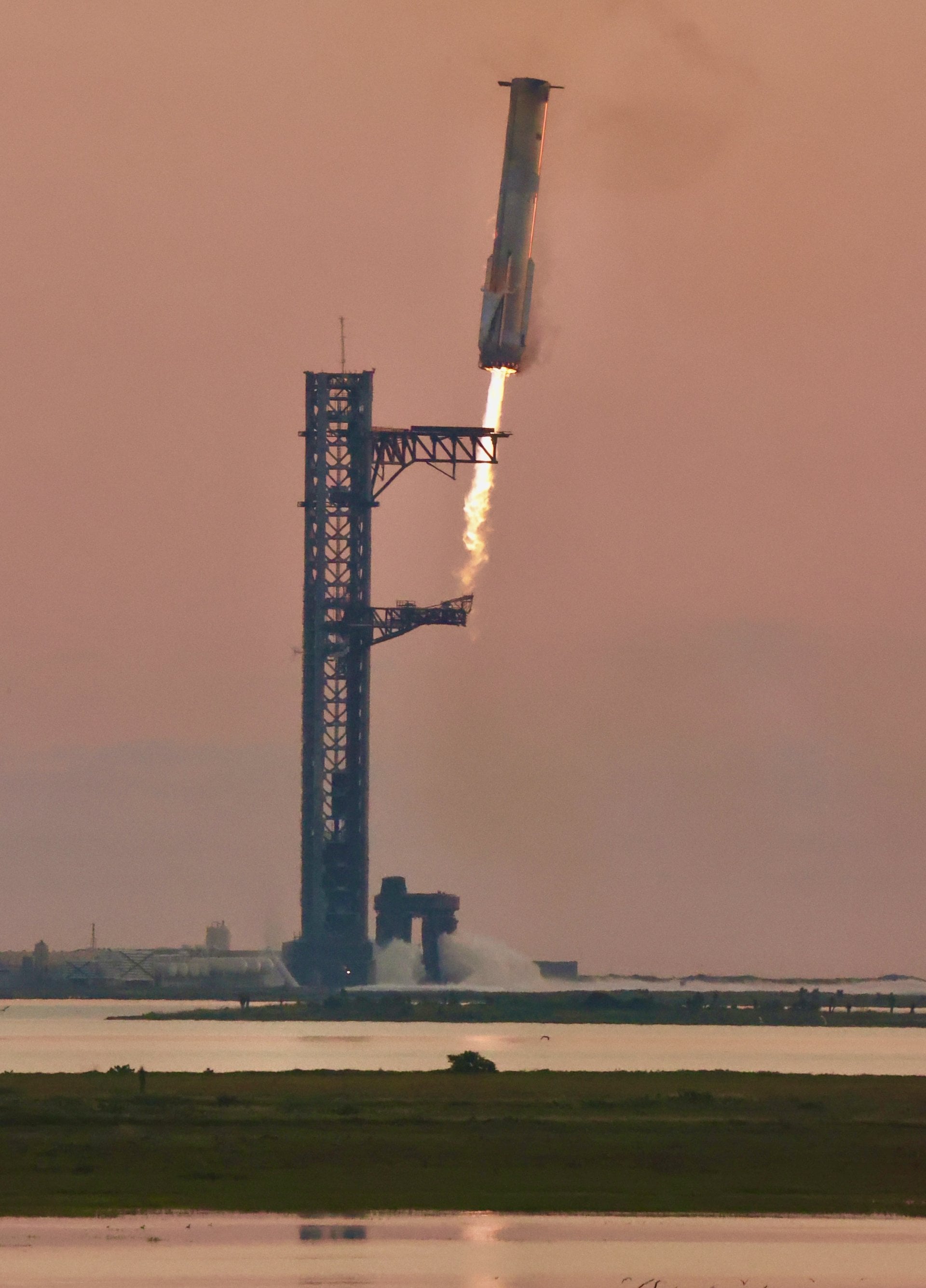 Super Heavy Booster 12 approaching the tower during Starship flight test 5 on October 13, 2024 (Credit : Steve Jurvetson)
Researchers at the German Aerospace Center (DLR) have just published one of the most rigorous independent analyses of Starship yet attempted and unusually, they did not rely on SpaceX's own claims. Instead, they extracted telemetry data from the publicly broadcast footage of the first four integrated flight tests, second by second, and used it to build and validate their own detailed models of the vehicle's performance. The result is a picture of Starship that is both more grounded and more impressive than the marketing suggests.
The analysis confirmed that in its current form, a fully reusable Starship that can deliver around 59 tonnes to low Earth orbit. That is roughly what a Falcon Heavy can achieve without recovering any of its boosters at all. The next generation version, equipped with the more powerful Raptor 3 engines and enlarged fuel tanks, is projected to achieve around 115 tonnes in reusable mode and potentially 188 tonnes if flown expendably, surpassing even the mighty Saturn V of the Apollo era. But the more striking part of the paper is a detailed design for a European alternative capable of launching over 70 tonnes to orbit, called the RLV C5.
The concept pairs the winged, reusable booster stage from DLR's long running SpaceLiner project with an expendable upper stage designed to maximise payload. It burns liquid hydrogen and liquid oxygen, which is a more efficient combination than the methane and oxygen that power Starship's Raptor engines, and its booster does not land the way Starship's does. Instead of descending tail first on a column of rocket fire, the SpaceLiner booster glides back through the atmosphere on wings, before being captured in mid-air by a large subsonic aircraft. It is a recovery method that sounds almost science fictional, but one that DLR researchers argue has distinct advantages: the booster needs no fuel reserved for landing burns, which means more of every kilogram of propellant goes towards actually reaching orbit.
In comparison, Starship is more than three times heavier than the RLV C5 at launch. A significant portion of that mass is the cost of full reusability: heat shield tiles, landing fuel, structural reinforcements, the wings. Of every tonne Starship sends to orbit, only around 40% is payload however the RLV C5, with its simpler partially reusable approach, manages to put 74% of its mass-to-orbit into useful payload. What it lacks in raw capacity it gains in efficiency.
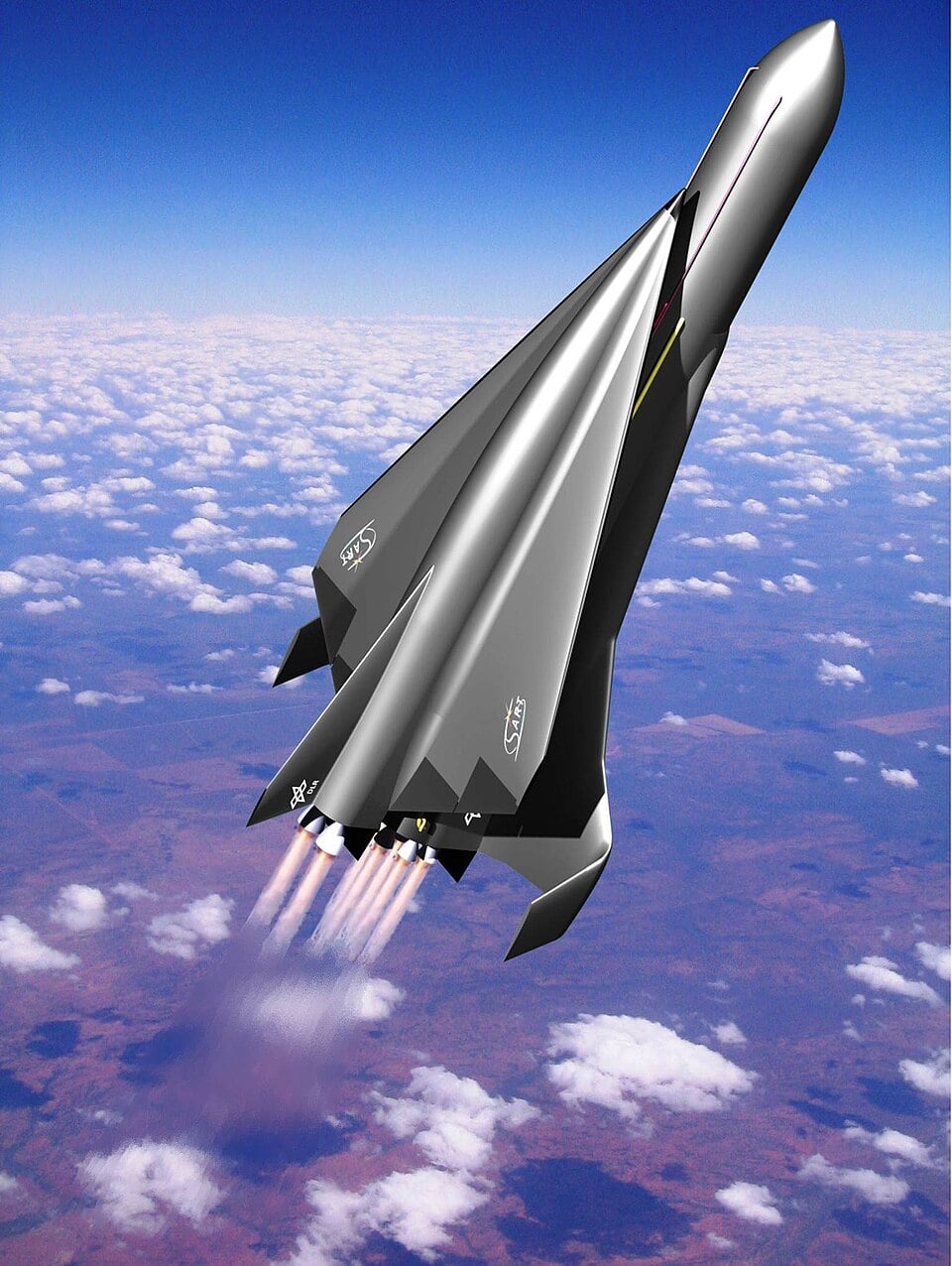 Artist's impression of the SpaceLiner full configuration during the ascent phase (Credit : ToSch1983Deutsches Zentrum)
The DLR researchers are careful to frame this not as a competition but as a choice. Starship's extraordinary capacity and planned rapid reuse make it ideal for missions requiring truly massive payloads for example moon bases, Mars missions and giant satellite constellations. The RLV C5 addresses a different need for sovereign European access to super heavy lift without the extraordinary investment required to develop a fully reusable system from scratch. It could be built using components already under investigation, and the researchers suggest it could slot in as an intermediate step within the SpaceLiner programme before a fully reusable version arrives.
There is a caveat that hangs over all of this, and the DLR team acknowledge it plainly. Starship is already flying, even if imperfectly. The RLV C5 exists on paper. The gap between those two states is not trivial. The thermal protection system that keeps Starship alive during reentry was damaged so severely during the fourth test flight that it had to be completely redesigned. Full and rapid reusability, the thing that makes Starship's economics work, remains an unsolved engineering problem.
Europe is starting far behind but as lead author Moritz Herberhold and his colleagues at the German Aerospace Center conclude, the "RLV C5 offers an effective path for Europe to independently develop partially reusable super-heavy launch capabilities" and sometimes, a smarter path matters more than a faster one.
Source : Comparison of SpaceX's Starship with winged heavy-lift launcher options for Europe