 Universe Today
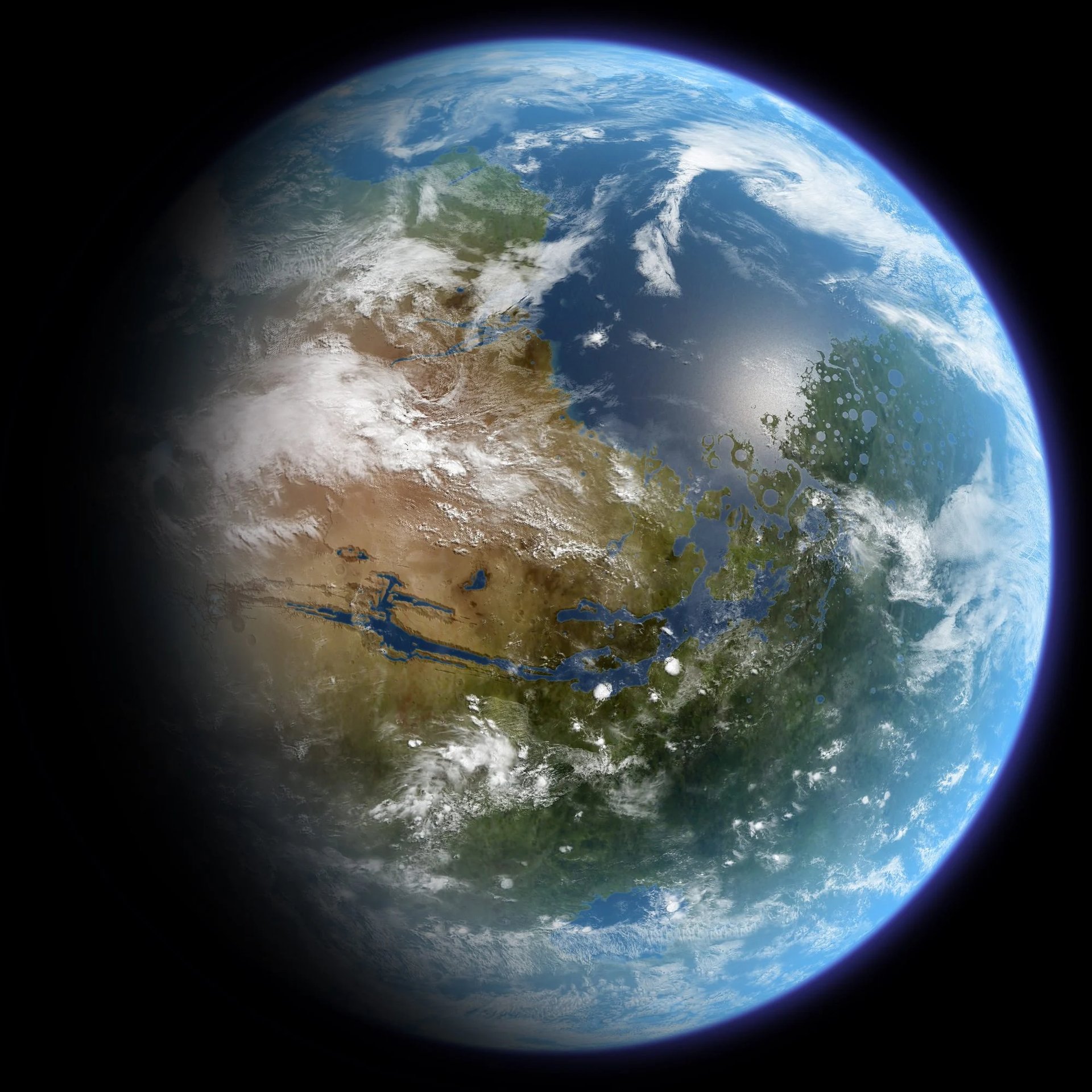
Reading the Mars Trilogy by Kim Stanley Robinson brings the benefits and pitfalls of efforts to terraform the Red Planet into sharp relief. Since the 1970s, when Carl Sagan first suggested the possibility that we could make Mars more Earth-like, that process has been a staple of science fiction. But there’s always been a significant amount of humanity that thinks we shouldn’t. A new paper available in pre-print on arXiv from Edwin Kite of the University of Chicago and his co-authors skirts around the ethical and moral questions of whether we should and tries to take a long hard look at whether we can.
The paper focuses on a three-stage process. The first would seem familiar to anyone who lives in the cold north of our planet - building greenhouses. But these wouldn’t be your typical greenhouses like the ones we have on Earth. They would be made out of advanced material like silica aerogel, and have specially engineered canopies that let visible light in but traps infrared heat from leaving.
Implementing these technologies could allow us to create localized, warm oases on the surface. And, at least in theory, could be scaled up and combined to build a “World House” - as coined by Isaac Arthur - that could cover the whole planet. Under each of these domes, the subsurface ice already present on Mars could melt, providing critical water supplies for human bases and potentially supporting isolated pockets of Earth-based life - if you can deal with the toxic perchlorates pervading the soil anyway.
Fraser talks about how we would terraform Mars.A step up from greenhouses would be to concentrate more solar energy on the planet directly. The roadmap discusses how we could do this with massive solar sails acting as orbital mirrors to bring additional sunlight down. Originally this could be directed specifically at the location of human settlements, but over time could be used to more broadly warm the planet. Specifically, these beams of sunlight could also sublimate the vast CO2 deposits at the Martian South Pole, thickening the atmosphere significantly.
Unfortunately, there’s a catch, as there almost always is with these types of mega engineering projects. Current solar sails are simply too heavy to be economical - if “economical” is even a word that should be used when talking about fundamentally modifying an entire planet’s environment. The paper calculates that, in order for this plan to work, engineers would have to build mass solar sails that weigh less than 20 grams per square meter - about a third of the weight of the current best that we have. But also, even if we did manage to get a giant mirror to reflect down more sunlight, that would fundamentally change the face of Mars itself - and we would have to deal with all of the geological fallout from that.
An even more dramatic way to raise Mars’ temperature is to use purposely engineered aerosols (the third process). This isn’t as simple as just kicking some Martian dust into the air. It would require manufacturing highly specific nanoparticles - like aluminum nanorods or nitrogen-doped graphene - and intentionally releasing them into the sky.
Fraser discusses the technologies we need to terraform Mars.There’s still a lot we don’t understand about how exactly this would work, given that we don’t really know how fast they would fall back to the ground, or how quickly they would clump together, but the researchers estimate that we would need 3 million tons of them to make a noticeable dent in the global climate. Given that the paper assumes a future cost to get something on the surface of Mars of around $2,000 per kilogram, that means we would definitely need to manufacture such material on Mars itself - which again is likely a long way off from becoming a reality.
Realistically, we’re still decades away from even attempting to warm Mars on a global scale. And there are plenty of other roadblocks in the way to truly “terraforming” it. But the Red Planet remains our most viable candidate for doing so. And as long as we plan to expand to other planets at all, it's the most viable candidate for that as well. The idea of creating another Earth will have a long time to play out in our imagination, but this paper makes clear - there is nothing physically impossible about doing so. It just takes a boatload of time, effort, and money.
Learn More:
E. S. Kite et al. - A research roadmap for assessing the feasibility of warming Mars
UT - Terraforming Mars Isn't a Climate Problem—It's an Industrial Nightmare
UT - Could We Really Turn Mars Green?
UT - Terraforming Mars Will Require Hitting It With Mulitple Asteroids

