 Universe Today
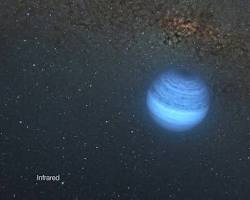
Rogue planets sound like rare travelers amongst the stars, freed from the gravitational constraints of a host system, left to forever wander the interstellar void. But modern models suggest these Free Floating Planets (FFPs) as they are technically known, are actually very common - nineteen times more common than planets beyond the “snow line”, which is the distance from the central star where it becomes cold enough that hydrogen compounds like water, ammonia, and methane can condense into ice. But why are FFPs so common? What forces them out of the stellar systems where they form? A new paper from Xiaochen Zheng of the Beijing Planetarium and his co-authors, available in pre-print in arXiv, offers a plausible explanation - planetary “bouncers”.
Current theories of how FFPs form range from isolated gas clouds collapsing into a planet, but without enough mass to create a star, to chaotic planet-planet scattering patterns that shoot early stage planets in all manner of directions. According to the paper, the second idea is closer to the truth, but it requires a little extra “oomph”.
There are two common types of exoplanets in other solar systems - close, hot “Super-Earths” and “Hot Jupiters” that orbit close to their host star, and distant, cold gas giants similar to Saturn and Jupiter in our own solar system. But, crucially, many newly formed stars also form with a companion, or binary. And that companion star can wreak absolute havoc with the gravitational balance of the new planetary system.
Fraser talks about the possibility of nearby rogue planets.Through a process known as the von Zeipel-Lidov-Kozai (vZLK) mechanism, a distant perturbing body, like a companion star, can slowly warp the orbit of a “cold” planet - i.e. one that is orbiting a great distance from its host star. Over millions of years, the vZLK mechanism causes the planet’s orbit to get squished and stretched until it becomes highly eccentric - essentially turning it into a long plunging oval.
On one end of this oval, the “intruder” planet will cross paths with the heavily populated inner solar system, where short-period Super-Earths and Hot Jupiters typically reside. When the two orbits collide, the stage is set for a giant game of cosmic billiards. The two planets don’t necessarily have to crash directly into each other, though that likely does sometimes happen. But what the researchers found was that, during a close encounter (which is much more likely), the two planets exchange orbital energy.
Since the “cold” planet already has a relatively tenuous connection to its host star, the small gravitational kick from that energy exchange is sometimes enough to push it past its escape velocity, breaking its gravitational bond to its host star and creating a FFP. According to the author’s simulations, Hot Jupiters are particularly effective at this “bouncer” effect - they will eject a Jupiter-mass intruder 80% of the time. Super-Earths, on the other hand, only eject Jupiter size intruding planets about 6.5% of the time, but are good at ejecting other “cold” super-Earths, booting them into interstellar space 52% of the time.
Fraser discusses more about the topic of rogue planets.As might be expected, the inner planets don’t get away unscathed from this herculean effort. In some cases, the gravitational interaction robs the inner planet of so much of its angular momentum that it spirals inwards and is completely consumed by the host star. In other scenarios, even if they survive, their orbits are left deeply scarred, with randomized tilts, highly eccentric orbits of their own, and sometimes even flipped completely upside-down.
Crunching the numbers further, the authors estimate that around 8% of FFPs are likely to come from these sort of “planetary bouncer” interactions. While that might not seem like much, taking into account the sheer number of FFPs shows how commonplace this type of interaction might be. It also highlights how dynamic, interconnected, and violent early planetary systems can be.
We’ll be able to discover plenty more new FFPs with upcoming telescopes like the Nancy Grace Roman Space Telescope, whose data will provide experimental evidence for some of the ideas put forth in the paper. Maybe, at some point, we’ll even get lucky enough to actively see one of these early star systems undergoing this process - and we can watch as another planet is ejected into the long dark night.
Learn More:
X. Zheng et al. - A Robust Launching Mechanism for Freely-Floating Planets from Host Stars with Close-in Planets
UT - Rogue Planets Can Spawn Their Own Planetary Systems
UT - How Many Rogue Planets are in the Milky Way? The Roman Space Telescope Will Give Us an Answer

