 Universe Today
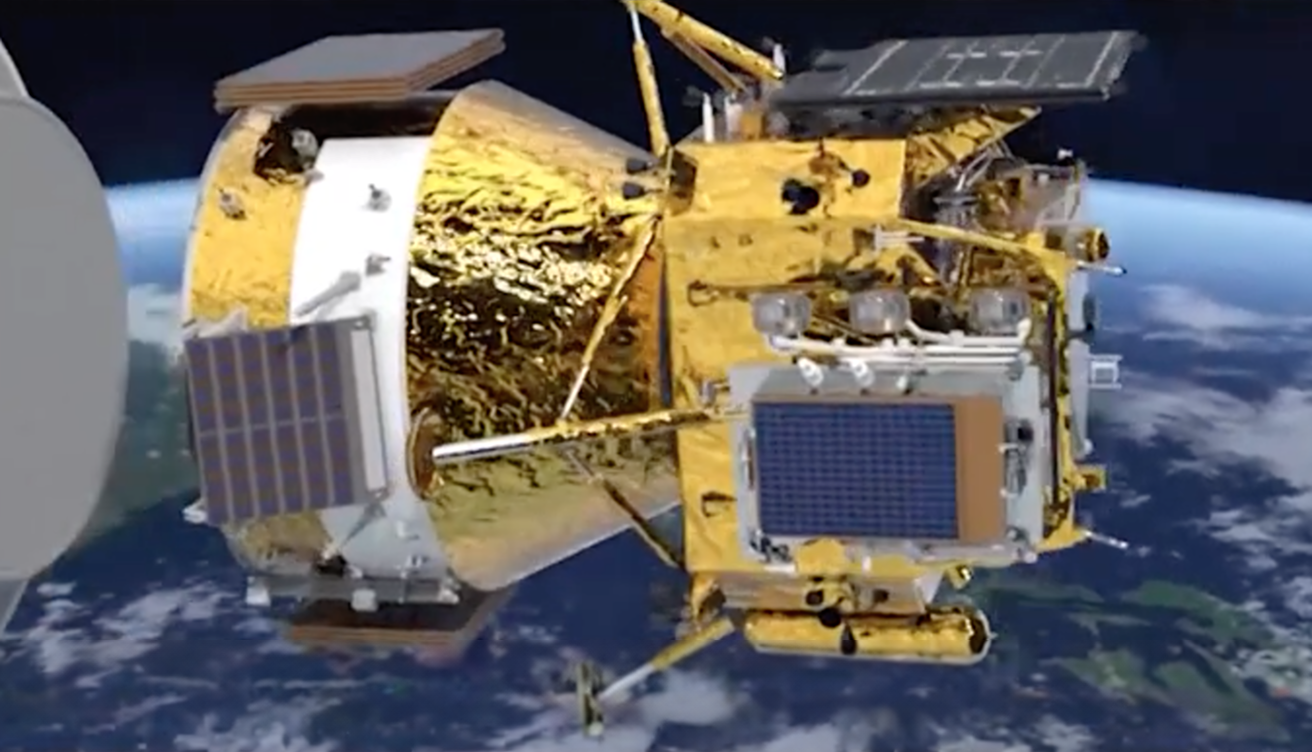
We’ve said it before, and we’ll say it again - space is hard. Another example, albeit lacking in the destructive displays of some past examples, is China’s recent delay of its Chang’e-7 lunar mission. The agency announced the mission would miss its late-August launch window with a very brief press release from the China National Space Administration and the China Manned Space Engineering Office. While that means a slight delay in China’s plan for the Moon, it’s only a matter of time before the cornerstone of the robotic lunar exploration program is back on the launch pad.
Notably, this cancellation came while the mission itself was already actually on the launchpad. The Long March 5 launch vehicle planned to take the mission to the lunar south pole had already been staged at the Wenchang Space Launch Site on Hainan Island. The original launch window, which opened on August 24th, represented a concurrence of factors, with the launch azimuth on Earth aligned with the timing of local seasonal illumination from the Sun.
With so much at stake, the decision to delay the mission surely did not come easily. While there were no technical details about the reasons for the delay, the press release mentioned the “principles of prudence, reliability, and absolute mission success” as factors in their decision-making process. That sounds both like the officials that made the call understood the stakes were high, but also understood the impact such a delay would have on their own job prospects.
Fraser talks about some of the results of Chang'e-6's returned lunar samples.Chang’e-7’s predecessors were largely “absolute mission success(es)”. These included everything from a simple orbiter to the first ever sample return by a robot from the far side of the Moon. So there was a lot of pressure leading up to this next step in the Chinese lunar exploration program.
To go along with those expectations, Chang’e-7 itself is more than just a single system. It is composed of an orbiter, designed to take high-resolution topographic maps, a lander/rover duo that is designed to touch down amidst the crazy topography of Shackleton crater, and a “hopper” that was designed to make powered leaps across crater floors and into chasms to sniff out water ice and other volatiles.
Any one of those mission objectives comes with its own set of engineering challenges, and most likely a long-standing problem with one caused the delay. But, as with many multi-phase missions, there will be cascading effects for future Chinese lunar efforts.
Fraser answers a question about base proximity on the Moon.Chang’e-7 itself is a direct precursor to the International Lunar Research Station (ILRS), a long-term initiative intended to establish a permanent robotic and human outpost on the Moon. Part of the delayed mission was to search for resources that could be used to build and maintain the ILRS, since engineers need ground-truth data on how accessible, and how easy to process, polar water ice actually is, before they decide what kind of infrastructure would be needed to build a base.
There is another, shorter, and parallel development roadmap toward a crewed Chinese lunar landing by 2030. The constituent components of that mission, such as the Long March 10 rocket and the Mengzhou crew vehicle, are still undergoing ground testing at this point. But data from Chang’e-7 is needed to characterize thermal profiles and regolith dynamics that will directly feed into the final design of those systems.
In other words, the delay is a blow to China’s longer term lunar exploration plans. But what would have been an even bigger blow would have been an unsuccessful mission - and that is precisely what this delay is hoping to avoid. It remains to be seen if it will be successful in that, and it’s unclear when the next viable launch window for Chang’e-7 could potentially be, but it will likely be sometime next year at the earliest. That still gives scientists plenty of time to incorporate as much information from the mission as they can into future ones. Hopefully this delay is only a minor hiccup on the road to a safe, successful continuation of an exploration program that has been stellar (or, perhaps more accurately, lunar) so far.
Learn More:
CASTC/Xinhua - China's Chang'e-7 launch will not proceed in planned window this year
UT - China's Chang'e 7 Will Include a Flag That Will 'Flap' on the Moon
UT - China's Chang'e-7 Will Deploy a Hopper that Jumps into a Crater in Search of Water Ice

