Universe Today
In a recent Hot Take segment, the China Global Television Network recently released an interesting video detailing China's future plans for space. Titled "Earth 2.0? China's plan to find new Earth," the video actually details four missions that the China National Space Agency (CNSA) has planned as part of the country's 15th Five-Year Plan (2026-2030). These missions cover a broad range of next-generation science objectives that space agencies worldwide want to achieve in the coming decades.
These include a radio astronomy experiment destined for the far side of the Moon, a solar observatory that will investigate space weather, a space telescope that will monitor black holes and neutron stars, and an exoplanet-hunting satellite that will search for Earth-like planets. These missions are all part of China's drive to become a major power in space and establish itself at the forefront of space science, research, and exploration. Here's a rundown on the four missions, what China hopes to accomplish with them, and some potential deploy dates:
Hongmeng Project
Also known as the "Hongmeng Plan," this project aims to deploy ten low-frequency telescopes that will orbit behind the Moon to conduct radio astronomy. Similar to other observatories proposed for the far side of the Moon, these satellites would "listen" to radio-frequency signals from the period known as the Cosmic Dark Ages. This mission will complement observatories such as the James Webb Space Telescope (JWST) by studying the earliest epochs of the Universe, which are currently undetectable by conventional telescopes.
For this and similar programs, the far side of the Moon is the chosen location because it is free of radio interference from Earth-based sources and the regular emissions from the Sun. The project is described as being "a colossal cosmic microphone... designed to detect the Universe's infant cries... [and] shed light on the turbulent epoch hundreds of millions of years after the Big Bang, before the first stars formed."
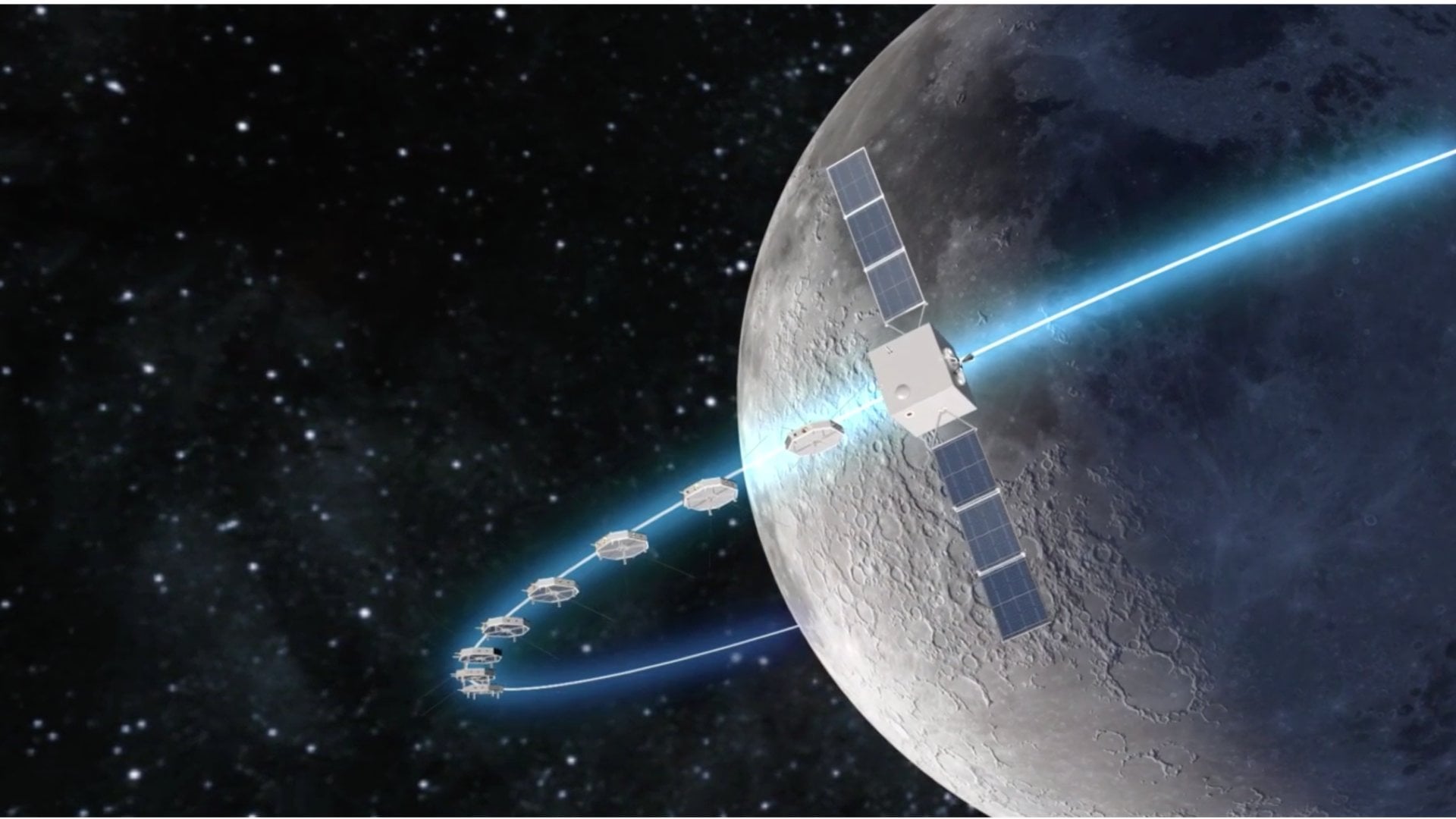 Artist Impression of Hongmeng Project. Credit: Xz998/Wikimedia Commons
Kuafu-2
Also part of the Hongmeng Project is a planned solar mission known as Kuafu-2. This satellite follows in the footsteps of its predecessor, the Advanced Space-based Solar Observatory (ASO-S), or Kuafu-1, which launched in 2022 to study the Sun's magnetic field and solar phenomena, such as flares and coronal mass ejections (CMEs). Kuafu-2 will build on this by becoming the first satellite to orbit the Sun's polar regions (which are difficult to access) and provide data on the Sun's magnetic field and solar cycle dynamics.
"Like a cosmic microscope, it will peer into the Sun's magnetic heart," says the video's narrator. The information it gathers will help scientists predict solar storms and the rippling effects they have across the Solar System.
Exo-Earth
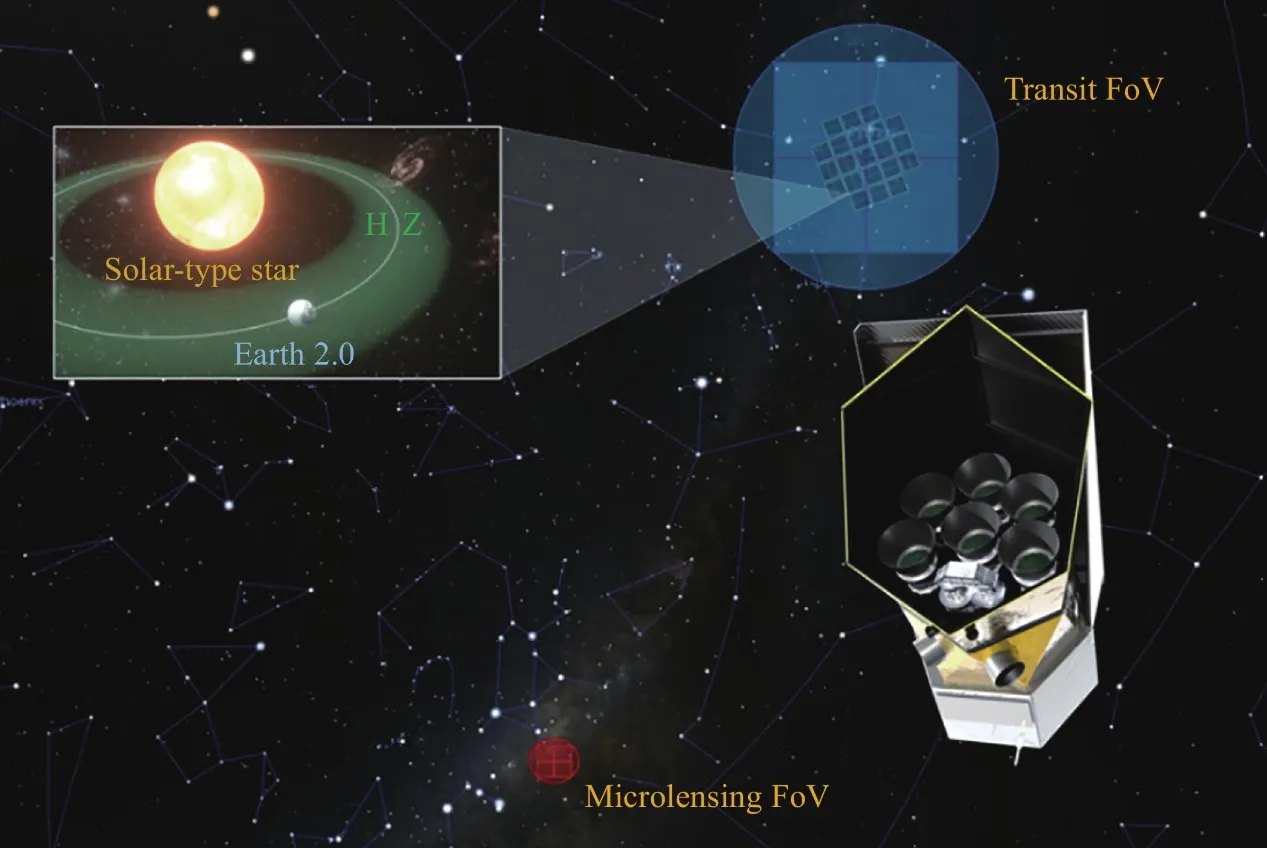
Also known as the "Earth 2.0" project, this exoplanet surveyor satellite is described as "a planetary detective on a mission to see whether Earth is one of a kind." Similar to the Kepler Space Telescope and the Transiting Exoplanet Survey Satellite (TESS), this observatory will monitor thousands of stars in our galaxy to find Earth analogues - i.e., rocky planets comparable in size to Earth and which orbit within their parent stars' habitable zones (HZs). The observatory is expected to launch by 2028 and will help establish China at the forefront of exoplanet studies.
eXTP Space Observatory
The fourth satellite, the enhanced X-ray Timing and Polarimetry observatory, a Chinese-led international effort to develop a mission that will combine X-ray observations with "unprecedented timing and polarization capabilities." The observatory will study how the laws of physics operate in the most extreme environments, including the event horizons of black holes, neutron stars, supernovae, and other astrophysical objects. According to its recently published proposal paper, the observatory features "advanced Spectroscopic Focusing Arrays (SFAs) and Polarimetry Focusing Arrays (PFAs)" and is scheduled for launch sometime in 2030.
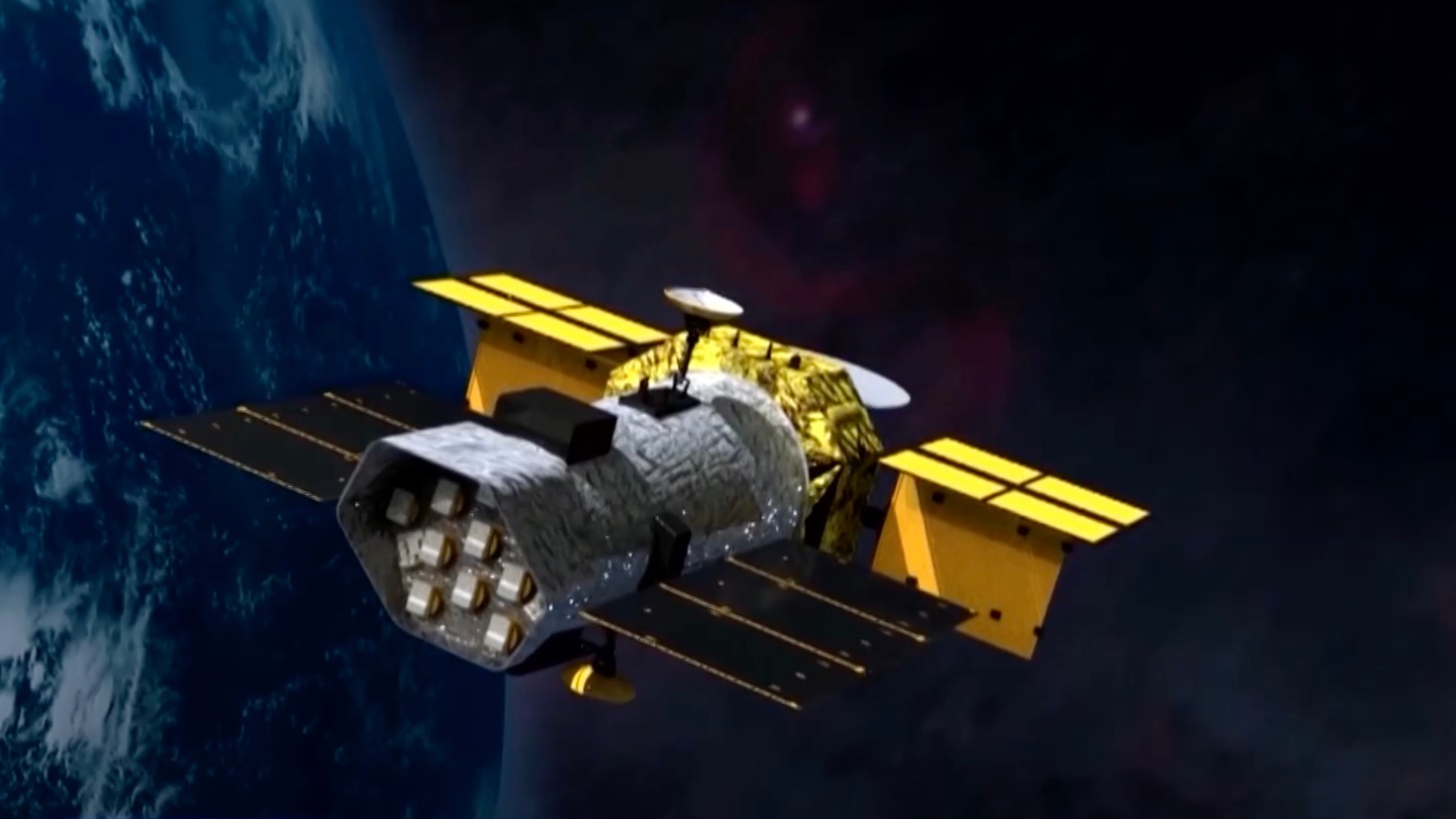 A schematic diagram of China's new generation space satellite of the enhanced X-ray Timing and Polarimetry mission (eXTP) project. Credit: CMG
Along with the video, CGTN's Hot Take released the following statement summarizing the aim of these missions and their associated programs:
In the vast, infinite universe, are humans just lonely travelers? Amid the limitless sea of stars, is there an "Earth 2.0," a planet as livable as our own? What miracle is behind the birth of the cosmos? And what secrets do the mysterious black holes hide? These ultimate questions at the core of our reality are now the focus of exploration by Chinese scientists. During the 15th Five-Year Plan (2026-2030), China will launch a series of scientific satellite missions, sending four satellites into space to explore the universe's great unknowns. Join us in this edition of Hot Take, and embark on an exciting journey to uncover the secrets of the cosmos.
Check out the full video below:
Further Reading: CGTN