 Universe Today
We’ve been reporting a lot lately on the negative impacts of satellite constellations. And unfortunately it’s time for another article about a paper pointing out the potential hazards of them. This one, by lead author Conner Barker of University College London, focuses on the pollution caused by rocket launches - and admittedly contains some good news, but also a cautionary tale that policy makers should be aware of.
Let’s start with some basic facts first. Satellite megaconstellations (SMCs) have been growing in size at a startling clip the last few years. As part of that growth, they’ve begun to take an increasing share of the payload space on rocket launches - according to the paper, by the end of the decade, rockets launching SMCs will account for up to 42% of the overall climate impact of the space launch industry.
That might seem surprisingly low given the frequency of launches. However, since most SMCs aren’t that high up in the atmosphere, the propellant needed to get them into orbit is significantly less than that needed to launch a probe on an interplanetary mission or get a massive geostationary satellite 24000 miles up. And the good news is even that propellant is getting cleaner.
Fraser discusses the limits to the number of satellites we can put in orbit.Traditional rocket launches emit chlorine into the atmosphere - and, as was proven very clearly last century, ozone and chlorine do not mix. However, according to the paper, the space launch industry from all rocket launches is only 0.02% of the cause of the ozone depletion. For comparison, the pollutants regulated by the Montreal protocol that banned the manufacture of many ozone damaging chemicals last century was a collective 2% by comparison.
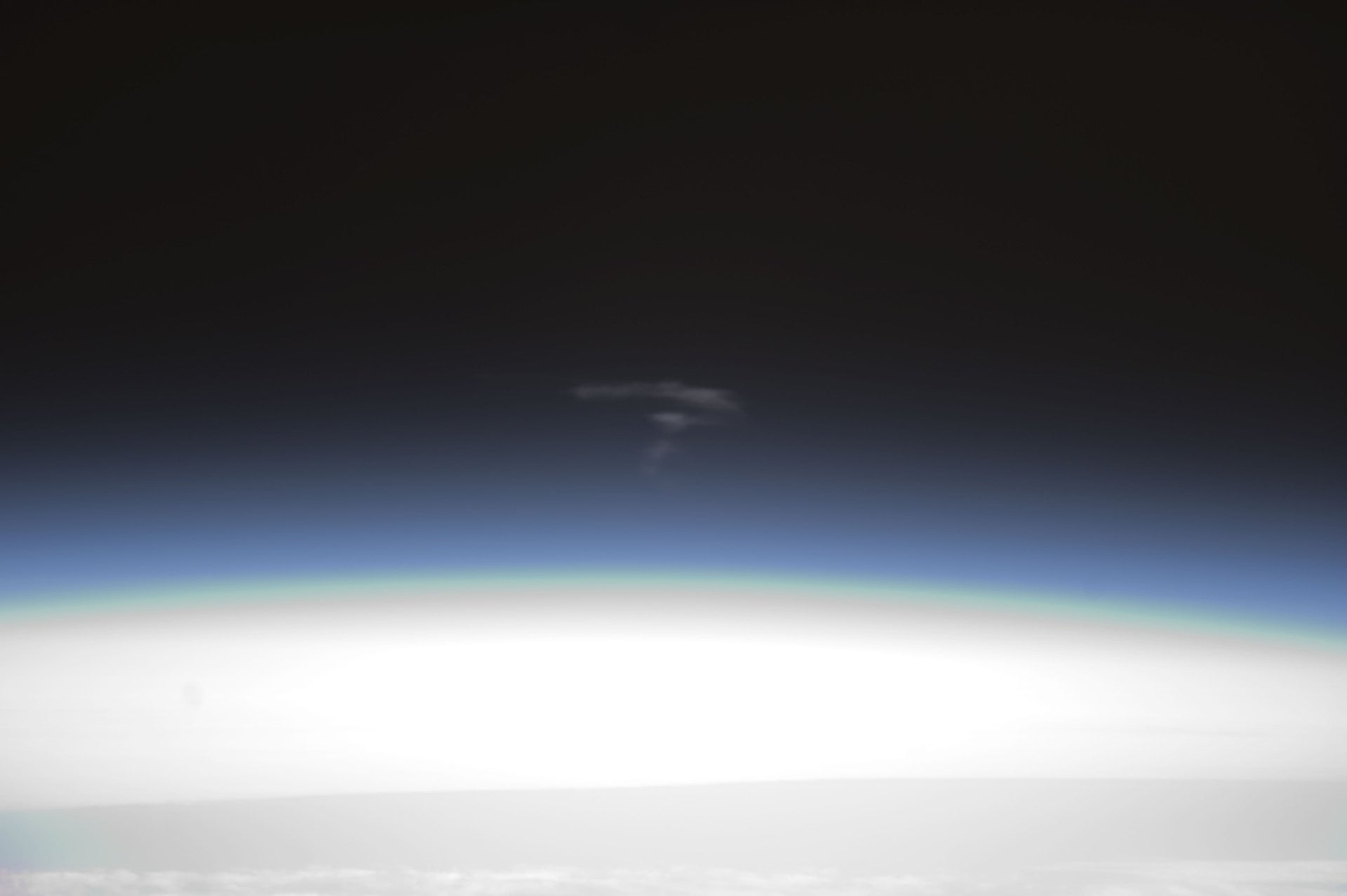
However, the main rocket engine that launches SMCs into orbit (Falcon 9) emits hardly any chlorine at all, since it uses kerosene as its main fuel. But here comes the bad news - kerosene does have another polluting effect - soot. Typically soot produced by ground sources is washed out by rain over a very short period of time. However, when it’s launched into the stratosphere behind a rocket, it can stay there for much longer - up to four years according to the paper.
The effects of all this soot in the stratosphere are complex. There’s some argument to be made that these black particles actually block some of the Sun’s light in the upper atmosphere. This consequently cools the lower atmosphere, but also heats the upper one. While the first one sounds like a net benefit, given the ongoing trouble we are having in limiting other our climate damaging activities, we understand very little about the impact of heat on the upper atmosphere. According to the paper, SMC launches are responsible for 56% of this “instantaneous warming” coming from launches - and that number is only set to grow.
Fraser discusses how the possibility of war could lead to an even more polluted atmosphere.To learn more, the researchers validated their models with some real-world data from NOAA’s SABRE aircraft campaign. This flew a high-altitude plane through a Falcon 9 rocket plume to directly sample the chemical makeup of the exhaust. They found that rocket produce nitrous oxides (which are heavily regulated in ground-based vehicles) much higher in the atmosphere as well. This appeared to be caused by an afterburner effect where the rocket exhaust continues to combine with nearby oxygen. But again, the effects of this process in the upper atmosphere is little understood.
So this paper stands as a stark reminder that we know so little about how our space launch practices are affecting the Earth. As launches become more and more common, we need to make sure we continue to study their impact. Otherwise we might end up tipping the climate balance in a completely avoidable way - and hampering the public’s opinion of space flight for decades to come.
Learn More:
UCL/EurekaAlert - Satellite launch pollution rapidly accumulating in the upper atmosphere
C.R. Barker et al - Radiative Forcing and Ozone Depletion of a Decade of Satellite Megaconstellation Missions
UT - What Causes Air Pollution?
UT - Scientists Publish the First Direct Measurement of Space Debris Pollution

