 Universe Today
Giant mpacts on Earth's surface can be cataclysmic events with far-reaching consequences. They can excavate massive craters like the Vredefort Crater. There's also growing evidence that impacts powerful enough can create a massive underground hydrothermal system of cracks and chemistry that could be conducive to life.
These are the attention-grabbers in the world of impacts.
But there are many more less energetic meteorite impacts that are more difficult to detect, and they're also an important part of Earth's history. These impacts generate extreme heat that can melt rock. When that happens, an impact can create a huge field of tektites, pebble-sized chunks of natural glass. There are five of these tektite fields around the world, and each one tells part of Earth's story.
Researchers in Brazil have found another tektite field, the first one in Brazil.
Their research is titled "Geraisite: The first tektite occurrence in Brazil," and it's published in the journal Geology. The lead author is Alvaro Crosta, a geologist and senior professor at the Institute of Geosciences at the State University of Campinas.
"We report on the discovery of a new tektite strewn field in northeastern Brazil," the authors write. "This recent finding resulted in the collection of ~500 specimens found within a strewn field at least 90 km long." They're naming the pieces “geraisites” after the Brazilian state of Minas Gerais.
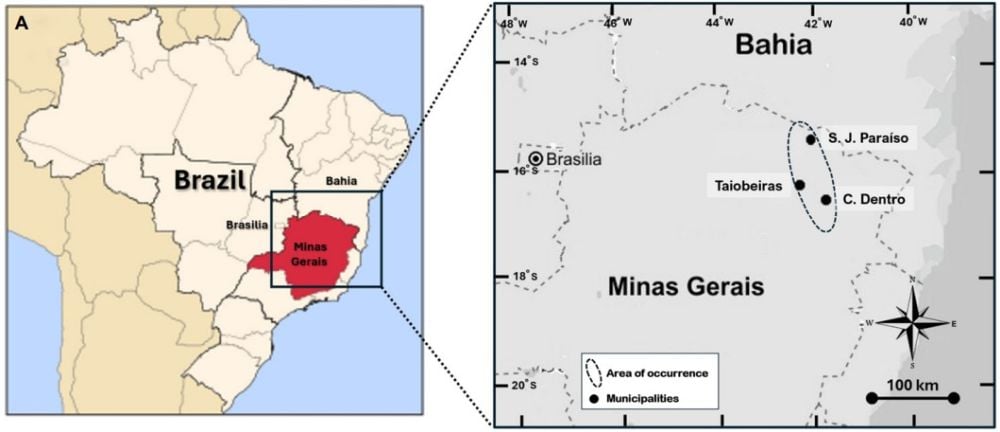 The tektite field was found in the Brazilian Province Minas Gerais and the tektites were given the name "geraisites." Image Credit: Crosta et al. 2025. Geo
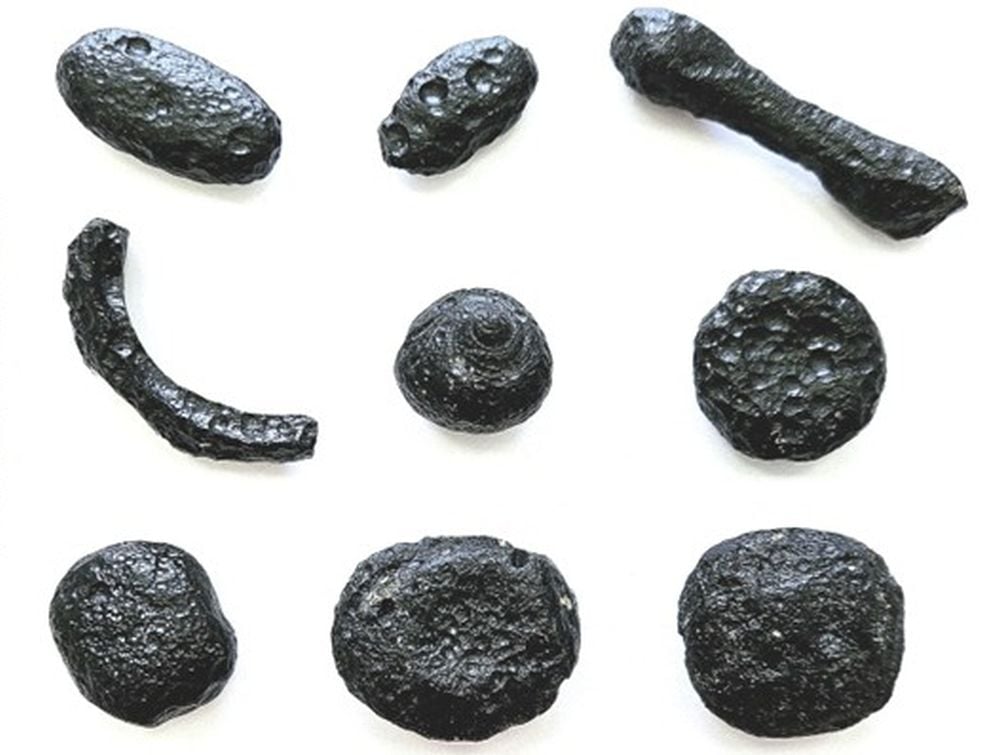
The geraisites range in size from <1 g up to 85.4 g and have many different shapes. This is typical of tektites, and their chemical composition is typical, too.
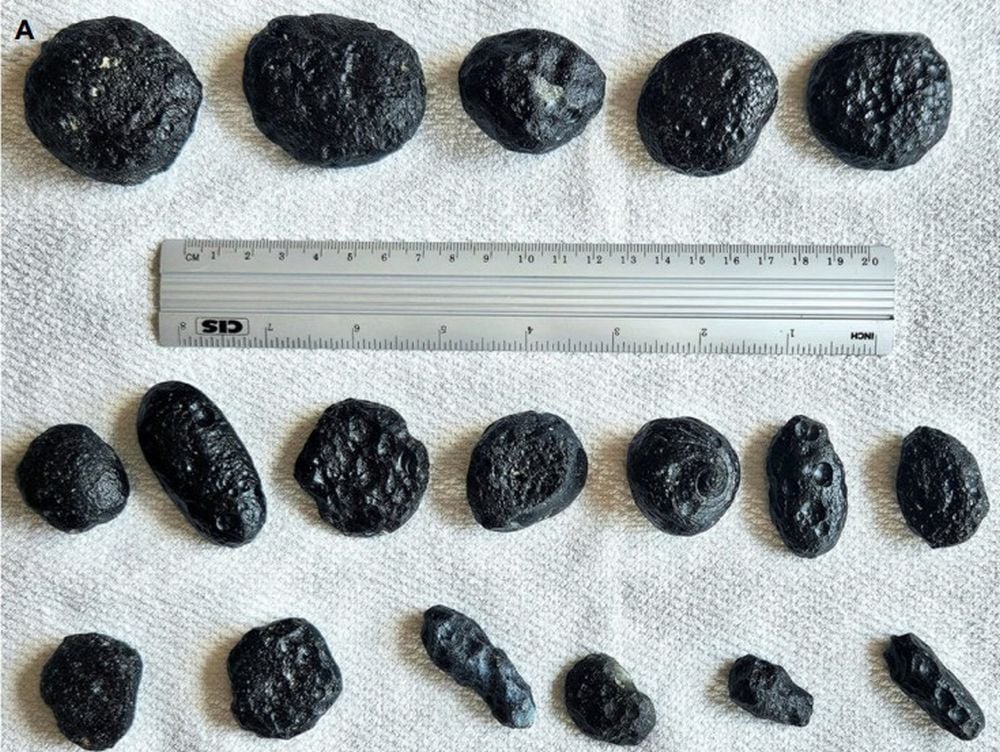 This photograph shows some of the sizes and shapes of the tektites/geraisites. They tend to be rounded, though some are elongated. They're also black and have characteristically pitted surfaces. Image Credit: Crosta et al. 2025. Geo
At the time the paper was written, the field was 90 km long, but subsequent efforts have found more tektites across a larger area 900 km long. “This growth in the area of occurrence is entirely consistent with what is observed in other tektite fields around the world. The size of the field depends directly on the energy of the impact, among other factors,” Crósta said in a press release.
When researchers study rocks like these, they have to differentiate between rock of volcanic origin and tektites. That's not simple. Both types of rock have been subjected to heat, and both types can be spread across a wide area.
Tektites have several factors in common that help scientists identify them. They're fairly homogenous, they have extremely low water and volatile contents, and they have no chemical relation to local bedrock where they're found.
The water content is a critical part of differentiating between volcanic rock and tektites. “One of the decisive criteria for classifying the material as a tektite was its very low water content, as measured by infrared spectroscopy: between 71 and 107 ppm. For comparison, volcanic glasses, such as obsidian, usually contain from 700 ppm to 2% water, whereas tektites are notoriously much drier,” Crósta said.
Tektites can contain lots of lechatelierite. Lechatelierite is a silica glass that forms from quartz by high-pressure shock metamorphism. It's often found near lightning strikes, too. It differentiates tektites from volcanic rock, which may or may not have lechatelierite because the magma could have originated deep in the mantle, where there's less silica.
Compared to some tektites, the geraisites have very few of these lechatelierite inclusions. Since obsidian, which is volcanic glass, doesn't typically contain lechatelierites, that helps rule out volcanic activity. There's also no other evidence of volcanic activity nearby. "The confirmation that this glass occurrence consists of tektites also makes sense knowing that the geographic location in which it is found is not volcanic and that the closest known volcanoes with similar age are in the Andean Cordillera, >2500 km away," the authors write.
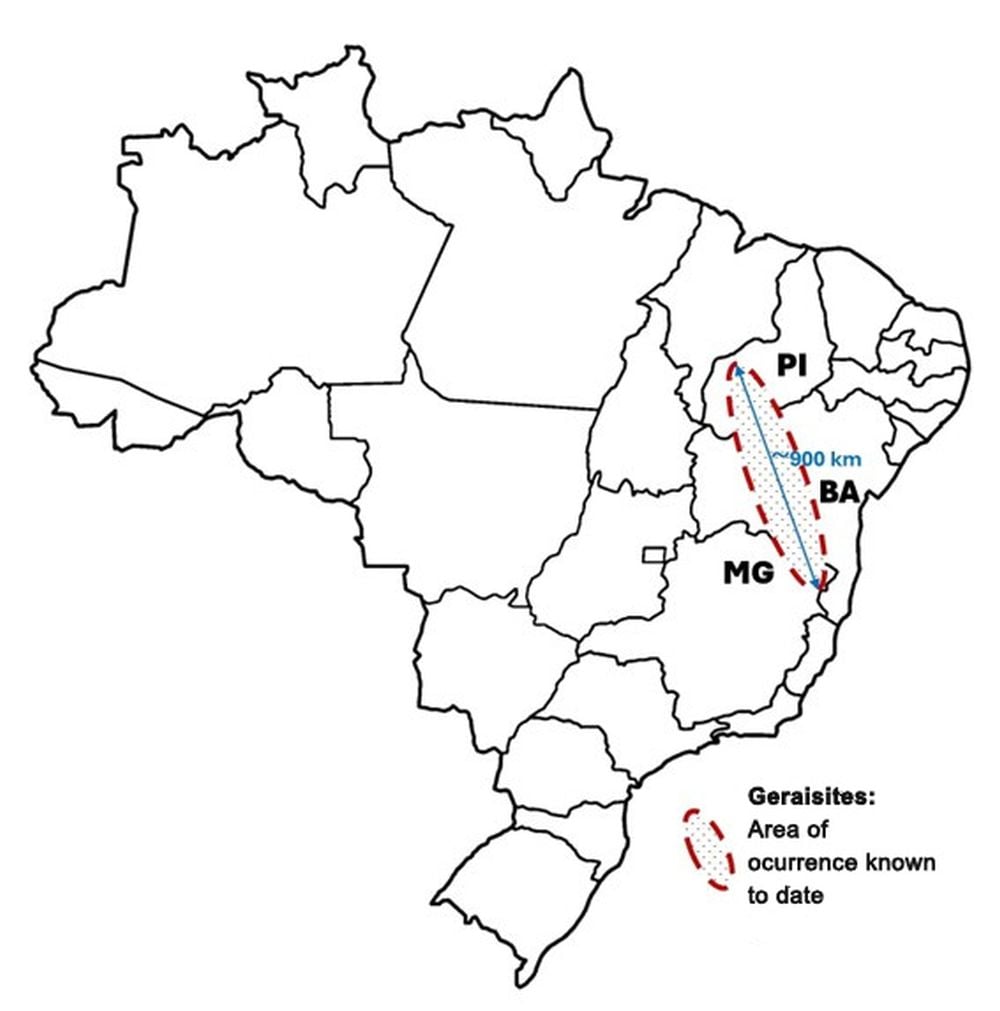 After further research, the tektite field was found to be about 900 km long. Image Credit: Crosta et al. 2025. Geo
There's also no crater, which would seem to go against the tektite interpretation. "No potential source crater related to this tektite strewn field is yet known in Brazil, nor in the neighboring countries," the researchers explain. But according to the researchers, that's not uncommon. There are six large tektite fields on Earth, and only three of them have associated, identified craters.
The researchers used argon isotope ratios (⁴⁰Ar/³⁹Ar) to date the geraisites. "The best estimate for their age of formation measured by the 40Ar/39Ar method is currently ca. 6.3 Ma, although the possible presence of inherited 40Ar will require more analyses to fully establish their age," the authors write in their paper.
As for the size of the impactor, it's not possible to determine that at this point, though the researchers say that it was unlikely to be small.
"The finding of the first tektite strewn field in Brazil, together with its potential connection to a yet-unveiled 6.3 Ma old impact event, fills a significant gap in the incomplete South American impact record," the authors write in their conclusion.
The record is incomplete because craters are difficult to spot from above in South America, mostly because it has high rates of tropical weathering that removes them. A crater can be preserved in a dry, desert location much longer than in South America. The continent also hasn't been surveyed geologically to the extent that other continents have.
But the contents of the tektites place some constraints on where the crater could be. The isotope geochemistry shows that the tektites came from continental crust around 3 billion years old. That suggests that it came from the São Francisco craton. That craton is an ancient part of the Earth's continental crust, and one of the oldest parts of South America.
“The isotopic signature indicates a very ancient continental, granitic source rock. This greatly reduces the universe of candidate areas,” said Crósta. Deeper study of the region could uncover the remnants of the ancient crater.
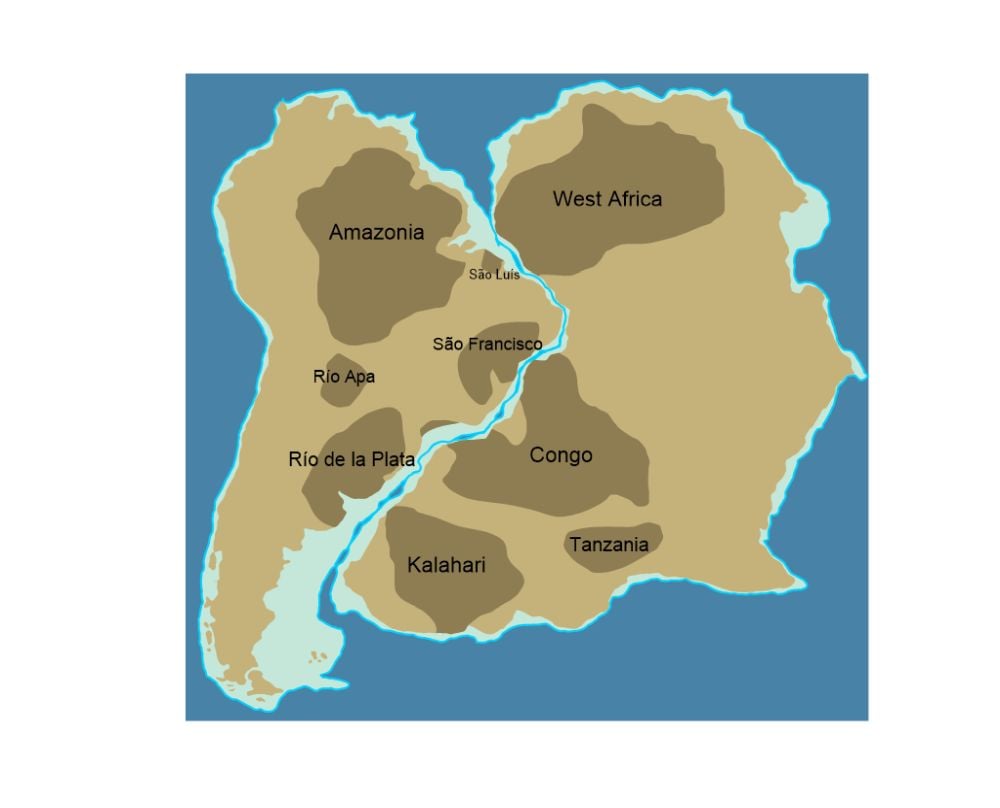 This image shows cratons in South America and Africa that are older than 1.3 billion years, including the São Francisco Craton. Image Credit: By Woudloper - Own work, CC BY-SA 3.0, https://commons.wikimedia.org/w/index.php?curid=9857099
The discovery of this tektite field, and another one recently found in Belize, suggests that they may not be as rare as thought. Finding more of them could change our understanding of the Earth's impact record.
"This has important implications regarding Earth’s overall impact record, hinting that there might be other still undiscovered tektite occurrences with distinct origins, chemical compositions, and ages," the authors conclude.

