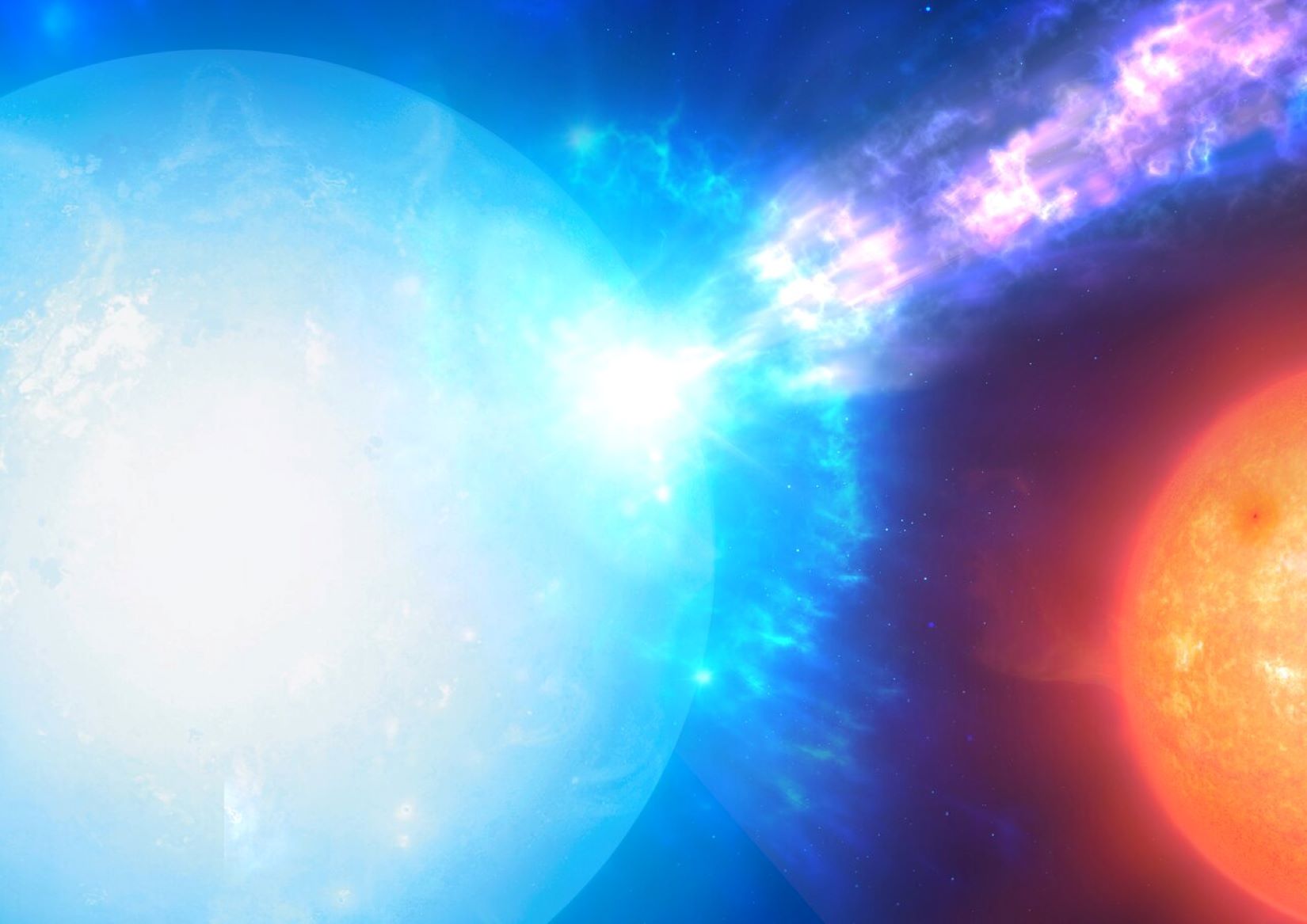
white dwarf

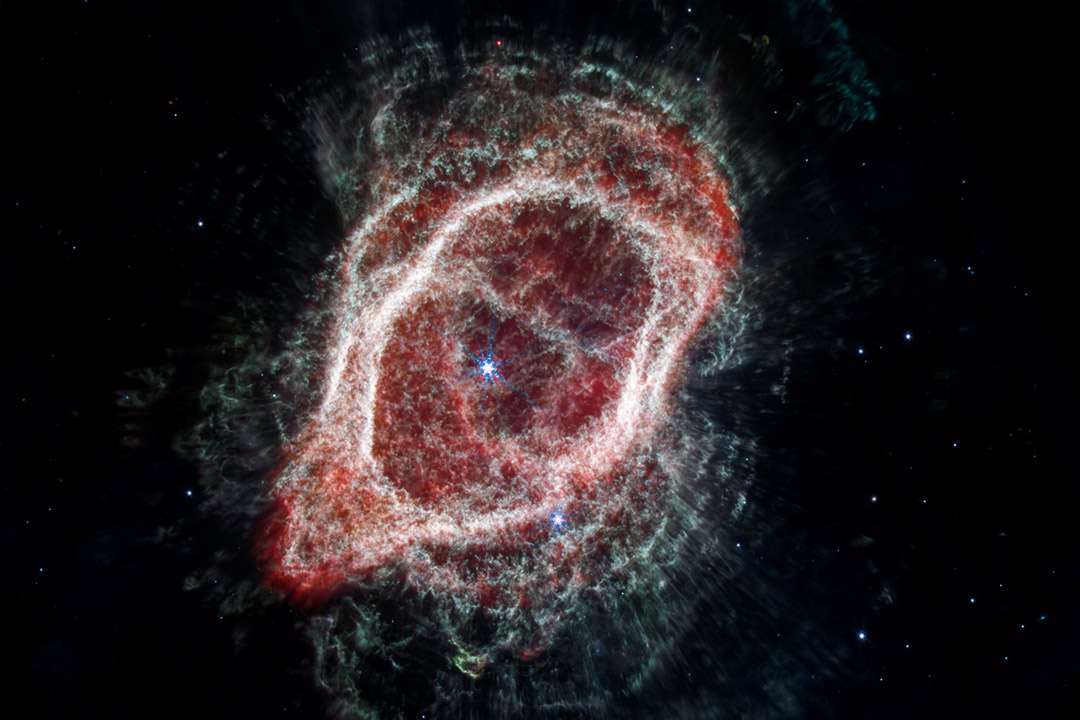
The Rosy Remains of a Star’s Final Days

May 3, 2013

Want to stay on top of all the space news? Follow @universetoday on Twitter Stars like our Sun can last for a very long time (in human terms, anyway!) somewhere in the neighborhood of 10-12 billion years. Already over 4.6 billion years old, the Sun is entering middle age and will keep on happily fusing [...]

Read the full article →

Closely-Orbiting Stellar Companions Surrounded by “Mystery Dust”

November 14, 2012

Artist’s concept showing a dust disk around a binary system containing a white dwarf and a less-massive M (red) dwarf companion. (P. Marenfeld and NOAO/AURA/NSF) Even though NASA’s Wide-field Infrared Survey Explorer spacecraft — aka WISE — ran out of coolant in October 2010, bringing its infrared survey mission to an end, the data that it [...]

Read the full article →

Effects of Einstein’s Elusive Gravity Waves Observed

August 29, 2012

Two white dwarfs similar to those in the system SDSS J065133.338+284423.37 spiral together in this illustration from NASA. Credit: D. Berry/NASA GSFC Locked in a spiraling orbital embrace, the super-dense remains of two dead stars are giving astronomers the evidence needed to confirm one of Einstein’s predictions about the Universe. Remove this ad

Read the full article →

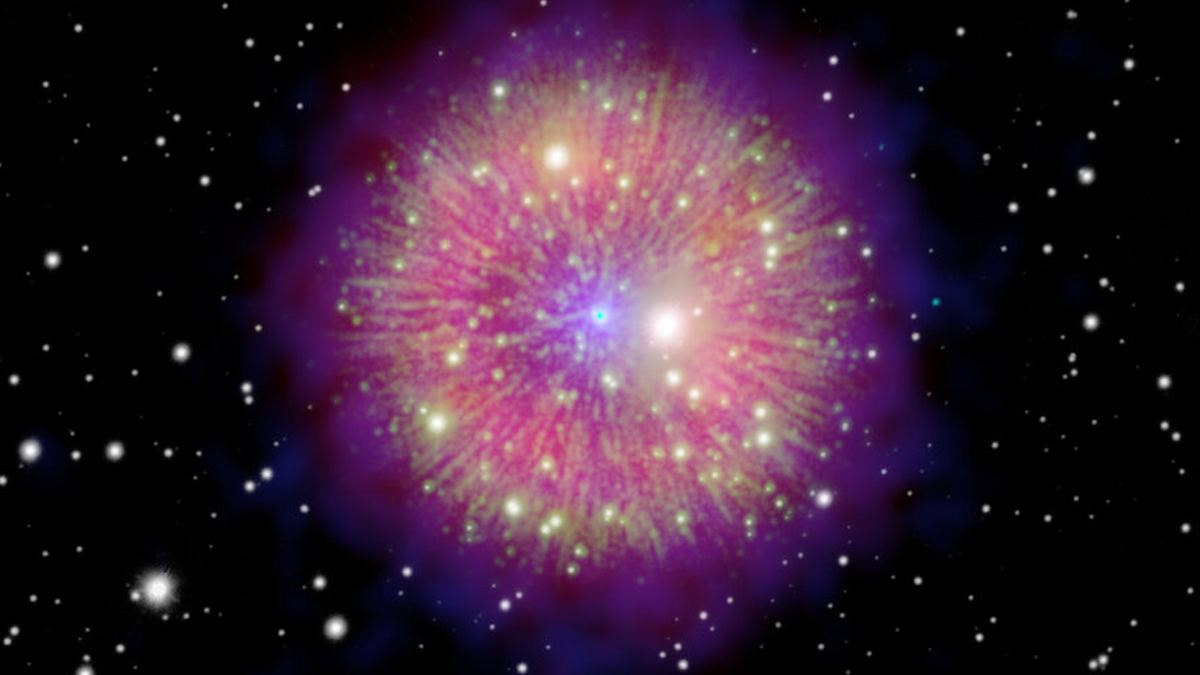
A New Species of Type Ia Supernova?

August 27, 2012

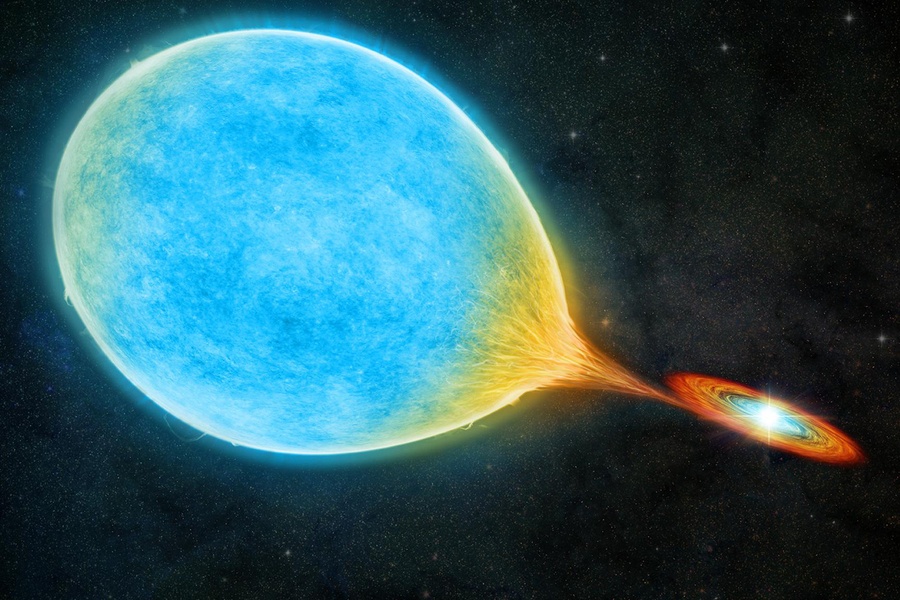
Artist’s conception of a binary star system that produces recurrent novae, and ultimately, the supernova PTF 11kx. (Credit: Romano Corradi and the Instituto de Astrofísica de Canarias) Although they have been used as the “standard candles” of cosmic distance measurement for decades, Type Ia supernovae can result from different kinds of star systems, according to [...]

Read the full article →

Will This Be The Fate Of The Earth?

May 3, 2012

Astronomers have found four nearby white dwarf stars surrounded by disks of material that could be the remains of rocky planets much like Earth — and one star in particular appears to be in the act of swallowing up what’s left of an Earthlike planet’s core. The research, announced today by the Royal Astronomical Society, [...]

Read the full article →