30th Anniversary of Luna 16

by Larry Klaes

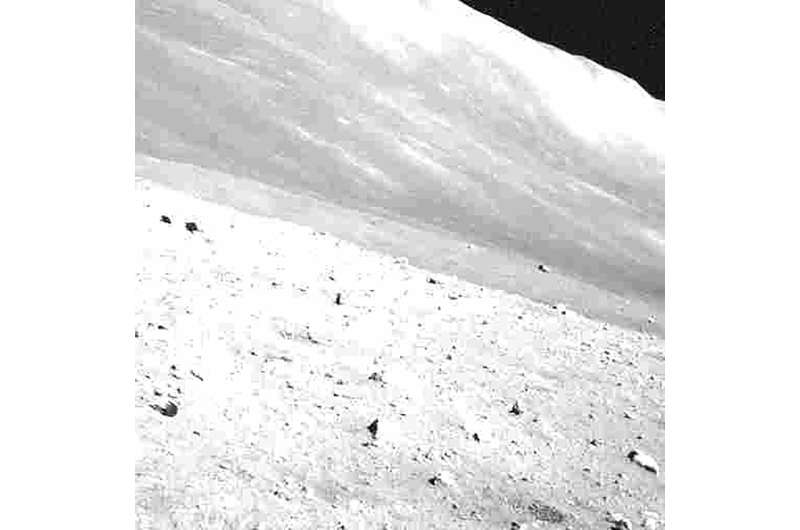
On September 12, 1970, the Soviet Union launched Luna 16 to Earth's moon in what would become the first successful return of lunar regolith by an automated probe: 101 grams from the Sea of Fertility.

The USA had done this twice in 1969 with Apollo 11 and 12, but they had two sets of those comparatively fragile wetware beings aboard the landers to accomplish this task. And their only attempt in 1970 went on to become a major motion picture directed by Ron Howard and starring Tom Hanks 25 years later.

Luna 16

The Soviets were able to accomplish this goal with robots two more times, in 1972 with Luna 20 and 1976 with Luna 24.

Some items of note and questions:

Luna 16 made the first night landing on Luna, some sixty hours after sun "set". Since it is claimed that Luna 16 returned excellent images from the lunar surface (but were not shown outside of the USSR), how were they able to show the landing site? Floodlights? Or did the base that remained on Luna last long enough to make it through fourteen Earth days of the freezing lunar night to the next sun "rise" for enough light to take images?

Has anyone seen these images since and are they available anywhere?

Perhaps someday we can get samples back from the lunar farside for comparison, to say nothing of establishing a human presence there again, this time permanently. Then on to Mars, the rest of the Sol System, and eventually the Milky Way galaxy. We'll get to the rest of the galaxies and maybe all those other universes after that, if they do exist.

Some handy-dandy URLs on the subject of Luna 16:

Two other space probe anniversaries of note this week:

September 9 - 25th Anniversary (1975), Viking 2 Launch (Mars Lander/Orbiter).

Second truly successful robot lander on Mars (after Mars 3 and Viking 1).

September 11 - 15th Anniversary (1985), ICE, Comet Giacobini-Zinner Encounter (formerly the ISEE 3 solar probe).

First space probe to flyby a comet, beating the USSR Vega 1 and 2 missions to the punch with comet Halley in early 1986.