NASA’s Solar Crown Jewel Bolted atop Atlas Rocket
Filed under: Astronomy, Missions, Solar Astronomy, Space Exploration | 1 Comment »
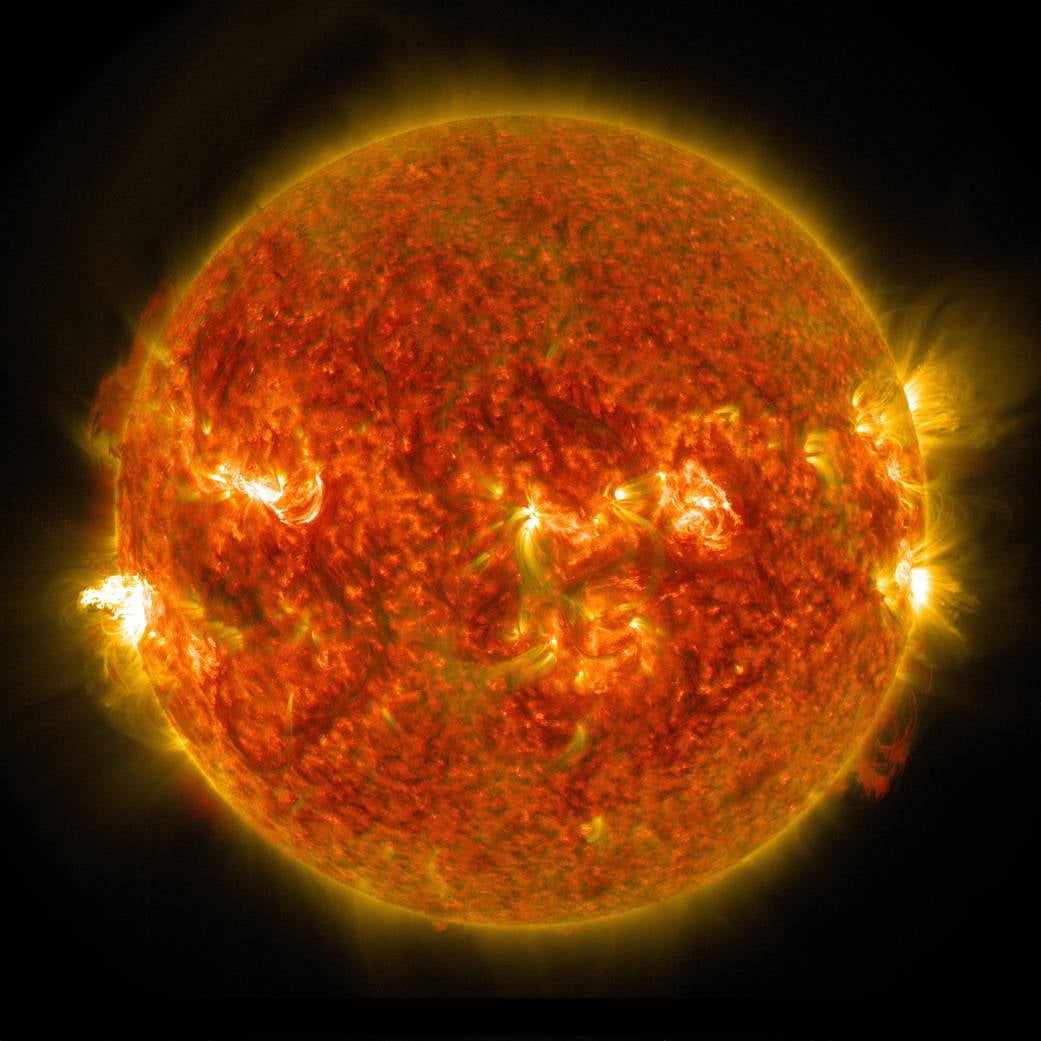
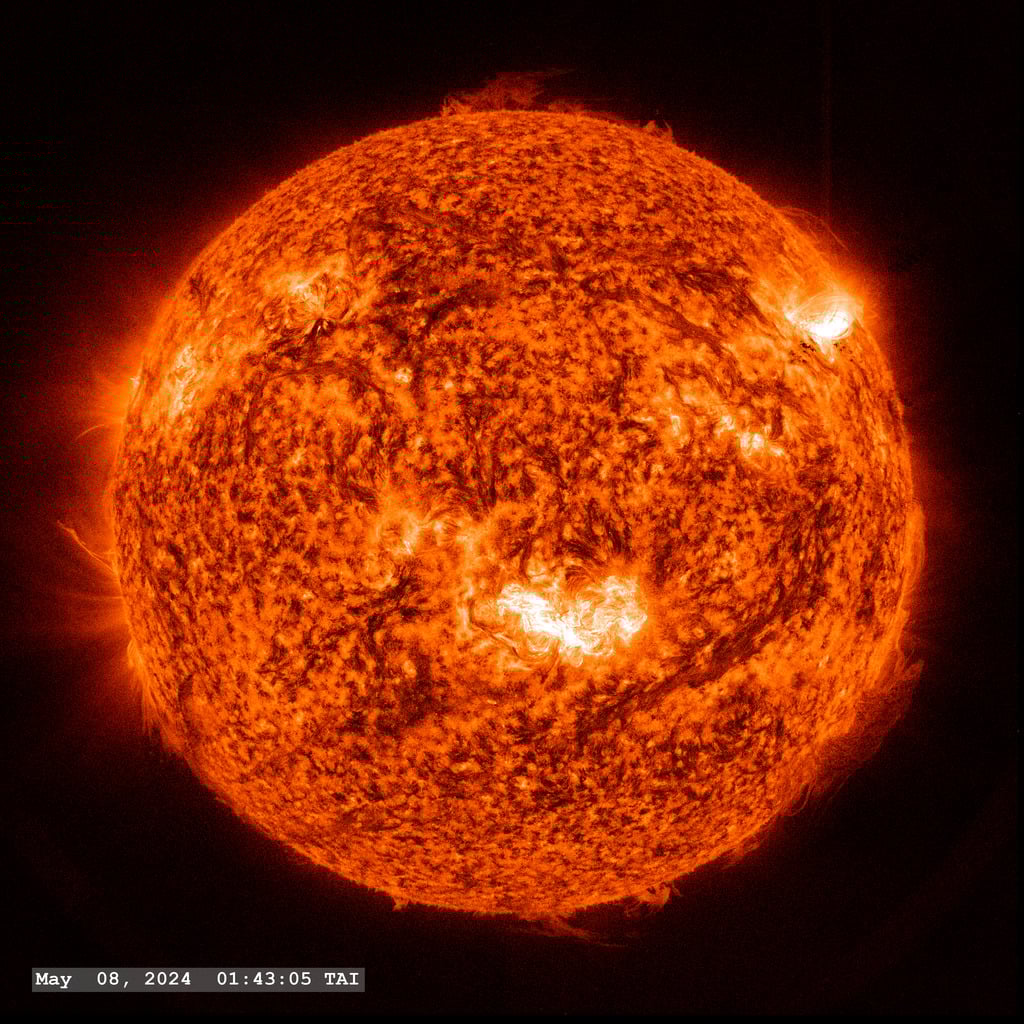
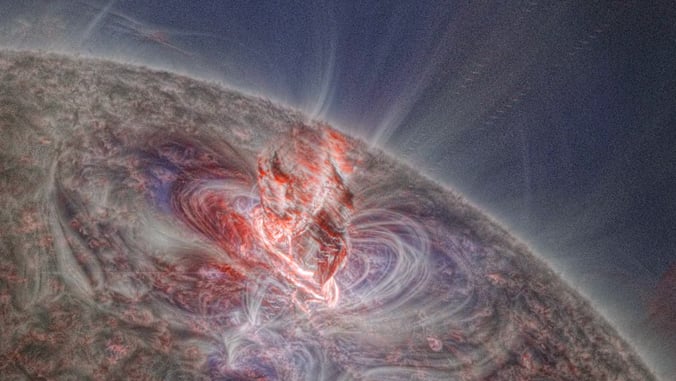
This great new video (just uploaded today!) does a great job of explaining the upcoming Solar Dynamics Observatory (SDO) mission, which is slated to launch on Feb. 9, 2010. SDO will provide a new eye on the sun that will deliver solar images with 10 times better resolution than high-definition television. This mission will zoom in on the cause of severe space weather—solar activity such as sunspots, solar flares, and coronal mass ejections. It will give us the best look ever at our Sun.
For more information see our detailed preview article on SDO.
Filed under: Solar Astronomy | 3 Comments »

SDO and two piece payload fairing inside “clean room” at Astrotech Spaceflight facility near KSC on Jan 21. Fairing protects spacecraft during ascent through earths atmosphere. Credit: Ben Cooper/Spaceflight Now
NASA’s new solar science satellite, dubbed the Solar Dynamics Observatory, or SDO, moved an important step closer to launch when it was encapsulated inside its two piece payload fairing on Thursday (Jan 21) at the Astrotech Space Operations Facility nearby to the Kennedy Space Center (KSC). SDO is the most sophisticated spacecraft ever designed and constructed to study the sun and its dynamic behavior. Read more…
Filed under: Astronomy, Earth, Missions, NASA, Science, Solar Astronomy | 4 Comments »
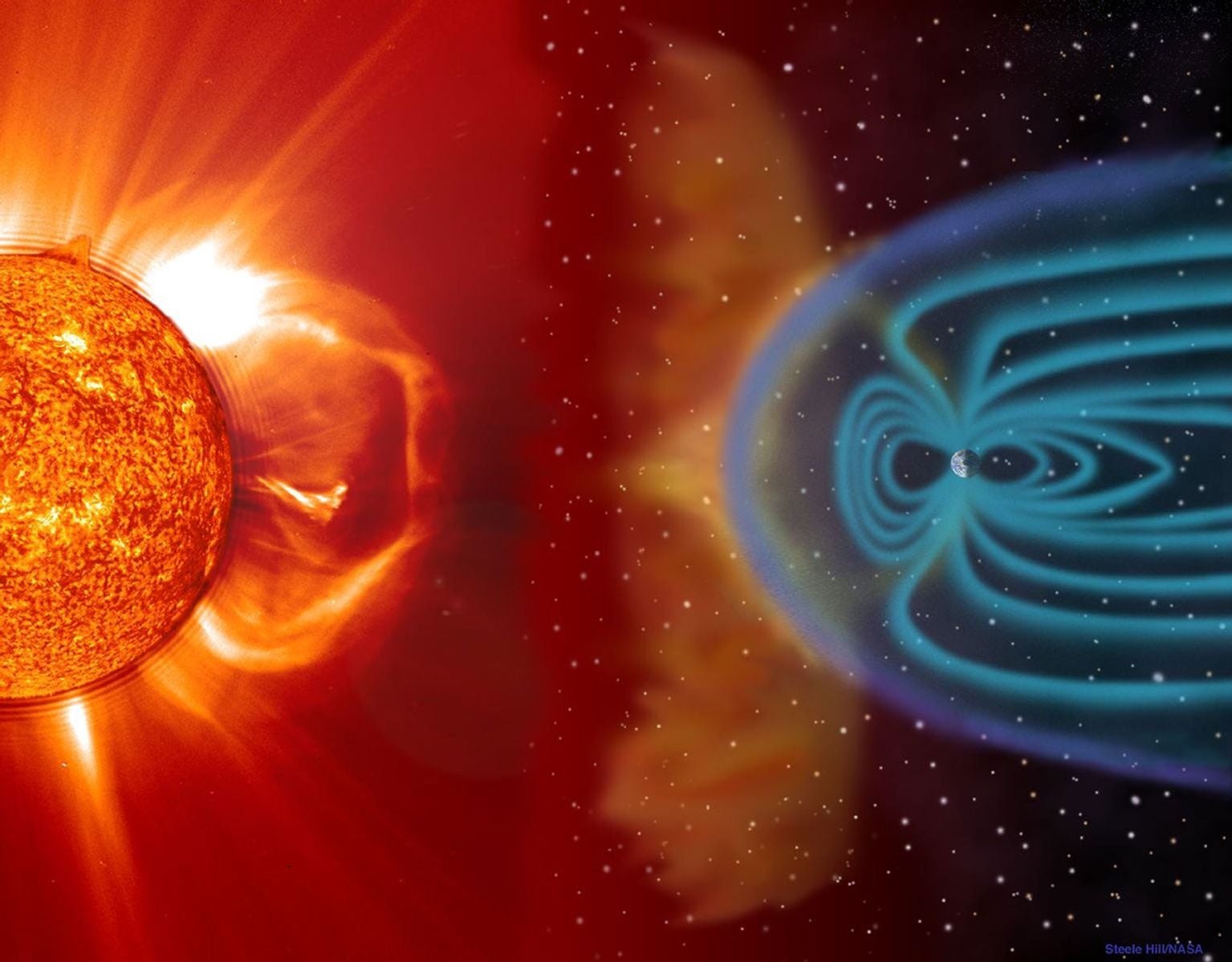
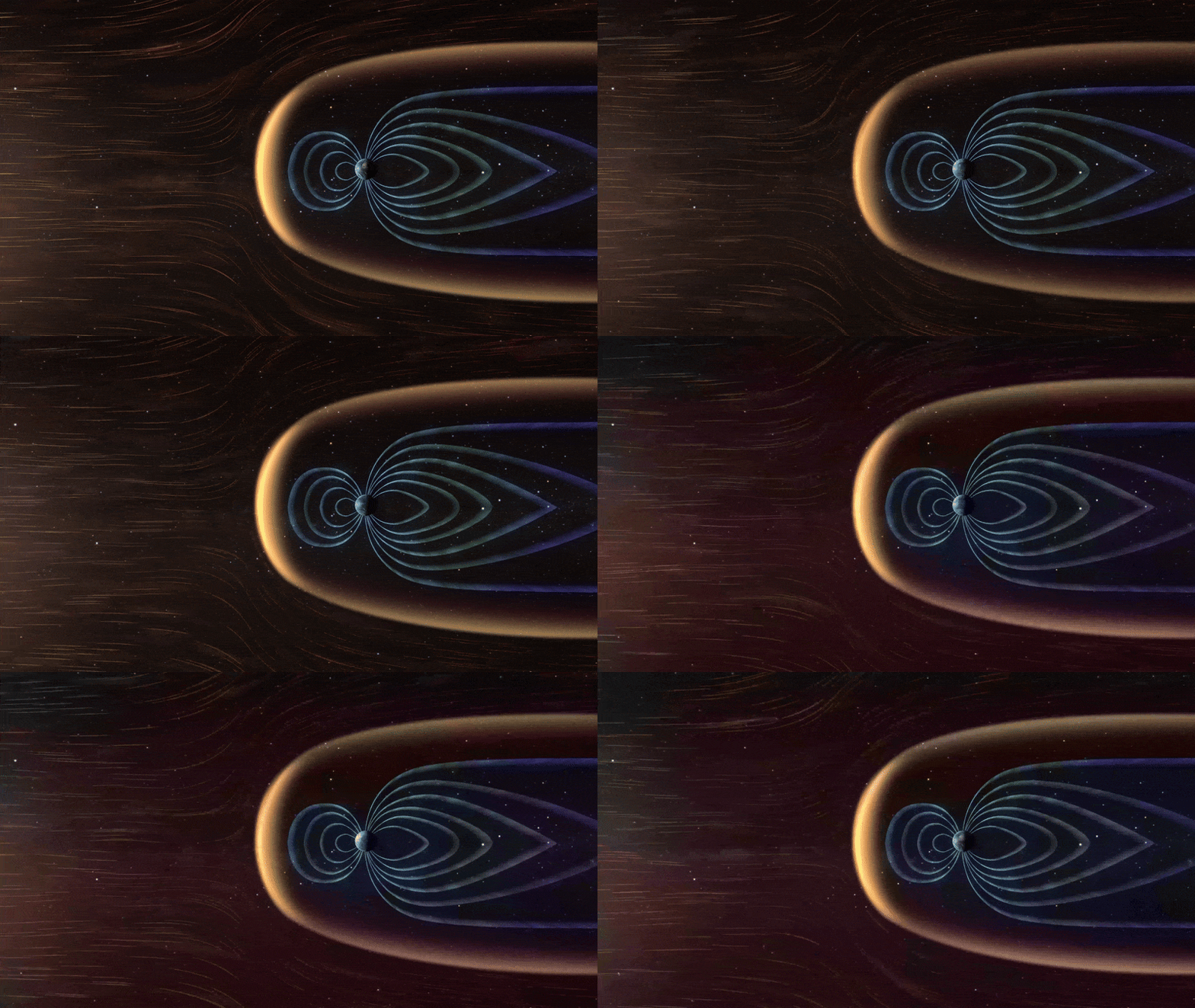
While Earth's magnetic field protects our planet from most of the permanent flow of particles from the solar wind, rifts or fissures in natural shield are known to occur, enabling the solar wind to penetrate our near-space environment. An ESA satellite cluster called, appropriately, Cluster has provided new insight into the location and duration of these ruptures in the Earth's magnetic shield, and reveals while our atmosphere protects us for the most part, clear effects of these rifts have been detected high in the upper atmosphere and in the region of space around Earth where satellites orbit.
Read more…
Filed under: Earth Observation, Solar Astronomy | 20 Comments »
Filed under: Solar Astronomy | 2 Comments »
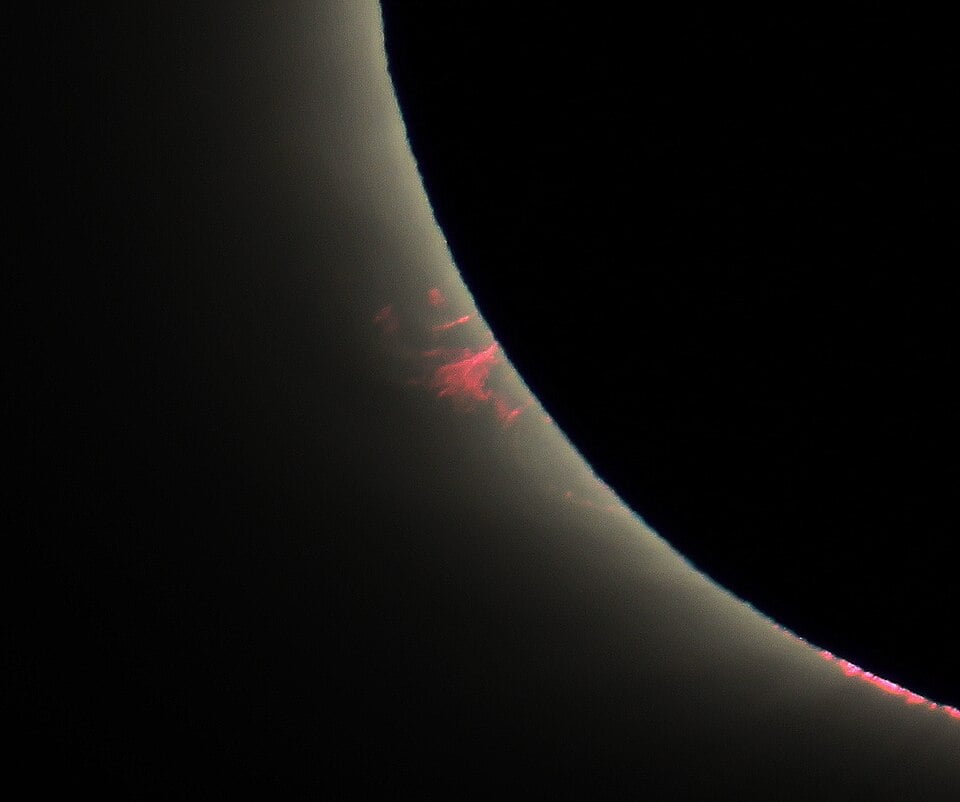
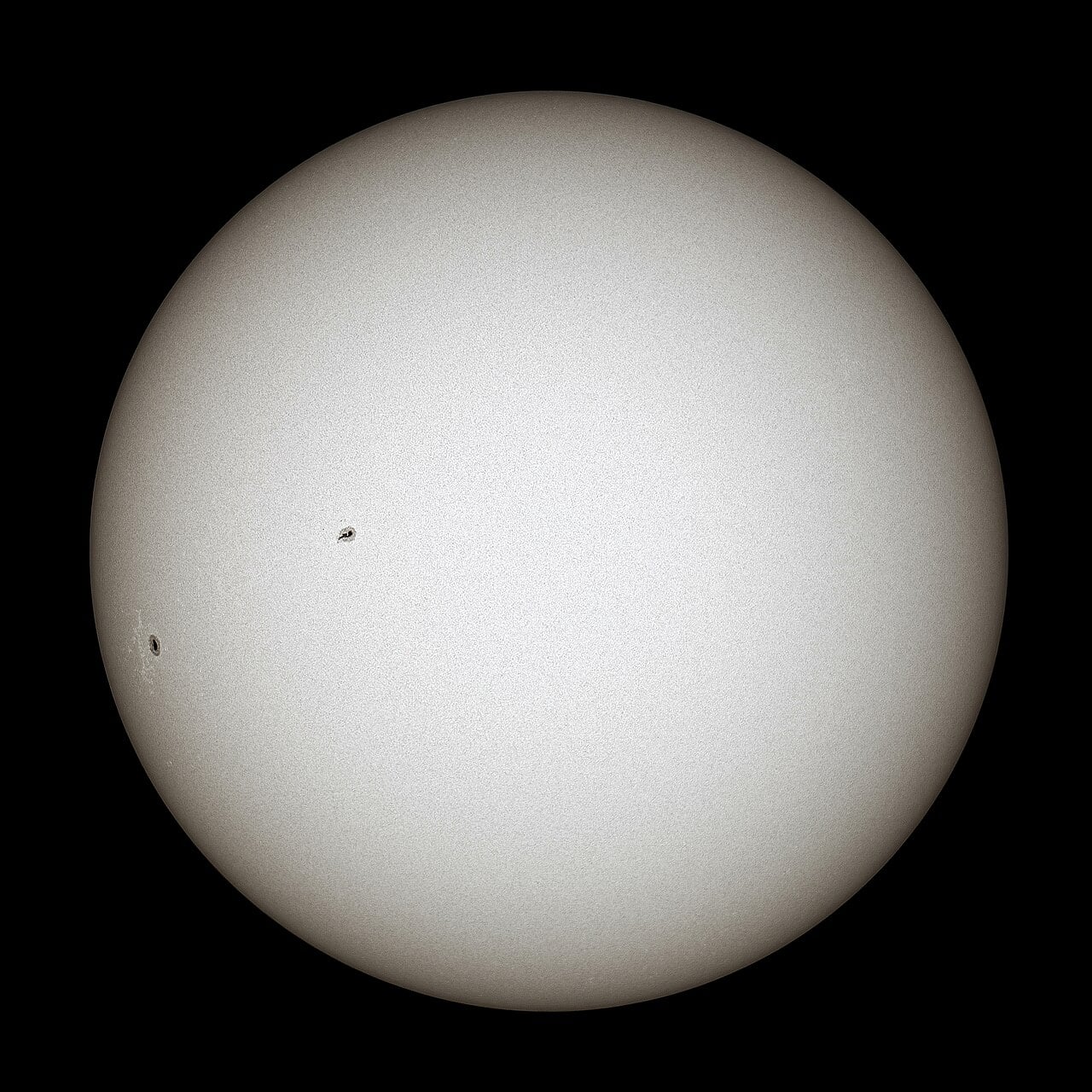
Astrophotographers capturing the recent annular solar eclipse on January 15, 2010 got an added bonus: upon closer inspection, they found sunspot 1040 also showed up on their images, too. "We didn't mean to catch sunspots in our Jaffna Eclipse expedition, nor did we plan to," said Prasanna Deshapriya, one of the members of the Eclipse Hunt 2010 crew, featured in our eclipse photo and video collection. "But surprisingly this is what really happened."
Read more…
Filed under: Solar Astronomy | Comments Off

Caption:The surface of Betelgeuse in near infrared at 1.64 micron in wavelength, obtained with the IOTA interferometer (Arizona). The image has been re-constructed with two different algorithms, which yield the same details, of 9 milliarcseconds (mas). The star diameter is about 45 milliarcseconds. Credit: Copyright 2010 Haubois / Perrin (LESIA, Observatoire de Paris)
An international team of astronomers has obtained an unprecedented image of the surface of the red supergiant Betelgeuse, in the constellation Orion. The image reveals the presence of two giant bright spots, which cover a large fraction of the surface. Their size is equivalent to the Earth-Sun distance. This observation provides the first strong and direct indication of the presence of the convection phenomenon, transport of heat by moving matter, in a star other than the Sun. This result provides a better understanding of the structure and evolution of supergiants.
Read more…
Filed under: Solar Astronomy | 22 Comments »
This image of the solar corona contains a color overlay of the emission from highly ionized iron lines and white light taken of the 2008 eclipse. Red indicates iron line Fe XI 789.2 nm, blue represents iron line Fe XIII 1074.7 nm, and green shows iron line Fe XIV 530.3 nm. This is the first such map of the 2-D distribution of coronal electron temperature and ion charge state. Credit: Habbal, et al.
Astronomers presenting at this week's AAS conference have reported on new research measuring the temperature of the solar corona. The work combines observations of the Sun's outer reaches from observations during total solar eclipses in 2006, 2008, and 2009. It utilized mapping of various abundances of ionized iron to build a two dimensional temperature map.
Filed under: Astronomy, Solar Astronomy | 9 Comments »
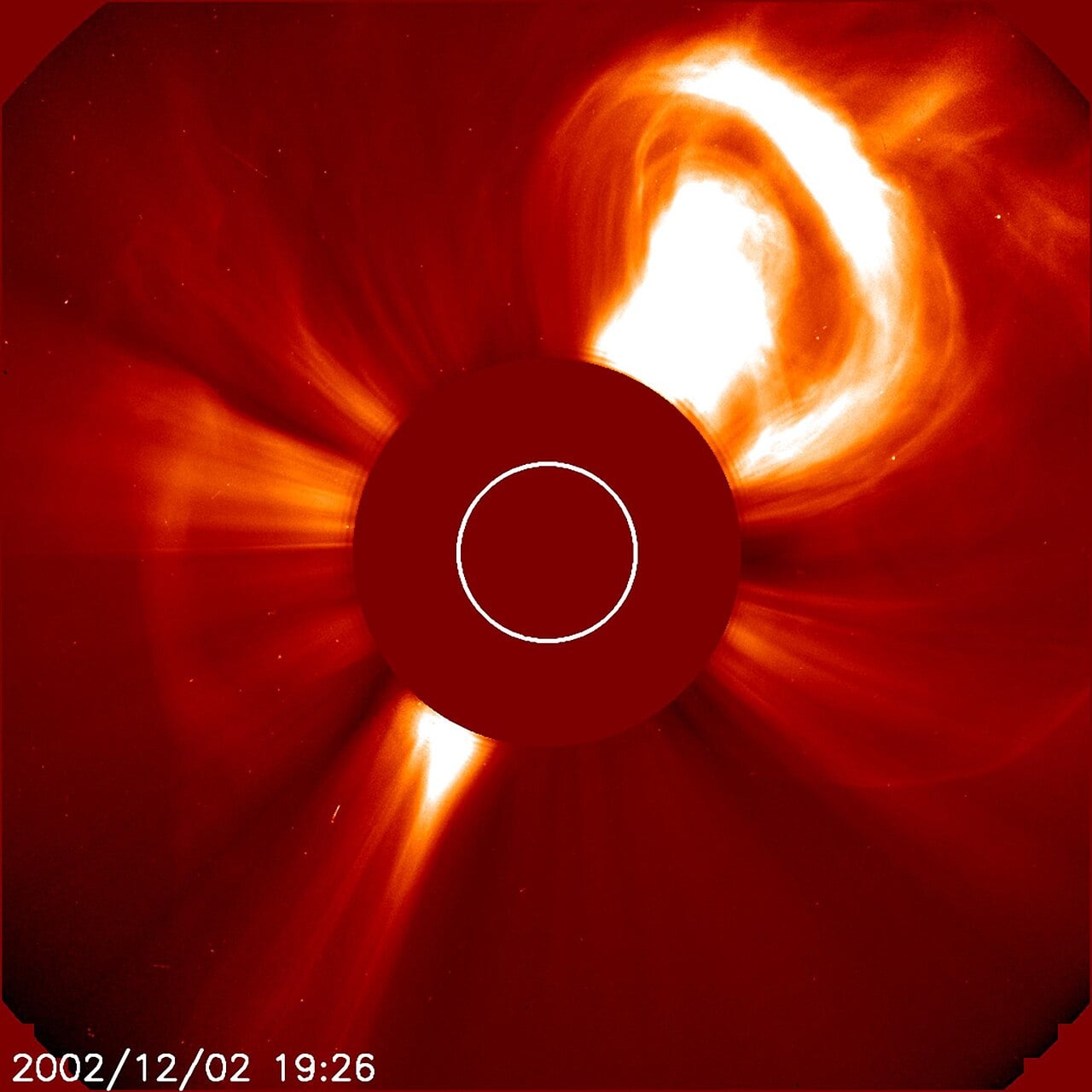
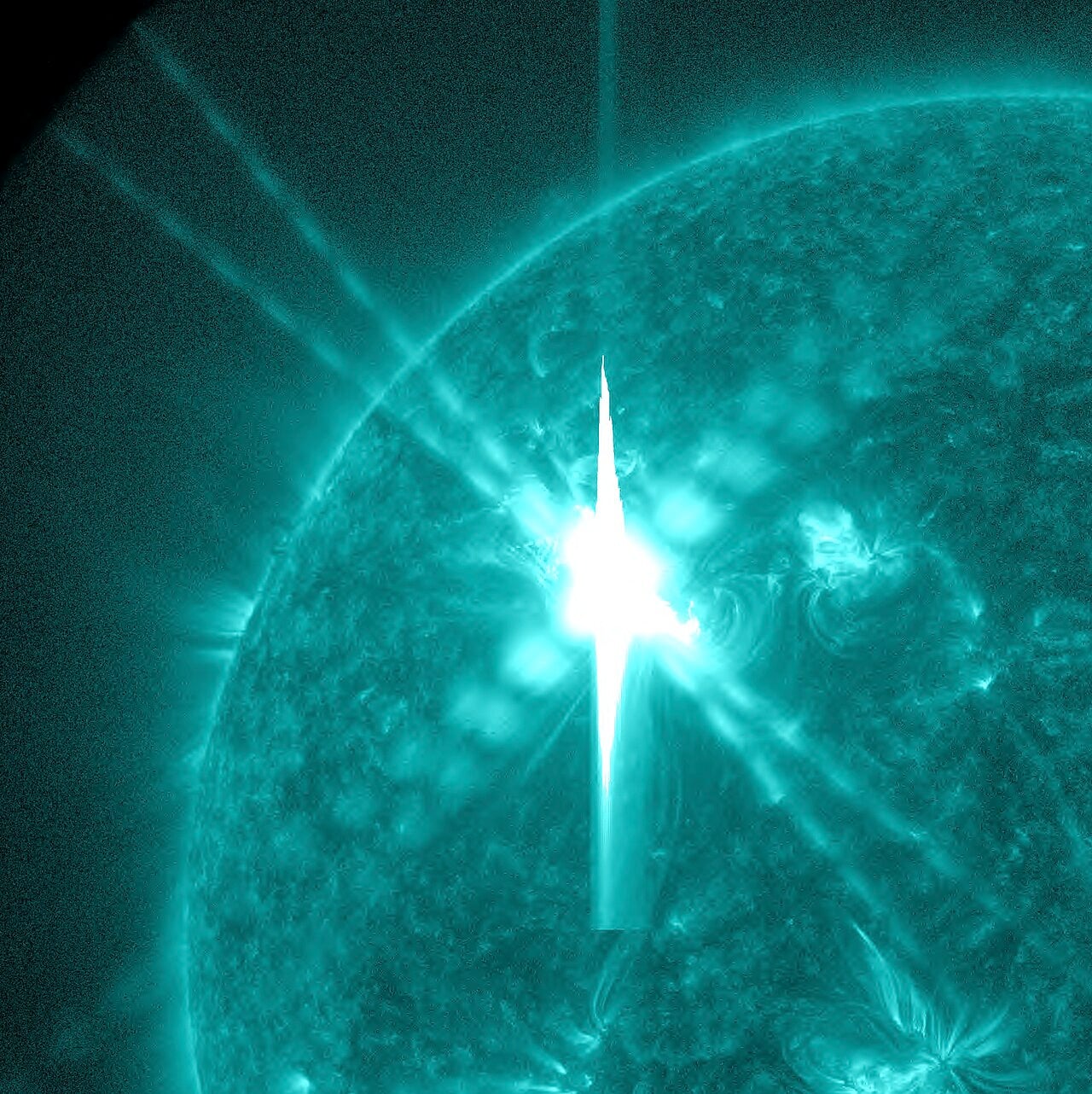
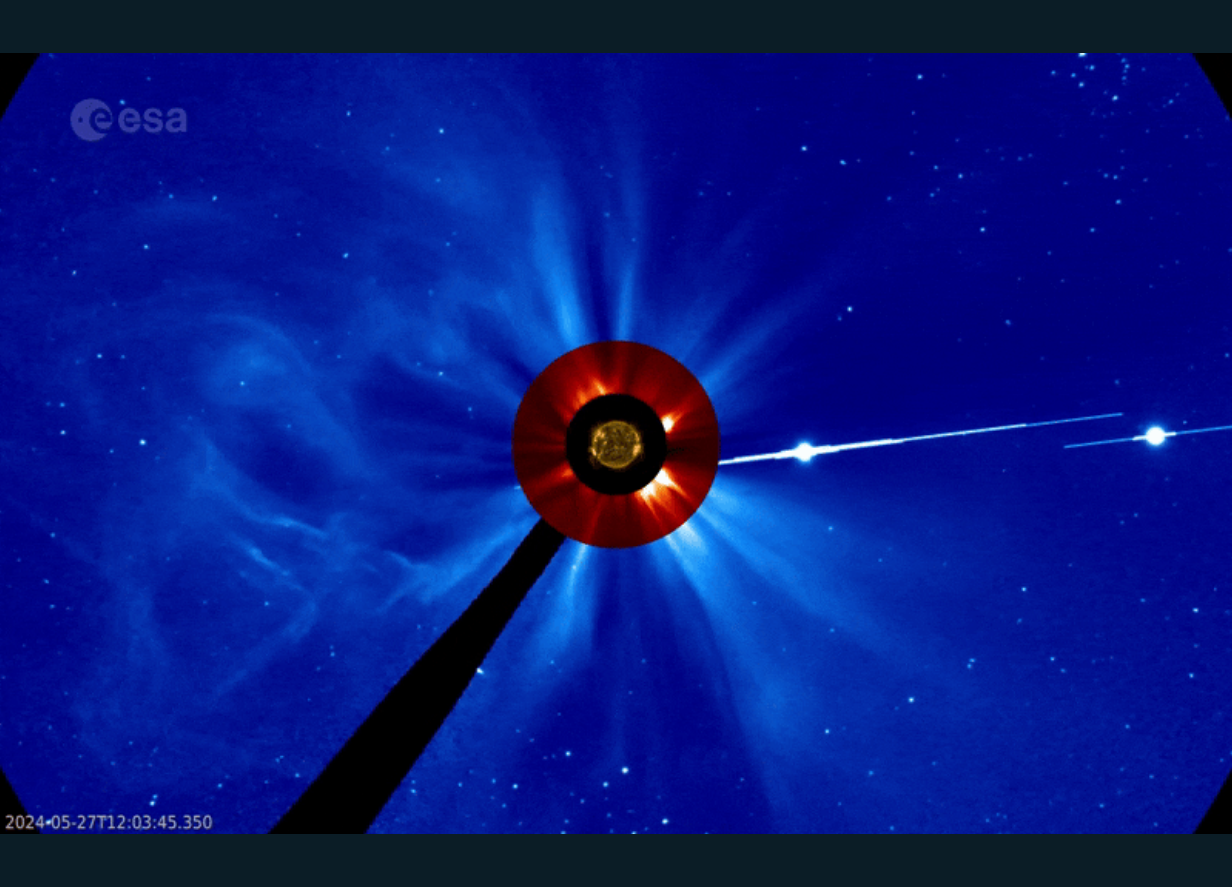
The current solar cycle (24) has been pretty boring, but a new sunspot — 1035 — is growing rapidly and now is seven times wider than Earth. Solar astronomers are predicting it could grow to be the largest sunspot of the year. There's not been a lot of competition for the biggest sunspot, though: for 259 days (or 74%) of 2009, the sun has been spotless. But maybe the (solar) tide is turning. There's been other action recently besides the new sunspot. A long-duration C4-class solar flare erupted this morning at 0120 UT from around the sunspot, which hurled a coronal mass ejection (CME) towards Earth. (See below for image of the CME that blasted off the sun on Dec. 14) Observers at high-latitude could see some aurora action when the CME arrives on or about Dec. 18th. Keep cheering; maybe the sun will come out of its doldrums.
Read more…
Filed under: Solar Astronomy | 3 Comments »

Images of known MBCs from UH 2.2-meter telescope data. Credit: Henry Hsieh
Asteroids are rocky bodies which belong between Mars and Jupiter. Comets are icy bodies that belong way out beyond Pluto. So what are comet-like objects doing in the asteroid belt?
Filed under: Asteroids, Comets, Solar Astronomy | 5 Comments »
Exploring the Sun via helium balloon almost sounds like an adventure for an animated movie, but the SUNRISE balloon-borne telescope has captured data and images that show the complex interplay on the solar surface to a level of detail never before achieved. As in the video above, SUNRISE shows our local star to be a bubbling, boiling mass where packages of gas rise and sink, lending the sun its grainy surface structure. Dark spots appear and disappear, clouds of matter dart up – and behind the whole thing are the magnetic fields, the engines of it all.
Read more…
Filed under: Solar Astronomy | 45 Comments »
Filed under: Missions, Solar Astronomy | 15 Comments »

Accurate timing of the incoming ENAs allows the IBEX team to obtain a higher resolution in the latitudinal direction. The inset at right shows some of the fine detail of the ribbon. Credit: Southwest Research Institute (SwRI)
Since it launched a year ago, the Interstellar Boundary Explorer (IBEX) has been monitoring heliosphere and how our Sun interacts with and the local interstellar medium — the gas and dust trapped in the vacuum of space. The first results from the mission, combined with data from the Cassini mission, are showing the heliosphere to be different from what researchers have previously thought. Data show an unexpected bright band or ribbon of surprisingly high-energy emissions. "We knew there would be energetic neutral atoms coming in from the very edge of the heliosphere, and our theories said there would be small variations in their emissions," said David McComas, IBEX Principal Investigator at a press conference on Thursday. "But instead we are seeing two-to-three hundred percent variations, and this is not entirely understood. Whatever we thought about this before is definitely not right."
Read more…
Filed under: Solar Astronomy | 67 Comments »
Filed under: Solar Astronomy | 1 Comment »

Radiation belt map of the ions with energies between 25-60 MeV, in Saturn's magnetosphere, based on several years of Cassini MIMI/LEMMS data. The structure of this radiation belt is almost perfectly stable for more than 5 years of Cassini observations, despite the intense variability of the radiation belts, outside the location of Tethys.
Filed under: Saturn, Solar Astronomy | 8 Comments »