 Universe Today
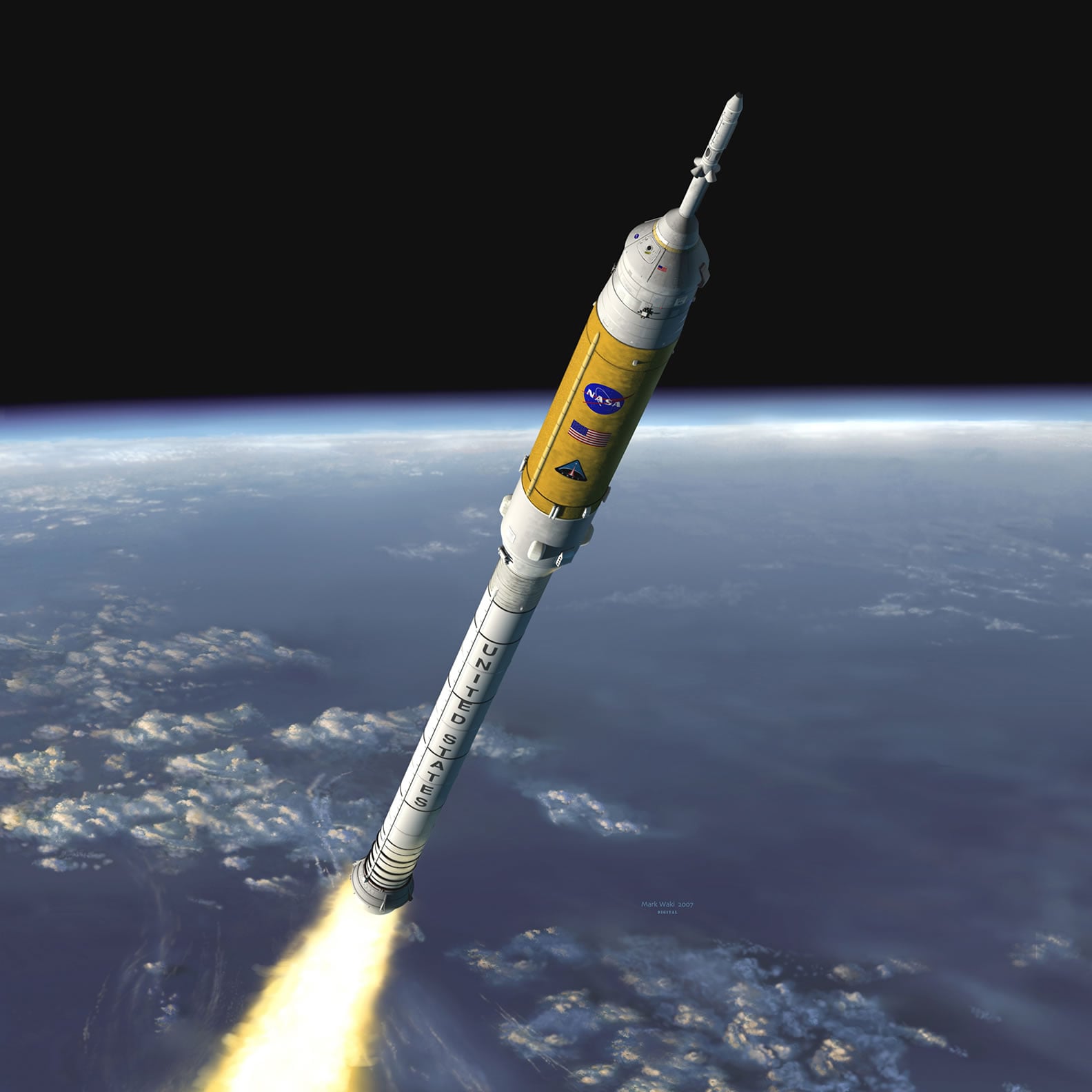
[/caption]There's been a lot of bad news surrounding the development of the Constellation Program of late. We've had news of general design flaws, rebelling NASA engineers, failed parachute tests, budget overruns, vibrational issues and job losses. Now we have a new one to add to the mix, the Ares I launch vehicle could bump into the launch tower during blast-off. According to a Florida report, only a tiny gust of wind is required to cause the rocket to hit the tower or scorch it, causing catastrophic failure and/or costly damage to the pad.
You'd be forgiven for thinking Constellation is a failed project, that is
obviously
going to overrun,
obviously
going to cost too much and is
obviously
a waste of time. But forget the media naysayers for a moment. Despite the challenges faced by NASA engineers, a bumpy road on the way to launching the most advanced rocket system ever devised is well worth the ride...
[caption id="attachment_17119" align="alignnone" width="580" caption="The Orion parachute test drop didn't go so well... (NASA)"]
[/caption]
Back in August
, I reported on the testing of the Ares and Orion parachute systems. Very little news was available about the
Ares parachute successes
, so the focus was placed on the
spectacular failure of the Orion test vehicle
, which fell to the ground like a stone (captured in full video glory). This wasn't a critical failure of the technology, it was more of an experimental anomaly. After all, isn't that what test flights are all about?
[caption id="attachment_17195" align="alignleft" width="250" caption="Ares V: Heavy lift capability comes with a price (NASA)"]
[/caption]Then there was much emphasis placed on the predicted vibrational problems facing Ares I during launch. Fortunately,
as Nancy reported on August 19th
, NASA engineers had a solution. Just when the NASA engineers thought they were winning, a few days later a report comes out saying the old Apollo era crawlerway
would not be able to support
the weight of a fully laden Ares rocket (cue more budget over-stretching).
More bad news has come from other areas too. During the transition from the Space Shuttle to Constellation, it was estimated that
8,000 jobs would probably be lost
. Even after this projected number was
reduced to 3,000-4,000 job losses
, US Senator Bill Nelson said that NASA job losses and an increased dependence on Russian space vehicles will result in "
generating jobs in Russia
." However, this argument may not hold water for much longer as the Russian Soyuz manufacturer
has run out of money
.
[caption id="attachment_15251" align="alignleft" width="250" caption="Protesting over job losses (Canaveral Port Authority)"]
[/caption]Now prepare yourself for some more bad news. The Orlando Sentinel has published an article entitled "Is NASA's Ares doomed?"
Oh dear
.
This headline comes in response to computer models that show the Ares I rocket could get blown into the launch tower during lift-off. Ares I could experience "liftoff drift", a phenomenon that occurs when the rocket's solid-fuel motor ignites, making the 309 ft (100 m) Ares I "jump" sideways. If this should occur during a breeze of a little over 12 mph (19 kmh), Ares I could fall into its launch tower, or cause severe and expensive damage to the tower under the extreme heat of its boosters.
"
We were told by a person directly involved
[in looking at the problem]
that as they incorporate more variables into the liftoff-drift-curve model, the worse the curve becomes
," said an anonymous NASA contractor. Contractors are not authorized to talk about Ares development, but the contractor continued, "
I get the impression that things are quickly going from bad to worse to unrecoverable
."
[caption id="attachment_15267" align="alignleft" width="166" caption="The future of space travel - Artist impression of Ares V on the launchpad (NASA)"]
[/caption]But are these problems insurmountable? Surely NASA engineers will find a solution to this difficulty (much in the same way as they found an answer to the vibrational problems)?
"
There are always issues that crop up when you are developing a new rocket and many opinions about how to deal with them
," said Jeff Hanley, Constellation Program manager. "
We have a lot of data and understanding of what it's going to take to build this
."
The Orlando Sentinel also posted information about continuing rifts in NASA pointing out that a growing number of engineers are quitting the Constellation program through fears of unrealistic goals and safety concerns, calling the whole Constellation concept into question.
"
If they push hard enough, yes, it will fly
," said one disgruntled NASA engineer working on Ares. "
But there are going to be so many compromises to be able to launch it, and it will be so expensive and so behind schedule, that it may be better if didn't fly at all
."
In my view, any massive project like Constellation will attract its critics. Ares and Orion are new technologies where NASA engineers will have to make some huge strides to make it work. As already mentioned, the Ares rocket system is going to fly, but it might overrun in spending and schedule. However, all these challenges will be worth it when we see the first Ares I launch from Cape Canaveral in six or seven years time.
[caption id="attachment_16141" align="alignleft" width="250" caption="Astronaut Eugene Cernan from Apollo 17, the last mission to the Moon (NASA)"]
[/caption]Never before have we had the opportunity to build a space technology not only used for transportation to the space station, it will be used to facilitate the next lunar mission, and eventually a trip to Mars. These projects come at a huge cost for the entire nation, but like the run-up to the Apollo missions in the 1960's, the US needs to build an enthusiasm for the future of space flight. We are on the cusp of a huge advance for mankind, there's no budget or timescale for that kind of achievement.
It may not be politically or economically realistic, but more money should be ploughed into NASA and Constellation. This is a momentous challenge requiring a momentous effort from the nation. Let's just hope some of the spending promises of the presidential candidates last beyond November 4th...
Original source: Orlando Sentinel